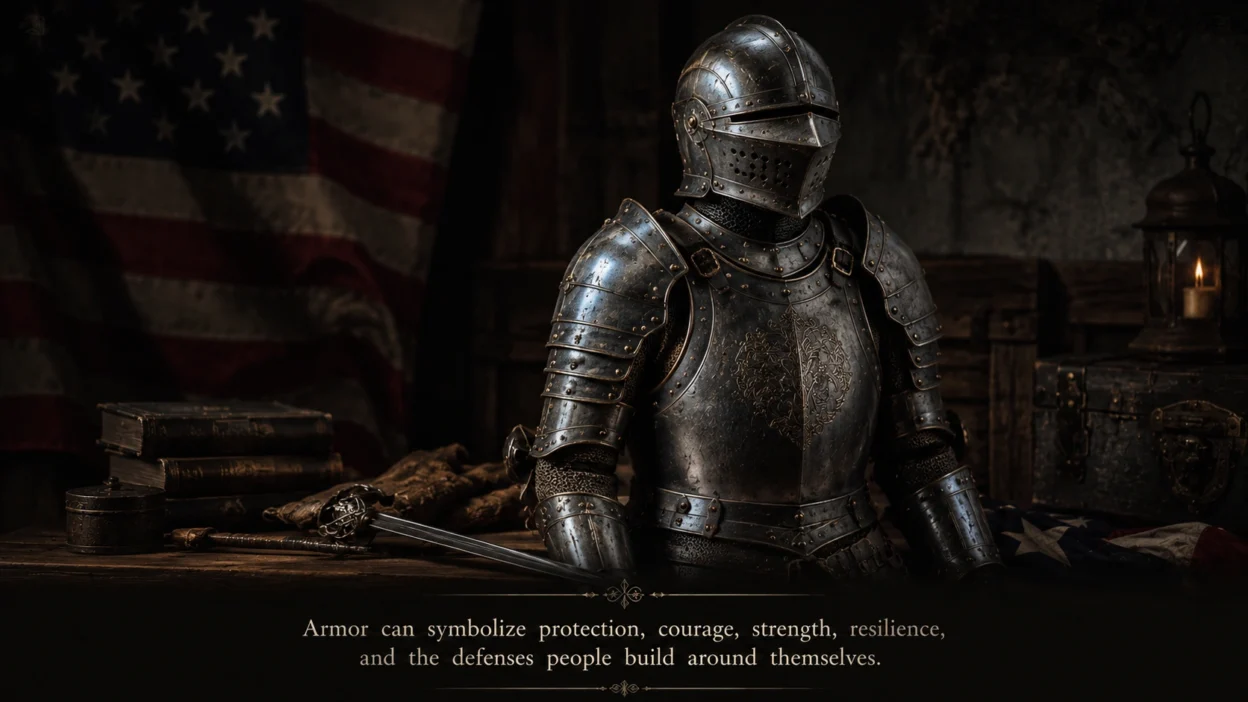
Armor is more than metal worn for battle. Armor Symbolism represents protection, strength, courage, resilience, and the desire to stand firm when life becomes difficult. Across history, people have also used armor to express rank, identity, honor, and power.
In the United States, armor often carries both literal and symbolic meanings. You might see it in military imagery, sports culture, fantasy stories, tattoos, jewelry, games, and personal artwork. In each setting, the basic idea remains familiar: armor creates a barrier between something vulnerable and a perceived threat.
Yet armor can also suggest emotional defenses. Someone may describe themselves as “putting on armor” before facing criticism, grief, conflict, or pressure. That modern use connects an ancient object with a very human experience.
Quick Answer
Armor Symbolism in the USA commonly represents protection, courage, strength, resilience, duty, and emotional defense. More broadly, armor can symbolize readiness, status, honor, and the struggle between vulnerability and security.
TL;DR
- Armor traditionally protects the body from physical danger.
- In America, it often represents courage, duty, resilience, and preparedness.
- Ancient armor also communicated rank, identity, and social power.
- Emotional armor describes defenses against hurt or vulnerability.
- Tattoos and artwork often use armor to represent survival and inner strength.
- Modern meanings can shift between protection, authority, fantasy, and intimidation.
What Does Armor Symbolize?
Armor has a simple physical purpose, but its symbolic meaning reaches much further. Because armor protects a vulnerable body, it naturally became a visual metaphor for safety and strength.
For American readers, the symbol often feels personal. It can represent the ability to endure hardship without suggesting that a person feels completely fearless.
Protection and Safety
The most direct meaning is protection. Armor stands between the wearer and danger.
It can therefore represent:
- Physical protection from threats and violence
- Emotional protection from pain and rejection
- Spiritual defense against harmful influences
- Personal boundaries against unwanted pressure
- Readiness to face difficult circumstances
- Security during uncertain periods of life
The symbol doesn’t always mean aggression. In many contexts, armor communicates preparedness rather than a desire to fight.
Strength and Courage
Armor also represents the courage to enter difficult situations. A person wearing armor accepts that danger may exist but chooses to move forward.
That idea fits strongly with American stories about perseverance. Heroes in military history, sports, comics, and popular entertainment frequently appear as protected figures who continue despite adversity.
The Historical Origins of Armor
Armor developed because humans needed protection during conflict. Early forms were practical rather than decorative, but they gradually acquired social and symbolic meanings.
Ancient societies created protective equipment from materials available to them. These included leather, wood, bronze, iron, and other metals.
Ancient Roots
Ancient warriors used shields, helmets, body coverings, and protective plates. Greek hoplites, Roman soldiers, and many other military cultures developed distinctive equipment.
Armor could identify a person’s role before anyone heard them speak. A helmet, shield, or decorated breastplate could immediately communicate that the wearer belonged to a particular military or social group.
The symbolic connection between protection and virtue also appeared in ancient religious and philosophical imagery. Protective equipment could represent the defense of order, community, or sacred values.
Medieval Armor
Medieval European armor became especially important to later Western ideas about knights. Full plate armor developed over centuries as weapons and battlefield tactics changed.
Knights’ armor became associated with:
- Honor
- Loyalty
- Military skill
- Social rank
- Chivalry
- Service
However, the popular image of the knight can simplify history. Real medieval armor was practical equipment designed around changing military needs.
Over time, paintings, stories, ceremonies, and literature transformed armor into a powerful symbol of the ideal warrior.
Armor Symbolism in the United States
America inherited many European artistic traditions involving armor. However, American culture reshaped the symbol through military history, popular entertainment, sports, and ideas about personal resilience.
Armor rarely represents monarchy in everyday American life. Instead, it more often points toward defense, service, individual strength, or heroic struggle.
Military Associations
Military imagery gives armor a serious meaning in the United States. Although modern service members don’t generally wear medieval armor, armor remains a familiar visual shorthand for protection and defense.
Modern body armor has also reinforced the literal association between armor and survival. It can represent the effort to protect people who enter dangerous environments.
At the same time, armor imagery shouldn’t automatically be interpreted as support for violence. Its meaning depends heavily on the setting and the surrounding symbols.
American Heroism
American entertainment frequently presents armored characters as protectors. Superheroes, science-fiction characters, soldiers, and fantasy warriors all use protective gear.
This creates an important shift. The armored figure isn’t always strong because nothing can hurt them. Instead, strength comes from continuing to act despite vulnerability.
| Context | Meaning in the USA | Common Associations | Notes |
| Military imagery | Defense and duty | Service, readiness, protection | Meaning depends on context |
| Tattoos | Personal resilience | Survival, courage, endurance | Often deeply personal |
| Fantasy art | Heroism and adventure | Knights, quests, bravery | Often influenced by medieval imagery |
| Sports | Mental toughness | Discipline, competition, perseverance | Usually metaphorical |
| Fashion | Strength and identity | Confidence, edge, authority | May be decorative rather than literal |
| Personal artwork | Emotional defense | Boundaries, healing, resilience | Often represents an inner struggle |
Armor as a Symbol of Emotional Protection
Physical armor protects the body. Emotional armor protects the inner self.
This metaphor is common in American speech. Someone might say they have “thick skin” or that they need to “put their armor on” before entering a difficult situation.
The Psychological Meaning
Emotional armor can represent coping strategies. A person may become guarded after experiencing disappointment, betrayal, loss, or repeated criticism.
However, emotional armor has two sides. It can help someone feel safe, but excessive defenses can also make connection harder.
The symbol therefore creates an interesting contrast:
- Armor can protect without eliminating vulnerability.
- Strong defenses can provide confidence during stressful moments.
- Emotional barriers may prevent both pain and closeness.
- Personal boundaries can be healthy forms of symbolic armor.
- Constant defensiveness can become isolating over time.
- Removing armor can symbolize trust, openness, or healing.
The meaning depends on whether the armor protects a person temporarily or permanently separates them from others.
What Does Armor Mean Spiritually?
Armor has appeared in religious and spiritual imagery as a metaphor for protection. One of the best-known examples comes from Christianity, particularly the “armor of God” described in the New Testament’s Letter to the Ephesians.
There, different pieces of armor represent qualities such as faith, righteousness, truth, and spiritual readiness. The imagery uses familiar military equipment to explain an inner moral struggle.
Spiritual Protection
For Christian readers, armor can therefore symbolize spiritual preparedness rather than physical combat.
Other cultures and traditions have also used protective objects, clothing, symbols, and ritual items. These examples differ greatly, so they shouldn’t be treated as one universal belief system.
Still, a broad pattern appears across many traditions: protection can represent safety, strength, sacred commitment, or resistance to harmful forces.
Armor and the Meaning of Courage
Armor doesn’t necessarily symbolize fearlessness. In fact, its deeper meaning can come from acknowledging danger.
A person wears armor because something vulnerable exists underneath it. That makes armor a useful symbol for courage.
Courage Despite Vulnerability
The armored figure can say, “I know this may hurt, but I’ll face it.”
That message resonates with American ideas about perseverance. Stories of soldiers, athletes, workers, activists, fictional heroes, and ordinary people often celebrate the ability to keep moving after setbacks.
Armor can therefore symbolize:
- Standing firm during adversity
- Protecting people who depend on you
- Continuing after failure
- Facing uncertainty with preparation
- Defending personal values
- Remaining steady under pressure
This interpretation makes armor more than a symbol of toughness. It becomes a symbol of purposeful endurance.
Armor in Tattoos and Body Art
Armor tattoos are popular because the image can carry a highly personal story. A person might choose a helmet, breastplate, armored arm, shield, or complete knight to represent something they survived.
Common Tattoo Meanings
The exact design changes the message. A polished suit of armor can suggest discipline, while damaged armor may emphasize survival.
Popular interpretations include:
- Surviving a difficult period
- Protecting loved ones
- Personal courage
- Strength after hardship
- Emotional boundaries
- Loyalty and commitment
- Readiness for future challenges
A cracked or worn piece of armor can be especially meaningful. Instead of pretending to be invincible, it can show that someone endured damage and kept going.
Armor in Fashion, Decor, and Popular Culture
Today, armor appears far beyond historical reenactment. Designers, artists, filmmakers, game creators, and collectors use it because the shape immediately communicates strength.
In home decor, even a decorative helmet can create a medieval or historical atmosphere. In fashion, metal-like panels and protective shapes can suggest confidence, toughness, or futuristic style.
Movies, Games, and Fantasy
Popular culture has dramatically expanded the armor symbol. Fantasy knights, science-fiction suits, superheroes, and video game characters have introduced millions of people to new forms of protective imagery.
Modern armored characters often combine technology with traditional ideas. A metal suit may represent intelligence, innovation, responsibility, or personal transformation rather than medieval warfare.
That evolution matters because today’s audience may recognize armor through fiction before encountering it through history.
Armor, Identity, and Personal Boundaries
Armor can symbolize identity because it shows what someone chooses to protect.
For some people, the image represents a strong public identity. They may see themselves as dependable, disciplined, or prepared to defend others.
Armor as a Personal Metaphor
You can think of symbolic armor as a boundary between your private and public selves.
It might represent the confident version of you that appears at work, school, competitions, or stressful social situations. The armor doesn’t necessarily mean that the person underneath lacks feelings.
Instead, it can mean they choose when and how to reveal those feelings.
Is Armor a Symbol of Power?
Yes, armor can symbolize power, but power isn’t its only meaning.
Historically, elaborate armor could communicate wealth, rank, military importance, or social position. A finely made suit required significant resources and skilled craftsmanship.
Protection Versus Authority
The distinction matters today. Armor can mean “I am protected,” while a commanding armored figure can suggest “I have authority.”
Those meanings sometimes overlap, but they aren’t identical.
For example, a protective helmet may emphasize safety. A highly decorated ceremonial suit may emphasize status. A futuristic armored character may represent technological power.
The surrounding imagery determines which interpretation becomes strongest.
Misunderstandings and Controversies Around Armor
Armor usually has positive associations, but context can change its meaning.
Military and warrior imagery can sometimes become connected with aggression, intimidation, or political movements. Therefore, viewers may interpret the same armor differently depending on where and how it appears.
When Context Changes Meaning
A historical museum display may communicate education and heritage. A fantasy tattoo may represent courage. A threatening modern image may instead communicate domination.
Armor also gets romanticized in popular culture. Medieval imagery can make warfare appear cleaner or more heroic than historical reality.
A balanced interpretation recognizes both sides. Armor represents protection and courage, but it also comes from the history of conflict.
How Armor Symbolism Has Changed Over Time
Armor’s meaning has shifted as its practical purpose changed.
Ancient armor primarily protected warriors. Medieval armor later became strongly associated with knights, status, and chivalric ideals. Modern protective equipment now connects the concept with survival and safety.
From Battlefield Equipment to Personal Symbol
Today, most people encounter armor as an image rather than everyday equipment.
That change has made the symbol more flexible. It can now represent emotional resilience, personal identity, fictional heroism, or a desire for security.
The older meaning hasn’t disappeared. Instead, new layers have accumulated around it.
Read More: Shield Symbolism: Protection, Strength, and Courage
Armor Symbolism in American Life Today
In contemporary America, armor often works as a metaphor for resilience. People use protective imagery to express the idea that difficult experiences have made them stronger.
This appears especially often in personal art and popular storytelling. The armored figure becomes someone who carries responsibility while protecting something valuable.
What an Armored Image May Communicate
The same image can speak differently to different people.
For one person, it may represent military service. For another, it may symbolize recovery from hardship. Someone else may simply love medieval history or fantasy.
That flexibility is part of armor’s lasting power. It allows people to attach their own experiences to a familiar visual form.
FAQs
What does armor symbolize in dreams?
Armor in dreams can symbolize protection, emotional defenses, confidence, or preparation. The meaning often depends on whether the armor feels comforting, restrictive, damaged, or threatening.
What does wearing armor symbolize?
Wearing armor can represent readiness, courage, self-protection, or emotional guardedness. In personal symbolism, it may suggest that someone feels the need to protect something vulnerable.
What does a knight in armor symbolize?
A knight in armor often represents courage, loyalty, duty, honor, and protection. Modern interpretations may also connect the knight with perseverance and the struggle to overcome challenges.
What does broken armor symbolize?
Broken armor can represent survival, vulnerability, loss, or strength after hardship. It can suggest that a person has been hurt but continues to stand.
What does armor symbolize spiritually?
Spiritually, armor can represent protection, faith, moral strength, and readiness. In Christian imagery, the “armor of God” uses armor as a metaphor for spiritual qualities and resistance to evil.
Is armor a symbol of strength?
Yes, armor commonly symbolizes strength because it protects a vulnerable person from danger. However, it can also represent responsibility, boundaries, resilience, and the courage to face vulnerability.
Conclusion
Armor Symbolism has survived because its basic message remains easy to understand. Armor protects what matters, represents preparation, and reminds us that courage doesn’t require the absence of fear. Perhaps that’s why armor still feels meaningful today. Beneath every protective layer, there is something worth protecting—and recognizing that can make strength feel more human.