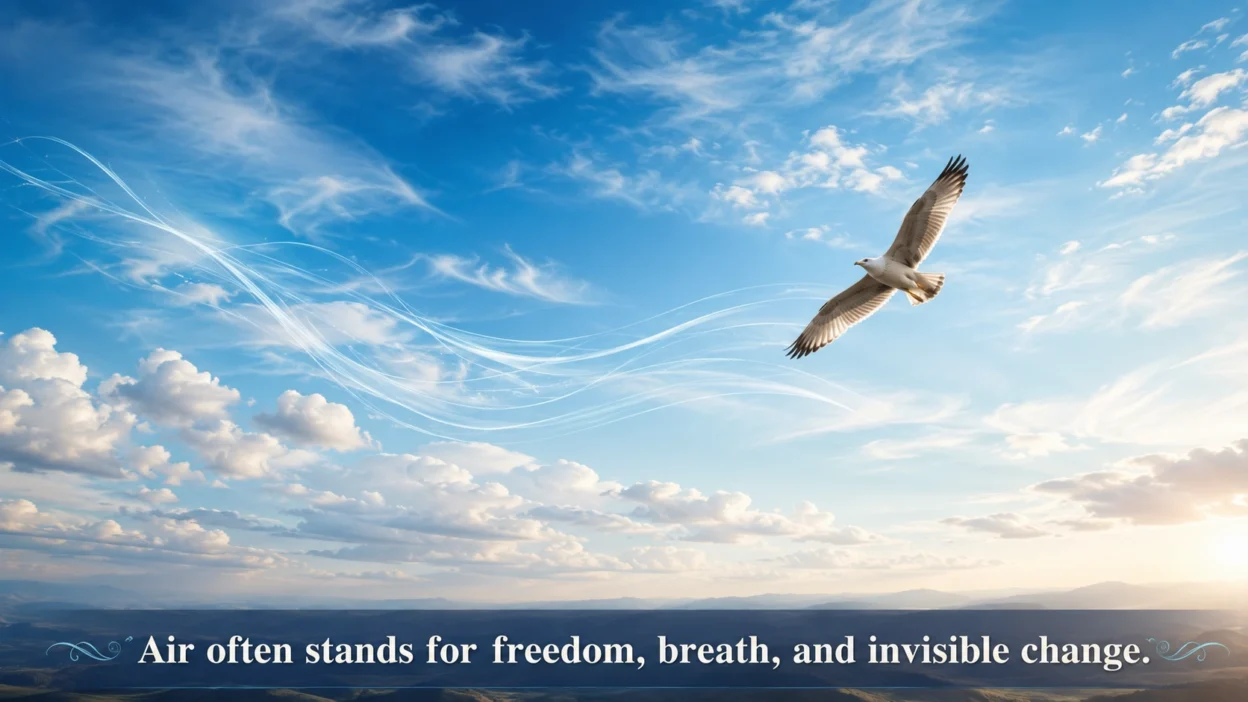
Air symbolism refers to the symbolic meanings connected with the air element, one of the most profound and universal symbolic elements found across belief systems, spiritual traditions, cultures, religions, myths, dreams, and art. Although air is invisible, intangible, and in constant motion, it remains essential for life through every life-giving breath. From my experience studying symbolism, I have noticed that people often notice the wind only when it changes, yet that quiet movement can reveal deep thought, clarity, and fresh inspiration.
The ever moving nature of air reminds us that unseen forces continuously shape our minds and are shaped by experience. Because of this, air symbolizes freedom, communication, intellect, intelligence, awareness, spiritual awareness, spiritual connection, and expanding consciousness. Every breath becomes a simple reminder that greater understanding and personal growth begin when we stay open to new ideas.
Air also teaches that progress comes from flexibility rather than resistance. As thoughts move as freely as the wind, they encourage clearer communication, deeper consciousness, lasting freedom, stronger spiritual connection, and continued growth through inspiration and understanding.
Quick Answer
Air Symbolism in the USA usually stands for freedom, breath, clarity, and change. It can also suggest spirit, movement, and things you sense without seeing.
TL;DR
- Air often means freedom, thought, and invisible energy.
- In the USA, it’s tied to open space and fresh starts.
- Ancient cultures linked air with breath and life.
- Religious traditions often connect air with spirit.
- Modern uses include tattoos, decor, and social media themes.
- Air can also symbolize danger, emptiness, or instability.
What Air Symbolism Means at a Glance
This section gives the fast meaning of air as a symbol. For a USA reader, it helps separate the simple idea of weather from the deeper idea of invisible force.
Core ideas
Air often carries a few main meanings at once. Because it is always moving, people connect it with freedom, change, and thought.
• Breath and life
• Lightness and openness
• Mind, logic, and ideas
• Spirit or unseen presence
Air can feel gentle, but it can also feel powerful. That is part of why it appears in so many stories and symbols.
What Air Looks Like as a Symbol
Air is unusual because it has no fixed shape. However, people still represent it through clouds, wind, birds, sky, mist, and movement.
Form, motion, and context
In images, air often appears through things that suggest flow or space. A wide blue sky can imply calm, while strong wind can imply force.
Common visual signs of air include:
• Clouds drifting across open sky
• Curtains or leaves moving in wind
• Birds gliding through the air
• Breath, mist, or smoke rising upward
• High places like hills, towers, or mountains
Because air cannot be touched, artists often show its effect instead. That makes it a symbol of the unseen made visible.
Ancient Roots of Air Symbolism
Air has been meaningful since early human cultures began naming the natural world. Long before modern science, people saw air as a life force because breathing separates life from death.
Ancient and pre-Christian roots
Many early traditions treated air as one of the basic elements of the world. In Greek thought, air was one of the four classical elements, along with earth, fire, and water. However, it was more than a physical substance. It was also linked with movement, sky, and the invisible life around people.
In other ancient systems, air often connected with the heavens, the soul, or the space between worlds. Because it moves freely, it could suggest divine presence, messages, or unseen power.
Air also mattered in early ritual life. Breath, chanting, smoke, and sacred wind often pointed to life moving through the body and the world.
Air in Religious and Spiritual Traditions
This section matters because air often becomes spiritual language. In the USA, many people still use air-related ideas when speaking about soul, prayer, or inner peace.
Breath, spirit, and unseen life
In several religious traditions, breath is closely linked to life force. Because breathing is constant and necessary, it often becomes a sign of divine gift or sacred presence.
Air can also symbolize:
• Spirit moving without being seen
• Prayer rising upward
• Life entering the body
• A message from beyond the physical world
In Christian language, breath and spirit are often closely tied. In other traditions, wind may represent divine movement, renewal, or transformation. Even for people who are not religious, air can still feel sacred because it supports all life.
What Air Symbolism Means in the USA
In the USA, air often feels connected to freedom, personal space, and mental openness. That comes partly from culture, geography, and everyday speech.
Everyday American ideas
Americans often use air-related language to describe mood and identity. Someone may want “more space,” “fresh air,” or a “clear head.” These are simple phrases, but they reveal deeper symbolic habits.
| Context | Meaning in the USA | Common Associations | Notes |
| Fresh air | Renewal and relief | Nature, calm, health | Often linked with going outside |
| Open sky | Freedom and possibility | Travel, space, hope | Common in landscapes and travel imagery |
| A breath of air | Relief or new energy | Change, reset, comfort | Used in everyday speech |
| Windy weather | Force and instability | Movement, disruption | Can feel both exciting and harsh |
| Air travel | Speed and reach | Distance, modern life | Often tied to ambition and progress |
Air in the USA often feels personal and practical. However, it also carries emotional weight because it suggests room to think, move, and begin again.
Air, Freedom, and American Identity
Air often overlaps with the American idea of freedom. Wide skies, open roads, and big landscapes have shaped how many people in the USA imagine independence.
Wide skies and open space
The visual language of the American West, rural land, and open horizons often uses sky and air to suggest possibility. Because the space looks uncontained, it can feel like a symbol of personal choice.
Air also appears in patriotic and cultural imagery through flight, flags moving in the wind, and soaring birds. These images can suggest reach, confidence, and a life not held down.
Air can symbolize:
• Independence and self-direction
• Room to grow and think
• Mobility and travel
• A future not yet fixed
That is why air often feels hopeful in American culture. It suggests life that is still in motion.
Emotional and Psychological Meaning
Air is strongly tied to emotion and thought. Because breathing affects the body so directly, air often becomes a symbol of calm, stress, panic, or relief.
Lightness, clarity, and change
People often connect air with a clear mind. A “breath of fresh air” can mean a new person, a new idea, or a new start. In contrast, stale air can suggest heaviness or emotional stuckness.
Air can reflect mental states such as:
• Calm and balance
• Openness to new ideas
• Detachment or distance
• Anxiety, when breath feels tight
• Change that arrives quickly
Psychologically, air often signals flexibility. It suggests someone who adapts, thinks fast, or prefers space. However, it can also point to instability when things feel scattered or uncertain.
Modern Uses of Air Symbolism
Today, air symbolism appears in many ordinary places. It shows up in tattoos, decor, branding, social posts, and identity language.
Tattoos, decor, and social media
Air tattoos often use birds, clouds, feathers, wind lines, or the word itself. These designs can express freedom, healing, travel, intellect, or spiritual calm.
In home decor, air appears in light fabrics, open rooms, sky colors, and minimalist spaces. These choices often create a feeling of breathing room and peace.
Modern uses include:
• Tattoo designs with birds or feathers
• Minimalist rooms with light colors
• Social posts about freedom or new beginnings
• Wellness themes about breathing and calm
• Travel imagery with sky and open horizons
Air works well in modern life because it feels clean, simple, and open. It fits both spiritual and everyday meanings.
Air in Nature, Weather, and the Elements
Air is also a natural force, not just a symbol. That matters because people often read symbolic meaning directly from weather and landscape.
Wind, storm, and weather
Gentle air can feel healing. Strong wind can feel disruptive, powerful, or even dangerous. Because of that, air is one of the most emotionally flexible symbols.
It can mean:
• A soft change coming in
• A storm building nearby
• Movement you can’t control
• Seasonal transition
• A reminder that nature is alive
In the older element systems, air often stood between matter and spirit. That idea still survives today in how people react to weather, seasons, and the feel of a place.
Misunderstandings, Misuse, and Controversies
Air usually has positive meanings, but it can also be misunderstood. Sometimes people use air to mean something empty, fake, or without substance.
When air means emptiness or danger
Phrases like “full of hot air” or “airheaded” show a negative side of the symbol. In these cases, air suggests lack of depth, unreliability, or too much talk and not enough action.
There are also safety and environmental meanings. Bad air can point to pollution, smoke, or danger. In those cases, the symbol shifts from freedom to threat.
Air can be used badly when people treat it as only softness or beauty. In truth, it can also stand for pressure, storms, and risk.
Read More: Water Symbolism: Meanings, History, and USA Use
How Air Symbolism Has Shifted Over Time
Air has kept its basic link to breath and movement, but its meaning has widened. Ancient cultures often treated it as one of the building blocks of life. Today, it also means mindset, lifestyle, and emotional space.
From sacred breath to modern metaphor
In older settings, air often felt divine or elemental. Today, it is also a common word for personal freedom, mental health, and design style.
That shift shows up in everyday life. Air can now mean a calm room, a new perspective, a big idea, or a fresh start. However, the older spiritual layer has never fully disappeared.
Air still works because it is both simple and deep. It is always around us, yet it remains invisible.
FAQs
What does Air Symbolism mean?
Air Symbolism represents ideas connected with freedom, communication, intelligence, awareness, and spiritual connection. Because air cannot be seen but is always present, it often symbolizes unseen power, clear thinking, and personal growth.
Why is air considered a powerful symbol?
Air is essential for life because every breath depends on it. Its constant movement and invisible nature make it a symbol of change, inspiration, wisdom, and the ability to adapt to new situations.
How is Air Symbolism used in different cultures?
Many cultures, religions, myths, and spiritual traditions connect air with the breath of life, higher knowledge, divine messages, and the human spirit. While the details vary, air is commonly linked with wisdom, freedom, and awareness.
What emotions are associated with Air Symbolism?
Air often reflects feelings of openness, hope, curiosity, peace, and mental clarity. It also reminds people to stay flexible, think clearly, and welcome new ideas.
How can Air Symbolism be applied in daily life?
You can use Air Symbolism as a reminder to communicate honestly, stay open-minded, welcome fresh perspectives, and make thoughtful decisions. Even taking a deep breath can encourage calm thinking and renewed focus.
Conclusion
Air Symbolism reminds us that some of life’s greatest influences cannot be seen but can still shape our thoughts, choices, and personal journey. Through its connection with breath, movement, freedom, and spiritual awareness, air continues to inspire people across cultures and generations. Whether viewed through mythology, religion, art, or everyday life, it encourages clear thinking, meaningful communication, and steady personal growth.