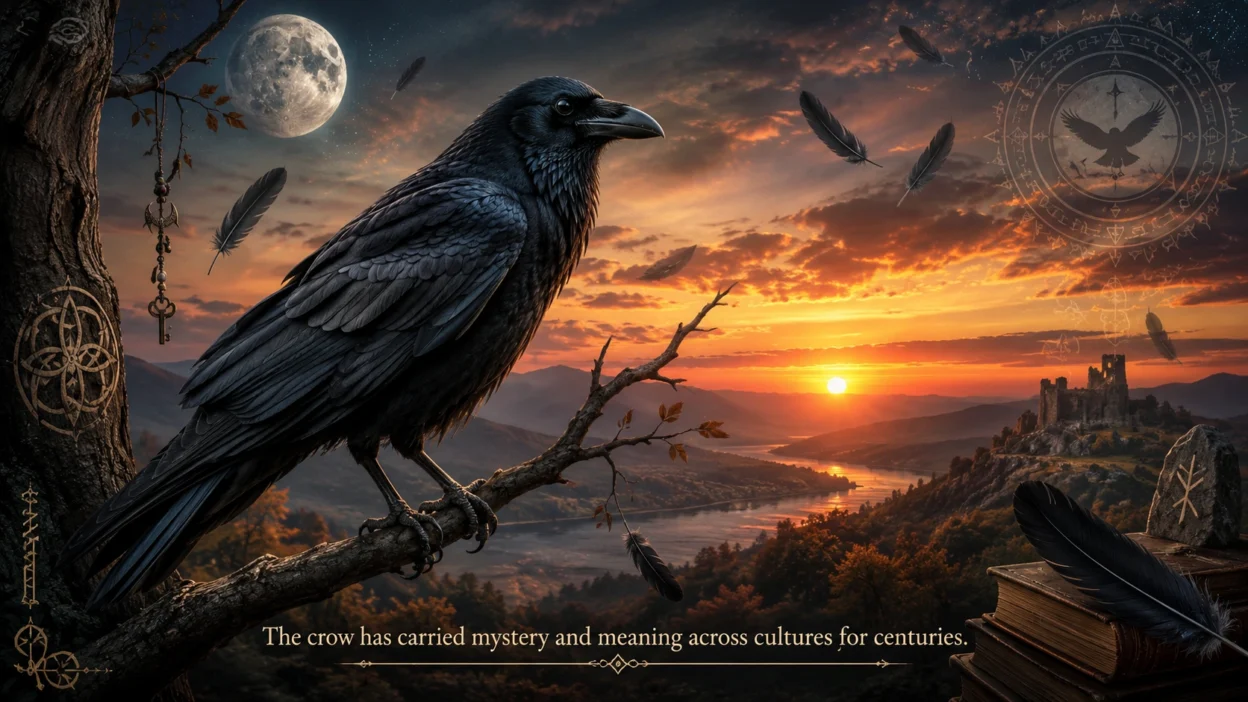
Crow Symbolism reveals how the crow and crows have inspired people for centuries, carrying rich symbolism through many cultures, culture, cultural traditions, myths, folk tales, and legends. Every symbol, symbolic symbolic image, and symbolic meanings connected with these birds can represent, representing, symbolize, and symbolizes ideas beyond ordinary beliefs. From my own study of modern symbolism and spiritual teachings, I have found that their mystery comes from their intelligent nature, remarkable intelligence, adaptability, and mysterious behavior rather than fear.
Many people once connected crows with dark omens, a single omen, or several omens, but that belief has often been misunderstood. Across psychology, psychological interpretations, and different traditions, these birds are linked with wisdom, knowledge, awareness, intuition, communication, and communication between worlds, including the spirit world. They appear in dreams, a dream, and spiritual experiences where they provide guidance, serve as a messenger, encourage change, support transition, inspire transformation, and help people transform their thinking through deeper spiritual insight and lasting insight.
This article explores the many meanings, from layered meanings to powerful meanings, found in crow imagery across modern culture and spirituality. Presented in a clear, engaging, and insightful way, it shows how different worlds of belief remain connected through shared teachings and timeless myth.
Quick Answer
Crow Symbolism in modern American culture usually represents intelligence, transformation, mystery, and adaptation. More broadly, many cultures also connect crows with messages, spiritual awareness, and the space between endings and new beginnings.
TL;DR
• Often symbolizes intelligence and adaptability
• Ancient cultures linked crows with messengers
• American culture mixes mystery with admiration
• Frequently appears in tattoos and fashion
• Can represent personal change or resilience
• Meanings shifted greatly over time
Overview of Crow Symbolism
What Makes Crows Symbolic?
Crow symbolism matters because people often attach meaning to animals they regularly see. In the United States, crows are among the most familiar wild birds, making them part of daily life and imagination.
Crows also stand out because of their appearance and behavior.
• Glossy black feathers create dramatic visual contrast
• Sharp eyes suggest awareness and observation
• Group behavior signals community and cooperation
• Loud calls attract attention immediately
• Strong memory shows unusual intelligence
• Flight patterns can appear mysterious
Why People Notice Crows
Unlike many birds, crows actively watch people. They can remember faces and solve problems. Because of this, people often feel as if crows are observing them rather than simply passing by.
That feeling shaped symbolism over centuries.
Historical Background of Crow Symbolism
Ancient Roots
The oldest meanings connected to crows often came from observation. Ancient people watched crows gather near battlefields, farms, and human settlements.
As a result, crows became linked with life and death cycles.
• Seen near changing seasons
• Connected with harvest periods
• Present around human activity
• Associated with endings and beginnings
• Viewed as carriers of messages
Mythological Symbolism
Many early societies created stories around crows.
In some Northern European traditions, crows represented knowledge and memory. In several Indigenous traditions across North America, crow figures appeared as creators, tricksters, teachers, or guides.
However, meanings varied widely between communities. No single interpretation represented all groups.
Medieval Changes
During medieval Europe, darker interpretations grew stronger. Black feathers and battlefield appearances caused many people to connect crows with death and misfortune.
Later, these ideas crossed into American folklore.
What Does the Crow Mean in America?
American Cultural Meaning
Crow symbolism in the United States combines older European ideas with local experiences and media influences.
Modern Americans often see crows in mixed ways.
| Context | Meaning in the USA | Common Associations | Notes |
| Autumn decorations | Mystery | Halloween imagery | Seasonal connection |
| Nature observation | Intelligence | Clever behavior | Often positive |
| Literature | Hidden truths | Darkness and change | Frequently symbolic |
| Personal symbolism | Transformation | Growth periods | Increasingly common |
| Spiritual interest | Messages | Intuition and awareness | Personal interpretation |
Influence of Movies and Stories
American entertainment shaped crow symbolism strongly.
• Horror films often suggest mystery
• Fantasy stories connect crows with wisdom
• Dark settings increase dramatic effect
• Poetry links crows with emotion
• Television uses crows as symbolic signs
Because of this, many Americans first meet symbolic crows through media.
Spiritual Meaning of Crows
Messenger Symbolism
Many spiritual traditions view birds as connections between worlds. Crows often became symbolic messengers because they travel freely across landscapes.
Some people believe seeing a crow signals:
• Personal change approaching
• Increased awareness
• Reflection and self-examination
• Attention to overlooked details
• Trusting intuition
Modern Spiritual Interpretation
Today, spiritual meanings often focus less on fear and more on growth.
Instead of predicting disaster, many people see crows as reminders to pay attention.
Crow Symbolism Across Cultures
Different Cultural Perspectives
Crow symbolism changes across regions and traditions. Understanding those differences matters because meanings are never universal.
• Some traditions connect crows with wisdom
• Others connect them with protection
• Certain stories describe trickster behavior
• Some link them with ancestors
• Others view them as guides
Respecting Cultural Meanings
Modern discussions sometimes blend traditions together. However, meanings developed within specific communities and histories.
Because of that, it’s important to avoid assuming one symbolic meaning fits every culture.
Emotional and Psychological Meaning of Crows
Psychological Associations
Animals often become symbols because they trigger emotional reactions.
Crows can create powerful feelings because they appear familiar yet slightly mysterious.
• Curiosity about unknown things
• Awareness and attention
• Independence and confidence
• Reflection during life changes
• Attraction toward mystery
Identity Signals
Some people also connect personally with crow symbolism.
For example, someone may identify with the bird’s intelligence, resilience, or outsider qualities.
Crow Symbolism and Transformation
Why Change Is a Common Theme
Transformation appears repeatedly in crow symbolism. Part of this comes from old stories involving cycles of death and renewal.
Today, people usually interpret transformation in everyday terms.
• Starting a new job
• Leaving old habits behind
• Personal growth periods
• Emotional healing journeys
• Identity changes
Instead of literal endings, modern interpretations often focus on life transitions.
Crow Symbolism in Tattoos
Popular Tattoo Meanings
Crow tattoos became increasingly popular because they can express multiple ideas at once.
Some choose realistic designs. Others prefer geometric or minimalist styles.
• Intelligence and cleverness
• Freedom and independence
• Personal rebirth
• Mystery and depth
• Strength after hardship
• Individual identity
Design Elements
Additional symbols often change meaning.
For example, moon imagery may emphasize mystery, while feathers may suggest freedom.
Crows in Social Media and Modern Culture
Digital Meanings
Social media introduced new symbolic uses.
People frequently post crow images during emotional moments, seasonal changes, or reflective periods.
• Dark aesthetic themes
• Personal transformation posts
• Nature photography communities
• Alternative fashion styles
• Symbolic mood content
Crow Identity Communities
Some online communities view crows as symbols of intelligence, curiosity, and nonconformity.
As a result, crow imagery now reaches audiences far beyond traditional folklore.
Misunderstandings and Controversies
The “Bad Luck” Question
Many people still ask whether crows bring bad luck.
Historically, that belief grew from old European fears and visual associations with death.
However, modern interpretations vary greatly.
Common Misunderstandings
• Seeing a crow doesn’t have universal meaning
• Cultural interpretations differ widely
• Black color symbolism changes by tradition
• Movies often exaggerate darker themes
• Symbolic meaning isn’t scientific prediction
Understanding context matters more than repeating old assumptions.
How Crow Symbolism Changed Over Time
Major Shifts in Meaning
Crow symbolism did not remain fixed.
Older meanings often focused on danger or mystery. Modern views became broader and more personal.
• Ancient periods emphasized natural cycles
• Medieval ideas stressed fear and omens
• American media added dramatic symbolism
• Modern spirituality emphasizes growth
• Digital culture encourages personal meanings
Why Meanings Continue to Change
Symbols evolve because people change. New experiences reshape old stories.
As culture changes, symbolism changes with it.
Read More: Owl Symbolism: Wisdom, Mystery, and Meaning
Crow Symbolism in Everyday American Life
Where People Encounter It
Many Americans see symbolic crow imagery even without noticing.
• Halloween decorations
• Home wall art
• Clothing graphics
• Jewelry designs
• Poetry and books
• Seasonal displays
Because crows remain common birds, their symbolism stays visible.
FAQs
1. What does crow symbolism usually represent?
Crow symbolism is commonly linked with wisdom, transformation, spiritual insight, intelligence, and change. Although many people associate crows with bad luck, most traditions view them as symbols of awareness, guidance, and deeper understanding.
2. Are crows considered good or bad omens?
The meaning depends on the culture and belief system. Some traditions see crows as omens, while many others view them as messengers that encourage growth, personal transformation, and important life changes rather than predicting misfortune.
3. What does it mean to dream about a crow?
A crow in a dream often symbolizes hidden knowledge, intuition, self-awareness, or an upcoming transition. It may suggest that you should pay closer attention to your inner thoughts and the opportunities for personal growth around you.
4. Why are crows important in spiritual traditions?
Many spiritual traditions see crows as guides between the physical and spiritual worlds. They are often associated with wisdom, communication, protection, and the ability to help people gain insight during times of change.
5. Why do crows appear in so many myths and legends?
Crows are highly intelligent and adaptable birds, which has made them powerful symbols across myths, folklore, and legends worldwide. Their behavior and problem-solving abilities have inspired stories about mystery, knowledge, and transformation for centuries.
Conclusion
Crow symbolism has remained meaningful across cultures because it reflects far more than mystery or superstition. Whether seen in myths, folklore, dreams, or spiritual traditions, the crow represents intelligence, wisdom, transformation, and a deeper connection to life’s changes. By understanding these symbolic meanings, we can appreciate the crow not as a sign of fear but as a reminder to stay aware, embrace growth, and look beyond appearances for deeper insight.