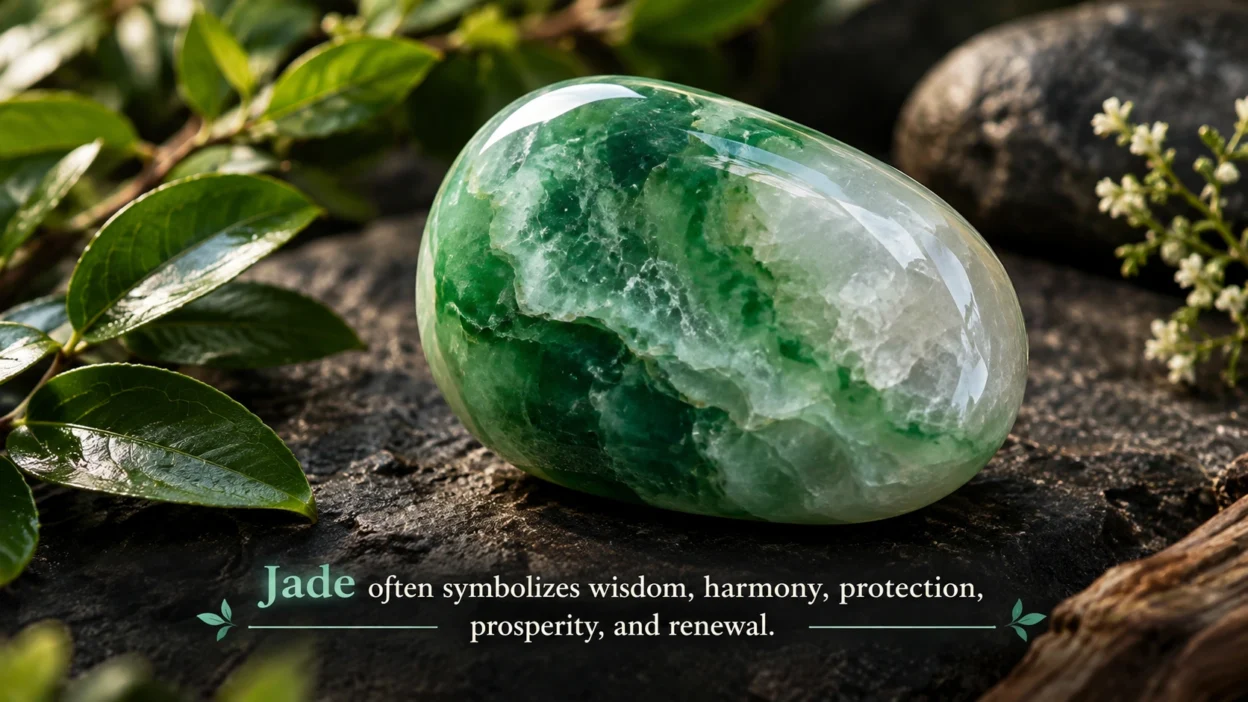
Jade Symbolism has fascinated people for thousands of years. This beautiful stone can appear in deep green, pale green, white, yellow, brown, or even lavender shades. However, its rich green color remains the image most Americans recognize.
Today, jade appears in jewelry, decorative objects, carvings, gifts, and spiritual traditions. In the United States, people often connect it with luck, prosperity, peace, and personal growth. Its meaning also comes from much older cultural traditions.
Unlike many symbols, jade carries both physical beauty and deep cultural history. Its smooth surface can suggest calmness, while its strength has made it meaningful across generations.
Quick Answer
In the United States, Jade Symbolism often represents prosperity, protection, harmony, wisdom, and renewal. Across different cultures, jade has also been connected with virtue, status, spiritual beliefs, and lasting strength.
TL;DR
• Jade commonly symbolizes harmony, wisdom, protection, and prosperity.
• Ancient cultures valued jade long before modern jewelry traditions.
• Americans often associate jade with luck and personal growth.
• Green jade strongly connects the stone with nature and renewal.
• Jade remains popular in jewelry, decor, gifts, and tattoos.
• Its meanings can differ depending on cultural and historical context.
What Is Jade?
Jade is the name commonly used for two different minerals: nephrite and jadeite. Both can be beautiful and durable, although they differ in their chemical structure.
For American readers, jade is usually recognized as a smooth green gemstone. However, its colors and cultural uses are much more diverse.
Jade’s Colors and Appearance
Jade can range from almost transparent to deep and richly colored. Its appearance often affects how people emotionally interpret it.
• Green jade often suggests nature, growth, and renewal.
• White jade can suggest purity, calmness, and clarity.
• Lavender jade may evoke imagination and individuality.
• Yellow jade can suggest warmth, optimism, and abundance.
• Dark jade may appear mysterious, grounded, and powerful.
• Smooth polished jade often creates a calming visual impression.
Why Jade Feels Different From Other Gemstones
Unlike sparkling diamonds, jade often has a softer visual presence. Its beauty comes from color, texture, depth, and a smooth glow.
Because of this appearance, people often associate jade with quiet confidence rather than dramatic luxury.
The Core Meaning of Jade
Jade has collected many meanings throughout history. Still, several ideas appear repeatedly in modern interpretations.
For people in the USA, jade often represents positive qualities people hope to bring into their lives.
Harmony and Balance
Jade’s smooth appearance can suggest emotional balance. Its natural colors also connect it with forests, plants, and peaceful landscapes.
Because of this, jade often symbolizes a desire for a calmer life.
Prosperity and Good Fortune
Jade is frequently associated with prosperity and good fortune. In modern American culture, this meaning often appears through gifts and decorative objects.
However, prosperity doesn’t always mean money. It can also represent abundance, opportunity, or a fulfilling life.
Wisdom and Protection
Many historical traditions connected jade with strength and protection. Today, people may wear it as a personal reminder of wisdom or resilience.
The stone can therefore represent both inner strength and thoughtful decision-making.
The Ancient History of Jade
Jade has been important to human societies for thousands of years. Before it became mainly associated with jewelry, people also used jade for tools, weapons, ornaments, and ceremonial objects.
Its durability made it useful, while its beauty gave it deeper meaning.
Early Uses of Jade
Ancient communities valued jade because it was hard and difficult to shape. Creating a polished object required patience and skill.
Therefore, jade could represent craftsmanship, effort, and lasting value.
Jade in Ancient China
Jade became especially important in Chinese history and culture. For centuries, it was used for ornaments, ceremonial objects, and items connected with social status.
It also became associated with admired qualities such as moral character, beauty, and harmony.
Jade in Ancient Mesoamerica
Jade was also highly valued by several ancient Mesoamerican cultures. Green stones could be connected with water, plants, life, and precious resources.
These meanings developed independently from Asian traditions, showing jade’s wide human appeal.
Jade Symbolism in Chinese Culture
Chinese traditions have played a major role in how jade is understood globally. For many people today, this cultural connection remains one of jade’s strongest associations.
However, jade’s meaning is complex and shouldn’t be reduced to a simple idea of luck.
Virtue and Character
Jade has often been used as a symbol of admired personal qualities. Its beauty, strength, and smoothness made it useful as a metaphor.
People could connect these physical traits with ideas about character and self-discipline.
Status and Respect
Historically, valuable jade objects could also represent wealth and social importance. Skilled jade carving required valuable materials and considerable labor.
Therefore, jade could communicate both beauty and prestige.
A Living Cultural Tradition
Today, jade remains meaningful within many Chinese communities worldwide. Its use can connect families with heritage, celebrations, gifts, and long-standing traditions.
For Americans, understanding this background adds important context to jade’s modern popularity.
What Does Jade Symbolize in the United States?
In the United States, jade symbolism often combines ancient cultural associations with modern personal meanings. Many Americans see jade as a beautiful green stone connected with positivity.
Its meaning often changes depending on the person wearing or displaying it.
Luck and Opportunity
Green jade is commonly connected with good fortune. This association makes it popular as a gift or personal object.
For some people, it represents hope for future opportunities.
Nature and Renewal
The color green strongly shapes jade’s American symbolism. Green often suggests plants, spring, fresh beginnings, and environmental awareness.
Therefore, jade can become a symbol of renewal and growth.
Personal Meaning Today
Modern Americans often choose gemstones based on personal feelings. A jade necklace may represent a memory, relationship, goal, or cultural connection.
This personal approach gives the stone new meanings beyond older traditions.
| Context | Meaning in the USA | Common Associations | Notes |
| Jewelry | Beauty and prosperity | Gifts, milestones, elegance | Meaning may be personal |
| Home decor | Peace and balance | Nature, calm spaces | Often chosen for its color |
| Gifts | Good wishes | Success and happiness | Cultural context can matter |
| Personal keepsakes | Memory and identity | Family and heritage | Often deeply individual |
| Modern fashion | Confidence and individuality | Green color, natural beauty | Meanings continue evolving |
The Spiritual Meaning of Jade
Some people view jade through spiritual traditions or personal beliefs. Others simply appreciate its beauty without attaching spiritual meaning.
Both approaches are common today.
Protection in Traditional Beliefs
Across different traditions, jade has sometimes been connected with protection. People may have carried or worn it as a meaningful object.
These beliefs should be understood as cultural or spiritual traditions, rather than universal facts.
Inner Peace and Reflection
Modern spiritual interpretations often connect jade with emotional calm. Its smooth texture and natural colors may support this association.
For some people, the stone becomes a reminder to slow down and reflect.
Personal Spiritual Symbols
A gemstone doesn’t need one official meaning. Many people create personal symbolism through memories and experiences.
Because of this, jade can represent a private journey or personal value.
Jade and Emotional Symbolism
The emotional meaning of jade often begins with its appearance. Green shades can feel connected with natural environments and living things.
As a result, jade may create feelings of comfort and stability.
Calmness
Smooth jade can look peaceful and balanced. This visual quality may explain why people connect it with emotional calm.
For example, jade decor may help create a softer atmosphere.
Hope
Green often suggests growth after difficult periods. Therefore, jade can symbolize hope and the possibility of change.
This meaning can feel especially powerful during new beginnings.
Confidence Without Excess
Jade can appear elegant without intense sparkle. Because of this, it may symbolize quiet confidence.
Its message can feel more subtle than dramatic.
• Calm during uncertain periods.
• Hope for growth and fresh beginnings.
• Confidence without needing constant attention.
• Connection with nature and living systems.
• Patience during slow personal change.
Jade Symbolism and the Color Green
Color plays a major role in how people understand jade. Even those unfamiliar with its history often respond emotionally to green.
In the USA, green already carries several familiar meanings.
Growth and New Beginnings
Spring landscapes often turn green as plants return to life. Therefore, green jade naturally connects with renewal.
This makes the stone meaningful during major life changes.
Nature and Environmental Awareness
Green can also represent forests, gardens, and environmental concerns. Jade’s natural appearance strengthens this connection.
However, the stone’s symbolism remains broader than environmental ideas alone.
Wealth and Prosperity
In American culture, green can also suggest money and financial success. This association sometimes strengthens jade’s connection with prosperity.
Still, many people interpret prosperity in wider personal terms.
Jade in Jewelry and Fashion
Jade jewelry remains popular because it can look both traditional and modern. Its colors work with simple designs as well as elaborate pieces.
Today, Americans wear jade for style, heritage, symbolism, or personal memories.
Necklaces and Pendants
A jade pendant can become a daily reminder of a personal value. Someone might connect it with peace, family, or perseverance.
The meaning often grows through continued use.
Bracelets and Rings
Jade bracelets can carry cultural significance for some families. Others choose them simply because they enjoy the color and material.
Therefore, appearance alone doesn’t reveal the owner’s intention.
Modern Fashion
Contemporary fashion often uses jade tones for their natural elegance. Green jewelry can add color without appearing overly bright.
This makes jade suitable for both casual and formal styles.
Jade in Home Decor and Everyday Spaces
Jade-colored objects can change the mood of a room. Their green shades may create a feeling of nature indoors.
For this reason, jade symbolism also appears in decorating choices.
Creating a Peaceful Atmosphere
A polished stone or jade-colored object can provide a calm visual focus. Natural colors often work well in quiet spaces.
People may place such objects in bedrooms, offices, or living areas.
Decorative Carvings
Jade carvings can also represent artistic traditions and family heritage. Their meaning depends greatly on their design and cultural background.
A carved animal, plant, or figure may add another symbolic layer.
Everyday Reminders
Some people keep jade objects near desks or personal spaces. The object can serve as a reminder of patience, goals, or loved ones.
This is one reason symbolic objects remain meaningful today.
Jade in Tattoos and Personal Identity
Jade can inspire tattoos through its color, shape, or cultural meaning. However, tattoo symbolism is usually highly personal.
A jade-inspired design may represent much more than the stone itself.
Nature-Inspired Designs
Green gemstones can be combined with leaves, flowers, or water. These designs often emphasize growth and renewal.
They can also represent a connection with the natural world.
Heritage and Cultural Connection
For some people, jade imagery connects with family history or cultural traditions. Such designs may express respect and identity.
Understanding the symbol’s cultural background can make the choice more thoughtful.
Modern Personal Expression
Others simply love jade’s appearance. A tattoo may represent beauty, individuality, or a memorable life period.
Personal symbolism often matters most.
Jade on Social Media and in Popular Culture
Today, gemstone imagery spreads quickly through photos and videos. Jade’s rich green color makes it visually distinctive.
As a result, it often appears in fashion, lifestyle, and personal storytelling.
A Symbol of Natural Beauty
Online images often present jade beside plants, wood, and natural textures. This visual combination strengthens its connection with nature.
The color itself communicates much of the message.
Personal Growth Themes
People may use gemstone imagery when discussing change or new beginnings. Jade fits naturally into these stories because of its green appearance.
However, each creator may use the symbolism differently.
Aesthetic Versus Traditional Meaning
Modern online use can simplify complex cultural traditions. A beautiful image may focus only on mood or fashion.
Learning the deeper history can help people appreciate jade more respectfully.
Common Misunderstandings About Jade
Jade is often discussed as though every green stone has the same meaning. In reality, jade has different forms, histories, and cultural associations.
Its symbolism also isn’t identical for everyone.
Jade Is Not One Single Mineral
The word jade commonly refers to nephrite and jadeite. These materials have different scientific properties.
However, both have been valued as jade in human history.
Jade Doesn’t Have One Universal Meaning
People sometimes describe jade as if it always means luck. While good fortune is a common association, jade can symbolize many other ideas.
Context, culture, and personal experience all matter.
Spiritual Claims Are Personal Beliefs
Some modern descriptions make strong promises about gemstones. Such claims belong to particular belief systems and personal practices.
They shouldn’t be presented as proven effects.
Cultural Respect and the Meaning of Jade
Jade has deep importance within several cultural traditions. Because of this, it deserves more than a simple decorative interpretation.
Respect begins with understanding where important meanings developed.
Appreciation Versus Simplification
Enjoying jade doesn’t require adopting every belief connected with it. However, reducing a meaningful tradition to a trendy slogan can remove important context.
Learning about history creates a richer appreciation.
Different Cultures, Different Stories
Chinese and Mesoamerican traditions developed important jade meanings in different historical settings. These traditions shouldn’t be treated as identical.
Each history deserves its own context.
Personal Use Can Still Be Meaningful
People can form their own connection with jade while respecting older traditions. Personal symbolism and cultural history can exist together.
Thoughtfulness is the key.
How Jade Symbolism Has Changed Over Time
Jade’s meaning has never remained completely fixed. Its uses have changed alongside societies, technologies, trade, and fashion.
Yet several older themes remain recognizable today.
From Useful Material to Precious Symbol
Early jade objects could serve practical purposes. Over time, difficult craftsmanship and beauty increased their symbolic value.
Jade became connected with prestige and ceremony.
From Cultural Object to Global Jewelry
International trade helped jade reach new audiences. Today, people around the world encounter it through jewelry and decorative arts.
This wider exposure created new personal interpretations.
Traditional Meanings in Modern Life
Older associations with harmony and prosperity remain popular. However, modern users may connect jade with wellness, identity, fashion, or environmental imagery.
Symbols survive by adapting to new settings.
Why Jade Still Matters Today
Jade continues to attract people because it combines beauty with history. Its color can immediately suggest nature, while its cultural past adds depth.
For Americans, this combination makes jade both familiar and mysterious.
A Connection Between Past and Present
An ancient material can still feel modern when placed in contemporary jewelry. This creates a bridge between historical craftsmanship and present-day identity.
The same stone can tell different stories across generations.
Read More: Ruby Symbolism: Meaning, History, and Modern Uses
Meaning Beyond Material Value
A jade object may be expensive, inexpensive, inherited, or newly purchased. Its emotional value doesn’t always depend on its price.
Memories often create the strongest symbolism.
A Flexible Modern Symbol
Jade can represent tradition for one person and change for another. It may symbolize heritage, hope, beauty, or personal strength.
That flexibility helps explain its lasting appeal.
FAQs
What does jade symbolize?
Jade commonly symbolizes harmony, wisdom, protection, prosperity, and renewal. However, its exact meaning depends on cultural and personal context.
Is jade considered a lucky stone?
Many traditions associate jade with good fortune and prosperity. Today, some people continue that symbolism, while others simply value its beauty.
What does green jade symbolize?
Green jade often symbolizes growth, nature, renewal, and prosperity. Its green color strongly shapes these modern interpretations.
Why is jade important in Chinese culture?
Jade has held important cultural value in Chinese history for centuries. It has been connected with beauty, virtue, craftsmanship, status, and family traditions.
Does jade have spiritual meaning?
Jade has spiritual meaning within some cultural and personal belief systems. Other people don’t attach spiritual beliefs to it and enjoy it as a beautiful material.
Is jade only green?
No. Jade can also appear white, lavender, yellow, brown, black, and other shades. Green remains the color most strongly associated with jade in popular culture.
Conclusion
Jade Symbolism brings together some of humanity’s oldest ideas about beauty and meaning. Across history, jade has represented harmony, wisdom, protection, prosperity, strength, and renewal. Perhaps jade’s greatest symbol is its ability to connect different generations. Whether you admire its color, history, or deeper meaning, jade invites you to look beyond beauty and consider the stories people attach to the things they value.