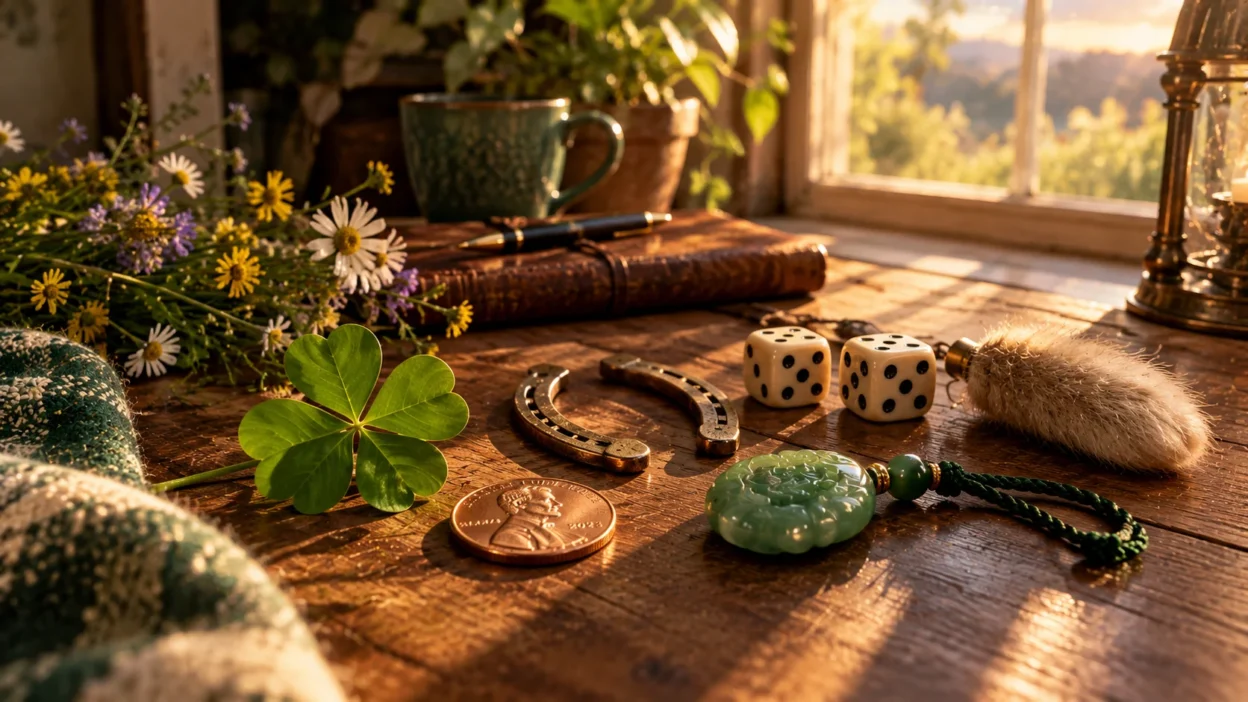
Luck is something people often hope for when facing uncertainty. Luck Symbolism explores how objects, animals, numbers, and everyday experiences come to represent good fortune, protection, opportunity, or unexpected success. In the United States, familiar examples include four-leaf clovers, horseshoes, lucky pennies, and the number seven.
These symbols appear in jewelry, tattoos, holiday decorations, sports rituals, and everyday sayings. Some people carry a lucky charm before an important event, while others avoid certain numbers or follow personal rituals. Even people who don’t believe in supernatural forces may find comfort in these traditions.
However, luck has never meant exactly the same thing to everyone. Its symbols developed through different histories, religious traditions, cultural practices, and personal experiences. Understanding their meanings reveals how people express hope, manage uncertainty, and search for possibilities when outcomes remain beyond their control.
Quick Answer
Luck Symbolism in the United States commonly represents good fortune, opportunity, hope, and protection against misfortune. Four-leaf clovers, horseshoes, lucky coins, and the number seven are familiar examples, while other cultures connect luck with prosperity, harmony, or spiritual blessings.
TL;DR
- Four-leaf clovers and horseshoes commonly symbolize good fortune in America.
- Lucky coins represent prosperity, opportunity, and the hope of financial success.
- Ancient traditions connected fortune with divine favor, fate, and natural signs.
- Personal rituals can provide comfort when outcomes feel uncertain.
- Tattoos, jewelry, and digital emojis keep luck symbols popular today.
- Cultural meanings vary, so context matters when interpreting a lucky object.
What Does Luck Symbolism Represent?
Luck symbolism gives visible form to the hope that favorable things will happen. A simple object can represent success, safety, unexpected rewards, or the belief that life sometimes offers helpful surprises.
However, a lucky object doesn’t have one universal meaning. Its interpretation depends on cultural traditions, personal memories, and the situation in which someone uses it.
Common Meanings of Lucky Symbols
Several ideas appear repeatedly in American beliefs about luck:
- Good fortune: The hope of receiving favorable opportunities or unexpected rewards.
- Protection: A reminder of safety during uncertain situations or difficult journeys.
- Prosperity: A wish for financial stability, abundance, and future success.
- Hope: Encouragement to remain optimistic when the outcome remains unknown.
- Opportunity: The possibility that an unexpected event could change someone’s life.
These meanings often overlap. For example, someone might carry a lucky coin because it represents both financial hope and personal protection.
Why Objects Become Symbols of Luck
People often connect meaningful objects with memorable experiences. A person who wins an important competition while wearing a particular bracelet might continue wearing it afterward.
Over time, the bracelet becomes associated with confidence and success. Whether or not it influences future outcomes, its emotional meaning can remain powerful.
Historical Origins of Luck and Good Fortune
Beliefs about luck developed long before modern American culture existed. Ancient communities used stories, religious practices, natural signs, and protective objects to understand events they couldn’t easily explain.
However, early beliefs about fortune weren’t identical to today’s idea of being lucky. Many people connected favorable outcomes with fate, divine approval, destiny, or relationships with spiritual powers.
Ancient Beliefs About Fortune
In ancient Greece, Tyche represented fortune and the unpredictable changes affecting cities and individuals. Roman culture associated Fortuna with luck, prosperity, and the changing conditions of life.
Fortuna often appeared in art holding a cornucopia, a symbol of abundance, or a ship’s rudder, suggesting the power to direct events. These images showed that fortune could bring benefits while remaining difficult to control.
Ancient Egyptians also associated prosperity and protection with religious figures and sacred objects. Across different societies, amulets and charms offered physical reminders of hoped-for safety or favorable outcomes.
Medieval Traditions and European Folklore
During medieval times, European communities continued using charms, protective objects, and folk customs. Some practices blended Christian beliefs with older local traditions.
Horseshoes, for instance, eventually became widely associated with protection and good fortune in European folklore. Their connection with iron, horses, and doorways helped them develop practical and symbolic importance.
Stories about fortunate objects also spread through families and communities. As people migrated, they carried these traditions into new places, including colonial America.
Luck Symbolism in American Culture
In the United States, lucky symbols appear in everyday life rather than only in religious or spiritual settings. People display them during holidays, carry them before competitions, and use them to express optimism about the future.
American ideas about luck also reflect immigration, popular entertainment, sports, gambling traditions, and the belief that opportunity can arrive unexpectedly.
The American Dream and Good Fortune
The American Dream emphasizes opportunity, personal effort, and the possibility of improving one’s circumstances. Luck fits into this cultural story because success often depends on circumstances beyond individual control.
For example, meeting the right person, discovering an unexpected opportunity, or being in the right place at the right time can feel like good fortune. Lucky symbols provide a simple way to express gratitude for these moments.
However, American culture also values hard work and preparation. Many people view luck as something that complements effort rather than replaces it.
Sports, Holidays, and Everyday Rituals
Lucky traditions are especially visible when people face uncertain outcomes. Athletes, students, performers, and fans may follow personal rituals before important events.
Common American examples include:
- Wearing a favorite shirt before a major game.
- Carrying a lucky coin during an important interview.
- Displaying shamrocks for St. Patrick’s Day celebrations.
- Avoiding the number thirteen in certain buildings or settings.
- Keeping a meaningful charm during travel or major life changes.
These customs vary from person to person. Some people follow them playfully, while others consider them important parts of their personal beliefs.
Popular Symbols of Luck and Their Meanings
Certain objects have become recognizable symbols of good fortune in the United States. Their meanings often come from folklore, visual associations, or stories passed between generations.
However, even familiar symbols can carry different meanings depending on how they appear and who uses them.
Four-Leaf Clover
<text> </text>
The four-leaf clover is among America’s most recognizable good-luck symbols. Unlike the more common three-leaf clover, it has four leaflets and is associated with rarity, hope, and favorable chances.
Its connection with St. Patrick’s Day has strengthened its visibility in American popular culture. Although the three-leaf shamrock has important associations with Irish identity and Christian tradition, the four-leaf clover is especially associated with luck.
Horseshoe
A horseshoe often represents protection and good fortune, particularly when displayed above a doorway. Its iron construction and association with valuable working animals contributed to its place in European folklore.
People disagree about whether its ends should point upward or downward. Upward-facing horseshoes are often said to hold luck, while downward-facing versions are sometimes understood as releasing blessings.
Neither arrangement has a universal meaning. Personal preference and local tradition often determine how people display them.
Lucky Coins and Pennies
Finding a penny can feel like a small, welcome surprise. In American culture, lucky pennies often represent prosperity, opportunity, and the hope that a minor discovery might signal something positive.
The familiar expression about finding a penny reflects this optimistic association. Coins also connect luck with money, making them popular charms for new jobs, business openings, and personal milestones.
Dice and the Number Seven
Dice represent chance because their outcomes are uncertain. They are closely associated with games, gambling, and the possibility of winning against the odds.
The number seven also has strong associations with luck in many American settings, including casino culture. However, its meaning changes with context, and it doesn’t guarantee a favorable outcome.
Other Familiar Luck Symbols
- Rabbit’s foot: A traditional American good-luck charm with roots in European and African American folk practices.
- Ladybug: A small insect often associated with positive surprises and good fortune.
- Lucky bamboo: A plant commonly associated with prosperity and harmony in contemporary American gift-giving.
- Jade charms: Objects connected with good fortune and protection in several East Asian traditions.
- Wishbones: Objects associated with making wishes and hoping for favorable results.
These symbols demonstrate how luck can be represented through plants, animals, everyday objects, and numbers.
Spiritual Meaning of Luck Symbols
Spiritual interpretations often connect luck with blessings, divine guidance, harmony, or the idea that life contains meaning beyond what people can immediately see. These interpretations differ across religious and cultural traditions.
In the United States, people encounter these ideas through family customs, spiritual practices, religious communities, and contemporary wellness culture. However, a lucky charm doesn’t carry the same spiritual significance for everyone.
Luck, Faith, and Divine Favor
In some religious traditions, favorable events may be understood as blessings or expressions of divine care. People might feel grateful after recovering from a difficult experience or finding help when they need it most.
However, religious faith and luck aren’t interchangeable concepts. Many religious teachings emphasize prayer, moral choices, patience, or trust rather than treating good fortune as something controlled by charms.
For some individuals, a symbolic object simply reminds them of their faith. Others prefer to understand favorable events through ordinary circumstances and human decisions.
Eastern Traditions and Prosperity
Several East Asian traditions associate particular colors, plants, animals, and objects with prosperity or favorable circumstances. Red, for example, is associated with celebration, happiness, and good fortune in many Chinese cultural settings.
Lucky bamboo is popular in American homes and offices as a gift representing prosperity and harmony. Its contemporary use draws on broader cultural associations, although specific practices and interpretations vary.
Similarly, jade has longstanding cultural significance in Chinese traditions and other societies. It may represent virtue, protection, status, or good fortune, depending on its cultural context.
Psychological Meaning of Believing in Luck
Beliefs about luck can influence how people feel when facing uncertainty. A lucky object may offer comfort, confidence, or a sense of familiarity before an important event.
However, feeling fortunate and actually controlling an outcome are different things. Understanding this distinction helps explain why lucky rituals can feel meaningful without guaranteeing success.
Comfort and a Sense of Control
Uncertain situations can make people feel anxious. A familiar ritual, such as carrying a charm or wearing a special item, may help someone feel prepared.
For example, a student might bring a lucky pen to an exam because it reminds them of previous achievements. The pen doesn’t determine their grade, but it may provide reassurance.
Optimism and Personal Identity
Lucky symbols can also express a person’s outlook. Someone who wears a four-leaf clover might want to communicate hope, resilience, or a playful attitude toward life’s surprises.
These objects can become part of a personal story. Their meaning often comes from the memories and values people attach to them rather than from the objects themselves.
When Luck Beliefs Become Misleading
Believing in luck can become unhelpful when someone assumes a charm guarantees safety or success. It can also encourage people to overlook preparation, evidence, or reasonable precautions.
A balanced approach allows room for meaningful traditions while recognizing that outcomes depend on many factors. People can appreciate a lucky symbol without expecting it to control events.
Luck Symbolism Across Cultures
Ideas about fortune appear around the world, but their symbols aren’t interchangeable. An object considered lucky in one community might have a different meaning elsewhere.
For American readers, understanding these differences helps prevent cultural misunderstandings and encourages respectful appreciation of traditions.
Different Symbols, Similar Hopes
| Symbol or tradition | Common association | Cultural context |
|---|---|---|
| Four-leaf clover | Rarity and good fortune | Irish folklore and American St. Patrick’s Day culture |
| Maneki-neko | Welcoming customers and prosperity | Japanese popular tradition |
| Red decorations | Happiness and favorable beginnings | Many Chinese cultural celebrations |
| Horseshoe | Protection and good luck | European folklore and American home decor |
| Ladybug | Good fortune and positive surprises | European and American folk beliefs |
These associations provide general guidance, not fixed definitions. Meanings can change between regions, communities, and individual families.
Why Cultural Context Matters
Some objects carry deep religious, historical, or cultural significance. Using them as simple decorations may overlook that background, especially when their meaning is reduced to a commercial trend.
For example, a maneki-neko is more than a generic cat figure. Its raised paw, appearance, and use connect it with Japanese cultural traditions surrounding welcome and prosperity.
Learning these details allows people to appreciate lucky symbols without assuming every tradition shares the same beliefs.
Modern Uses of Luck Symbols
Luck remains visible in contemporary American life through clothing, jewelry, digital communication, home decor, and personal rituals. Modern designs often simplify traditional symbols while preserving their hopeful associations.
However, modern use can create new meanings. A lucky charm might represent fashion, family heritage, personal confidence, or spiritual belief.
Tattoos and Jewelry
Four-leaf clovers, horseshoes, ladybugs, and lucky numbers are common choices for symbolic jewelry and tattoo designs. People may select them to mark a personal milestone, remember someone important, or express optimism.
A small coin tattoo might represent prosperity, while a clover could symbolize resilience and hope. These interpretations are personal rather than universal.
Social Media and Digital Culture
Digital communication makes luck symbols easy to share. A clover emoji, lucky number, or charm photograph can express encouragement before an exam, interview, or competition.
People also use lucky symbols humorously. Posting a charm before an important event might signal excitement without suggesting a serious supernatural belief.
Home Decor and Gift-Giving
Lucky objects often appear in entryways, offices, and living spaces. Horseshoes, decorative coins, plants, and symbolic figurines can express wishes for prosperity and protection.
They also make popular gifts for new homes, businesses, and career changes. Their value often lies in the message they communicate: someone hopes the recipient will thrive.
Misunderstandings and Controversies About Luck
Luck symbolism is usually associated with positive intentions, but its interpretation can become complicated. Some practices have cultural histories that are less familiar to modern users, while others encourage unrealistic expectations.
Understanding these distinctions helps people appreciate lucky traditions without treating every claim as fact.
Luck Isn’t the Same as Fate
Luck usually describes favorable or unfavorable circumstances that seem unpredictable. Fate, by contrast, suggests that events follow a predetermined course or larger plan.
The concepts sometimes overlap, but they aren’t identical. A person might believe that meeting a helpful stranger was lucky without believing the encounter was destined to happen.
Superstition and False Certainty
A superstition is a belief or practice that connects an action or object with an outcome without reliable evidence that the connection exists. Common examples include avoiding ladders, fearing Friday the thirteenth, or carrying a charm to prevent bad luck.
Such practices can be harmless personal traditions. Problems may arise when people treat them as guarantees or make important decisions based entirely on them.
Cultural Appropriation and Oversimplification
Some lucky symbols come from communities with distinct cultural or spiritual histories. Commercial products sometimes present these symbols without explaining their origins or differences.
Respectful use begins with learning what a symbol means within its original context. It also means avoiding claims that one cultural practice represents an entire community.
How Luck Symbols Have Changed Over Time
Luck symbols have adapted as societies changed. Objects once connected with farming, religion, or local folklore now appear in global advertising, fashion, digital culture, and personal expression.
However, older meanings haven’t simply disappeared. Traditional beliefs often continue alongside newer, more casual interpretations.
From Protection to Personal Expression
In earlier societies, lucky objects could be connected with protection against illness, danger, or uncertain harvests. People often understood these objects within broader religious and community beliefs.
Today, many Americans use similar objects more casually. A charm might express family heritage, serve as a fashion accessory, or offer a reminder to stay hopeful.
Commercialization and Popular Culture
Businesses frequently use lucky imagery to suggest success, abundance, or positive experiences. Four-leaf clovers appear on seasonal products, while horseshoes and lucky numbers feature in gifts and entertainment.
This commercial use can make symbols more recognizable. At the same time, it may simplify their histories or detach them from their original cultural settings.
Traditional Belief and Modern Skepticism
Some people continue to believe that particular objects influence fortune. Others view lucky symbols as meaningful traditions without accepting supernatural explanations.
Both approaches show how symbolism can survive changing beliefs. An object doesn’t need one universally accepted explanation to remain culturally recognizable.
How to Interpret a Luck Symbol in Your Life
Interpreting a lucky symbol begins with its appearance and context. Consider where it came from, how someone uses it, and what experiences might have shaped its meaning.
Instead of assuming every symbol predicts the future, ask what it communicates about the person’s hopes, memories, or values.
Consider the Object and Its Setting
A horseshoe above a farmhouse doorway may reflect a traditional belief in protection. The same image on a modern necklace might communicate optimism or a connection to rural heritage.
Likewise, a lucky coin kept in a wallet may represent financial hopes, while a coin passed down through a family could carry memories of a loved one.
Read More: Wealth Symbolism: Meaning, History, and Modern Interpreations
Reflect on Personal Meaning
Personal experiences often shape the way people interpret luck. An object may become important because it was present during a meaningful achievement or received from someone they trust.
Consider these questions when exploring a symbol:
- What does the object traditionally represent?
- Which cultural or family stories are connected to it?
- What emotions does it bring to mind?
- Does it represent hope, protection, opportunity, or remembrance?
- Is its meaning personal, cultural, spiritual, or a combination?
These questions encourage thoughtful interpretation without assuming that every lucky object has the same power or meaning.
FAQs
What Is the Most Common Symbol of Good Luck?
The four-leaf clover is one of the most recognizable symbols of good luck in the United States. Horseshoes and lucky pennies are also widely familiar. Their popularity reflects folklore, family traditions, and repeated use in American culture.
What Does a Four-Leaf Clover Symbolize?
A four-leaf clover commonly represents good fortune, hope, and rare opportunities. Its unusual appearance distinguishes it from the more common three-leaf clover. In America, it’s also closely associated with St. Patrick’s Day celebrations.
Why Is the Horseshoe Considered Lucky?
Horseshoes became associated with good fortune through European folklore and beliefs about protection. Their iron construction and connection with horses helped strengthen these associations. Today, people often display them above doors or use them in jewelry.
What Number Represents Luck in American Culture?
Seven is widely regarded as a lucky number in American popular culture, particularly in games and casino settings. Its associations also reflect older religious and cultural traditions. However, the meaning of a number depends on the setting and the beliefs of the people using it.
Do Lucky Charms Actually Bring Good Fortune?
There is no reliable evidence that a charm can guarantee favorable events. However, carrying a meaningful object may help someone feel calm, confident, or connected to a personal tradition. Its emotional value can be real even when its supernatural effects aren’t established.
What Is the Spiritual Meaning of Luck?
Spiritual interpretations may connect luck with blessings, divine guidance, harmony, or meaningful coincidences. These interpretations vary between religious and cultural traditions. For some people, a lucky object represents faith, while others view it as a personal reminder of hope.
Conclusion
Luck symbols give people a way to express hope when life feels unpredictable. From four-leaf clovers and horseshoes to lucky coins and meaningful charms, these objects represent good fortune, protection, prosperity, and opportunity across American culture. Luck Symbolism ultimately reveals how people respond to uncertainty and possibility. When you encounter a lucky object, consider both its cultural history and the personal meaning it holds. Sometimes, its greatest significance lies in the hope it inspires.