The rose and roses have long been admired by humanity, becoming powerful examples of symbolism, symbolic expression, symbolic nature, symbolic meanings, floral symbolism, and symbolic representation. Their universal meaning, every meaning and meanings, true beauty, fragrance, affection, romance, balance, harmony, softness, strength, devotion, sacrifice, secrecy, spiritual values, spiritual growth, spiritual awakening, mystery, transformation, emotions, emotional depth, values, and lasting hope remind me that flowers often express feelings better than ordinary words can communicate.
Across religions, every religion, different cultures, every culture, and each unique cultural context, the rose continues to inspire people. It appears in literature, literary works, dreams, and dreaming, while remaining meaningful in modern life. Its color, different colors, elegant form, graceful form, and beautiful floral form are powerful symbols with lasting purpose, encouraging communication, meaningful messages, and personal reflection that feel timeless and deeply human.
The article explores why this flower remains rich, inspiring, engaging, and clear across generations. Whether appreciated through history, faith, art, or everyday life, the rose continues to remind us that simple symbols can carry extraordinary meaning.
Quick Answer
Rose symbolism in the USA most often stands for love, beauty, respect, and remembrance. It can also suggest faith, secrecy, balance, or quiet strength, depending on the color and setting.
TL;DR
• Roses usually symbolize love and beauty.
• In the USA, they also mean honor and remembrance.
• Red roses are the strongest romance symbol.
• White roses often suggest purity or farewell.
• Color, context, and number change the meaning.
• Modern use includes tattoos, gifts, holidays, and memorials.
What a Rose Looks Like
Roses are usually recognized by their layered petals, rounded bloom, and thorny stem. They can appear in many colors, from deep red to pale white, bright yellow, pink, orange, and even darker shades. Because they are so visually strong, people often read meaning into them before they even speak.
In symbolism, appearance matters. A single rose can feel intimate, while a full bouquet can feel formal, romantic, or ceremonial. That visual range helps explain why roses work in so many settings across the USA.
The Parts People Notice Most
• Petals suggest softness, care, and beauty.
• Thorns suggest protection, pain, or caution.
• Buds suggest youth, promise, and new beginnings.
• Full blooms suggest maturity, abundance, and celebration.
Rose Symbolism at a Glance
This section gives the core meanings people in the USA usually connect with roses. It matters because rose symbolism is often understood in seconds, not in long explanations. The color and setting do most of the work.
The Main Ideas People Read Into Roses
• Love and romance
• Beauty and elegance
• Remembrance and respect
• Purity, secrecy, or spiritual meaning
• Balance between pleasure and pain
Historical Roots of Rose Symbolism
Roses carried meaning long before modern flower shops existed. Ancient cultures saw them as special because of their scent, shape, and short-lived beauty. Over time, the flower moved from myth and ritual into poetry, religion, art, and public life.
In old Mediterranean cultures, roses were linked with gods, love, and passing time. Later, Christian traditions gave the rose new layers of meaning, including purity, sacrifice, and devotion. Because of that long history, rose symbolism never stayed fixed for very long.
From Ancient Gardens to Cultural Icon
The rose was prized in Persia, Greece, and Rome for beauty and fragrance. It also appeared in stories about love and secrecy. The Latin phrase often linked to hidden speech, “sub rosa,” helped create the idea that roses could stand for privacy or confidential matters.
Why History Still Shapes Meaning
Even today, people often sense that roses mean more than simple decoration. That feeling comes from centuries of use in poetry, ceremony, and personal gift-giving. The flower’s long history gives it a weight that many other flowers do not have.
Roses in Ancient and Religious Traditions
Roses have appeared in both sacred and symbolic settings for a very long time. In some traditions, they point to divine beauty or spiritual purity. In others, they stand for earthly love, grief, or the limits of human life.
For a USA audience, this matters because rose symbolism often feels both religious and everyday at the same time. A rose might appear in a church, a wedding, or a funeral, and each setting shifts the meaning.
Spiritual and Cross-Cultural Meanings
In Christian art, the rose can suggest the Virgin Mary, holiness, or sacrifice. In other settings, it may represent mystery, devotion, or the soul’s unfolding. Some cultures also connect roses with love that is deep, restrained, or honored in private.
Ancient Themes That Still Survive
• Love mixed with longing
• Beauty that does not last forever
• Sacredness joined with human feeling
• Secrecy, trust, and hidden meaning
What Roses Mean in the USA
In the USA, roses are usually read through personal emotion and public tradition. They are common in Valentine’s Day gifts, weddings, anniversaries, funerals, and award ceremonies. Because they appear in both joyful and sad moments, Americans often see them as emotionally flexible.
They also show up in national and local symbols, from state flowers to community gardens. That makes roses feel familiar, classic, and widely understood. At the same time, different colors can carry different messages, so context still matters.
Common American Associations
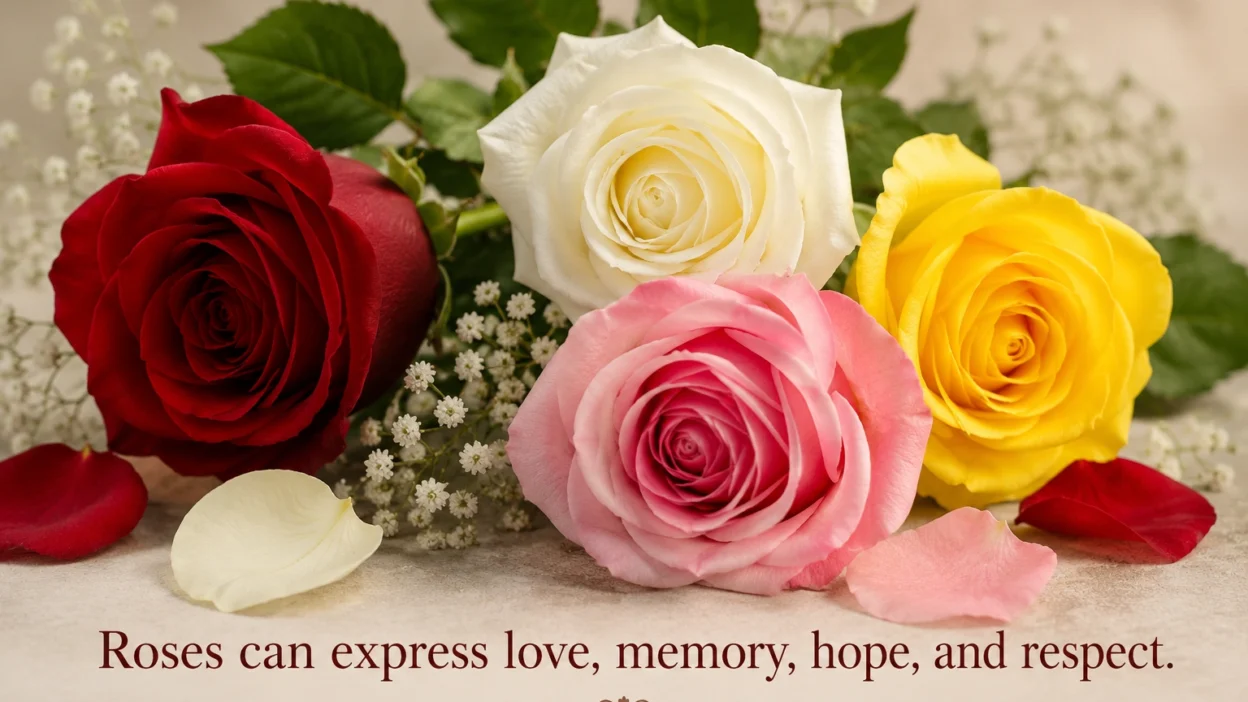
• Red roses signal romantic love and passion.
• White roses often suggest sympathy or innocence.
• Pink roses can show gratitude, admiration, or grace.
• Yellow roses usually feel friendly and bright.
Rose Symbolism in American Public Life
| Context | Meaning in the USA | Common Associations | Notes |
| Valentine’s Day | Romance and desire | Red bouquets, love notes | Strongest modern love symbol |
| Weddings | Beauty and commitment | White or blush roses | Often linked with elegance |
| Funerals | Honor and remembrance | White roses, mixed arrangements | Softens grief with respect |
| Awards and ceremonies | Praise and celebration | Formal floral displays | Adds dignity and warmth |
| Everyday gifting | Care and appreciation | Pink or yellow roses | Less intense than red |
Rose Colors and Their Meanings
Color is one of the biggest reasons rose symbolism can change so quickly. In the USA, people often learn the meaning of a rose by its shade before they learn any history. That makes color one of the most practical parts of interpretation.
This section is useful because many misunderstandings come from assuming all roses mean the same thing. They do not. A red rose and a yellow rose can send very different messages.
Red, White, Pink, and Yellow
Red roses usually mean deep love, passion, and devotion. White roses often suggest purity, peace, remembrance, or a fresh start. Pink roses lean toward sweetness, gratitude, admiration, and gentle affection. Yellow roses often feel cheerful, friendly, and warm, though older meanings sometimes linked them with jealousy or fading love.
Other Shades and What They Suggest
Orange roses can feel lively, confident, and energetic. Lavender roses often suggest enchantment, wonder, or a more unusual kind of admiration. Darker roses can carry a dramatic, mysterious, or gothic mood.
Color Meaning in Brief
• Red: romance and strong desire
• White: innocence, peace, or mourning
• Pink: appreciation and tenderness
• Yellow: friendship and optimism
• Orange: enthusiasm and energy
• Lavender: mystery and rare admiration
Rose Symbolism in Love and Relationships
Roses remain one of the clearest love symbols in American culture. However, the message changes depending on the relationship and the event. A single rose can feel intimate, while a dozen roses can feel formal or traditional.
This matters because people often use roses to say what they cannot easily say out loud. The flower becomes a soft stand-in for affection, apology, gratitude, or longing.
Why Roses Feel Romantic
Roses combine beauty, scent, and fragility. That mix makes them feel emotionally intense. Also, the thorned stem adds a hint of risk, which mirrors the idea that love can be wonderful and difficult at the same time.
What Different Gifting Styles Can Suggest
• One rose often feels personal and direct
• A bouquet feels generous and intentional
• White roses may suit apology or peace
• Pink roses often feel thoughtful and kind
Emotional and Psychological Associations
Roses trigger strong feelings because they are tied to memory, celebration, and loss. Many people associate them with warmth, safety, and being valued. However, they can also bring sadness, nostalgia, or longing.
Psychologically, roses often suggest that beauty has a cost. The thorns remind people that closeness can involve hurt, and that strong feelings are rarely simple. That tension is part of why rose symbolism lasts.
What Roses Often Signal
• Emotional openness
• Appreciation and care
• Softness with boundaries
• Memory, longing, or grief
• Hope after hardship
Modern Uses in Tattoos, Fashion, and Decor
Roses are everywhere in modern style. They appear in tattoos, clothing prints, phone wallpapers, social posts, perfume ads, and home decor. Because the flower is both classic and adaptable, people use it to signal identity without saying much.
In the USA, rose imagery can feel elegant, sentimental, edgy, or even rebellious. The meaning changes with placement, color, and design style. A realistic red rose sends a different message from a black line drawing or a wilted bloom.
Why People Choose Rose Images Today
• Tattoos may mark love, loss, or personal growth
• Fashion may use roses for softness or style
• Home decor may use them for warmth and beauty
• Social media posts may use them for mood and emotion
A Few Modern Visual Styles
A single rose tattoo often suggests intimacy or memory. A rose with a skull can lean toward mortality or contrast. A rose with a name or date often becomes a personal tribute.
Roses in Holidays, Memorials, and Public Life
Roses are not limited to romance. They also appear in holidays, remembrance events, and civic ceremonies. Because of that, they can move easily between private feeling and shared ritual.
This section matters for USA readers because the rose often helps people express what formal language cannot. It can comfort, honor, or mark a milestone.
Where Roses Often Appear
• Valentine’s Day and anniversaries
• Mother’s Day and birthdays
• Funerals and memorial services
• Graduation and achievement ceremonies
• Church settings and religious observances
Why They Work So Well in Rituals
Roses look graceful, but they also fade quickly. That short life makes them feel meaningful in moments that pass fast. They help people mark time, memory, and gratitude.
Misunderstandings, Misuse, and Controversies
Rose symbolism is usually positive, but meaning can shift in unwanted ways. A rose may be used in ways that are romantic in one setting and manipulative in another. Also, certain rose images can be tied to subcultures or messages that are not obvious at first glance.
It is also important not to flatten all rose meanings into love alone. That oversimplifies a symbol with a long, changing history. In some cases, the same rose can suggest tribute, secrecy, or loss rather than romance.
Read More: Apple Symbolism: Deep Meanings from Spiritual Wisdom to Modern Life
When the Meaning Gets Complicated
Some rose imagery is tied to gangs, extremist symbols, or coded messaging in certain contexts. Those uses are not the main historical meaning of roses, but they can matter in modern interpretation. Context is the safest guide.
Common Mistakes People Make
• Assuming every rose means romance
• Ignoring the color and setting
• Missing funeral or memorial meaning
• Treating decorative use as universal truth
How Rose Symbolism Has Shifted Over Time
Rose symbolism has never stayed still. Ancient societies linked roses with love and divine beauty, while later traditions added secrecy, purity, devotion, and grief. In the USA, the flower became even more flexible through greeting cards, weddings, film, and social media.
Today, roses still carry their old meanings, but people use them in more personal ways. A rose can honor a lost loved one, celebrate a partner, or show a mood online. That shift from fixed symbol to adaptable emotional shorthand is part of its modern power.
From Classical Symbol to Personal Language
Older meanings are still present, but they now coexist with new ones. A rose can be traditional, trendy, ironic, or deeply private. That flexibility helps explain why it remains so popular.
FAQs
What does Rose Symbolism mean?
Rose Symbolism refers to the meanings and messages associated with roses. While they are best known for representing love, they also symbolize beauty, hope, devotion, balance, spirituality, and personal transformation.
Why are roses connected with love?
Roses have been linked to love for centuries because of their beauty, fragrance, and delicate appearance. In many cultures and traditions, they express affection, romance, and deep emotional connections.
Does the color of a rose change its symbolism?
Yes. Different rose colors carry different meanings. For example, red often symbolizes love and passion, white represents purity and peace, yellow stands for friendship and joy, and pink reflects gratitude and admiration.
What do roses symbolize spiritually?
Spiritually, roses often represent spiritual awakening, divine love, inner wisdom, hope, healing, and the journey of personal growth. They are commonly associated with sacred traditions and meditation.
Why is Rose Symbolism still important today?
Rose Symbolism remains meaningful because it communicates emotions that words often cannot. Roses continue to play an important role in celebrations, relationships, literature, art, and personal expression around the world.
Conclusion
The rose symbolizes love, beauty, true beauty, affection, romance, balance, harmony, devotion, sacrifice, secrecy, spirituality, spiritual awakening, mystery, transformation, hope, wisdom, emotional depth, strength, softness, and timeless human connection. Across cultures and generations, it reminds us that beauty and resilience can exist together, making the rose one of the world’s most enduring and meaningful symbols.