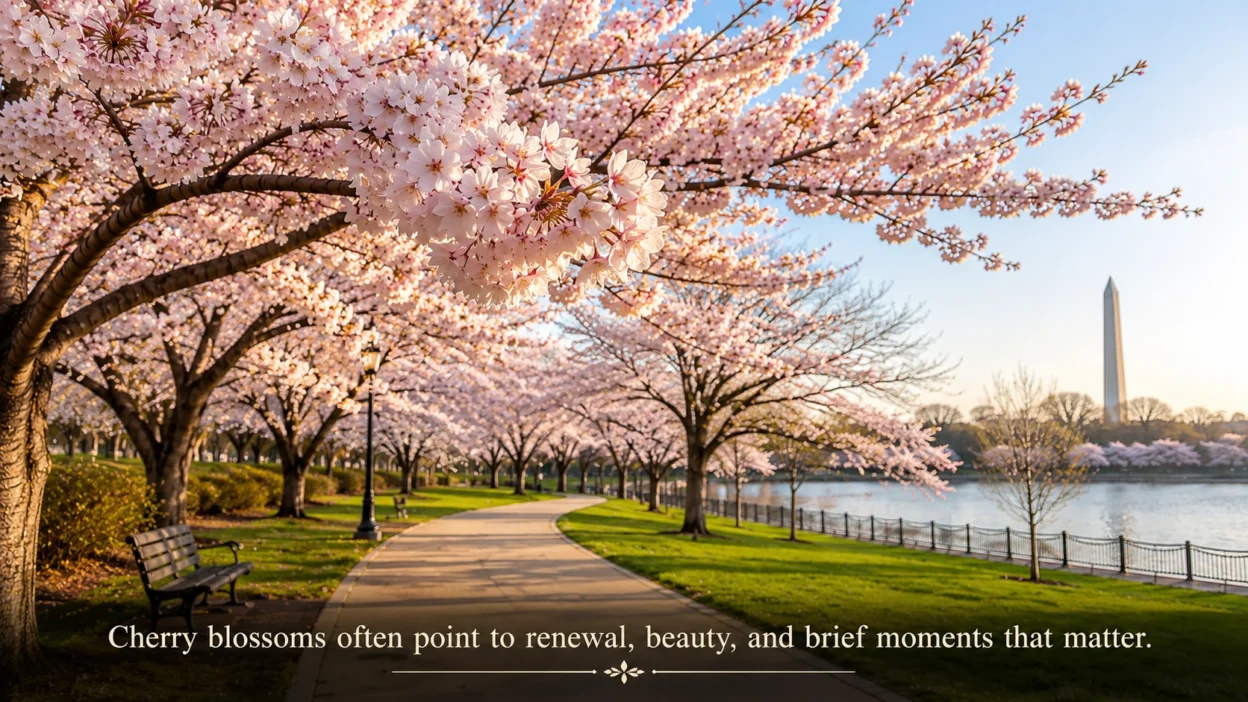
Cherry blossom symbolism feels simple at first. However, the flower carries more than spring color and pretty petals. It can suggest renewal, beauty, memory, and the quiet fact that good things don’t last forever.
In the United States, people often connect cherry blossoms with Washington, DC, and the early arrival of spring. Today, many also read them as a sign of friendship between nations, especially Japan and the U.S. That mix of beauty and history gives the flower its lasting pull.
The meaning also travels well across cultures. Because the blooms last only a short time, they often feel emotional, hopeful, and even a little bittersweet. That is a big reason people keep returning to them in art, tattoos, travel, and social posts.
Quick Answer
Cherry blossom symbolism in the USA usually stands for spring, renewal, beauty, and friendship. It also carries a softer reminder that life’s best moments can be brief. In broader cultural settings, it can also suggest impermanence, hope, and quiet reflection.
TL;DR
- Cherry blossoms usually mean spring and fresh starts.
- In the U.S., they strongly suggest Japan-U.S. friendship.
- Their short bloom adds a feeling of beauty and loss.
- Many people link them with peace, hope, and calm.
- Tattoos and decor often use them for softness and renewal.
- Their meaning has grown, but the brief bloom still matters.
What Cherry Blossoms Are
Cherry blossoms are the flowers of ornamental cherry trees. They are usually soft pink or white, with small clustered petals that open in spring. Depending on the variety, the color can look pale and misty or deeper and richer.
Soft Petals, Short Bloom
The reason people notice them so quickly is simple. The blossoms arrive fast, fill a tree with color, and fade soon after. That short blooming window is a big part of the symbol’s power.
• Pale pink often feels gentle, romantic, and light.
• White blossoms can suggest purity or a clean beginning.
• Heavy clusters make the tree look full, dreamy, and temporary.
• Falling petals often feel like a calm, graceful goodbye.
Where the Symbol Came From
Cherry blossom meaning took shape over centuries, especially in Japan. There, the flower became linked with seasonal change, beauty, and the fragile pace of life. Its brief bloom made it a natural symbol for impermanence.
Early Roots in Japan
Japan’s blossom traditions go back many generations. People gathered to view the flowers, celebrate spring, and reflect on how quickly beauty passes. Over time, the flowers became part of art, poetry, public ritual, and everyday life.
In that setting, the blossom was never just decorative. Instead, it became a way to talk about life, loss, and renewal without saying those things directly. That is why the flower still feels so deep, even when it looks delicate.
Why Cherry Blossoms Matter in the USA
In the United States, cherry blossoms carry a dual meaning. They are a sign of spring, but they are also tied to a specific friendship story between Japan and the United States. That makes them both seasonal and historical at the same time.
A Flower That Became an American Spring Signal
Many Americans read cherry blossoms as one of the clearest signs that winter is ending. In places like Washington, DC, their bloom marks a public season of walking, photography, festivals, and outdoor gathering. Today, they can feel as much like a community event as a natural one.
| Context | Meaning in the USA | Common Associations | Notes |
| Washington, DC | Friendship and spring | National festival, Tidal Basin, tourism | Tied to the 1912 gift from Japan. |
| Public parks | Seasonal renewal | Picnics, photos, family walks | Often treated as a shared spring marker. |
| Gifts and cards | Warmth and care | Grace, affection, new beginnings | Popular for soft, hopeful messages. |
| Tattoos and art | Personal growth | Healing, memory, beauty | Often linked with change and resilience. |
The Washington, DC Connection
The strongest American link began in 1912, when Japan gifted more than 3,000 cherry trees to Washington, DC. The National Park Service and the National Cherry Blossom Festival both describe that gift as a gesture of friendship that still shapes the city’s identity.
That story still matters because it is visible. The blossoms are not hidden in a museum or a book. They bloom in a public place, in front of millions of visitors, and turn history into a shared experience.
In 2024, Japan also announced another gift of cherry trees for America’s 250th anniversary in 2026. That new gesture shows the symbol is still active, not frozen in the past.
How Americans Read the Flower
Americans often pair cherry blossoms with ideas like hope, softness, and a fresh start. However, the flower is not only about cheer. Its fast fade also makes people think about time, memory, and the need to enjoy what they have now.
• They signal the start of spring.
• They suggest calm, beauty, and tenderness.
• They can honor friendship across cultures.
• They remind people that moments pass quickly.
Spiritual and Cross-Cultural Meanings
Cherry blossoms are not read the same way everywhere, but the themes often overlap. Across East Asian traditions, they are closely tied to spring, beauty, and the short life of all living things. In some spiritual readings, that makes them a quiet teacher.
Impermanence and Mindfulness
A common Japanese idea connected to cherry blossoms is the awareness that beauty is temporary. That does not make the flower sad in a simple way. Instead, it can encourage people to notice life more carefully while it is still in bloom.
In Buddhist-influenced readings, this can connect to change, release, and rebirth. The point is not to cling to the blossom. It is to value the season while it lasts.
A Wider Cultural Mood
In modern global use, the flower also appears as a sign of peace, hope, and renewal. However, those meanings usually rest on the older idea of transience. The blossom feels peaceful partly because it does not stay.
Emotional and Psychological Associations
People often respond to cherry blossoms with a strong mood shift. The flowers feel light, gentle, and emotionally open. Because they bloom quickly and fall quickly, they can also trigger nostalgia.
What the Flower Signals
Cherry blossoms can signal a person who values softness without weakness. They can also suggest a reflective mind, someone who notices change instead of fighting it. In that sense, the symbol can feel mature as well as pretty.
• Hope after a hard season.
• Beauty that feels quiet, not loud.
• Acceptance of change.
• A longing to hold on to a moment.
• Grace under pressure.
For many people, that emotional mix is the real reason the symbol sticks. It does not only say “spring.” It says “spring will not wait,” which gives the image a little ache.
Cherry Blossom Tattoos and Body Art
Cherry blossom tattoos are popular because they look elegant and carry layered meaning. The design can be small and simple, or wide and flowing across the shoulder, arm, back, or leg. In either form, it usually suggests beauty, growth, and time passing.
Why the Design Feels Personal
Many people choose the flower after a major life change. That might be healing, grief, travel, parenthood, or a new chapter. Because the blossom is delicate, it can turn private experience into something graceful.
It is also a flexible design. Some people pair it with birds, waves, or branches. Others keep it minimal and let the bloom speak for itself. That flexibility helps the symbol feel personal rather than generic.
Cherry Blossoms in Decor, Fashion, and Media
Cherry blossoms work well in design because their shape is easy to recognize and their color palette feels calm. They appear in home decor, fabrics, stationery, seasonal displays, and social media images that want a soft spring feeling. They are especially common when people want something pretty without making it loud.
Soft Color, Big Mood
In fashion and decor, the flower often stands for elegance, freshness, and lightness. In media, it can mark a romantic or reflective moment. Because the blossom is so visually linked to spring, it almost instantly changes the mood of a room or image.
That is why cherry blossoms show up in seasonal campaigns, wedding looks, travel photos, and pastel-themed feeds. The image is not just ornamental. It carries a feeling people already know.
Misunderstandings and Controversies
Cherry blossoms are loved widely, but their meaning can be oversimplified. Some people treat them as only a “pretty flower,” which misses the deeper ideas of time, change, and memory. Others use them as a generic Asia-inspired design without understanding their history.
Not Every Pretty Blossom Means the Same Thing
A cherry blossom is not just a stand-in for any pink spring flower. In many places, the symbol has a specific link to Japanese culture and to Washington, DC’s friendship story. When that context disappears, the image can become flatter and less respectful.
There is also a practical misunderstanding. People sometimes assume every spring blossom is a cherry blossom, but many ornamental trees bloom at the same time. The symbol matters most when the flower is recognized in its proper setting.
How the Meaning Has Changed Over Time
Cherry blossom symbolism has not stayed still. It began in older cultural and poetic traditions, then grew into a larger sign of transience and seasonal beauty. In the United States, it later picked up a strong civic meaning through the Washington, DC planting and festival.
Read More: Sunflower Symbolism: Meaning and Modern Uses
From Courtly Admiration to Public Memory
Today, the blossom belongs to many settings at once. It can mean spring at a park, friendship in a city, memory in a tattoo, or calm in a design. However, the old idea remains underneath all of those uses: beauty arrives, shines, and leaves.
Because of that, the flower still feels fresh. It is old enough to carry tradition, but simple enough to stay current. That balance is rare, and it explains why the symbol keeps returning in new forms.
FAQs
What do cherry blossoms symbolize in America?
In America, cherry blossoms usually symbolize spring, renewal, and friendship. They are also closely tied to Washington, DC, and the long relationship between the United States and Japan.
Are cherry blossoms a sign of spring?
Yes. In the U.S., they are one of the best-known signs that spring has arrived. In places like Washington, DC, their bloom also launches major public celebrations.
What do cherry blossoms mean spiritually?
Spiritually, they often point to impermanence, renewal, and mindfulness. Some traditions treat them as a reminder to value life while it is beautiful and brief.
Why are cherry blossoms so special in Japan?
They have been celebrated for centuries and are tied to poetry, seasonal rituals, and the feeling that life is both beautiful and temporary. That emotional depth is a big part of their cultural importance.
Why do people get cherry blossom tattoos?
People often choose them to express growth, healing, beauty, or a new beginning. The flower’s brief bloom also makes it a powerful symbol for change and memory.
Conclusion
Cherry blossom meaning is beautiful because it holds two truths at once. It can feel hopeful and soft, but it can also remind you that nothing stays in bloom forever. That tension gives the symbol its power. In the United States, cherry blossom symbolism is especially tied to spring, friendship, and public memory. The flower still speaks clearly because people can see it, share it, and feel it in real time.