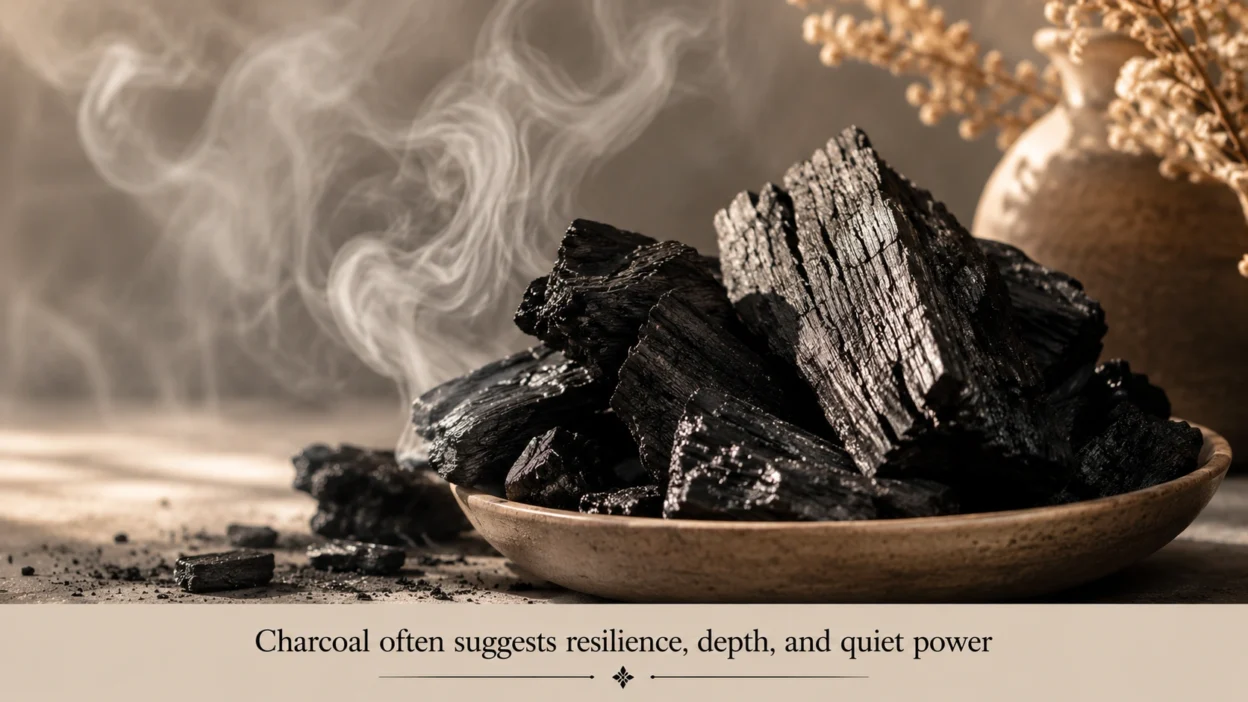
Charcoal Symbolism goes far beyond its dark appearance. Formed through fire and transformation, charcoal has long been associated with resilience, endurance, and quiet strength. In the United States, people often connect it with simplicity, stability, and the ability to grow after hardship. Whether seen as a material or a color, charcoal represents the balance between power and restraint, making it a meaningful symbol in both everyday life and creative expression.
Unlike plain black, charcoal carries a softer, more natural character. It reflects the idea that something valuable can emerge after intense change, giving it strong connections to renewal, wisdom, and perseverance. At the same time, its muted tone suggests sophistication without excess, which is why it has become a popular choice for modern design, fashion, architecture, and branding.
Today, charcoal appears in home décor, artwork, clothing, logos, tattoos, and cooking traditions, where its symbolism changes with the setting. In one context, it represents elegance, professionalism, and timeless style. In another, it reflects authenticity, history, survival, and a deep connection to nature. This versatility has made charcoal a lasting symbol of transformation, strength, and understated beauty.
Quick Answer
Charcoal symbolism in the USA usually points to resilience, maturity, simplicity, and quiet power. It can also suggest warmth, transformation, and the ability to endure pressure.
TL;DR
• Charcoal often represents strength after hardship.
• It carries a darker, softer mood than pure black.
• In America, it suggests elegance without flash.
• It can also mean warmth, memory, and reinvention.
• Artists, designers, and tattoo fans use it often.
• Its meaning changes with fire, ash, and smoke imagery.
What Charcoal Symbolism Means at a Glance
This section gives the simplest reading of the symbol. For American readers, charcoal is often less about drama and more about quiet presence.
Because it sits between black, gray, fire, and ash, it rarely feels one-dimensional. Instead, it suggests balance, survival, and controlled energy.
Core Meanings People Commonly See
• Strength that does not need attention.
• Calm authority and mature taste.
• A life changed by pressure or heat.
• Warmth hidden inside a dark surface.
What Charcoal Looks Like in Everyday Life
Charcoal appears in a few familiar forms. It can mean burned wood used for grilling, drawing sticks used by artists, or a dark gray color used in design and clothing.
That variety matters because the appearance shapes the message. A lump of charcoal suggests fuel and survival, while charcoal gray suggests style, polish, and restraint.
Physical Forms and Visual Cues
Charcoal usually appears as:
• Rough blackened wood with a matte surface.
• Soft drawing sticks that smudge easily.
• Deep gray fabric, paint, or interior finishes.
• Smoke-dark edges after burning or heating.
Why the Look Matters
The material feels useful, not decorative. Because of that, it often signals work, function, and honest material presence.
In contrast, glossy black can feel formal or severe. Charcoal feels softer, warmer, and more lived-in.
Historical Roots of Charcoal
Charcoal is one of humanity’s oldest useful materials. Long before modern design language, people used it for heat, cooking, metalwork, and drawing.
Its symbolism grew from those uses. A substance made by controlled burning naturally suggested transformation, survival, and human skill.
Ancient and Early Uses
People across early civilizations relied on charcoal because it burned hotter and cleaner than raw wood. That made it valuable in cooking, craft, and early industry.
It also became useful for marking walls, tools, and surfaces. As a drawing material, charcoal helped humans turn soot and fire into image-making.
From Survival to Symbol
Because charcoal comes from something burned but not fully destroyed, it became a natural sign of endurance. It is the leftover body of heat, but it still has purpose.
That idea still shapes modern meaning. Many people see charcoal as proof that damage can become utility.
Charcoal in American Culture
In the USA, charcoal has a practical reputation. People connect it with grilling, drawing, architecture, clothing, and understated style.
It also feels familiar in everyday speech. When Americans describe something as charcoal, they often mean dark gray, neutral, strong, and refined without being showy.
Common American Associations
In the United States, charcoal often suggests:
• Backyard cookouts and outdoor gatherings.
• Artist studios and sketchbooks.
• Men’s and women’s fashion with a muted edge.
• Modern homes with clean, balanced color schemes.
Charcoal in Daily Language and Taste
When a person chooses charcoal clothing or decor, they often want something timeless. The color feels serious, but not harsh.
It also works well in American design because it pairs easily with white, wood, steel, and natural textures. That makes it a favorite for people who want calm, modern spaces.
Charcoal in American Settings
| Context | Meaning in the USA | Common Associations | Notes |
| Backyard grill | Warmth, gathering, comfort | Cookouts, summer, family | Feels social and familiar |
| Interior design | Clean taste, balance, modernity | Walls, sofas, accents | Often used as a neutral |
| Fashion | Quiet confidence, maturity | Suits, coats, basics | Less severe than pure black |
| Art supplies | Expression, study, rough texture | Sketching, shading, practice | Linked with skill and draftwork |
| Branding | Trust, simplicity, polish | Packaging, logos, labels | Suggests premium restraint |
Charcoal and Color Symbolism
Charcoal gray sits in a special place between black and gray. It is dark enough to feel grounded, yet soft enough to avoid harshness.
Because of that, it often communicates control. It says the person or place using it prefers depth over flash.
How Charcoal Differs from Black
Black can feel formal, sharp, or absolute. Charcoal usually feels more forgiving and more human.
That softer tone matters in American spaces. It helps people create seriousness without making a room or outfit feel cold.
Why Designers Like It
Charcoal works because it supports other colors. It lets white stand out, warms up wood, and gives bright colors more room to breathe.
• It creates contrast without feeling severe.
• It hides wear better than pure white.
• It works in both classic and modern settings.
• It feels polished in business and home spaces.
Charcoal in Spiritual and Cross-Cultural Meaning
Charcoal is not tied to one belief system. Still, many cultures read it in similar ways because of its connection to fire, ash, and transformation.
Its spiritual feel often comes from its in-between state. It is neither raw wood nor full ash, which makes it a sign of transition.
Broader Symbolic Patterns
Across cultures, charcoal can suggest:
• A phase between destruction and renewal.
• Purification through heat or trial.
• Hidden energy that remains after burning.
• Grounding, earth, and elemental balance.
Respectful Cultural Context
In some traditions, smoke, ash, and burned materials are linked to cleansing or sacred change. Charcoal may appear in those settings as a tool rather than a symbol by itself.
That means context matters. The same material can signal ritual, utility, art, or cooking depending on the tradition.
Emotional and Psychological Associations
Charcoal often feels calm, steady, and serious. It can create a sense of safety because it does not demand attention.
For many people, the color also feels emotionally mature. It suggests someone who values privacy, control, and a sense of grounded order.
Common Feelings Charcoal Can Evoke
• Stability without stiffness.
• Elegance without brightness.
• Reflection instead of performance.
• Strength that has been tested.
What It Suggests About Identity
People often choose charcoal when they want to look capable and composed. It can signal independence, discipline, or a low-key sense of style.
However, it can also hint at sadness or heaviness in darker contexts. That is why the surrounding colors and setting matter so much.
Charcoal in Art, Drawing, and Creative Expression
Charcoal drawing has a long artistic history because it is bold, flexible, and human. It can make soft shadows or deep, dramatic lines.
That artistic use gives the material a second life. It becomes not just fuel, but a tool for memory, study, and emotional expression.
Why Artists Use Charcoal
• It moves quickly across paper.
• It blends easily for soft shading.
• It creates strong contrast with little effort.
• It supports sketches, studies, and final works.
Symbolic Meaning in Art
In creative work, charcoal often stands for raw truth. It feels less polished than ink or paint, which gives it honesty.
Because of that, charcoal art can suggest vulnerability, draftsmanship, and the early shape of an idea.
Charcoal in Tattoos and Body Art
Charcoal itself is not a common tattoo subject, but charcoal-inspired imagery is. People may use charcoal shading, smoky textures, or dark gray tones for mood.
These tattoos often aim for depth rather than loudness. They feel intimate, grounded, and a little mysterious.
Why People Choose Charcoal-Inspired Tattoos
• To show resilience after a difficult chapter.
• To prefer muted, earthy, or monochrome styles.
• To create shadow, smoke, or ash effects.
• To signal strength without bright color.
Common Tattoo Themes
Charcoal imagery may appear in fire scenes, broken objects, embers, wolves, skulls, trees, or abstract shading. In each case, the dark tone adds gravity.
However, the meaning depends on the full design. Charcoal shading alone does not carry one fixed message.
Charcoal in Fashion, Decor, and Social Media
Modern American style uses charcoal everywhere. It appears in clothing, kitchenware, furniture, branding, and online aesthetics.
This popularity comes from its flexibility. Charcoal can feel luxurious, minimal, masculine, feminine, classic, or modern depending on the setting.
Modern Usage Examples
• Suits and coats that look sharp but not severe.
• Living rooms with a muted, balanced palette.
• Product labels meant to feel premium and clean.
• Social media feeds built around neutral tones.
Why It Works So Well
Charcoal helps people express taste without shouting. It gives a space or outfit structure while staying subtle.
That subtlety is part of its modern charm. Many people want beauty that feels calm, not loud.
Misunderstandings, Misuse, and Controversies
Charcoal is usually positive, but context can change its message. Because it is so dark, it may be used to create grief, gloom, or coldness.
It can also be confused with black in visual design. However, charcoal is usually softer and more layered than pure black.
Where Meanings Can Shift
• In funerary settings, it may feel somber or reflective.
• In branding, it may seem too serious for playful products.
• In clothing, it can read as elegant or stern.
• In interior spaces, too much can feel heavy.
Charcoal and Harmful Uses
Unlike some symbols, charcoal does not carry a major built-in hate meaning. Still, any dark visual language can be used to intimidate, erase warmth, or suggest emotional coldness.
That is why tone matters. Charcoal is not negative by nature, but it can be used in negative ways.
How Charcoal Meaning Has Changed Over Time
Charcoal once meant survival, labor, and basic usefulness. Over time, it also came to mean design sense, artistic skill, and understated luxury.
Today, Americans often see it as versatile and modern. At the same time, it still keeps its old link to fire, ash, and endurance.
The Big Shift
In the past, charcoal was mainly a working material. Now, it also stands for style and atmosphere.
That shift says a lot about modern culture. People still value usefulness, but they also want objects and colors that feel calm and intentional.
Read More: Rose Gold Symbolism: Meaning, History, and USA
Why Charcoal Still Feels Powerful Today
Charcoal remains meaningful because it carries both damage and purpose. It reminds people that something can be burned and still remain useful.
For American readers, that makes it relatable. It fits a culture that values reinvention, practicality, and quiet confidence.
At the same time, Charcoal Symbolism keeps its visual appeal because it works in so many settings. It can soften a room, sharpen an outfit, or deepen a creative work without taking over.
FAQs
What does charcoal symbolize spiritually?
Charcoal often symbolizes transformation, endurance, and what remains after hardship. In spiritual settings, it can also suggest cleansing, grounding, or a stage of change.
Is charcoal the same as black symbolism?
No. Black can feel absolute, formal, or intense, while charcoal usually feels softer and more balanced. Charcoal often carries more warmth and subtlety.
Why do people use charcoal in design?
People use charcoal because it looks timeless and calm. It gives depth without feeling too harsh or too bright.
What does charcoal mean in art?
In art, charcoal suggests raw expression, shading, and emotional honesty. It is valued for both control and looseness.
Is charcoal a lucky symbol?
Not usually in a direct sense. Still, many people view it positively because it represents resilience, usefulness, and renewal.
Conclusion
Charcoal has a simple look, but its meaning runs deep. It can stand for strength, restraint, warmth, and transformation all at once. In American life, Charcoal Symbolism shows up in design, clothing, art, and daily taste. It feels modern, but it also carries an old story about fire, survival, and what remains. That is why charcoal still matters. It reminds people that beauty does not have to be loud to be powerful.