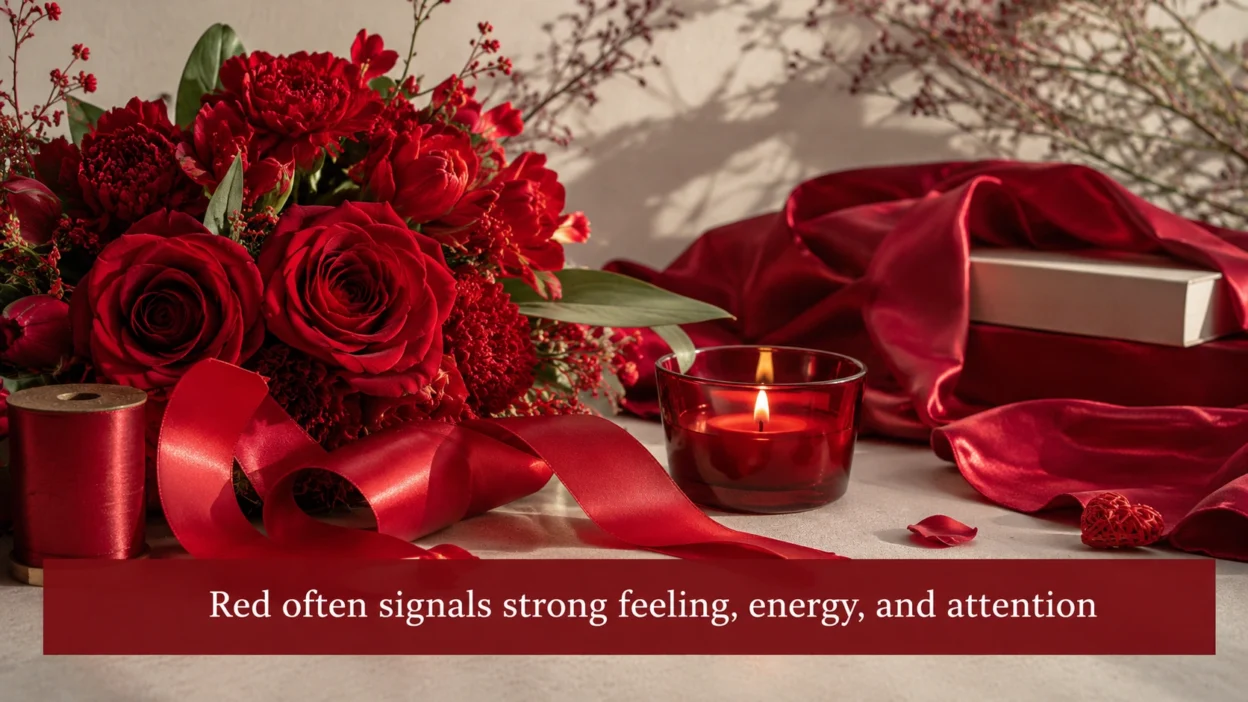
Red shows up everywhere, but it rarely feels neutral. In red symbolism, the color can suggest love, warning, courage, anger, luck, or power, depending on where you see it. Because it is so bold, people notice it fast and react to it fast.
That strong reaction is part of why red has stayed meaningful for so long. It appears in art, clothing, flags, holidays, signs, makeup, food, and religious spaces. In the United States, red often carries a mix of emotional warmth and public force.
At the same time, red can mean very different things in different settings. A red rose feels romantic, while a red stop sign feels urgent. That contrast is what makes red so fascinating.
Quick Answer
Red symbolism in the USA usually means passion, energy, warning, love, and power. In older traditions, it can also point to life, sacrifice, protection, luck, or sacred strength.
TL;DR
• Red often signals strong emotion and immediate attention.
• In America, red means love, danger, patriotism, and confidence.
• Ancient cultures linked red with life, blood, and protection.
• Religious uses can connect red with sacrifice or holy power.
• Modern uses include fashion, tattoos, holidays, and branding.
• Meaning changes with context, tone, and culture.
What Does Red Symbolism Mean?
Red is one of the strongest visual signals in daily life. It can feel romantic in one moment and urgent in the next. That is why people read it so quickly and so differently.
For a USA reader, red often sits at the center of emotional and cultural meaning. It can suggest confidence, heat, warning, desire, or celebration. Because of that, red rarely fades into the background.
Core Meanings at a Glance
Red commonly suggests:
• Passion and romance
• Danger or caution
• Power and confidence
• Energy and movement
• Celebration and warmth
Why the Same Color Sends Mixed Signals
Red works like a spotlight. It pushes forward visually, so the eye goes to it first. However, the feeling it creates depends on the object, setting, and tone around it.
What Red Looks Like in Symbols
Red appears in many forms, and each one changes how people read it. It may be bright, dark, soft, dusty, glossy, or deep like wine. The exact shade matters more than many people realize.
In symbols, red often shows up in clothing, flags, roses, fire, hearts, lipstick, stop signs, and sacred cloth. It can also appear as paint, ink, lighting, fabric, or seasonal decoration. That flexibility keeps red useful across many settings.
Common Visual Forms
• Bright scarlet often feels bold and alert.
• Deep crimson often feels richer and more serious.
• Soft red can feel romantic or nostalgic.
• Dark red may suggest maturity, luxury, or intensity.
• Clean, flat red often feels official or public.
Red Symbolism in Ancient History
Red meanings stretch far back in human history. Long before modern design, people used red pigments from clay, stone, and natural dyes. Those early uses connected red with blood, life, protection, and survival.
Because blood meant both danger and life, red became a natural symbol of power. Ancient people also saw red in fire, sunset, iron, and war. Over time, those links made red feel active, strong, and deeply human.
Ancient Roots
In early societies, red often appeared in burial customs, ritual paint, and body decoration. It could mark status, protect against harm, or honor the dead. In many places, red was not just decoration; it was meaning made visible.
From Survival to Status
As trade and craft developed, rare red materials gained value. Rich cloth, dyes, and pigments helped red become a sign of wealth and authority. Because of that, red slowly moved from survival into prestige.
Red in Religion and Sacred Tradition
Red carries spiritual weight in many traditions. It can represent blood, sacrifice, fire, divine energy, or the sacred life force. These meanings are not identical across religions, but they often share the idea of something powerful and serious.
In the United States, people may see red in churches, festivals, prayer cloths, or ceremonial art. However, the meaning depends on the specific faith tradition. It is best understood as a sign of reverence, not a single universal code.
Sacred Meanings in Brief
• Renewal through fire
• Sacrifice and devotion
• Spiritual power and authority
• Protection from harm
• Life and vitality
Respectful Cross-Cultural Note
In some Asian traditions, red is tied to good fortune and joy. In other places, it can mark weddings, sacred thresholds, or festive celebration. These meanings are different, but they all show red’s strong cultural presence.
What Red Symbolism Means in America
In the USA, red is one of the most versatile symbolic colors. It can mean love, courage, danger, patriotism, and urgency all at once. That wide range makes it deeply tied to American visual culture.
American life uses red in daily signals and public identity. You see it in warning signs, political imagery, sports uniforms, holiday decor, and restaurant branding. Because of that, red feels both personal and public.
American Meanings at a Glance
| Context | Meaning in the USA | Common Associations | Notes |
| Valentine’s Day | Love and romance | Hearts, roses, gifts | Warm and emotional |
| Traffic and safety | Warning and stop | Lights, signs, signals | Fast recognition matters |
| National imagery | Patriotism and identity | Flags, sports, civic events | Often paired with white and blue |
| Holiday decor | Celebration and warmth | Christmas, winter, seasonal style | Strong visual contrast |
| Politics and media | Force and intensity | Campaign colors, headlines | Can feel bold or confrontational |
Why Americans Read Red So Quickly
American culture often uses red for direct messages. That means people learn to treat red as a color that demands attention. Even when the message is playful, red still feels strong.
Patriotic and Public Meaning
Red also carries national meaning in the United States. It appears in the flag, sports teams, parades, and civic imagery. For many people, that makes red feel both proud and familiar.
Red and Emotion
Red is one of the most emotional colors people encounter. It often brings a physical sense of heat, speed, or pressure. Because of that, red can affect mood before a person even explains why.
Psychologically, red can feel exciting, romantic, aggressive, or dramatic. It may raise energy and sharpen focus. However, too much red can also feel overwhelming or tense.
Common Emotional Associations
• Passion and attraction
• Anger and urgency
• Excitement and adrenaline
• Confidence and boldness
• Heat, risk, and intensity
What Red Signals About Identity
People often wear or display red when they want to be noticed. It can communicate self-assurance, leadership, or emotional openness. In contrast, a quiet red can suggest elegance rather than drama.
Red in Fashion, Decor, and Branding
Red works well in style because it refuses to disappear. A red dress, red wall, or red logo can change the mood of a room or outfit instantly. That is one reason designers return to it again and again.
In the USA, red often stands for confidence in fashion and clear energy in branding. It can feel classic, festive, daring, or luxurious depending on the shade. The same color can also help businesses feel memorable and lively.
Modern Uses
• Lipstick and nail color for bold expression
• Accent walls for warmth and energy
• Logos that want quick attention
• Holiday items that feel festive and traditional
• Statement clothing for confidence and style
Why Brands Use Red
Red helps products stand out fast. It can suggest appetite, excitement, or urgency without a long explanation. That is why many brands use red for instant recognition.
Red in Tattoos and Personal Identity
Red tattoos and red ink details have become more visible in modern body art. People often choose red for roses, hearts, flames, snakes, koi fish, or abstract line work. The look can feel soft, fierce, romantic, or rebellious.
For many wearers, red also signals personal meaning rather than one fixed symbol. It may honor love, survival, memory, family, or inner strength. Because of that, red tattoos can feel intimate and highly individual.
Popular Personal Meanings
• Love that stayed strong
• A fresh start after loss
• Fierce self-confidence
• Connection to heritage or culture
• A visible reminder of passion
When Red Becomes Identity
Some people use red as a style choice, not a message. Others use it to mark a chapter in life. Both uses are valid, and both show how flexible red can be.
Red in Holidays and Seasonal Use
Red plays a major role in American holidays. It appears in Valentine’s Day hearts, Christmas decor, Independence Day imagery, and fall displays. The color works well because it feels festive and easy to recognize.
Holiday red often mixes comfort with celebration. It can feel joyful, familiar, and warm, especially when paired with green, gold, white, or blue. That strong contrast helps red stay central in seasonal design.
Holiday Associations
• Valentine’s Day: romance and affection
• Christmas: warmth and cheer
• Independence Day: patriotism and pride
• Winter decor: brightness against cold
• Cultural festivals: energy and celebration
Red Symbolism Across Cultures
Red does not mean the same thing everywhere. In some cultures, it points to good fortune, weddings, or celebration. In others, it may mark sacred strength, danger, or ceremonial seriousness.
For a USA reader, this matters because meaning changes with context. A symbol that feels romantic in one place may feel formal or lucky in another. Understanding that difference helps avoid quick assumptions.
Broader Global Patterns
Red is often linked to:
• Life and blood
• Joy and celebration
• Protection and good luck
• Power and authority
• Fire and transformation
Why Context Matters
A symbol always belongs to a setting. Red on a wedding dress, a warning label, or a sacred banner does not speak the same way. The message changes with the culture around it.
Red Symbolism Misuse and Controversy
Red can be used in harmful or misleading ways. Because it feels powerful, people sometimes use it to intimidate, provoke, or spread political extremes. That does not change the color’s older meanings, but it can affect how people react to it.
It is also important to separate respectful cultural use from abuse. A sacred red symbol, a national red symbol, and a hate symbol are not the same thing. Careful context keeps the meaning clear.
When Red Raises Concern
• Aggressive propaganda uses red to stir emotion
• Warning imagery can create fear on purpose
• Political messaging may use red to signal division
• Some symbols can be misread outside their culture
• Overuse can make red feel harsh or stressful
Keeping Meaning in Context
Most red symbolism is not negative. Still, context decides whether red feels loving, ceremonial, or threatening. That is why reading the whole image matters.
How Red Meaning Has Changed Over Time
Red has never stayed still. In older societies, it often meant life, blood, and protection first. Later, it also came to stand for wealth, sacred force, romance, and public power.
Today, red still carries all of those layers at once. However, modern media and design have made it even more immediate. People now read red almost instantly, which keeps it powerful in daily life.
Shifts Over Time
• Ancient red often meant survival and ritual
• Medieval red often suggested status and sacred authority
• Modern red often signals emotion, urgency, and identity
• Digital life has made red even more attention-grabbing
• Cultural context now matters more than ever
Read More: Charcoal Symbolism: Meaning, History, and Modern Use
What Stayed the Same
Even as meanings changed, red kept one core trait: intensity. It still tells the mind that something matters. That continuity helps explain why red remains so important today.
FAQs
What does red symbolize in everyday life?
Red usually symbolizes energy, attention, love, or warning. In everyday American life, it often feels urgent and emotionally strong.
Is red a good luck color?
In some cultures, yes. Red is often linked to luck, celebration, and prosperity, but the meaning depends on tradition and setting.
Why is red used for stop signs and warnings?
Red is easy to notice quickly. That makes it useful for signals that need fast attention, like traffic or safety messages.
What does red mean spiritually?
Spiritually, red can stand for life, sacrifice, sacred fire, or protection. Different traditions use it in different ways.
Why do people love red so much?
People respond to red because it feels alive and bold. It can make a space, outfit, or symbol feel stronger right away.
Conclusion
Red symbolism is powerful because it speaks in many voices at once. It can mean love, danger, courage, celebration, or sacred force, depending on where it appears. That wide range helps explain why red still shapes American life so strongly. In the USA, red symbolism shows up in holidays, fashion, signs, tattoos, and public identity. It feels familiar, but it never feels flat. That is the beauty of red: it keeps its meaning by staying intense.