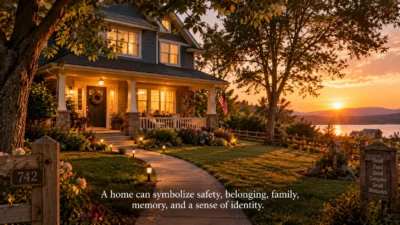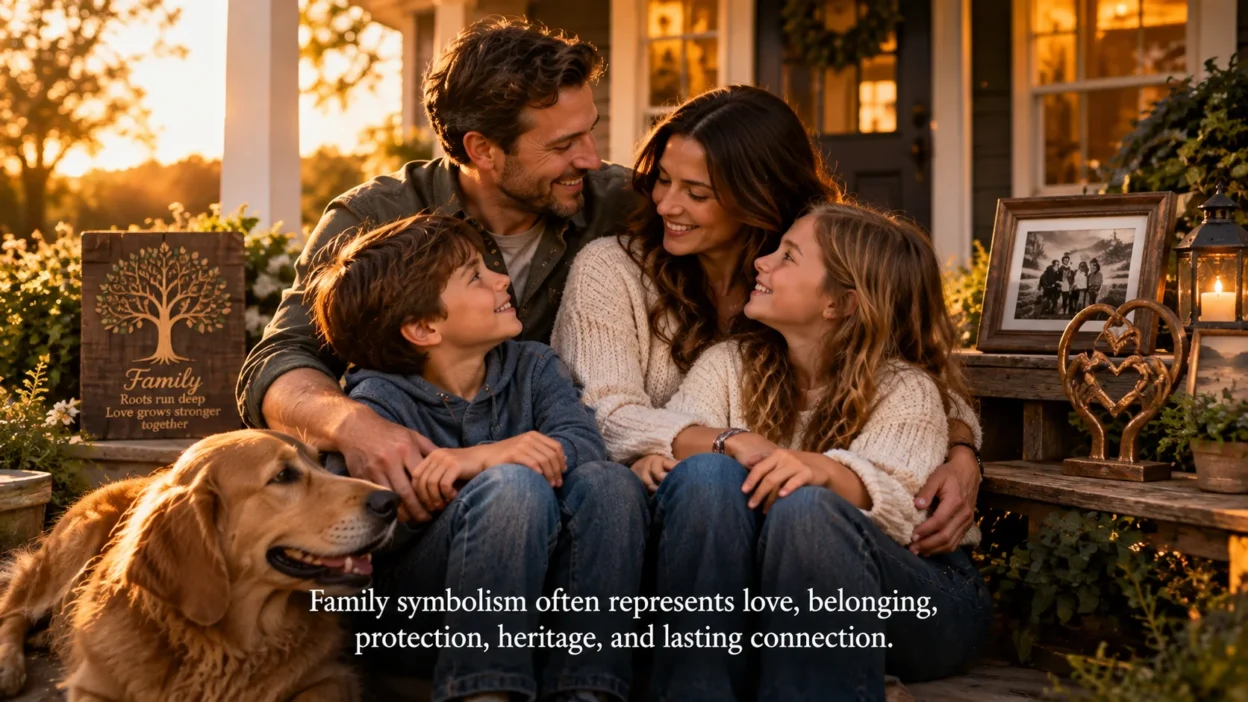
Family symbolism describes the signs, images, objects, and traditions people use to express family bonds. A family tree, wedding rings, a shared home, intertwined hands, or even a simple family photograph can carry this meaning.
In 2026, family remains closely connected with ideas of love, belonging, responsibility, memory, and identity. However, families take many forms, so their symbols can be deeply personal.
Today, family symbolism appears in jewelry, tattoos, home decor, holidays, photographs, social media, and personal traditions. Its meaning also changes as people rethink what family can mean.
Quick Answer
Family symbolism represents love, belonging, protection, loyalty, heritage, and connection. In the USA, it often reflects both biological relationships and chosen families, while broader traditions connect family symbols with ancestry, continuity, and community.
TL;DR
- Family symbols express love, belonging, loyalty, and connection.
- The family tree represents ancestry and generations.
- American culture often links family with home and tradition.
- Religious traditions add their own meanings to family bonds.
- Modern tattoos and jewelry make family symbolism personal.
- Family symbols can also represent chosen and blended families.
What Is Family Symbolism?
Family symbolism turns relationships into visible signs or meaningful objects. Unlike one universal emblem, family symbolism includes many images shaped by culture, memory, and personal experience.
For American readers, this variety matters because families differ greatly in structure and tradition. A symbol meaningful to one household may feel completely different to another.
Common Family Symbols
Several symbols appear repeatedly when people want to express family connections:
• Family tree represents ancestry, generations, and shared roots.
• Interlocking rings can represent unity, marriage, and lasting commitment.
• Home often symbolizes safety, belonging, and shared memories.
• Hands held together suggest support, affection, and protection.
• Hearts commonly represent family love and emotional closeness.
• Photographs preserve relationships and memories across generations.
These symbols don’t have fixed meanings in every situation. Context usually determines whether a family symbol emphasizes love, heritage, protection, or remembrance.
Why Family Symbols Matter
Symbols help people express feelings that can be difficult to explain directly. A small pendant containing children’s initials, for example, can carry years of memories.
Likewise, a family photograph can become more than decoration. It can represent a shared story and remind people where they came from.
Historical Roots of Family Symbolism
Family symbolism is much older than the modern American family portrait. Ancient societies used ancestry, household objects, genealogies, and sacred images to show relationships between generations.
However, the exact meaning changed from one society to another. Some traditions emphasized bloodlines, while others focused more strongly on household, clan, inheritance, or spiritual connections.
Ancient Roots
Ancient cultures often recorded ancestry through genealogies and family lines. These records could establish social identity, inheritance, leadership, or connections between generations.
Family trees themselves are a later visual form of an older idea: roots create continuity. The metaphor works because a tree grows from earlier roots while producing new branches.
Medieval and Early Modern Traditions
In medieval Europe, family identity became closely connected with heraldry, coats of arms, seals, and ancestral records. These symbols could identify particular families and communicate social position.
Meanwhile, religious art frequently depicted parents, children, marriage, and extended kinship. Such images helped communicate both family relationships and broader spiritual ideas.
The Rise of the Family Portrait
From the Renaissance onward, portraits increasingly documented family members and relationships. Later, photography made family images available to a much wider population.
By the nineteenth and twentieth centuries, photographs became important household objects. They preserved memories while also creating a visual record of family history.
What Does Family Symbolism Mean in America?
In the United States, family symbolism often connects private relationships with broader ideas of home, responsibility, tradition, and identity. However, there isn’t one American definition of family.
The meaning has also changed as American households have changed. Blended families, adoptive families, single-parent households, extended families, and chosen families can all create meaningful bonds.
Family and the American Home
The home is one of America’s strongest everyday family symbols. A house can represent security, childhood memories, shared routines, and a place to return.
For many people, however, home isn’t defined only by a building. It can also mean the people who provide emotional support and belonging.
Family Holidays
American holidays often make family symbolism especially visible.
Thanksgiving, Christmas, Hanukkah, New Year’s celebrations, birthdays, weddings, and reunions can all create family-centered rituals. These traditions connect people through meals, photographs, gifts, stories, and repeated customs.
Family, Heritage, and Identity
Family symbols can also preserve cultural heritage. Recipes, heirlooms, surnames, languages, photographs, and family stories may connect younger generations with older ones.
At the same time, people increasingly recognize that identity can include relationships beyond ancestry. Chosen family and close community can carry similar emotional meaning.
Family Symbols and Their Meanings
Different symbols communicate different aspects of family life. Their meanings often overlap, but the context can change what each one emphasizes.
| Symbol | Meaning in the USA | Common Associations | Notes |
| Family tree | Heritage and ancestry | Roots, generations, history | Often used in genealogy |
| Home | Safety and belonging | Comfort, childhood, stability | Can represent people rather than a building |
| Heart | Family love | Affection, care, devotion | Common in jewelry and artwork |
| Ring | Commitment and unity | Marriage, partnership, loyalty | Meaning depends on context |
| Hands | Support and connection | Care, cooperation, protection | Often used in memorial designs |
| Photograph | Memory and continuity | Loved ones, milestones, remembrance | Common in homes and keepsakes |
These symbols can also appear together. For example, a family tattoo might combine a tree, names, dates, and roots to create a highly personal story.
Spiritual and Cross-Cultural Family Meanings
Family symbolism appears across many cultures and spiritual traditions. However, these meanings shouldn’t be treated as universal rules.
Some traditions place strong emphasis on ancestors, while others focus on marriage, parenthood, community, or spiritual kinship. These ideas often overlap with everyday concepts of belonging.
Ancestors and Generations
Ancestor symbolism appears in many parts of the world. Family remembrance can include photographs, memorial objects, ceremonies, stories, or dedicated spaces.
In these settings, remembering family members may connect the present generation with those who came before.
Religious Family Symbolism
Christian traditions have often depicted family through images of parents, children, marriage, and household life. The Holy Family, for example, became an important subject in Christian art.
Judaism, Islam, Hinduism, Buddhism, and other traditions also contain teachings, stories, rituals, and artistic traditions involving family relationships. Their meanings differ significantly, so individual traditions are best understood on their own terms.
Broader Human Meaning
Across cultures, family symbolism frequently addresses similar human concerns:
• Belonging to something larger than oneself.
• Caring for younger and older generations.
• Remembering people who came before.
• Passing stories and traditions between generations.
• Creating bonds based on love and responsibility.
These similarities don’t mean every culture understands family in exactly the same way.
The Psychological Meaning of Family Symbols
Family symbols can carry powerful emotional associations because they connect abstract ideas with personal memories. A symbol may instantly remind someone of a person, place, or period in life.
However, family isn’t always associated with positive experiences. For some people, family symbols can also represent grief, separation, conflict, or complicated memories.
Feelings Connected With Family
Common emotional associations include:
• Love and affection
• Safety and protection
• Belonging and acceptance
• Loyalty and responsibility
• Nostalgia and remembrance
• Pride in heritage
• Grief after loss
Because experiences differ, the same symbol can create very different emotions for different people.
Why Personal Symbols Feel Powerful
A family tattoo may have little meaning to a stranger but enormous meaning to its owner. The design acts like a visual shortcut to personal memories.
Similarly, an old recipe card can symbolize an entire relationship. Its physical simplicity may contrast with its emotional importance.
Family Symbolism in Tattoos and Jewelry
Modern tattoos and jewelry offer highly personal ways to express family relationships. Names, initials, birth dates, family trees, hearts, fingerprints, and meaningful objects are common approaches.
People may also combine several symbols into one design. This allows a tattoo or piece of jewelry to tell a more complete family story.
Popular Family Tattoo Ideas
Common concepts include:
• Names or initials of parents, children, or partners.
• Birth dates representing important family milestones.
• Family trees showing multiple generations.
• Matching symbols shared by relatives.
• Coordinates connected to a meaningful family location.
• Small memorial designs honoring someone who died.
The meaning depends more on the personal story than the design alone.
Family Jewelry
Jewelry can turn family symbolism into something carried every day. Lockets, engraved rings, pendants, bracelets, and birthstone jewelry are common examples.
Birthstones can also create a visual collection representing different family members. Their meaning comes from the combination of the stones and the relationships behind them.
Family Symbolism in Home Decor
Family symbolism is especially visible in American homes. Framed photographs, inherited furniture, personalized signs, quilts, artwork, and displayed heirlooms can all communicate family identity.
However, these objects don’t need literal words to carry meaning. A dining table inherited from grandparents can symbolize generations even without a family name attached.
Family Walls and Photographs
Gallery walls often combine photographs from different generations. Together, the images can create a visual family timeline.
Likewise, wedding photographs, childhood pictures, graduation portraits, and reunion photos can mark important moments in a shared story.
Heirlooms and Memory
Family heirlooms have symbolic power because they physically connect different generations. Jewelry, watches, furniture, letters, recipes, and handmade objects can become carriers of memory.
For many families, their value comes from history rather than price.
Family Symbolism on Social Media
Social media has changed how people display family identity. Photos, captions, anniversaries, birthday posts, and family videos allow relationships to become part of a public or semi-public identity.
At the same time, people differ greatly in how much family life they want to share online.
Digital Family Symbols
A profile photograph with relatives can signal closeness or belonging. Matching profile images can also mark shared events or relationships.
Digital albums and private group chats create another kind of family archive. Instead of sitting in a physical album, memories can now remain accessible across years.
The Meaning of Sharing
Posting family moments can celebrate relationships, but it can also involve privacy concerns. Children and relatives may not always want personal moments shared publicly.
Therefore, modern family symbolism includes not only what people display but also what they choose to keep private.
Family Symbolism and Changing Family Structures
Family symbolism has evolved as American ideas about family have changed. Older symbols sometimes assumed a particular household structure, while modern families can be much more diverse.
This doesn’t make traditional symbols meaningless. Instead, people often adapt them to describe relationships that matter to them.
Blended and Adoptive Families
A family tree can include biological relatives, adoptive parents, stepparents, and other important relationships. The branches can therefore represent emotional connections rather than genetics alone.
Similarly, family photographs may include people who aren’t related by blood but have played important family roles.
Chosen Family
The phrase “chosen family” describes close relationships that provide forms of care and belonging traditionally associated with family.
This concept is particularly important for people whose strongest support networks extend beyond relatives. Its symbolism often emphasizes loyalty, mutual care, and acceptance.
Misunderstandings and Controversies
Family symbolism can appear simple, but its meanings aren’t always straightforward. Problems can arise when one family model is presented as the only legitimate form.
Historically, ideas about the ideal family have been influenced by religion, law, economics, media, and social expectations. These influences have changed over time.
The “Perfect Family” Image
Advertising and popular media have often presented highly idealized families. Such images can make family life look consistently happy and conflict-free.
Real families are more complicated. Love and disagreement can exist together, and family relationships can change over time.
Family Symbols and Exclusion
A symbol intended to celebrate family can feel exclusionary if it assumes everyone has the same family structure.
Today, many people use familiar symbols in broader ways. A family tree, for example, can represent anyone who forms part of a person’s meaningful family network.
How Family Symbolism Has Changed Over Time
Family symbolism once focused heavily on ancestry, inheritance, marriage, and household structure. Modern interpretations increasingly include emotional connection, personal identity, and chosen relationships.
Technology has also changed how people preserve family memories. Printed albums now exist alongside cloud photo libraries, videos, digital archives, and social platforms.
From Bloodline to Belonging
Older family symbolism often emphasized lineage. Modern symbolism can still celebrate ancestry, but belonging has become equally important for many people.
As a result, symbols such as linked hands or circles can communicate family without specifying biological relationships.
From Private Keepsakes to Public Identity
Family objects were once mainly displayed inside homes or carried privately. Today, people can share family symbols instantly through digital platforms.
This has expanded the audience for family identity while also creating new questions about privacy and personal boundaries.
Read More: Friendship Symbolism: Meaning, History, and Modern Use
What Family Symbolism Says About Identity
Family symbols can communicate where someone comes from and what relationships they value. They can also preserve parts of personal history that might otherwise disappear.
However, identity isn’t determined entirely by family. People build identities through friendships, communities, work, beliefs, experiences, and personal choices as well.
Heritage and Memory
A surname, heirloom, photograph, or family recipe can connect someone with earlier generations. These objects can make history feel personal rather than distant.
For immigrants and their descendants, family traditions may also preserve connections with places, languages, and customs associated with earlier generations.
Family as a Source of Meaning
Family symbolism often expresses the idea that individual lives are connected. Birth, marriage, caregiving, celebration, separation, and remembrance all create symbolic moments.
Ultimately, the strongest meaning usually comes from the relationship behind the symbol rather than the object itself.
FAQs
What does family symbolize?
Family commonly symbolizes love, belonging, protection, loyalty, heritage, and connection. The meaning can vary depending on personal experience and cultural background.
What is the most common symbol for family?
The family tree is one of the most recognizable family symbols. It represents roots, generations, ancestry, and connections between relatives.
What symbolizes family love?
Hearts, intertwined hands, linked circles, family photographs, and personalized jewelry can symbolize family love. Their meaning becomes stronger when connected to a specific relationship or memory.
What does a family tree symbolize?
A family tree represents ancestry and connections across generations. Its roots often suggest earlier generations, while branches represent descendants and expanding family relationships.
What symbolizes family protection?
A home, shelter, embracing hands, or protective animal imagery can represent family protection. The exact meaning depends on the cultural and personal context.
Can family symbolism include chosen family?
Yes. Modern family symbolism can represent people connected through care, loyalty, trust, and shared experiences rather than biological relationships alone.
Conclusion
Family symbolism gives visible form to ideas such as love, belonging, protection, heritage, and connection. From ancient ideas of ancestry to modern photographs, tattoos, jewelry, and digital memories, these symbols continue to change with society. The most meaningful family symbol is often the one connected to a real story. Think about the people, memories, and values behind a symbol, and its meaning becomes much more personal.