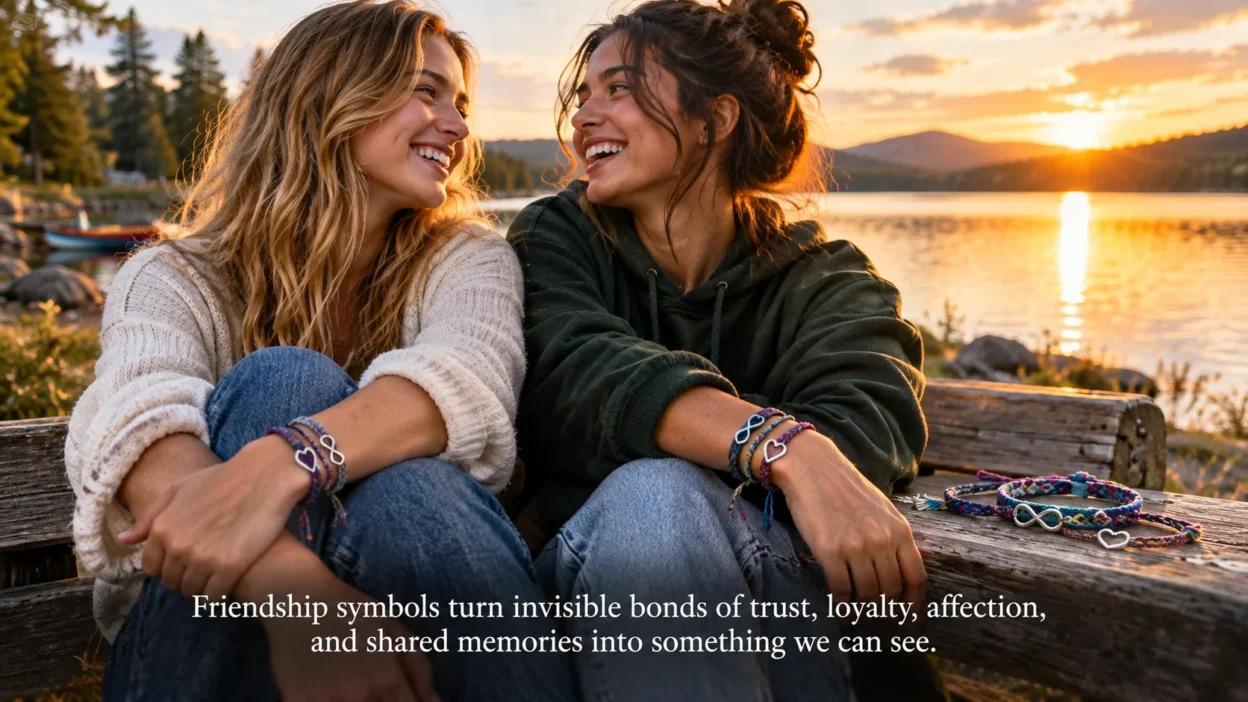
Friendship Symbolism represents the signs, objects, colors, gestures, and images people use to express friendship. Hearts, linked hands, bracelets, flowers, and matching objects can all communicate a bond between people.
In 2026 , friendship often centers on trust, loyalty, shared experiences, and emotional support. However, friendship symbols can also express fun, belonging, memories, personal identity, and the hope that a relationship will last.
Today, these symbols appear everywhere. You might see them on friendship bracelets, tattoos, greeting cards, jewelry, social media posts, gifts, and home decor. Their meaning can be deeply personal, yet many symbols have older cultural roots.
Quick Answer
Friendship Symbolism usually represents trust, loyalty, affection, companionship, and a lasting bond. In the USA, friendship symbols often emphasize equality, personal choice, shared memories, and emotional connection, while broader traditions may connect friendship with loyalty, harmony, and mutual support.
TL;DR
- Friendship symbols express trust, loyalty, affection, and belonging.
- Ancient cultures used objects and gestures to mark social bonds.
- American culture often links friendship with equality and shared experiences.
- Bracelets, hearts, flowers, and linked designs remain popular today.
- Modern friendship symbols often carry highly personal meanings.
What Does Friendship Symbolism Represent?
Friendship symbolism gives a visible form to an invisible relationship. Because friendship has no single physical shape, people use familiar objects and images to represent it.
For American readers, this symbolism often appears in everyday items rather than formal ceremonies. A small bracelet or handwritten note can carry powerful emotional meaning.
Common Friendship Symbols
Several images repeatedly appear when people want to express friendship:
• Linked hands suggest cooperation, trust, and mutual support.
• Hearts represent affection, care, and emotional closeness.
• Circles can suggest unity, equality, and an unbroken connection.
• Bracelets often represent a friendship that can be carried daily.
• Flowers can express appreciation, beauty, warmth, and personal affection.
• Matching objects can represent shared identity and common memories.
The exact meaning depends on context. For example, a heart between romantic partners may suggest love, while the same heart between friends can simply express deep care.
Why Symbols Matter
Symbols work because they communicate ideas quickly. A person may struggle to explain years of friendship, yet a meaningful object can capture that history instantly.
However, the same symbol can mean different things to different people. Personal memories often become more important than traditional definitions.
Historical Roots of Friendship Symbols
Friendship itself is ancient, so its symbolic language reaches far into human history. Long before modern bracelets and social media, people used gifts, shared rituals, gestures, and objects to show loyalty.
Ancient literature also treated friendship as an important human relationship. Greek philosophical traditions, for example, explored different forms of friendship and the value of mutual goodwill.
Ancient Ideas of Friendship
Classical thinkers often connected friendship with loyalty, virtue, companionship, and mutual benefit. These ideas helped shape later Western discussions about what makes a relationship meaningful.
Meanwhile, many societies used hospitality and gift exchange to establish or strengthen social bonds. A shared meal, exchanged object, or public gesture could communicate trust.
Medieval and Early Modern Traditions
During later European history, friendship became associated with letters, portraits, gifts, poetry, and commemorative objects. These items helped people maintain emotional connections across physical distance.
However, friendship symbolism wasn’t limited to Europe. Different societies developed their own customs for expressing loyalty, kinship, community, and mutual respect.
The modern idea of a friendship symbol therefore comes from many overlapping traditions rather than one single origin.
Friendship Symbolism in American Culture
In the United States, friendship is strongly connected with personal choice. Unlike family relationships, friendships are usually understood as relationships people voluntarily build and maintain.
This makes friendship symbols especially useful. They can mark a relationship that someone chose because of shared interests, trust, humor, experiences, or values.
Friendship and American Identity
American culture frequently celebrates friendship through stories, music, television, movies, sports, and everyday social life. Friend groups can become important sources of belonging.
For many people, friends also become part of major life experiences. Graduations, birthdays, vacations, school years, military service, workplaces, and community activities can create lasting friendships.
Everyday American Symbols
Some symbols have become particularly recognizable in everyday American life:
• Friendship bracelets are common gifts among children, teenagers, and adults.
• Matching jewelry can mark a shared experience or close relationship.
• Group photographs preserve memories of friendship and belonging.
• Greeting cards often use hearts, flowers, and cheerful colors.
• Shared clothing can represent group identity and inside jokes.
These symbols don’t require a formal ceremony. Their meaning often comes from the story behind them.
Friendship Bracelets and Their Meaning
Friendship bracelets are among the clearest modern friendship symbols. They turn friendship into something physical that can be worn, exchanged, and remembered.
Their appeal comes partly from their simplicity. A bracelet can be inexpensive, handmade, colorful, and deeply personal at the same time.
Why Bracelets Became Powerful Symbols
A bracelet stays close to the body, making it an intimate reminder of another person. When friends exchange matching or coordinated bracelets, the object becomes a small shared marker.
The handmade quality can also matter. Making something for another person requires time and attention, which can communicate care.
In the United States, friendship bracelets have also appeared in school culture, summer camps, youth groups, concerts, fandom communities, and social media.
Friendship Bracelets Today
Modern friendship bracelets can use beads, thread, charms, letters, colors, or personalized patterns. Some contain names, initials, dates, or private references.
Their meaning can therefore move beyond traditional friendship. They may represent community, fandom, a special event, a personal milestone, or a memorable experience.
Colors and Their Friendship Meanings
Colors can add another layer of meaning to friendship symbols. However, color meanings aren’t universal, so context matters.
For American audiences, bright colors often create a playful feeling, while softer shades may suggest calm affection. A person’s favorite color can also matter more than any traditional association.
| Color or Style | Common Friendship Association | Typical Feeling | Important Note |
| Yellow | Happiness and warmth | Cheerful | Often linked with positive energy |
| Pink | Affection and kindness | Gentle | Doesn’t necessarily imply romance |
| Blue | Trust and calm | Peaceful | Commonly associated with reliability |
| Green | Growth and renewal | Fresh | Can suggest a friendship changing over time |
| Purple | Individuality and creativity | Expressive | Often chosen for personal style |
Personal Color Meanings
A color can become meaningful because of a shared memory. For example, two friends may choose orange because it reminds them of a favorite trip.
Therefore, there isn’t one fixed color code for friendship. The story behind the color often matters most.
Emotional and Psychological Meaning of Friendship
Friendship symbols can trigger feelings connected with safety, belonging, acceptance, and memory. Seeing an old bracelet may immediately remind someone of a person or period in their life.
However, friendship symbolism isn’t only about happiness. It can also represent distance, change, loss, or nostalgia.
Friendship and Belonging
Humans generally seek social connection. Friendship can provide companionship and a sense of being understood.
A shared symbol can strengthen that feeling because it communicates membership in a relationship or group. A matching bracelet, for example, can silently say, “We share something.”
Friendship and Memory
Objects often become containers for memories. A photograph, bracelet, necklace, or handwritten note can remind someone of a particular person.
This is why friendship symbols can remain meaningful even after circumstances change. The object may preserve an emotional connection to the past.
Friendship Symbols in Tattoos
Friendship tattoos can turn a relationship into a permanent visual statement. Friends may choose matching designs, complementary images, dates, words, or symbols that only they fully understand.
Matching and Complementary Designs
Matching tattoos create visual similarity. Complementary tattoos take a different approach by using two designs that become meaningful together.
Common concepts include:
• Small hearts representing affection and closeness.
• Coordinates marking a meaningful shared location.
• Short words representing an inside phrase or promise.
• Symbols that form a complete image when placed together.
• Simple lines or shapes representing an enduring connection.
However, permanent symbols can become complicated when relationships change. A friendship tattoo may later represent an important chapter rather than an active relationship.
Friendship Symbolism in Social Media
Social media has changed how people display friendship. Posts, profile pictures, captions, shared videos, and digital artwork can all become friendship symbols.
Instead of keeping a symbol private, people can now share it with a large audience.
Digital Friendship Symbols
Online friendship often uses familiar visual language:
• Heart emojis can express affection between close friends.
• Matching profile images can show group identity.
• Shared photos preserve important moments publicly.
• Tags and mentions connect friends to shared memories.
• Inside jokes can become recognizable symbols within a group.
However, online displays don’t always reveal the full strength of a relationship. A private friendship may have little public evidence, while a highly visible friendship may change over time.
Friendship Gifts and Their Symbolism
Gifts have long helped people communicate feelings that are difficult to express directly. Friendship gifts can therefore carry symbolic meaning beyond their practical value.
A gift doesn’t need to be expensive. In many cases, personalization makes it more meaningful.
Popular Friendship Gift Symbols
Common examples include bracelets, necklaces, mugs, photographs, flowers, keychains, books, and handmade items.
The most important feature is often the connection between the object and the friendship. A simple keychain from a memorable trip can mean more than an expensive generic gift.
The Meaning Behind Giving
A friendship gift can communicate several ideas at once:
• “I remember our shared experience.”
• “I appreciate having you in my life.”
• “This reminded me of you.”
• “Our friendship matters to me.”
• “I wanted you to have something meaningful.”
The symbolic value comes from intention as much as from the object itself.
Cross-Cultural and Spiritual Meanings of Friendship
Friendship has been valued across many cultures, although the symbols used to express it vary. Ideas such as loyalty, hospitality, mutual support, and companionship appear in many traditions.
Some spiritual traditions also emphasize relationships built around compassion, kindness, community, or shared moral values.
Different Cultural Expressions
In some cultures, friendship is closely connected with hospitality and generosity. In others, shared rituals, food, clothing, or community activities can strengthen bonds.
However, it is important not to treat one symbol as universal. A color, animal, flower, or gesture may have different meanings in another cultural setting.
Spiritual Friendship
Spiritual friendship can describe a bond based on shared reflection, compassion, service, or religious practice. The concept appears in different forms across religious and philosophical traditions.
Its central theme is often mutual support rather than possession. The relationship becomes meaningful through respect, trust, and shared growth.
Friendship Symbols in Holidays and Special Events
American celebrations provide many opportunities for friendship symbolism. Birthdays, graduations, Valentine’s Day, school events, weddings, reunions, and holidays can all involve friendship gifts or messages.
Although some celebrations focus on romantic relationships or family, friends often play an important role.
Celebrating Friendship
Friendship can be highlighted through group dinners, parties, handwritten cards, photographs, gifts, and shared activities.
Modern celebrations also allow people to create their own traditions. A yearly trip, matching item, or private ritual can become a friendship symbol over time.
Friendship Day and Similar Observances
Friendship-focused observances have encouraged people in different countries to recognize the value of friendship. Their popularity and customs vary by location.
In the United States, friendship is often celebrated informally rather than through one universally observed tradition.
Misunderstandings and Misuse of Friendship Symbols
Friendship symbols usually have positive meanings, but context can change how they are understood. A heart, matching object, or affectionate message may be interpreted as romantic when the sender intended friendship.
Friendship Versus Romance
Some symbols overlap with romantic symbolism. Hearts, flowers, jewelry, and affectionate language can appear in both relationships.
Therefore, the object alone doesn’t always establish the relationship. The surrounding context and the people involved provide important clues.
When Symbols Become Exclusive
Friendship symbols can also create feelings of inclusion or exclusion. A matching group bracelet might make members feel connected, while someone outside the group could feel left out.
This doesn’t make the symbol inherently harmful. It simply shows that symbols can communicate group boundaries as well as affection.
How Friendship Symbolism Has Changed Over Time
Friendship symbolism has moved from physical letters and exchanged keepsakes toward a mixture of physical and digital expression.
In earlier periods, a meaningful object often had to travel physically between people. Today, a friendship can be represented through a shared image, digital message, video, emoji, or online memory.
From Keepsakes to Digital Symbols
The underlying meaning has remained surprisingly stable. People still want to communicate loyalty, affection, appreciation, and shared identity.
However, technology has made these messages faster and more public. A friendship symbol can now reach thousands of people within seconds.
What Has Stayed the Same
Despite these changes, the basic human idea remains familiar. People use symbols because relationships can be difficult to describe in words.
A bracelet, photograph, tattoo, or simple message can say something larger: this person matters to me.
What Makes a Friendship Symbol Meaningful?
A friendship symbol becomes powerful when it connects with a real experience. The most meaningful symbols often have a story that outsiders don’t immediately understand.
For example, two friends might choose a simple object because it reminds them of their first trip together. Someone else might treasure a handmade bracelet because a close friend made it during childhood.
Read More: Road Symbolism: Meaning, History, and Modern Uses
Personal Meaning Matters Most
Traditional symbolism provides a starting point, but personal history gives a symbol its strongest meaning.
A symbol can represent loyalty for one person, humor for another, and remembrance for someone else. None of these meanings has to cancel the others.
Choosing a Friendship Symbol
When choosing one, consider the relationship rather than simply choosing the most popular design.
Think about a shared place, favorite activity, meaningful color, memorable phrase, or experience that shaped the friendship. A simple symbol with a real story can become much more meaningful than a complicated design.
FAQs
What Is the Most Common Symbol of Friendship?
There isn’t one universal symbol, but hearts, friendship bracelets, linked hands, and flowers are widely recognizable. Their exact meanings depend on the relationship and context.
What Color Represents Friendship?
Yellow is often associated with cheerful friendship and warmth in American popular culture. However, blue, pink, green, and other colors can represent friendship depending on personal or cultural context.
What Flower Symbolizes Friendship?
Yellow roses are commonly associated with friendship in modern American floral traditions. Other flowers can also represent appreciation, affection, happiness, or companionship.
What Symbol Represents a Lifelong Friendship?
A circle, infinity-style design, matching symbol, or personalized keepsake can suggest lasting friendship. The strongest meaning usually comes from the shared story behind the symbol.
What Does a Friendship Bracelet Symbolize?
A friendship bracelet commonly represents affection, loyalty, connection, and shared memories. Handmade bracelets can also symbolize time, effort, and personal attention.
Can a Friendship Symbol Have a Romantic Meaning?
Yes. Some symbols, especially hearts, flowers, jewelry, and affectionate colors, overlap with romantic symbolism. Context usually determines how people interpret them.
Conclusion
Friendship symbols give physical or visual form to relationships built on trust, affection, loyalty, and shared memories. From ancient gifts and gestures to modern bracelets, tattoos, photographs, and digital messages, people have continually found ways to express connection. A meaningful friendship symbol doesn’t have to be elaborate. Sometimes, the smallest object carries the biggest memory because it reminds you of someone who helped make an important part of life meaningful.