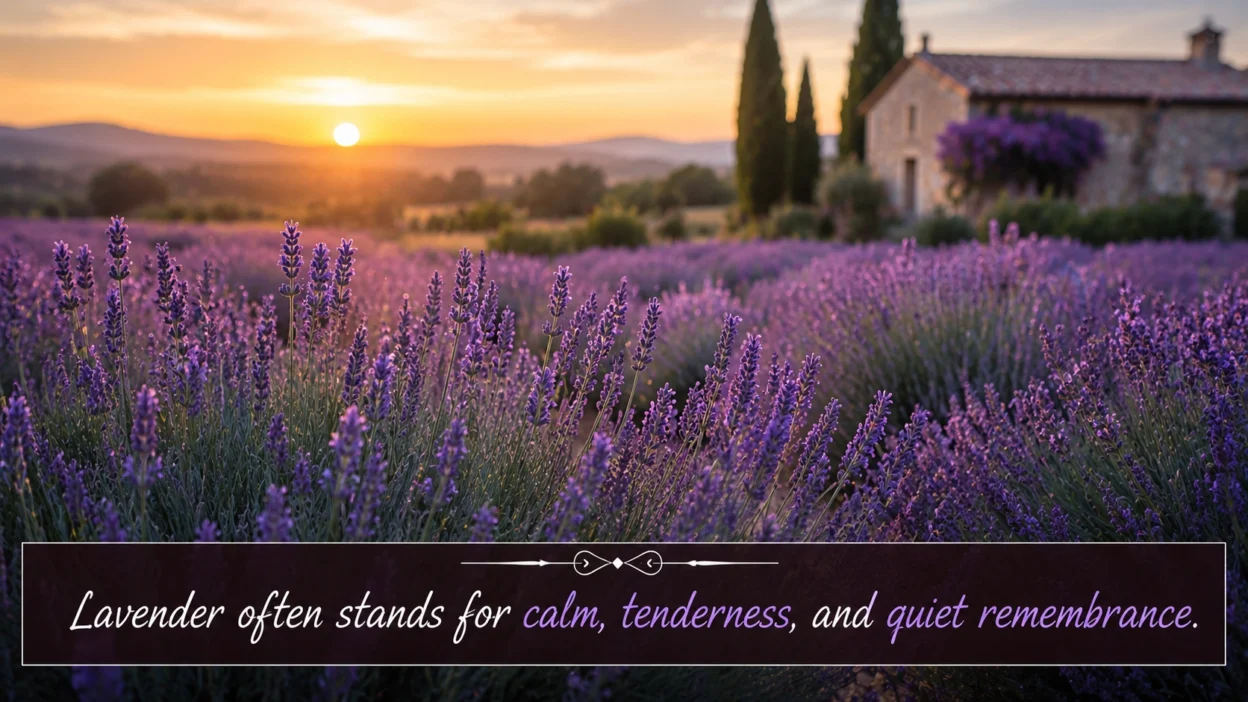
Lavender symbolism feels soft at first glance, but it carries a lot of meaning. The plant itself is easy to recognize: thin stems, narrow gray-green leaves, and small purple flower spikes that rise gently above the plant. Its scent is just as important as its shape, and many people know lavender before they even think about its history.
In the United States, lavender shows up in places where people want comfort. It appears in gardens, candles, soaps, wedding decor, sleep products, and sympathy gifts. Because it can feel peaceful, elegant, and a little nostalgic, it has become one of the most familiar symbolic plants in everyday life.
Its meaning has not always been simple, though. Lavender comes from old cleansing traditions, flower-language customs, and modern identity history. That is why it can suggest rest in one setting, devotion in another, and memory or pride in a third.
Quick Answer
Lavender symbolism in the USA usually means calm, purity, tenderness, and remembrance. It can also point to LGBTQ+ identity and resilience. In older flower traditions, its meaning could shift depending on context.
TL;DR
• Lavender often means peace, calm, and rest.
• Its name is linked to washing and cleansing.
• Victorian flower language gave it mixed meanings.
• In the U.S., it also connects to queer history.
• People use it in decor, gifts, tattoos, and self-care.
What Lavender Looks and Feels Like
A plant people notice right away
Lavender is a fragrant herb with slender stems, narrow leaves, and purple blossoms that grow in tidy spikes. The flowers are small, but the whole plant feels visible because of its color and scent. That combination makes it easy to remember and easy to symbolize.
Its look matters because symbolism often begins with appearance. Lavender seems clean, balanced, and gentle, so people naturally connect it with calm and softness.
Why the scent changes the meaning
The smell of lavender is one of the reasons it became so important. A scent can shape memory faster than a picture can, and lavender is strongly tied to that feeling. Many people think of bedrooms, linens, warm baths, and quiet spaces when they smell it.
Where Lavender Came From
Ancient use and old cleansing habits
The word lavender is linked to washing. That connection goes back through old European language, and it fits the plant’s long use in baths, linen, and fragrance. Before it became a symbol of style, it was a useful herb.
Lavender also has a long practical history in older civilizations. It was valued for scent and daily use, which helped give it an early meaning of freshness and care.
From household herb to cultural symbol
Because lavender was used in homes so often, it never stayed only decorative. It became part of daily life, and that gave it a quiet sense of trust. People came to see it as something clean, soothing, and dependable.
Lavender in Flower Language
The Victorian habit of hidden messages
In the 1800s, people loved using flowers to send messages without speaking directly. Lavender fit into that world because it already had a soft, refined presence. It could suggest a feeling instead of stating one openly.
That tradition traveled into the United States and helped shape how Americans still read flowers today. Even now, lavender is often seen as tender, graceful, and emotionally careful.
Why the meanings were never exact
Flower language was never perfectly fixed. Different books and traditions gave flowers different meanings, so one person might read lavender as devotion while another might read it differently. That flexibility is part of what makes symbolic flowers interesting.
Lavender has also been linked to distrust in some older sources. That does not cancel the gentler meanings. It simply shows that symbols shift depending on the era and the message.
Lavender Symbolism in the USA
Calm, care, and easy beauty
In the United States, lavender most often suggests calm. People use it in spaces meant for relaxation, such as bedrooms, spas, and quiet corners of the home. It also shows up in products meant to help people unwind.
Its color helps too. Soft purple tends to feel soothing rather than loud, so the plant and the color reinforce each other.
Everyday American associations
Lavender has become a familiar sign of comfort in American life. People connect it with home, cleanliness, softness, and a gentle kind of elegance. It is not flashy, and that makes it appealing.
| Context | Meaning in the USA | Common Associations | Notes |
| Bedrooms and baths | Rest, calm, comfort | Sleep sprays, candles, linens | The scent does much of the work. |
| Weddings | Grace, tenderness, devotion | Bouquets, table decor, favors | It feels romantic without being dramatic. |
| Memorial settings | Memory, softness, reflection | Sympathy gifts, quiet rituals | It suggests gentle remembrance. |
| Gardens | Beauty, order, pollinators | Borders, hedges, bees, butterflies | It is both useful and attractive. |
| Personal identity | Pride, visibility, history | Queer symbolism, activism, memory | The meaning can be political too. |
Why it feels so familiar
Lavender works well in American culture because it is simple and useful. It can live in a yard, a vase, a drawer, or a candle. That flexibility keeps it close to daily life.
Lavender and Emotional Meaning
Peace, rest, and emotional ease
Lavender is often linked to calm because people use it in relaxation products and soothing spaces. The flower has become a visual sign for slowing down. It suggests breathing room, not urgency.
This is one reason so many people connect lavender with sleep and stress relief. It does not promise magic. Instead, it offers a gentle mood.
Memory and tenderness
Lavender also carries emotional weight because scent is tied to memory. A familiar smell can bring back a place, a time, or a person very quickly. Lavender often does that.
For many people, it feels nostalgic. It can remind them of grandparents, gardens, linen closets, summer air, or quiet self-care habits.
Lavender in Spiritual and Cross-Cultural Meaning
Purity and cleansing
Because lavender has old links to washing, it often feels clean in a symbolic sense. People may use it in spiritual spaces to suggest purification, renewal, or a fresh start. That meaning fits the plant’s history well.
It also works in gentle rituals because it feels non-threatening and peaceful. It is a symbol that comforts more than it commands.
Meanings beyond the United States
Lavender is not read the same way everywhere. In some places, people value it mainly as a fragrant herb or garden plant. In others, it carries spiritual or emotional weight.
That difference matters. A symbol is never only one thing, because culture shapes what people see in it.
Lavender in Gardens, Decor, and Gifts
A useful plant that also looks elegant
Lavender is popular in gardens because it looks neat and smells wonderful. It also attracts bees and butterflies, which makes it useful as well as beautiful. That combination gives it a strong place in modern landscaping.
People also dry lavender for sachets and home fragrance. It fits easily into spaces where people want both beauty and comfort.
Why it works so well in gifts
Lavender is a common gift because it feels thoughtful without being too intense. It works for weddings, housewarmings, and sympathy arrangements. It also feels personal enough to be meaningful.
That balance is part of its charm. Lavender can be practical, decorative, and emotional all at once.
Lavender in Tattoos, Fashion, and Personal Style
A quiet symbol on the body
In tattoos, lavender often means softness, calm, memory, or a love of nature. Its shape is simple enough to work in small designs, but its meaning can still feel deep. That makes it a strong choice for people who want something subtle.
It is also chosen as a sign of identity. For some, it carries queer history and personal pride.
Why it appears in style and social posts
Lavender photographs beautifully. The color is soft, the flower is recognizable, and the whole image feels calm. That is why it appears so often in fashion boards, lifestyle posts, and slow-living content.
It fits a visual style that values peace, balance, and gentle beauty. In that setting, lavender becomes more than a plant. It becomes a mood.
Lavender and LGBTQ+ History
The word as a political symbol
One of the most important modern meanings of lavender in the United States comes from queer history. The phrase “Lavender Scare” refers to the 1950s persecution of LGBTQ+ federal workers. That history gave the word a painful public edge.
Because of that, lavender came to represent both harm and visibility. It marks a time when people were targeted for who they were.
Reclaiming the color and the word
Over time, many LGBTQ+ people and allies reclaimed lavender as a sign of identity and solidarity. That is why the symbol can feel tender and political at the same time. It carries memory, but it also carries pride.
This layered meaning is one reason lavender still matters. It is not only pretty. It has history.
Common Confusions and Mixed Meanings
Calm or distrust?
Some people are surprised to learn that lavender has not always meant peace. In older flower-language traditions, it could also stand for distrust. That does not mean the calm meaning is wrong.
It means the symbol changed over time. Different eras used flowers in different ways, and lavender was never locked into one definition.
The flower and the color are not identical
Another common confusion is treating the plant and the color as exactly the same thing. Lavender the flower can vary in shade, while lavender the color usually means a soft, muted purple. They are related, but not identical.
That difference matters when reading symbolism. A bouquet, a paint swatch, and a Pride reference can point in different directions.
Read More: Tulip Symbolism: Meaning, History, and Colors
How Lavender Meaning Has Changed Over Time
From practical herb to modern sign
Lavender started as a useful plant tied to washing, scent, and daily care. Then it moved into flower language, home decor, wellness culture, and identity history. Its meaning widened as its use widened.
That is why it still feels current. The symbol has grown without losing its older roots.
What has stayed the same
Even with all those changes, one idea has remained steady. Lavender usually points toward gentleness. Whether that means calm, purity, memory, or pride, the tone is still soft but meaningful.
FAQs
What does lavender symbolize spiritually?
Lavender often symbolizes cleansing, peace, and gentle renewal. Some people also connect it with healing and quiet protection.
Why is lavender linked to calm?
Its fragrance is widely used in relaxation and sleep products. Over time, that has made people strongly associate it with rest and comfort.
Does lavender mean purity?
Yes, many people read lavender as a symbol of purity. That idea fits its old connection to washing and freshness.
Why is lavender important in LGBTQ+ history?
Lavender became tied to queer history through the Lavender Scare in the 1950s. Later, it was reclaimed as a symbol of pride and visibility.
Can lavender have negative meanings too?
Yes, older flower traditions sometimes linked it with distrust. Like many symbols, its meaning depends on context and time.
Conclusion
Lavender symbolism is rich because it blends beauty, usefulness, and memory. It can mean calm, purity, tenderness, reflection, and pride, depending on where and how it appears. In modern American life, Lavender Symbolism is still growing. It remains a gentle sign of care, but it also carries history and identity in a deeper way.