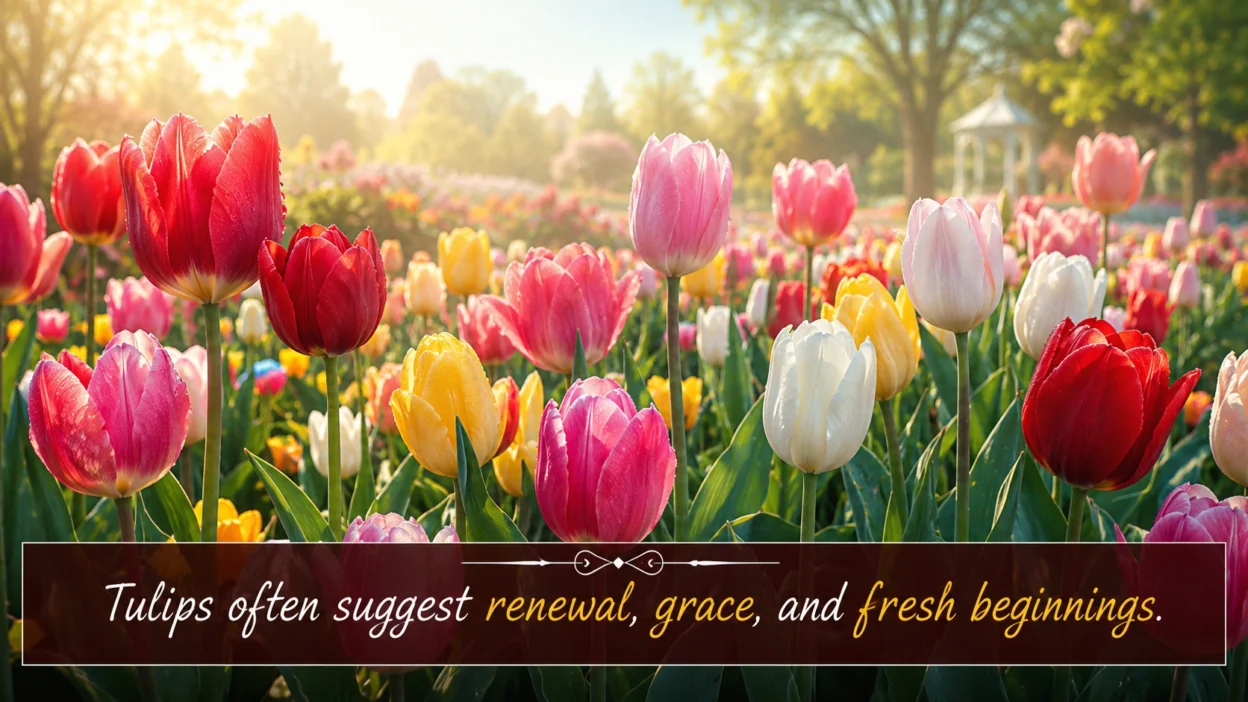
Tulip Symbolism shows up in spring gardens, gift bouquets, wedding flowers, and seasonal décor across the United States. A tulip’s clean shape, smooth petals, and bold color make it easy to recognize.
People notice tulips because they feel simple and bright at the same time. They often signal warmth, fresh starts, affection, and quiet elegance. In the USA, tulips are tied closely to spring, home gardens, and cheerful seasonal traditions.
Their meaning is older than many people realize. Tulips began in Central Asia and became famous through Persian and Ottoman gardens before spreading across Europe and later into American life. Today, they still carry a mix of beauty, hope, and graceful restraint.
Quick Answer
Tulip Symbolism in the USA most often means spring renewal, love, and graceful beauty. Broader traditions also connect tulips with abundance, faith, and the return of life after winter.
TL;DR
• Tulips usually symbolize spring, beauty, and fresh beginnings.
• In America, they strongly suggest cheerful, seasonal optimism.
• Color changes the message more than many people expect.
• Their history runs from Central Asia to Persia, Turkey, and Europe.
• Tulips also appear in gifts, weddings, gardens, and tattoos.
• Their meaning has shifted from luxury to everyday warmth.
What Tulips Are and Why They Matter
Tulips are cup-shaped spring flowers with smooth petals and tall stems. Their neat form makes them easy to spot in gardens, parks, and floral arrangements.
For American readers, tulips matter because they feel familiar and seasonal. They show up just when winter ends, so people often connect them with relief, renewal, and brighter days.
Shape, color, and first impression
Tulips stand out because they look clean and balanced. Their colors can be soft, bold, or strikingly simple.
• Upright stems suggest strength and calm confidence.
• Rounded blooms feel gentle, welcoming, and refined.
• Bright colors make them feel hopeful and lively.
• Single stems often seem elegant, while bunches feel generous.
The Roots of Tulip Meaning
Tulip meaning did not begin in the United States. It grew over centuries in regions where the flower was admired for rarity, beauty, and courtly elegance.
The earliest tulips grew in parts of Central Asia and western Asia. From there, they became important in Persian gardens and later in the Ottoman world, where they were linked with beauty, refinement, and high taste.
From ancient gardens to royal courts
In Persian culture, flowers often carried deep poetic meaning. Tulips became part of that visual language because they were vivid, delicate, and memorable.
In the Ottoman Empire, tulips rose to great status. They appeared in art, textiles, ceramics, and palace gardens, which helped turn them into a symbol of elegance and prestige.
How Tulips Became an American Flower
Tulips reached North America through European gardening traditions. Over time, they became a familiar part of suburban yards, city parks, and spring festivals.
In the USA, tulips fit a strong seasonal rhythm. People plant them in fall, wait through winter, and enjoy them as one of spring’s first bright rewards.
Why Americans connect with them so easily
Tulips fit American ideas of renewal because they arrive after cold weather. They feel hopeful without being showy.
They also work well in everyday spaces. That makes them less formal than some flowers and easier to associate with family life, neighborhoods, and seasonal cheer.
Tulip Colors and Their Meanings
Color changes tulip symbolism in a big way. A red tulip does not send the same message as a white or yellow one.
This matters in the USA because tulips are often given as gifts. The color can quietly shape the emotional tone of the message.
Common color associations
| Color | Meaning in the USA | Common Associations | Notes |
| Red | Deep love and strong affection | Romance, admiration, Valentine’s Day | Feels direct and warm |
| Pink | Gentle care and sweetness | Gratitude, friendship, tenderness | Softer than red |
| Yellow | Cheer, hope, and sunshine | Optimism, spring, good spirits | Can feel playful |
| White | Purity, peace, and calm | Sympathy, weddings, sincerity | Often feels quiet and clean |
| Purple | Grace, dignity, and charm | Elegance, creativity, respect | Suggests a more regal mood |
| Orange | Energy and enthusiasm | Warmth, excitement, celebration | Feels bold and lively |
Why color matters so much
Tulips have a simple shape, so color does most of the emotional work. That is why one bouquet can feel romantic, while another feels peaceful or celebratory.
What Tulips Symbolize in the USA
In the United States, tulips are closely tied to springtime and fresh starts. They often appear when people are ready for longer days, warmer weather, and a lighter mood.
They also carry a sense of polite beauty. Tulips do not usually feel dramatic; instead, they suggest balance, welcome, and quiet confidence.
American meanings people notice most
• Spring after winter
• Soft love and affection
• Home beauty and garden pride
• Hope, renewal, and new growth
• Simple elegance without fuss
Tulips in American daily life
Tulips appear in front yards, city flower beds, church displays, and gift shops. Because they are so common in spring, they feel approachable rather than distant or elite.
They also work well for Mother’s Day, Easter season décor, graduations, and housewarming gifts. In each setting, they usually express warmth and good wishes.
Tulips in Gardens, Festivals, and Public Spaces
Tulips have a strong public presence in America, especially in spring displays and flower festivals. They often turn parks and streets into temporary signs of seasonal change.
That public role matters because symbolism grows stronger when many people share the same image. A field of tulips can feel like a collective announcement that winter is over.
Why public tulips feel meaningful
Tulips are often planted in large groups for color impact. Their repetition creates a sense of abundance and optimism.
They also photograph well, which helps them spread through social media and local travel posts. As a result, they now live both in the garden and in digital memory.
Tulips in Other Cultures and Faith Traditions
Tulips carry meanings outside the United States too. Those meanings are worth noting because they help explain why the flower has remained so beloved.
In Persian and Turkish traditions, tulips have long been linked with beauty, grace, and spiritual feeling. In parts of Europe, they later came to suggest wealth, taste, and spring abundance.
A respectful cross-cultural view
Some Christian floral traditions connect tulips with renewal and hope. That happens partly because the flower blooms at a time that fits Easter season in many places.
In broader spiritual settings, tulips can suggest the soul waking up after stillness. However, the meaning is usually gentle rather than doctrinal.
The Emotional Message Tulips Send
Tulips often feel emotionally balanced. They are bright, but not overwhelming.
That makes them useful when someone wants to show care without sending a heavy message. They can express affection, calm support, or quiet encouragement.
Feelings tulips often bring up
• Relief after a hard season
• Trust in a fresh start
• Tenderness without pressure
• Cheerfulness that feels mature
• Beauty that seems natural, not forced
Why people respond so quickly to them
Tulips bloom at the right emotional moment for many people. After long winters, a tulip can feel like proof that change is possible.
They also have a gentle structure. That gives them a sense of order, which many people find comforting.
Tulips in Gifts, Decor, and Seasonal Traditions
Tulips are popular because they fit many settings. They can look casual in a kitchen vase or elegant in a formal arrangement.
In the USA, they are especially common in spring décor. Their colors help brighten homes, offices, classrooms, and event spaces without feeling too serious.
Common modern uses
• Birthday bouquets
• Spring centerpieces
• Wedding arrangements
• Holiday and church décor
• Garden border plantings
• Seasonal social media posts
Why they work so well in decoration
Tulips bring color without clutter. Their shape is neat enough to feel orderly, but soft enough to feel friendly.
That balance is part of their appeal. They make a space feel cared for, lived in, and ready for spring.
Tulip Tattoos and Personal Identity
Tulip tattoos are often chosen for their clean shape and calm meaning. People may pick them because the flower feels personal without being loud.
In America, floral tattoos often carry private messages. A tulip can stand for recovery, hope, love, or a new chapter in life.
What a tulip tattoo may suggest
A tulip tattoo may signal growth after difficulty. It may also show a love of simplicity, beauty, or seasonal change.
Some people choose specific colors to make the meaning sharper. A red tulip can feel romantic, while a white one can feel peaceful or reflective.
Misunderstandings and Shifting Meanings
Tulip meaning has changed over time. It once suggested rare beauty and wealth in elite settings, but today it is much more ordinary and widely shared.
That shift is important because symbols do not stay fixed. As flowers move from royal gardens to grocery stores, their meaning becomes more everyday and personal.
Clearing up common confusion
Tulips are not tied to one single emotion. Their meaning changes with color, setting, and purpose.
They also should not be reduced to only romantic meaning. In many American settings, they are more about renewal, friendliness, and seasonal joy.
Tulips in Art, Language, and Pop Culture
Tulips appear often in painting, photography, branding, and home design. Their shape is easy to recognize, which makes them useful as a visual symbol.
In American culture, they often stand for a clean, tasteful spring look. Because they are familiar, they can signal comfort before anyone even reads a label.
Why artists keep using them
Tulips photograph beautifully in soft light. Their petals create simple lines that feel balanced and calm.
They also work as a shorthand for freshness. A single tulip can suggest an entire season’s mood.
Read More: Lily Symbolism: Meaning, History, and Modern Uses
Tulips and the American Idea of Spring
Tulips fit the American imagination of spring almost perfectly. They bloom at a time when many people want color, warmth, and movement again.
That is why they remain such a strong seasonal symbol. They represent more than a flower; they represent a shift in feeling.
Spring ideas they often carry
• Ending of winter
• Return of color
• Gentle optimism
• Outdoor living
• Emotional reset
FAQs
What does a tulip symbolize?
A tulip usually symbolizes spring, beauty, and renewal. In the USA, it often also suggests affection and quiet elegance.
What do tulips mean in a bouquet?
In a bouquet, tulips often express warmth, care, and cheerful beauty. The color can make the message more specific.
What do red tulips mean?
Red tulips usually mean deep love and strong affection. They are often chosen for romantic occasions.
What do yellow tulips mean?
Yellow tulips often suggest happiness, hope, and sunshine. They are a natural fit for spring and cheerful gifts.
Are tulips religious symbols?
Tulips are not strongly tied to one religion. However, they can appear in spiritual or seasonal settings that suggest renewal and hope.
Why are tulips associated with spring?
Tulips bloom as winter ends, so they feel like a sign of return and growth. That timing makes them one of the clearest spring flowers in American life.
Conclusion
Tulips carry a meaning that is both simple and rich. They stand for beauty, spring renewal, affection, and graceful calm. Their history stretches from ancient garden cultures to modern American homes and public spaces. Today, Tulip Symbolism still feels fresh because the flower speaks in a quiet, natural way. That is part of its lasting power. A tulip does not need to be dramatic to be memorable, and that makes it easy to love year after year.