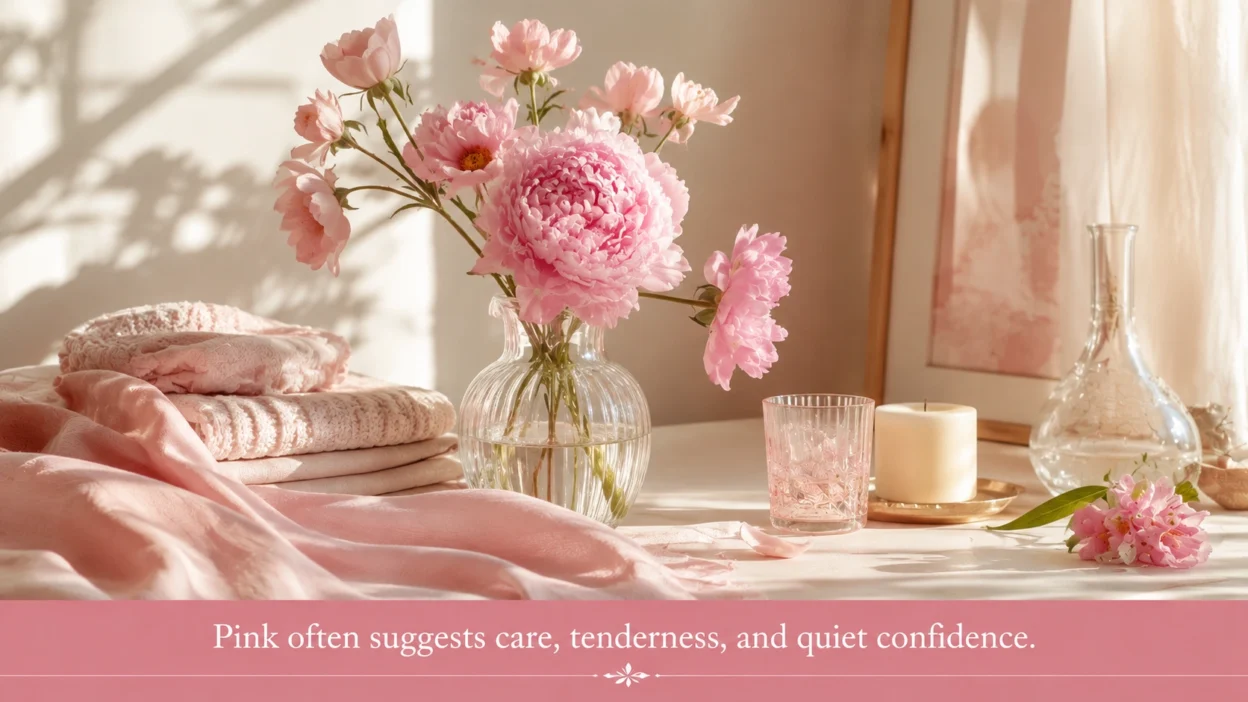
Pink is one of those colors that can feel gentle at first glance, yet it carries a lot of meaning. In everyday life, people link it with romance, kindness, youth, and comfort. At the same time, it can also suggest boldness, pride, and self-expression.
In the United States, pink symbolism has changed a great deal over time. It has moved through fashion, childhood, activism, design, and popular culture. Because of that, pink feels both familiar and layered, which is why people still ask what it really means.
It also shows up in many forms. Sometimes it appears as a pale blush, and sometimes as a bright neon statement. However, the meaning often depends on shade, setting, and who is using it.
Quick Answer
Pink symbolism in the USA often suggests love, care, softness, and warmth. However, it can also signal confidence, playfulness, protest, or identity, depending on the setting.
TL;DR
- Pink often means tenderness, affection, and gentleness.
- In the U.S., it also connects with childhood and romance.
- Bright pink can feel bold, loud, and self-assured.
- Historical meanings of pink have shifted over time.
- Pink ribbons shaped public awareness in American life.
- Today, pink appears in fashion, decor, tattoos, and activism.
What Pink Symbolism Looks Like
Pink usually appears as a lighter red, but the shade matters a lot. Blush pink feels soft and quiet, while hot pink feels energetic and direct. Because of that, people often read the same color in very different ways.
The setting matters too. Pink on flowers may feel romantic, but pink on a sign may feel playful or commercial. Also, pink in clothing can look sweet, fashionable, rebellious, or polished.
Shades and Settings
Soft pink usually suggests calm, gentleness, and care. Bright pink often feels more confident and attention-grabbing.
• Blush pink often feels tender and soothing.
• Hot pink can seem lively and fearless.
• Dusty pink feels mature and understated.
• Neon pink usually reads as modern and bold.
Soft, Bright, and Bold Pink
Not every pink says the same thing. A pastel wall, a satin dress, and a pink logo each send a different message.
That is why pink symbolism works best when you notice context. Color never speaks alone.
Core Meanings at a Glance
Pink has a few meanings that come up again and again. In daily life, people often connect it with warmth, affection, and emotional openness. However, it can also point to fun, style, or a strong personal point of view.
These meanings are not fixed rules. Instead, they are common habits of thought that people in the U.S. recognize quickly.
Love, Care, and Youth
Pink often carries a soft emotional tone. It can suggest affection without the intensity of red.
Playfulness and Confidence
Pink can also feel cheerful and lively. In a bright form, it can say, “I am here, and I am not afraid to be seen.”
Where Pink Symbolism Comes From
Pink did not always carry the same meaning it does today. In older European art and dress, pale reds and rose tones were linked to beauty, warmth, and refinement. However, the stronger modern idea of pink as a gendered or emotional color came later.
Over time, pink became tied to fashion, mass advertising, and social habits. Because of that, its meaning changed with each era.
Early European Use
In older European painting and clothing, pink often signaled softness, luxury, and elegance. It was not always treated as a “girl color.”
From Delicate to Defiant
By the twentieth century, pink took on new social meanings. It became linked with childhood, romance, and later, public identity. Today, it can still feel delicate, but it can also feel openly defiant.
Pink Symbolism in the USA
In the United States, pink has some of its strongest cultural meaning. Many Americans connect it with baby products, Valentine’s Day, femininity, and commercial style. However, the color has also been used in activism, public health awareness, and political expression.
That mix makes pink especially interesting. It can feel private and personal, but it can also become a public symbol.
Gender, Kids, and Consumer Culture
For many Americans, pink is tied to childhood and gender-coded marketing. Baby clothes, toys, and school supplies have helped build that association over decades.
Pink Ribbons and Public Memory
Pink ribbons became widely recognized in American life through health awareness campaigns. They helped turn a color into a shared symbol of support and remembrance.
| Context | Meaning in the USA | Common Associations | Notes |
|---|---|---|---|
| Baby products | Softness and care | Nurseries, clothes, gifts | Often linked with girlhood |
| Valentine’s Day | Romance and affection | Flowers, candy, cards | Lighter than red, less intense |
| Awareness ribbons | Support and solidarity | Health campaigns, public events | Color can carry collective memory |
| Fashion | Style and identity | Runways, makeup, outfits | Can feel sweet or daring |
| Home decor | Comfort and warmth | Bedrooms, living rooms, accents | Often used to soften a space |
| Activism | Visibility and pride | Protests, statements, symbols | Meaning depends on the group |
Pink in Other Cultures and Spiritual Traditions
Pink is not only an American symbol. In other places, it can suggest joy, youth, celebration, or sacred beauty. However, the meaning varies widely, so it is best to treat these uses with care.
In spiritual settings, pink can also stand for compassion and emotional healing. That is why people often find it comforting in prayer spaces, meditations, or symbolic art.
Respectful Cross-Cultural Notes
In some cultures, pink appears in festivals, clothing, or ceremonial design. In others, it is simply one color among many, without a strong fixed meaning.
The key point is this: pink is flexible. Its meaning grows from tradition, context, and shared use.
Pink and the Mind
Pink often affects people in emotional ways before they even name it. Soft pink may feel safe, soothing, or nurturing. Bright pink may feel exciting, social, or a little rebellious.
Psychologically, pink can send mixed signals in a good way. It can calm the eye while still feeling alive.
Emotional Associations
Pink often brings to mind kindness, sweetness, and affection. It can also remind people of childhood memories, gifts, and celebration.
• Soft pink may lower the sense of visual tension.
• Warm pink can feel welcoming and friendly.
• Bright pink may boost energy and attention.
• Rose pink often feels romantic and balanced.
What Pink Can Signal
Pink can signal emotional openness. It can also suggest that someone values beauty, comfort, or personal style.
At the same time, a strong pink choice may say something different. It may signal confidence, irony, or a refusal to blend in.
Pink in Fashion and Beauty
Fashion has played a huge role in pink symbolism. In clothes, makeup, and accessories, pink can feel feminine, elegant, cute, or powerful. Because of that, it stays popular across ages and styles.
Pink is also highly adaptable. It can look vintage, sporty, glamorous, or streetwear-friendly depending on the cut and shade.
Style, Branding, and Trends
Many brands use pink to create a friendly or stylish mood. That happens because the color often feels approachable but still memorable.
• Pale pink can suggest quiet luxury.
• Bright pink can create instant visual impact.
• Pink packaging often feels soft and inviting.
• Rose tones can add warmth to a polished look.
Pink in Home Decor and Design
In home decor, pink often softens a room. It can make a space feel calm, lived-in, and welcoming. However, the effect changes with the shade and the other colors nearby.
Americans often use pink in bedrooms, nurseries, bathrooms, and accent pieces. It works especially well when paired with white, cream, gold, or gray.
Calm Spaces and Friendly Rooms
Pink decor can make a room feel more relaxed and less severe. That is why it shows up in both modern minimalist spaces and cozy homes.
It can also feel personal. For many people, pink decor says the space is warm, expressive, and human.
Pink in Tattoos and Personal Identity
Pink tattoos often carry meanings tied to love, femininity, healing, or self-expression. Sometimes the color is chosen for beauty alone. Other times, it reflects a deeper story.
In the U.S., pink ink can also stand for resilience and identity. A person may use it to show softness without weakness.
Meaning on Skin
Pink tattoos may symbolize remembrance, joy, or a gentle but strong personality. They can also honor a relationship, a cause, or a turning point in life.
The same design can mean different things to different people. That personal layer is part of pink’s power.
Pink in Holidays, Activism, and Media
Pink shows up often in American holidays and media. It is common in Valentine’s Day displays, spring advertising, and playful pop culture imagery. However, it also appears in serious public symbols.
That range is one reason pink stays so visible. It can move from fun to meaningful without losing its identity.
From Valentine’s Day to Pop Culture
Pink hearts, candy wrappers, and floral displays help define Valentine’s Day in the U.S. At the same time, movies, music, and social media often use pink to create a dreamy or stylish mood.
• Holiday pink often feels sweet and romantic.
• Media pink can feel nostalgic or trendy.
• Protest pink can feel loud and intentional.
• Social posts use pink for warmth and visual charm.
Misunderstandings, Misuse, and Controversies
Pink is sometimes treated as if it has only one meaning. That can flatten a rich symbol into a stereotype. In reality, pink can mean many things at once.
It has also been used in ways that feel reductive or manipulative. For example, some marketing leans too hard on old gender ideas, while some political or cultural uses can be misunderstood by outsiders.
When Pink Gets Over-Simplified
One common mistake is assuming pink always means “for girls.” That idea is cultural, not universal, and it has changed over time.
Another issue is using pink symbols without understanding the group or cause behind them. Respect matters, especially when a color is tied to public memory or identity.
How Pink Meaning Has Changed Over Time
Pink has moved through many roles. It has been soft, formal, playful, political, and personal. Because of that, it never stays in one box for long.
Today, many Americans see pink as both familiar and flexible. It can still mean sweetness, but it can also mean strength, confidence, and self-definition.
Read More: Orange Symbolism: Meaning, History, and Modern Use
Old Ideas, New Readings
Older ideas connected pink with delicacy and fashion. Newer readings often highlight choice, identity, and style.
That shift matters because it shows how symbols live. They change when people use them in new ways.
FAQs
What does pink symbolize in the USA?
Pink often symbolizes love, care, softness, and femininity in the U.S. However, it can also suggest confidence, youth, and modern style.
Is pink a romantic color?
Yes, pink is often romantic, especially in lighter or rose shades. It usually feels gentler than red.
What does pink symbolize spiritually?
Spiritually, pink is often linked with compassion, healing, and emotional peace. Many people also connect it with kindness and heart-centered energy.
Why was pink once seen differently?
Pink has not always carried the same gender meaning. In earlier times, it was used more broadly, and later culture made it more gendered.
What does a pink ribbon mean?
A pink ribbon often stands for awareness, support, and remembrance. In the U.S., it is strongly associated with public health campaigns.
Is bright pink different from soft pink?
Yes, very different. Soft pink usually feels calm and gentle, while bright pink feels bold and energetic.
Conclusion
Pink symbolism is richer than many people expect. In the United States, it can point to love, care, youth, style, and personal strength. However, its meaning always depends on shade, setting, and intention. That flexibility is what keeps pink interesting. A single color can feel sweet in one moment and powerful in the next. When you look at pink symbolism today, you are really seeing a story about change. And that story is still unfolding in fashion, memory, design, and identity.