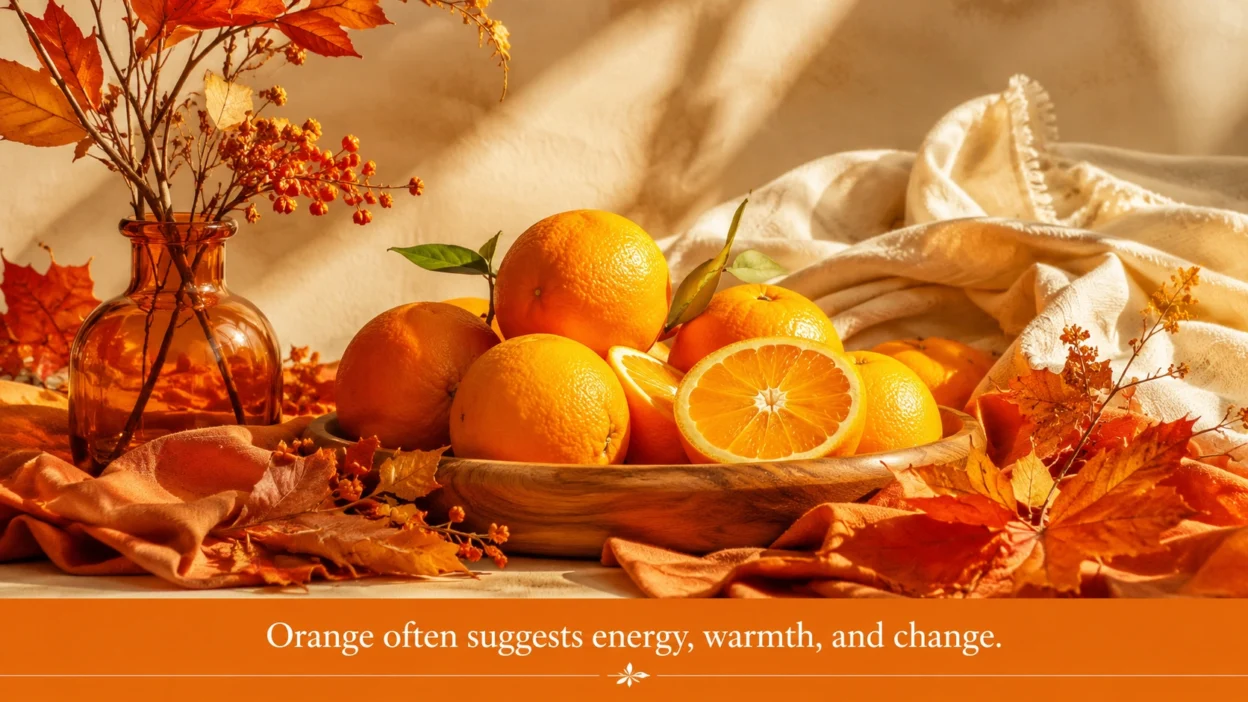
Orange is one of the easiest colors to notice and one of the hardest to pin down. It can feel warm, playful, bold, spiritual, or even warning-like, depending on the setting. That mix is part of why Orange Symbolism matters so much in the United States.
People in the U.S. meet orange in fall leaves, Halloween decor, sports uniforms, road cones, religious clothing, and brand logos. Because it shows up in both joyful and serious places, it carries layered meanings. It can suggest energy and creativity, but it can also signal caution, visibility, and change.
That flexibility gives orange a strong place in modern culture. It feels familiar, yet it never stays in one lane for long.
Quick Answer
Orange symbolism in the USA usually points to energy, warmth, enthusiasm, and visibility. It can also suggest caution, harvest time, Halloween, and change. In wider spiritual and cultural settings, orange may represent devotion, wisdom, fire, or renewal.
TL;DR
- Orange often signals energy, warmth, and movement.
- In the U.S., it is strongly tied to fall and Halloween.
- It also appears in safety signs and high-visibility gear.
- Orange can feel creative, cheerful, or alert.
- In spiritual traditions, it may suggest devotion or wisdom.
- Its meaning shifts with context, setting, and use.
What Orange Looks Like and Where It Shows Up
Orange sits between red and yellow on the color wheel. It can look bright and fruity, or deep and burned like clay, copper, or autumn leaves. That range makes it useful in both everyday life and symbolic language.
Shades, Materials, and Common Settings
You see orange in nature, food, clothing, flags, sports gear, and seasonal decor. It can look soft in peach tones or intense in neon safety gear. Because of that, it often feels lively but never completely quiet.
• Bright orange grabs attention fast.
• Burnt orange feels earthy and grounded.
• Peach orange looks softer and calmer.
• Neon orange signals visibility and urgency.
What Orange Symbolizes at a Glance
This section gives the core meanings most Americans associate with orange. It matters because the color’s message changes quickly based on context. A pumpkin, a sunset, and a traffic vest all say different things.
Main Meanings People Notice
Orange often stands for energy, warmth, friendliness, and creativity. It can also suggest harvest, movement, fun, and alertness. In the U.S., it is one of the most context-sensitive colors.
A Simple Meaning Table
| Context | Meaning in the USA | Common Associations | Notes |
|---|---|---|---|
| Autumn decor | Harvest, coziness, change | Leaves, pumpkins, spice | Strong seasonal meaning |
| Safety gear | Alertness, visibility | Cones, vests, barriers | Practical and direct |
| Sports teams | Team spirit, excitement | Jerseys, fan gear | Often feels bold and loud |
| Spiritual clothing | Devotion, discipline, wisdom | Robes, scarves, prayer | Respectful and symbolic |
| Branding | Energy, friendliness, action | Food, youth, movement | Often used to feel upbeat |
Ancient Roots of Orange Symbolism
Orange as a named color is newer than the feeling behind it. Long before English speakers used the word, people noticed the hues in fire, fruit, minerals, clay, and sunsets. These tones often carried ideas of life, heat, abundance, and transformation.
Before the Word “Orange”
Ancient cultures did not always separate orange from red or yellow. Instead, they used nearby natural references like saffron, ochre, amber, and copper. That made orange part of a larger family of warm, earth-based colors.
Fire, Sun, and Harvest
Because orange resembles flame and sunset, it often linked to life force and renewal. At the same time, it also pointed to harvest and the turning of seasons. That balance between warmth and change still shapes how people read it today.
Orange in American Culture
In the United States, orange has a strong public life. It shows up in seasonal traditions, school and sports culture, road safety, and state identity. That makes it feel less formal than red or blue, but often more memorable.
Why Americans Recognize It So Quickly
American readers often connect orange with fall, pumpkins, Halloween, and outdoor change. It can feel cheerful in one setting and highly practical in another. Because of that, orange works well in both celebration and caution.
State, School, and Sports Identity
Orange also appears in team colors and university branding. It often suggests pride, energy, and boldness. In sports, it can create a loud, electric feeling that fans notice right away.
Orange in Religion and Spiritual Life
Orange has deep spiritual use in several traditions, especially in South Asian contexts. This section matters because it shows that the color can mean more than fun or warning. It can also point to discipline, sacred life, and inner focus.
Sacred Clothing and Devotion
In Hindu, Buddhist, and Sikh traditions, orange or saffron tones may appear in robes, cloth, rituals, and holy spaces. The color can suggest renunciation, wisdom, or commitment. In these settings, it is not casual at all.
Respectful Cross-Cultural Meaning
Outside the U.S., orange can also connect to courage, sacred fire, and renewal. In some places, it is tied to festivals and spiritual cleansing. These meanings are broad, but they remain respectful and tradition-based.
Orange and the Psychology of Mood
Orange affects mood in a direct way. It tends to feel warm, social, and active, which is why people use it when they want energy without the intensity of red. At the same time, too much orange can feel loud or overwhelming.
Emotional Signals
Orange often creates feelings of excitement, optimism, and friendliness. It can also suggest comfort, especially in autumn settings. Because it sits between red and yellow, it often feels both energetic and welcoming.
What It Can Say About Identity
People who choose orange often want to look bold, creative, or approachable. In fashion and design, it can show confidence without looking as strict as black or navy. It can also signal a playful personality.
• Warmth and welcome
• Creative energy
• Visibility and confidence
• Change and movement
Orange in Fashion, Design, and Branding
Orange is a powerful design choice because it stands out fast. In the U.S., it is often used to attract attention, suggest freshness, or create a youthful mood. It works especially well when a brand wants to feel active and approachable.
Why Brands Use It
Orange can make a space or product feel lively. It often works for food, fitness, travel, tools, and entertainment. Designers use it when they want movement, cheer, and immediate visual impact.
Home Decor and Everyday Style
In decor, orange can make a room feel warm and seasonal. Burnt orange and terracotta often feel more grounded than bright orange. That is why many people use it in fall themes, cozy rooms, and rustic spaces.
Orange in Holidays, Sports, and Public Life
Orange is everywhere in public culture, especially during autumn in the U.S. It is also common in safety systems and team identity. That wide use gives it a unique mix of fun and function.
Halloween and Harvest Season
Orange is one of Halloween’s main colors because it fits pumpkins, leaves, and the season’s energy. It also pairs naturally with black, which creates a striking contrast. Together, they suggest mystery, celebration, and change.
Safety and Warning
In public life, orange often means “pay attention.” Road cones, construction vests, and warning markers use orange because it is easy to spot. That practical role has shaped how Americans read the color every day.
Orange Tattoos and Personal Identity
Orange tattoos are less common than black or red ones, but they can carry strong personal meaning. People may choose them to express warmth, hope, creativity, or a love of autumn. Some also use orange to show spiritual or cultural connection.
Why People Choose Orange Ink
Orange can feel cheerful without being soft. It often suits sun motifs, flowers, flames, citrus, and seasonal symbols. As a personal mark, it usually suggests energy and a bright outlook.
Common Tattoo Themes
• Sunrises and sunsets
• Pumpkins and fall leaves
• Flames and movement
• Spiritual symbols with saffron tones
When Orange Means Caution, Warning, or Risk
Orange is not always friendly. In some settings, it becomes a warning color that demands attention. That dual role is important because it keeps orange from feeling only playful or decorative.
Practical Meaning in Daily Life
On signs and gear, orange usually means visibility, alertness, or temporary danger. It is not as severe as red, but it still asks for caution. This is one reason orange feels so useful in public spaces.
Different Feelings in Different Places
A pumpkin on a porch feels festive. A neon vest on a highway feels serious. Context changes everything, and orange is one of the clearest examples of that rule.
How Orange Meanings Have Shifted Over Time
Orange has changed from a broad warm hue into a highly specific modern color word. That shift matters because it shows how language and culture shape symbolism. Today, Americans know orange as both seasonal and practical.
From Earth Tone to Named Color
Early uses of orange-like tones were tied to natural materials and fire. Later, the fruit helped give the color its modern name. After that, orange became more distinct in art, clothing, and daily life.
New Meanings in Modern Culture
Today, orange can feel playful, sporty, spiritual, or urgent. It is one of the few colors that can mean celebration one minute and caution the next. That range keeps it vivid in American life.
Cross-Cultural and Spiritual Meanings
Orange carries meaningful traditions beyond the United States. This section keeps the picture balanced and respectful. It also helps explain why the color feels richer than a simple “warm color” label.
A Broader View
In Buddhism, orange robes can reflect discipline and detachment. In Hindu settings, saffron tones often suggest sacred duty and devotion. In other places, orange may connect to fire, harvest, or festive life.
Why This Matters for U.S. Readers
America is culturally mixed, so orange can carry more than one story at once. Seeing those layers helps people understand why the color can feel both ordinary and sacred. It also prevents oversimplifying a symbol with deep roots.
Common Misunderstandings About Orange
Orange is sometimes treated as only a Halloween color or only a safety color. That misses most of its meaning. The color can be joyful, sacred, earthy, or even political, depending on the setting.
What People Often Miss
Some readers assume orange is always loud or childish. However, softer shades can feel calm, mature, and refined. Burnt orange, terracotta, and saffron all show a quieter side of the color.
When Meaning Gets Misread
A bright orange outfit may feel bold in one culture and ordinary in another. A religious robe may look simple to outsiders but carry deep meaning to believers. Context always matters more than the color alone.
Orange in Pop Culture and Social Media
Orange moves quickly through modern visual culture. It shows up in filters, seasonal posts, sports graphics, product photos, and creator branding. Because it pops on screen, people use it to create instant mood.
Why It Works Online
Orange draws the eye without looking cold. It can make a post feel warm, energetic, and current. That is why creators often use it for fall themes, food shots, and cheerful branding.
Digital Identity and Aesthetic Use
Some people use orange to build a bold online look. Others use it to soften their feed with sunset tones or retro warmth. In both cases, the color helps set a clear emotional tone.
Read More: Yellow Symbolism: Meaning, History, and Today
FAQs
What does orange symbolize spiritually?
Orange can symbolize devotion, transformation, wisdom, and sacred energy. In many traditions, it is tied to discipline and inner growth. In modern spiritual settings, it may also suggest healing and renewal.
Is orange a lucky color?
Orange is often seen as a positive color because it feels warm and lively. In some traditions, it may suggest blessing, vitality, or abundance. Still, “luck” depends on the culture and the setting.
Why is orange used for Halloween?
Orange fits Halloween because it matches pumpkins, autumn leaves, and harvest themes. It also creates a strong contrast with black. Together, the two colors feel festive, mysterious, and seasonal.
What does orange mean in America?
In the U.S., orange usually suggests energy, autumn, creativity, and visibility. It also appears in safety gear, school pride, and sports culture. That makes it one of the most flexible colors in American life.
Does orange represent danger?
Sometimes, yes. On signs, cones, and vests, orange is used to warn people and improve visibility. In other settings, though, it can mean warmth, fun, or celebration.
Conclusion
Orange carries more than one message, and that is what makes it memorable. It can feel joyful, spiritual, practical, or cautionary, often all at once. In the United States, people meet it in fall, safety gear, sports, and everyday design.
At its core, Orange Symbolism is about energy, change, and attention. It reflects fire, harvest, creativity, and visibility without locking into just one meaning. That’s why orange still feels so alive in modern culture, and why it keeps showing up wherever people want warmth with a little edge.