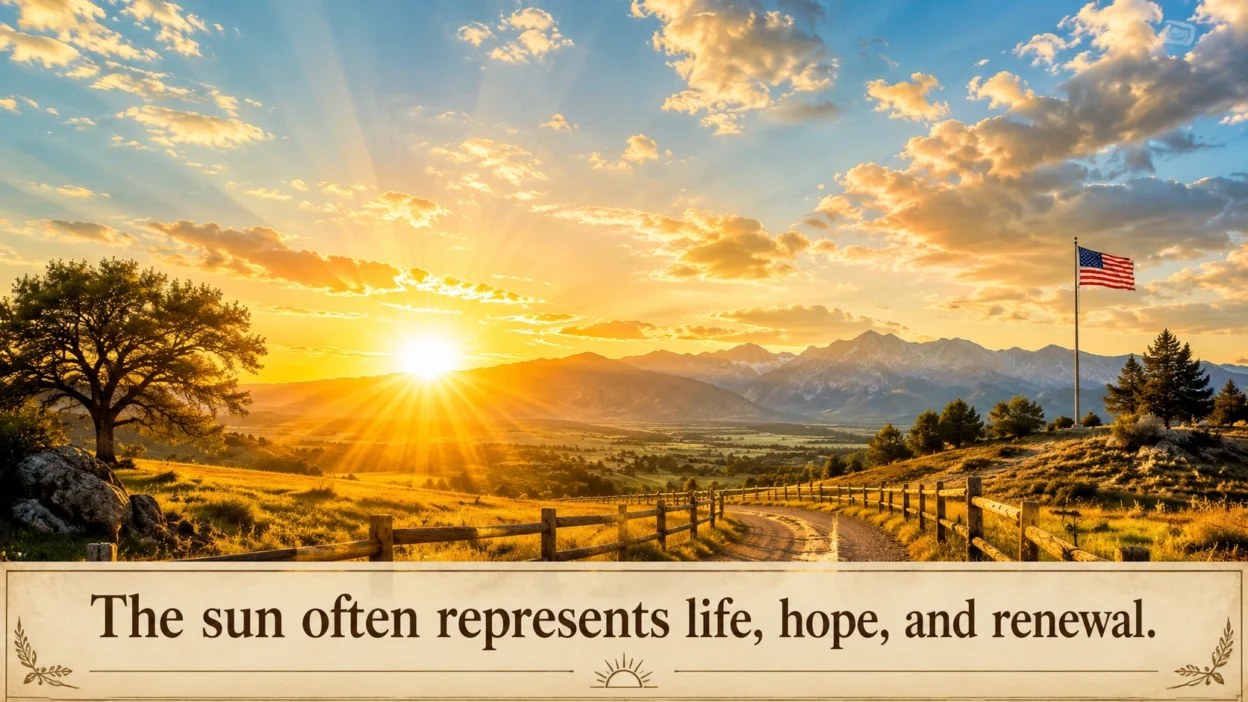
Sun symbolism refers to the symbolic meanings associated with the sun across ancient and universal themes. Through spiritual traditions, cultures, religions, myths, dreams, and art, the sun has become a timeless source of warmth and light. Its central role in sustaining life reminds us of the life-giving force behind all existence. From my experience studying cultural symbols, I have found that nearly every belief and many systems give the sun a special place because it represents hope and symbolizes lasting purpose.
The sun is often linked with vitality, power, strength, clarity, and truth because its light seems to illuminate every path before us. These ideas encourage personal growth while also expressing a divine authority that many people believe watches over the world. Its steady presence and constant, radiant nature have inspired generations, and each sunrise reflects the promise of a new beginning.
Many stories say the sun teaches wisdom through enlightenment, encouraging people to seek deeper understanding instead of fear. Whether viewed through history, faith, or everyday life, this enduring symbol continues to connect people with the same timeless values that have shaped human thought for centuries.
Quick Answer
In the USA, Sun Symbolism usually means life, hope, energy, and renewal. Broader traditions also connect it with power, guidance, truth, and divine light.
TL;DR
• The sun often symbolizes life, warmth, and clarity.
• In America, it also suggests optimism and new beginnings.
• Ancient cultures treated the sun as a sacred force.
• Sun images appear in tattoos, decor, flags, and art.
• Sunrise often suggests hope; sunset can suggest peace or closure.
What Sun Symbolism Means Today
Sun symbolism has a simple surface and a deep history. Today, most people read the sun as a sign of life, brightness, and forward motion. In the USA, it often feels hopeful and positive.
Core meanings at a glance
At a basic level, the sun points to light, energy, and growth. It also suggests truth, because light helps people see clearly. For many readers, that is the symbol’s main appeal.
• Life and vitality
• Hope and renewal
• Clarity and truth
• Warmth and comfort
Why it still matters
The sun is easy to recognize, but it never feels empty. Because it rises every day, it reminds people that change can be steady and good. That makes it useful in both spiritual and everyday settings.
What the Sun Looks Like as a Symbol
The sun usually appears as a circle, a glowing disk, or a bright face with rays. Sometimes it is drawn simply, and sometimes it is styled with sharp points, soft beams, or a rising edge above land or water.
Common visual forms
A sun symbol can look playful, sacred, modern, or antique. However, the basic shape stays the same: a round center with light coming out. That clear shape helps people understand it at a glance.
• Circle with straight rays
• Circle with wavy rays
• Rising sun over the horizon
• Stylized sun face in folk art
Colors, rays, and circles
Gold, orange, and yellow are the most common sun colors. Still, white and red suns also appear in older art and flags. The circle often matters as much as the rays, because it suggests wholeness and endless return.
Ancient Roots of Sun Symbolism
Sun symbolism is much older than modern American culture. Ancient societies watched the sun closely because crops, seasons, and survival depended on it. That made the sun powerful in religion, storytelling, and public life.
Pre-Christian and ancient traditions
Many early cultures linked the sun with gods, kings, and cosmic order. Egyptian, Mesopotamian, Greek, Roman, and Indigenous traditions each gave the sun special meaning in their own way. Even where beliefs differed, the pattern was similar: the sun meant power, life, and order.
From deity to daily symbol
Over time, the sun moved from sacred worship into broader symbolism. People still respected its power, but they also used it to mark time, direction, and seasonal change. That shift helped the symbol survive long after older religions changed.
How Sun Symbolism Grew in the USA
In the USA, the sun became part of both public culture and private meaning. It appears in state symbols, local art, patriotic imagery, and everyday language. Americans often use it to signal positivity, freedom, and a bright future.
National, civic, and cultural uses
The sun can suggest a new day, a new place, or a new chance. It also shows up in Western imagery, travel branding, and regional designs tied to warm climates. Because of that, it often feels tied to movement and possibility.
| Context | Meaning in the USA | Common Associations | Notes |
| Sunrise imagery | Hope and fresh starts | Morning, change, optimism | Often used in inspirational art |
| State and regional symbols | Place and identity | Climate, heritage, local pride | Meaning can vary by region |
| School or community graphics | Growth and positivity | Learning, teamwork, youth | Common in children’s visuals |
| Brand design | Energy and trust | Warmth, welcome, brightness | Often simplified for easy recognition |
| Personal tattoos | Renewal and strength | Survival, selfhood, healing | Usually chosen for personal meaning |
Why Americans connect with it
The sun fits a culture that values progress and self-invention. However, it is also deeply practical. People see the sun every day, so the symbol feels both personal and universal.
Sun Symbolism Across Cultures
The sun has carried important meaning in many cultures, and that broad history still shapes how people understand it today. A respectful look across traditions helps explain why the symbol feels so old and so familiar at the same time.
Respectful cross-cultural echoes
In many spiritual systems, the sun stands for divine presence, wisdom, or life force. In some traditions, it is linked with masculine energy, while in others it represents balance or cosmic order. These meanings are not identical, but they often overlap.
• Sacred light and higher power
• Daily renewal and survival
• Order, rhythm, and time
• Strength, guidance, and blessing
Emotional and Psychological Meaning
The sun is one of the easiest symbols to feel. People often connect it with warmth, safety, confidence, and energy. Because of that, it can shape the mood of a room, a story, or even a person’s image.
What it signals about identity
When someone uses sun imagery, they may want to express hope, resilience, or openness. It can also suggest that they value growth and light over fear and darkness. In that sense, the symbol often becomes a small statement about how a person wants to live.
Feelings people often attach to it
Sun symbolism can bring comfort because it suggests movement and return. It can also feel empowering, since sunlight reveals what was hidden. For many people, that mix makes it emotionally rich.
Sun Symbolism in Daily Life
The sun is not only a sacred or artistic symbol. It also appears in normal life, which is part of why it stays meaningful. Americans use it in ways that feel casual, cheerful, and easy to understand.
Everyday settings and habits
You may see sun imagery in calendars, classroom posters, home decor, and summer events. It also shows up in phrases like “sunny side,” “a ray of sunshine,” and “chasing the sun.” These habits keep the symbol active in everyday speech.
• Morning routines and sunrise photos
• Seasonal decor for summer and spring
• Encouraging messages and greeting cards
• Travel themes and vacation branding
Sun Tattoos and Body Art
Sun tattoos are popular because they can mean many things without needing a long explanation. Some people choose them for beauty, while others choose them for survival, recovery, or a major life change. The design is often simple, bold, and easy to personalize.
Why people choose it
A sun tattoo can mark a turning point, a healed season, or a belief in starting again. It may also honor a loved one, a family story, or a spiritual path. Because the symbol is so flexible, it works in many styles.
Common tattoo styles
People often choose a classic circle with rays, a tribal-inspired design, or a sunrise scene. Some prefer a tiny sun on the wrist or ankle, while others choose a larger back or shoulder piece. The style often changes the tone, but the core message stays bright.
Sun Symbolism in Decor, Fashion, and Media
Sun imagery works well in visual culture because it is simple and uplifting. Designers use it when they want a space or product to feel friendly, warm, or energetic. That is why it appears so often in homes, clothes, and digital posts.
Homes, brands, and social posts
In decor, the sun can make a room feel open and hopeful. In fashion, it can suggest confidence, playfulness, or summer energy. In social media, it often supports captions about healing, travel, gratitude, or a fresh chapter.
Modern uses at a glance
• Wall art and pillows
• Logos and package design
• Festival and summer clothing
• Photo captions about new beginnings
Misunderstandings, Misuse, and Controversies
Most sun symbolism is positive, but context still matters. A sun can mean warmth and hope in one setting, while a similar image may carry political, religious, or historical weight in another. That is why the same shape can feel very different to different viewers.
Positive symbol vs harmful use
Some sun-like images have been used by groups or movements with harmful messages. In those cases, the symbol’s meaning is not neutral anymore. It is important to look at the full context, not just the shape itself.
A careful reading helps
The sun is not automatically controversial. However, history can change how a symbol is read in public life. When that happens, the message is shaped by use, not just by design.
Read More: Moon Symbolism: Meaning, History, and Modern Uses
How the Meaning of the Sun Has Shifted
The sun has moved from sacred force to personal symbol, and that shift is still happening. In older traditions, it often stood at the center of religion and order. Today, it is more likely to appear in personal expression, design, and lifestyle imagery.
From sacred power to personal sign
Modern readers often use the sun to mean healing, growth, or self-trust. That is a softer, more individual meaning than many ancient uses. Still, the older sense of power never fully disappeared.
What changed over time
• From worship to decoration
• From cosmic rule to daily inspiration
• From shared ritual to personal identity
• From mythic power to emotional meaning
FAQs
What does Sun Symbolism mean?
Sun Symbolism refers to the deeper meaning connected with the sun. It commonly represents life, light, strength, truth, hope, wisdom, and personal growth across many cultures and beliefs.
Why is the sun a powerful symbol?
The sun is seen as a powerful symbol because it gives light and supports life. Its daily rise and set remind people of renewal, consistency, and the promise of a fresh beginning.
Is Sun Symbolism the same in every culture?
No. While many cultures connect the sun with life, power, and divine guidance, each tradition adds its own beliefs, stories, and spiritual meanings based on its history and values.
What does the sun symbolize spiritually?
Spiritually, the sun often symbolizes enlightenment, divine presence, clarity, truth, inner strength, and the life-giving force that inspires people to grow and move forward.
How is Sun Symbolism used today?
Today, Sun Symbolism appears in art, tattoos, jewelry, home décor, literature, social media, and personal beliefs. Many people use it to express hope, confidence, positivity, and new beginnings.
Conclusion
Sun Symbolism has remained meaningful for thousands of years because it connects everyday life with deeper ideas of light, vitality, truth, and renewal. Whether viewed through history, religion, mythology, or personal experience, the sun continues to remind people of strength, hope, wisdom, and the endless opportunity for growth with every new day.