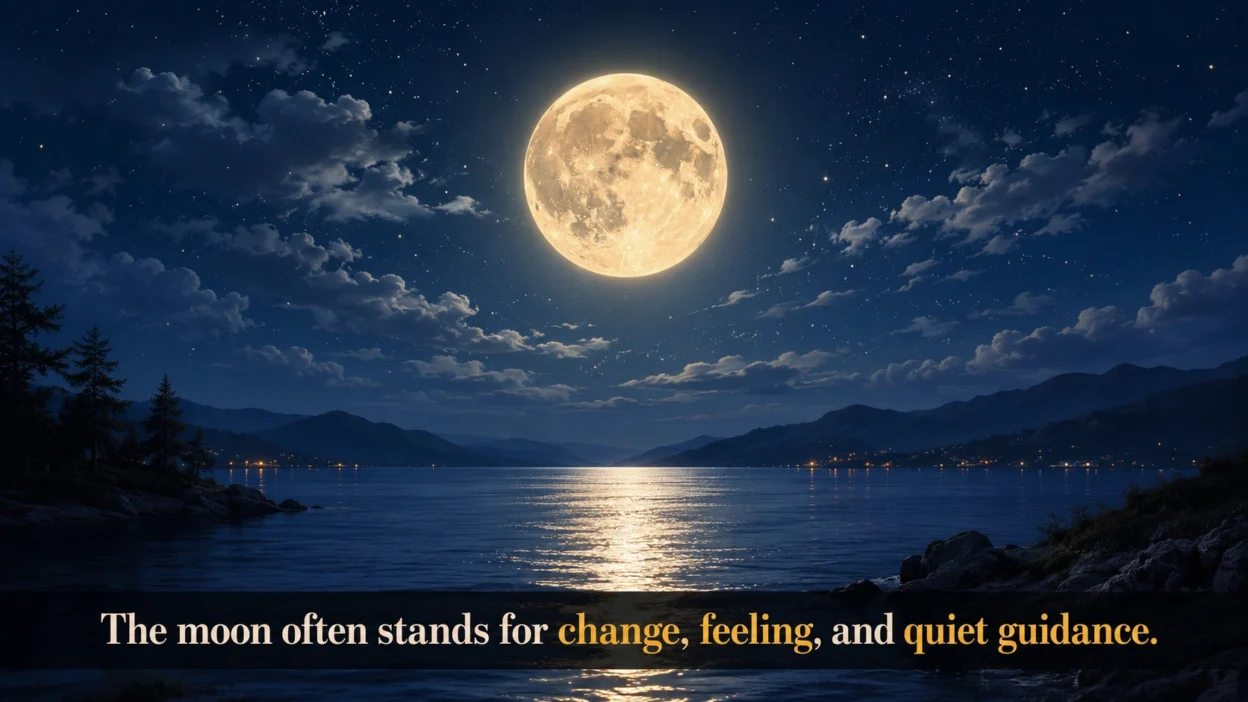
Moon Symbolism reveals how the moon holds powerful and mysterious symbolic meanings across spiritual traditions, cultures, religions, myths, dreams, and art, inspiring lasting inner awareness.
From my experience studying symbolic history, I have seen the moon remain closely linked with the night, tides, cycles, phases, and light, showing its lasting influence on nature and many belief systems. It represents and symbolizes intuition, emotion, emotional depth, reflection, femininity, transformation, the hidden aspects of the self, helping people better understand both life and themselves.
Because the moon is ever changing yet eternal, it reminds us that change is natural, growth happens step by step, and every steady pattern has meaning. By governing the rhythm of life, it reflects how people move through different seasons of life. The moon teaches that every phase has value, encouraging patience, understanding, and a deeper connection with the world around us.
Quick Answer
Moon symbolism in the USA often stands for change, intuition, emotion, and cycles of renewal. More broadly, it can also suggest mystery, feminine energy, time, and spiritual reflection.
TL;DR
- The moon often symbolizes change and cycles.
- In the USA, it feels poetic, emotional, and reflective.
- Ancient cultures linked it to gods, time, and nature.
- Moon phases often point to growth, release, and renewal.
- Today, it appears in tattoos, decor, stories, and social posts.
What Moon Symbolism Really Means
The moon is one of the easiest symbols to recognize. It can appear as a full circle, a crescent, a half moon, or a thin sliver in the night sky.
Because it changes shape so visibly, people connect it with change, growth, and emotional rhythm. It also feels quiet and watchful, which gives it a sense of inner life and hidden meaning.
Core meanings at a glance
• Change that happens over time
• Emotions that rise and fall
• Mystery hidden in plain sight
• Renewal after a dark period
What the Moon Looks Like as a Symbol
The moon’s appearance matters almost as much as its meaning. A full moon feels bright, open, and complete. A crescent moon feels delicate, new, and uncertain.
Color also shapes the message. A silver moon often feels calm and spiritual, while a golden moon can seem warm and dramatic. A red moon may feel rare, intense, or unsettling.
Common visual forms
• Full moon: wholeness, fullness, clarity
• Crescent moon: growth, beginnings, possibility
• Half moon: balance, transition, decision
• Eclipse moon: hidden forces, surprise, change
Ancient Roots of Moon Meaning
Long before modern calendars, people watched the moon to track time. Its phases helped communities follow planting, hunting, rituals, and seasonal change.
Many ancient cultures tied the moon to gods, goddesses, and cosmic order. In some traditions, it was linked with fertility and water. In others, it stood for wisdom, fate, or the power of night.
Early ideas that shaped later meanings
The moon’s pattern was useful because it repeated. That repeatability made it a natural symbol for cycles, memory, and return.
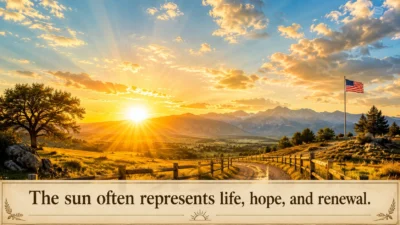
It also stood opposite the sun in many belief systems. The sun often represented active power, while the moon suggested reflection, receptivity, and mystery.
Moon Symbolism in the USA
In the United States, the moon is less tied to one strict religious meaning and more tied to mood, imagination, and identity. People use it in poems, songs, movies, and home design because it feels personal and universal at once.
American culture often treats the moon as a symbol of longing and possibility. It can suggest hope at night, distance from ordinary life, or a private space for thought.
What the moon often means to Americans
• Quiet reflection after a busy day
• Emotional honesty and inner awareness
• Romance, longing, and gentle beauty
• Freedom to dream beyond limits
Moon symbolism in everyday American life
The moon appears in children’s stories, bedtime language, and seasonal decor. It also shows up in wellness spaces, spiritual communities, and soft aesthetic trends online.
Many people use the moon as a sign of balance. It reminds them that life has phases, and not every stage lasts forever.
Moon Phases and What They Suggest
Moon phases are one of the most popular ways people interpret moon symbolism. Each phase carries a slightly different message, and those meanings still shape modern American use.
A full moon may suggest clarity or completion. A new moon may suggest fresh starts. A waning moon may suggest release, rest, or letting go.
| Context | Meaning in the USA | Common Associations | Notes |
| New moon | New beginnings | Fresh starts, setting intentions | Often linked to reset energy |
| Crescent moon | Growth and hope | Small steps, early change | Feels light and graceful |
| Full moon | Clarity and fullness | Emotions, completion, visibility | Most dramatic and widely recognized |
| Waning moon | Release and reflection | Rest, ending, clearing space | Often tied to slowing down |
| Eclipse | Hidden change | Surprise, uncertainty, shift | Feels rare and powerful |
Why phases matter so much
Phases make the moon feel alive. Instead of staying fixed, it moves through a cycle that people can watch and understand.
That makes it a strong symbol for human life. We also move through stages, and not every stage looks the same.
Moon Symbolism in Spiritual and Cross-Cultural Traditions
The moon carries many meanings around the world. In some traditions, it is linked with feminine power, fertility, and intuition. In others, it relates to wisdom, renewal, or sacred time.
In Chinese tradition, the moon is often connected with reunion and the Mid-Autumn Festival. In Hindu traditions, lunar cycles can shape religious timing and symbolism. In many Indigenous and local traditions, moon names and stories guide seasonal awareness and community life.
A respectful cross-cultural view
Because moon meanings vary, it helps not to treat one meaning as the only truth. Different cultures may see the moon as a guide, a teacher, a calendar marker, or a sacred presence.
For many readers, the important point is simple. The moon often connects human life to larger rhythms beyond daily routines.
Emotional and Psychological Associations
People often feel something when they look at the moon. It can soften the mood, slow the mind, and create space for thought.
Psychologically, the moon may suggest inward attention. It is often linked with feelings that are private, changing, or difficult to name.
Common emotional signals
• Calm after tension
• Loneliness mixed with comfort
• Hope during uncertain times
• Wonder that feels almost childlike
Why the moon feels personal
The moon does not shout. It glows. That softer presence makes it feel like a companion rather than a command.
Because of that, many people use moon imagery during hard times. It can feel like a reminder that darkness is not permanent.
Moon Symbolism in Art, Music, and Pop Culture
The moon has stayed popular because it works well in stories. It can stand for romance, mystery, danger, fantasy, or escape.
American movies, songs, and books often use the moon to mark emotional turning points. A moonlit scene usually feels more intimate than a daytime one.
Why creators keep using it
It creates mood fast. It also gives a scene a sense of time, distance, and quiet meaning without much explanation.
The moon is especially useful when a story needs contrast. It can make a safe moment feel magical, or a lonely moment feel beautiful.
Moon Tattoos, Decor, and Social Media Use
Moon tattoos are popular because they feel flexible and deeply personal. A crescent moon can suggest growth, while a full moon can suggest wholeness or power.
In home decor, moon shapes often appear in soft, modern, or bohemian styles. People use them in wall art, lamps, and bedding because they bring a calm night-time feeling.
Popular modern uses
• Tattoos for change, healing, or femininity
• Jewelry with crescent or full moon designs
• Bedroom decor with dreamy, quiet themes
• Social posts that signal reflection or mood
What people often mean by using moon images
Sometimes they are talking about a phase in life. Sometimes they just like the look. Often, it is both.
That mix is part of the moon’s strength. It can be decorative and meaningful at the same time.
Misunderstandings, Misuse, and Controversies
Moon symbolism is usually gentle, but it can be misunderstood. Some people treat it as only “feminine,” which is too narrow. Others treat it as only spiritual, which leaves out art, science, and culture.
There is also a difference between respectful use and shallow trend use. A moon image can be meaningful without belonging to any one group, but it should still be used thoughtfully when it comes from a specific cultural tradition.
Things to keep in mind
The moon is not a single universal code. Its meaning changes with context, belief, and setting.
It can also be overused in branding or online aesthetics until the symbol loses some of its depth. Even then, its core power usually remains.
How Moon Meaning Has Changed Over Time
The moon has kept its basic shape, but its meaning has shifted. In older life, it was a practical guide for time, farming, and ritual. Today, it is more often a symbol of identity, emotion, and style.
That change matters because modern readers often meet moon symbolism through design first. A tattoo, a post, or a logo may carry feeling before it carries history.
Read More: Air Symbolism: Meaning, History, and Use
The big shift in meaning
In the past, the moon often helped people organize life. Today, it often helps people explain inner life.
Still, the old and new meanings work together. The moon remains a symbol of rhythm, and human life still runs in rhythms.
FAQs
What does Moon Symbolism mean?
Moon Symbolism refers to the deeper meanings connected with the moon. It commonly represents intuition, emotions, personal growth, transformation, and the natural cycles of life.
Why is the moon a symbol of change?
The moon changes through different phases each month. Because of this, many people see it as a symbol of change, renewal, and steady personal growth.
What does the moon symbolize spiritually?
In many spiritual traditions and belief systems, the moon symbolizes inner awareness, reflection, emotional depth, femininity, and a deeper connection with the self.
Why is Moon Symbolism important in different cultures?
Many cultures, religions, myths, and artistic traditions use the moon to explain life cycles, nature, dreams, and the relationship between people and the world around them.
How can Moon Symbolism be applied in daily life?
Moon Symbolism can remind us to be patient during change, trust our intuition, reflect on our experiences, and understand that growth happens one step at a time.
Conclusion
Moon Symbolism continues to inspire people because it reflects the natural rhythm of life and reminds us that every stage has meaning. Acros
s different cultures and beliefs, the moon remains a lasting symbol of intuition, transformation, reflection, and emotional growth. Its changing phases encourage us to accept change, trust our inner awareness, and appreciate the journey of personal growth.