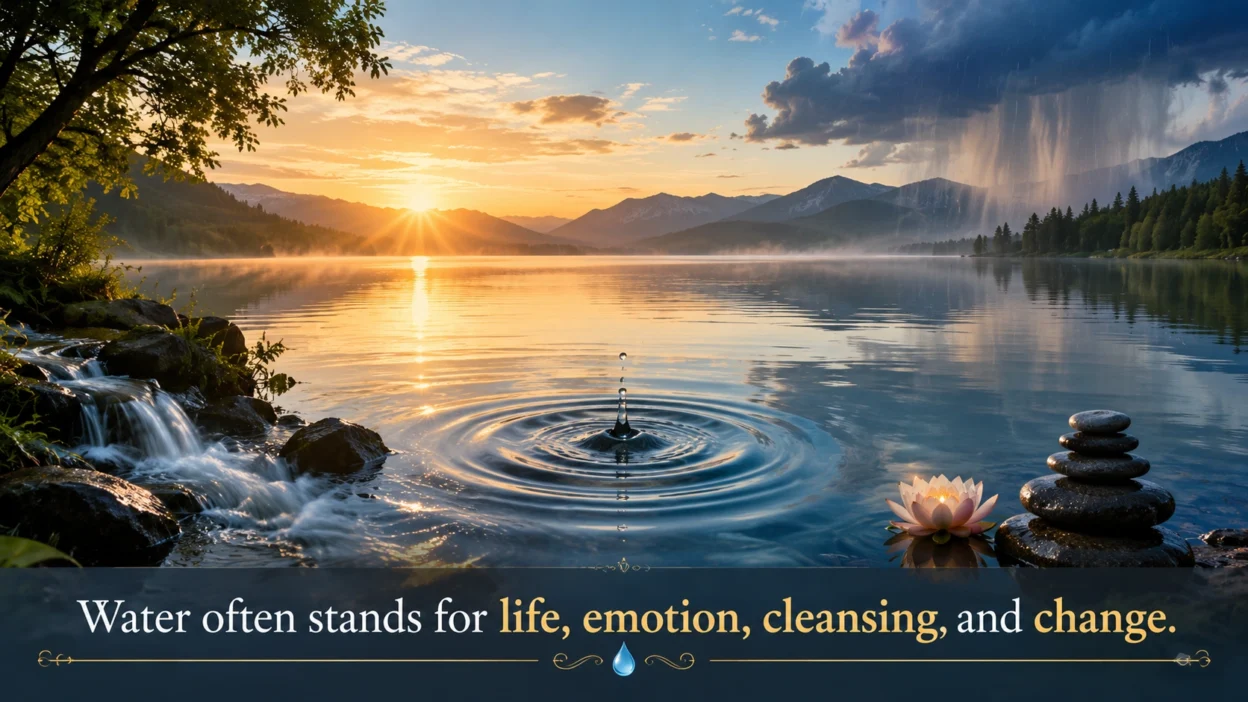
Water Symbolism reveals universal meaning through life, emotion, renewal, and spiritual growth, reflecting inner change with calm strength always. Water Symbolism has universal appeal because its symbolic meanings appear across spiritual traditions, cultures, cultural practices, religions, dreams, and art. Water is essential to life, and its life force reminds us that every living thing depends on it. It represents and symbolizes emotion, emotions, emotional balance, purification, renewal, transformation, flow, and existence. From my experience studying symbols in different contexts, I have seen how water speaks to people in deeply personal and widely shared ways.
Whether calm or turbulent, water reflects our inner and outer states of consciousness. It adapts to every situation, cleanses what it touches, and sustains life through constant movement. These qualities make it one of the most powerful symbols for understanding personal change, emotional strength, and everyday resilience.
One lesson that Water Symbolism continually teaches is that flexibility is one of the keys to lasting growth. When we accept change instead of resisting it, we often experience spiritual renewal and a deeper connection with ourselves and the world around us.
Quick Answer
Water symbolism in the USA usually stands for life, renewal, cleansing, emotion, and change. More broadly, it can also mean mystery, spiritual rebirth, and the flow of time.
TL;DR
• Water often means life, healing, and emotional depth.
• In the USA, it also suggests freedom and renewal.
• Ancient cultures linked water to creation and sacred power.
• Clear water often signals peace; rough water signals stress.
• People use water symbolism in tattoos, art, and rituals.
• Its meaning changes with context, mood, and culture.
What Water Symbolism Means at a Glance
Water is easy to see but hard to reduce. It can mean purity in one scene and danger in another. That flexibility is why it remains such a strong symbol in American life.
Core meanings people recognize
Most people connect water with a few basic ideas. These meanings often overlap, which makes the symbol feel rich instead of fixed.
• Life and survival
• Cleansing and renewal
• Emotion and sensitivity
• Change and movement
• Mystery and the unknown
Why it feels so universal
Every person needs water. However, everyone also has a personal memory tied to it. It may remind someone of rain, the ocean, baptism, a flood, or a childhood lake.
Because of that, water symbolism feels both shared and personal. It works in religion, art, psychology, and everyday speech without losing impact.
How Water Appears as a Symbol
Water does not need a special shape to carry meaning. Its symbolism depends on form, movement, color, and setting. A still pond says something different from a stormy sea.
Common visual forms
The way water appears changes the message it sends. For example, a glass of water feels very different from crashing waves.
• Still water suggests calm and reflection
• Flowing water suggests progress and life
• Rain suggests cleansing and emotional release
• Floods suggest overwhelm or loss of control
• Ice suggests stillness, distance, or emotional freeze
Colors, light, and context
Blue water often feels peaceful, while dark water can feel deep or uncertain. Clear water usually suggests purity, but muddy water can imply confusion or danger.
Also, sunlight on water often makes the symbol feel hopeful. In contrast, water at night may feel secret, spiritual, or unsettling.
Ancient Roots and Early Civilizations
Water symbolism is older than most written history. Early people lived near rivers, lakes, rain, and seas, so water shaped both survival and belief. That practical need became spiritual meaning.
Water in ancient creation stories
Many early cultures saw water as the place where life began. In some stories, the world rises from a cosmic sea. In others, water existed before land, order, or form.
This idea appears in Mesopotamian, Egyptian, Greek, and other ancient traditions. The message is simple: water comes before growth.
Sacred water in early rituals
Ancient people used water in washing, blessing, and initiation rituals. They linked it to purity, new identity, and divine favor. That pattern still appears today in many faith traditions.
Water also marked boundaries. It could separate the known from the unknown, or the living from the dead. That tension made it sacred and powerful.
Water Symbolism in the USA
In the USA, water carries both practical and emotional meaning. It matters in daily life, but it also shapes national identity. From coastlines to rivers, water is tied to movement, opportunity, and open space.
American themes tied to water
Water often reflects values Americans admire. It suggests freedom, travel, fresh starts, and natural beauty. At the same time, it can also warn of storms, drought, and climate risk.
In literature and film, water often marks a turning point. A river crossing, a storm, or a beach scene can signal change in a character’s life.
Everyday American settings
Water symbolism appears in many familiar places. It shows up in beaches, lakes, backyard pools, rainstorms, and city fountains. It also appears in memorials, churches, and school lessons.
Here is a simple view of how Americans often read water in different settings:
| Context | Meaning in the USA | Common Associations | Notes |
| Ocean | Freedom, vastness, power | Travel, summer, the unknown | Can feel peaceful or dangerous |
| River | Passage, change, journey | History, borders, movement | Often linked to life stages |
| Rain | Cleansing, sadness, renewal | Growth, storms, reflection | Mood depends on intensity |
| Baptismal water | New beginning, faith | Grace, rebirth, identity | Strongly tied to Christian practice |
| Drinking water | Life, health, need | Care, survival, balance | Usually plain, but deeply symbolic |
Why it matters culturally
Water is part of how Americans describe resilience. People talk about “rising after the flood” or “going with the flow.” These phrases show how water became part of the country’s emotional language.
It also appears in public concern. Droughts, hurricanes, and water quality shape how people think about control, loss, and protection.
Water in Faith and Spiritual Traditions
Water has deep spiritual meaning across many traditions. In the USA, people encounter it most often through Christianity, but it also appears in other faiths and spiritual practices. Its use is usually respectful and symbolic rather than literal.
Cleansing and rebirth
In Christianity, water often stands for cleansing from sin and a new life. Baptism is the clearest example. The act of water touching the body represents inner change.
Other traditions also use water for purification. The shared idea is that water can wash away what is old or unclean.
Respectful cross-cultural meanings
In many spiritual systems, water connects to life force, blessing, or sacred presence. Some traditions honor rivers, springs, or holy wells. Others view water as a bridge between the human and divine.
These meanings are not identical, but they often share the same core ideas. Water brings life, removes impurity, and marks transition.
Emotional and Psychological Meaning
Water symbolism speaks strongly to feelings. That is one reason it works so well in art, therapy language, and personal expression. People often use it when they want to describe inner states they cannot easily explain.
Water as a mirror of emotion
Calm water often reflects peace, trust, and balance. Rough water can suggest anxiety, grief, or pressure. Deep water may point to hidden feelings or unexplored parts of the self.
Because water moves, it also suggests emotional flow. This makes it useful for describing mood changes, healing, and self-discovery.
What people often feel from water imagery
Water can trigger a strong emotional response, even without words. It may feel comforting, cleansing, lonely, or powerful.
• Peace during quiet shoreline scenes
• Relief after rain or bathing
• Fear when water feels deep or wild
• Hope when water suggests a fresh start
• Reflection when water acts like a mirror
Water in Dreams and the Mind
Water appears often in dreams, and many people search for its meaning. In symbolic reading, dream water usually reflects emotion, life changes, or hidden thoughts. The details matter a lot.
Dream states and water types
Clear water often suggests clarity, while muddy water can suggest confusion. A flood may feel like being overwhelmed. A calm lake may point to inner stillness.
Dream water rarely has one fixed meaning. Instead, it reflects the dreamer’s emotional situation and the dream’s setting.
Why the mind uses water imagery
The mind reaches for water because it already connects to deep feeling. Water is flexible, hard to hold, and always changing. That makes it a natural symbol for the unconscious.
In simple terms, water in dreams often says, “Pay attention to your feelings.”
Modern Uses in Tattoos, Decor, and Media
Water symbolism is still very alive today. People choose it for tattoos, home decor, branding, and online images because it feels clean, modern, and meaningful. It also adapts easily to different styles.
Tattoos and personal identity
A water tattoo may represent healing, movement, freedom, or survival. Waves are popular because they suggest strength and flow at the same time. Some people choose rain, drops, or oceans for memory or renewal.
Water tattoos often feel personal rather than loud. They can mark a life change, a spiritual path, or a deep emotional season.
Decor, style, and digital culture
Water imagery appears in calm interior design, spa spaces, and nature-themed art. It also shows up in social media posts about self-care, rest, and emotional reset. In branding, water often suggests purity, freshness, or trust.
Common modern uses
• Wellness and spa branding
• Ocean and lake photography
• Minimalist tattoos and line art
• Nature-based home decor
• Posts about healing and balance
Water in Holidays, Rituals, and Daily Life
Water symbolism is not only poetic. It also lives in ordinary habits and seasonal traditions. Many people encounter it without naming it as symbolism.
Ritual and celebration
Water appears in baptisms, blessing rituals, spring ceremonies, and memorial moments. It can stand for welcome, grief, cleansing, or new beginnings. Even a simple act like sprinkling water can feel meaningful.
Holiday traditions often use water imagery too. Rainy spring weather, beach vacations, and summer lake trips all carry a sense of renewal.
Ordinary American life
Everyday water use also matters symbolically. Drinking water can mean care for the body. A shower can feel like a reset after stress. Even washing dishes can become a quiet, grounding routine.
That is part of water’s power. It makes symbolic meaning feel close to home.
Misunderstandings and Negative Meanings
Water is often seen as gentle, but it is not always kind. Floods, storms, drowning, and pollution remind people that water can also be dangerous. Symbolism changes when fear enters the scene.
When water means threat
Dark or violent water often suggests chaos, loss, or emotional overload. A flood can symbolize being unable to control events. Storm water may suggest instability, pressure, or danger.
This does not erase positive meanings. Instead, it shows how water symbolism holds both sides of life.
When meanings are confused
Sometimes people treat all water imagery as the same. However, context matters a lot. A baptismal font, a hurricane, and a glass of water do not send the same message.
It also helps to separate cultural tradition from personal interpretation. Water can be sacred in one setting and purely practical in another.
How Water Symbolism Has Changed Over Time
Water symbolism has kept its core meanings, but modern life changed the details. Ancient people mainly focused on survival, blessing, and creation. Today, people also connect water to wellness, ecology, and identity.
Read More: Fire Symbolism: Meaning, History, and USA Uses
From sacred force to modern metaphor
Older traditions often treated water as a living power. Modern readers still feel that, but they also use water in psychological and lifestyle ways. It now stands for self-care, emotional balance, and flow.
That shift does not weaken the symbol. Instead, it gives it more layers.
What stayed the same
Even with all the change, some ideas remain constant. Water still means life, movement, and transformation. It still marks beginnings and endings.
In that sense, water symbolism has aged well. It still speaks clearly to modern Americans.
FAQs
1. What does water symbolize?
Water commonly symbolizes life, emotions, purification, renewal, transformation, and the continuous flow of existence. Its ability to adapt and sustain life makes it one of the most meaningful symbols across cultures and spiritual traditions.
2. Why is water considered a spiritual symbol?
Many spiritual traditions view water as a symbol of cleansing, healing, rebirth, and spiritual renewal. Rituals involving water often represent letting go of the past and beginning a new chapter.
3. What does calm water symbolize?
Calm water usually represents peace, emotional balance, clarity, inner harmony, and self-awareness. It reflects a settled mind and a sense of stability.
4. What does turbulent water symbolize?
Turbulent water often symbolizes emotional struggles, uncertainty, personal challenges, and transformation. It can also represent the process of growth through difficult experiences.
5. How is water symbolism used today?
Today, water symbolism appears in art, literature, tattoos, meditation, home décor, films, and personal development. People often use it to express resilience, emotional healing, flexibility, and new beginnings.
Conclusion
Water Symbolism continues to inspire people because it connects the physical and emotional sides of life in a simple yet powerful way. Whether it appears as a quiet lake, a flowing river, gentle rain, or powerful ocean waves, water reminds us to adapt, grow, and move forward. Its enduring symbolism of life, purification, emotion, and renewal makes it one of the most universal and timeless symbols found throughout human history.