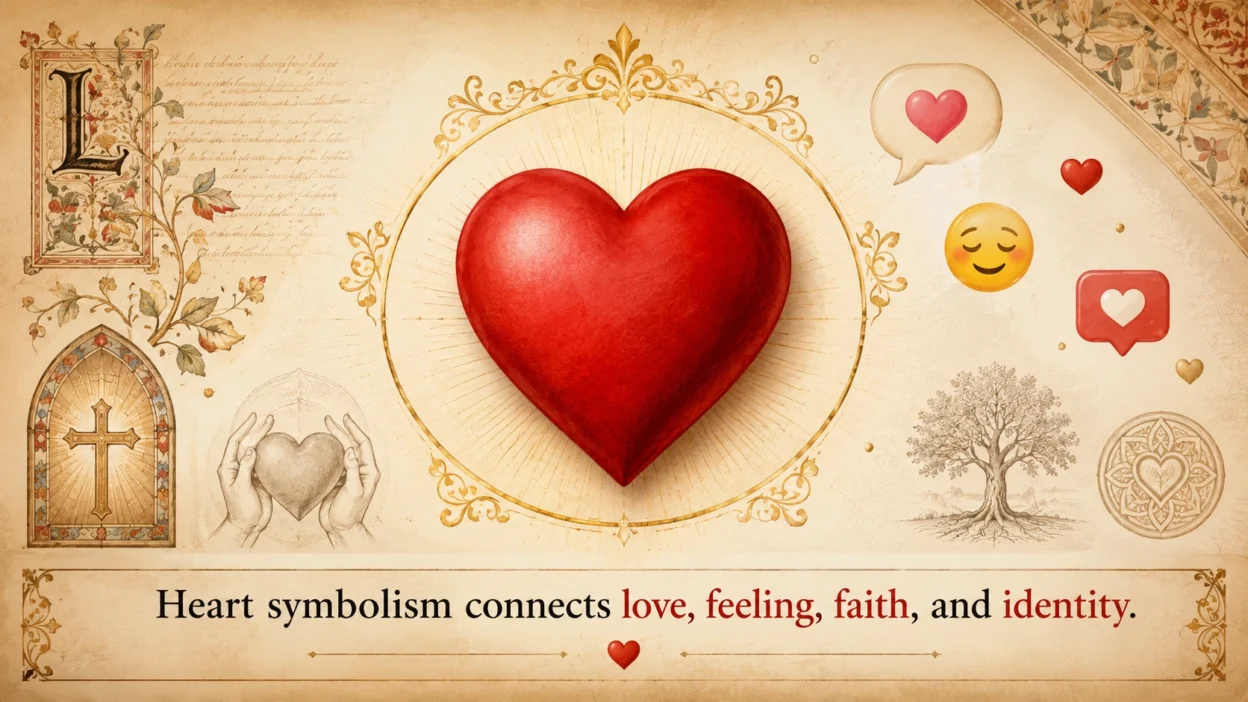
Heart Symbolism shows how the heart has become one of the most powerful and universal symbols, inspiring people across spiritual traditions, cultures, religions, myths, dreams, art, and belief systems. This lasting meaning continues to shape how people understand life, love, and personal values today.
More than a physical organ, the heart is viewed as the center of life force and emotion. Its symbolic meanings have been shaped across time, and every role it has played represents, symbolizes, and has symbolized love, compassion, courage, sincerity, and emotional depth.
From my experience studying symbols in different traditions, I have found that the heart points to the deepest truth of the self. It encourages true understanding, teaches that real growth begins within, and reminds us that inner wisdom grows through honest feelings. This is what the heart means to many people who want to feel, connect, and live authentically in an authentic way.
Quick Answer
What does Heart Symbolism mean?
Heart symbolism usually stands for love, affection, and emotional connection in the USA. It can also suggest compassion, faith, grief, and inner strength, depending on the context.
TL;DR
- The heart symbol most often means love and affection.
- In the USA, it appears everywhere, from cards to emojis.
- Its modern shape became popular in medieval Europe.
- Ancient roots may connect it to life, mind, and desire.
- Different colors and styles change the meaning.
- Broken hearts often signal loss, pain, or healing.
What Heart Symbolism Looks Like
The heart symbol is not a medical drawing. It is a smooth, rounded shape with two curves and a pointed bottom. People often color it red, pink, white, black, or gold.
That shape makes it easy to recognize at a glance. Because it is simple, it works well in art, apps, gifts, and tattoos.
Common visual forms
• A solid red heart for love or romance
• A pink heart for softness, warmth, or friendship
• A broken heart for loss or heartbreak
• A black heart for grief, irony, or edge
• A white heart for peace, purity, or remembrance
Where the Heart Shape Came From
The familiar heart shape did not start as a digital icon. It developed over time in European art, writing, and decoration.
Many historians say the shape became strongly linked to love in the Middle Ages. Before that, similar shapes were often used for decoration, plants, or heraldic design.
Ancient roots and early ideas
Long before the modern symbol, people connected the heart with life and feeling. Ancient thinkers in Greece and Rome often treated the heart as the center of emotion and thought.
Other cultures also gave the heart deep meaning. In some traditions, it was tied to the soul, conscience, or inner self. That broader idea helped the symbol survive.
Medieval Europe and romantic love
The heart shape became more clearly linked to romance in medieval Europe. Courtly love literature and religious art helped shape that meaning.
By the late Middle Ages, the heart was becoming a sign of devotion, longing, and emotional truth. That shift still shapes how Americans read the symbol today.
Why Heart Symbolism Means Love in the USA
In the United States, the heart is the default symbol for love. People use it for partners, family, friends, pets, causes, and even cities.
Valentine’s Day gave the symbol a huge role in American life. However, it also became part of everyday language through cards, packaging, advertising, and digital reactions.
Everyday American meanings
• Romantic love and attraction
• Care, support, and kindness
• Friendship and emotional closeness
• Pride in a place, team, or cause
• A warm or affectionate personality
Common contexts in the USA
| Context | Meaning in the USA | Common Associations | Notes |
| Valentine’s Day | Romance and affection | Cards, candy, flowers | The strongest seasonal use |
| Social media | Reaction or support | Likes, comments, replies | Can be casual or emotional |
| Tattoos | Personal meaning | Love, memory, loyalty | Often deeply individual |
| Gifts and decor | Warmth and welcome | Homes, mugs, wall art | Friendly and familiar |
| Public life | Solidarity or pride | Campaigns, city branding | Often simple and upbeat |
Heart Symbolism in Religion and Spiritual Life
The heart is not only about romance. In many faith traditions, it also points to devotion, mercy, and the inner life.
That matters in the USA because religious symbols often appear in art, churches, and family traditions. The heart can express love for God, compassion for others, or a desire for purity.
Sacred and spiritual meaning
In Christian art, the heart often appears as a sign of deep love and sacrifice. The Sacred Heart tradition, for example, links the heart with compassion and spiritual devotion.
In broader spiritual language, the heart can mean the center of a person’s true self. It may suggest honesty, conscience, or a life guided by feeling and care.
Emotional and Psychological Meaning
The heart symbol speaks quickly because it feels personal. Most people connect it with warmth, attachment, safety, and belonging.
It can also show vulnerability. A heart can mean, “I care deeply,” but it can also mean, “I have been hurt.”
What the symbol often signals
• Emotional openness
• Loyalty and tenderness
• Hope after pain
• Desire for closeness
• A kind or generous spirit
Why people respond to it so strongly
The heart is easy to read. Because of that, it works well when words feel too heavy or too slow.
It can soften a message, deepen a memory, or make grief easier to share. That emotional flexibility is a big reason it lasts.
Heart Colors and Variations
Color changes the meaning of heart symbolism in a big way. A red heart rarely means the same thing as a white or black one.
In the USA, people often learn these color cues through apps, texting, and social media. Even when the meanings are not fixed, the shades still guide the feeling.
Color meanings many Americans use
Red Heart
Red is the classic choice for romance, strong affection, and deep care. It is the most familiar and most direct version.
Pink Heart
Pink often feels softer, sweeter, and more playful. It can suggest affection, admiration, or youthful charm.
White Heart
White can suggest peace, purity, remembrance, or gentle support. It often feels calm and respectful.
Black Heart
Black may signal grief, irony, dark humor, or emotional distance. In some spaces, it also shows style or edge.
Green, Blue, and Other Colors
Other colors often follow mood, identity, or community use. Their meaning may shift by platform, group, or trend.
Heart Symbolism in Tattoos and Body Art
Heart tattoos are popular because they are personal and easy to customize. A small outline can mean one thing, while a detailed design can mean something much deeper.
Many Americans choose hearts to honor a person, a bond, or a life moment. Others use them to show healing after loss or to mark self-love.
Popular tattoo meanings
• A loved one’s memory
• Romantic commitment
• Family loyalty
• Healing after heartbreak
• Faith in love again
Why people choose heart tattoos
The symbol is compact, clear, and emotional. It can be placed almost anywhere and still carry strong meaning.
It also works with names, dates, flowers, arrows, or flames. That makes it easy to turn a shared symbol into something very personal.
Heart Symbolism in Social Media and Emojis
Digital life changed the heart symbol in a big way. A heart can now mean “I agree,” “I care,” “I saw this,” or simply “I liked this.”
That flexibility is useful, but it can also cause confusion. A heart in a text message may feel warmer, more serious, or more romantic than the sender intended.
Digital uses people see every day
• Reaction buttons on apps
• Reply symbols in chats
• Emoji in captions and comments
• Profile icons and sticker packs
• Charity and campaign graphics
Why digital hearts can be tricky
A red heart may feel intimate in one conversation and ordinary in another. Context matters more than the symbol itself.
That is why tone can shift so quickly online. A simple heart may comfort one person and confuse another.
Heart Symbolism in Holidays and Gifts
In the United States, the heart is strongly tied to gift culture. It shows up in Valentine’s Day candy, greeting cards, home decor, and themed packaging.
However, it is not limited to one holiday. You can see it at birthdays, anniversaries, weddings, memorials, and family celebrations.
Where it shows up most
• Valentine cards and chocolate boxes
• Wedding decorations and favors
• Memorial keepsakes and sympathy gifts
• Friendship gifts and matching items
• Home decor and seasonal displays
The heart helps people mark moments that matter. Because it feels familiar, it makes emotion easy to share.
Misunderstandings and Controversies
The heart symbol seems harmless, but context can change everything. What looks sweet in one place can feel shallow, manipulative, or inappropriate in another.
There is also a difference between the heart as a general symbol and the way some groups misuse symbols for hateful or exclusionary messages. In those cases, the issue is not the heart itself, but the intent behind it.
Common points of confusion
• A heart may show support, not romance
• Color can change the meaning
• A broken heart is not always about dating
• Some uses are ironic, not affectionate
• Religious hearts and emoji hearts are not the same
Neutral way to read it
The safest approach is to read the whole message. Look at the setting, the tone, and the relationship between people.
That keeps the symbol from being oversimplified. It also helps avoid accidental misunderstandings.
Read More: Sun Symbolism: Meaning, History, and USA Use
How Heart Symbolism Has Changed Over Time
The heart symbol has stayed familiar, but its meaning has widened. It once leaned heavily toward romance and devotion.
Today, it also covers mental health, self-care, friendship, identity, grief, and public support. That shift reflects a broader American culture where emotion is shared more openly.
Major shifts people notice
• From courtly love to everyday affection
• From sacred devotion to casual texting
• From formal art to quick digital reactions
• From private feeling to public identity
• From one meaning to many shades
The heart is still the same shape, but people now use it in many more ways. That makes it one of the most flexible symbols in modern life.
FAQs
1. What does heart symbolism mean?
Heart symbolism commonly represents love, compassion, emotion, courage, sincerity, and inner wisdom. Across many cultures and belief systems, it reflects the emotional and spiritual center of a person rather than just the physical heart.
2. Why is the heart a universal symbol?
The heart is considered a universal symbol because nearly every culture has connected it with life, human emotions, relationships, and personal identity. Although meanings vary, it is widely recognized as a sign of deep feeling and connection.
3. What does the heart symbolize in spiritual traditions?
In many spiritual traditions, the heart symbolizes the soul, compassion, truth, forgiveness, and divine love. It is often viewed as the place where inner growth, faith, and wisdom begin.
4. Does heart symbolism have the same meaning in every culture?
No. While love is the most common meaning, different cultures also associate the heart with courage, loyalty, honesty, sacrifice, healing, or spiritual awakening. The exact interpretation depends on historical and cultural context.
5. Why is the heart symbol still popular today?
The heart remains popular because it is simple, recognizable, and emotionally meaningful. It appears in art, jewelry, tattoos, emojis, greeting cards, social media, and logos, making it one of the world’s most enduring symbols.
Conclusion
Heart symbolism has remained meaningful across history because it speaks to experiences that people share regardless of culture or belief. It continues to represent love, emotion, compassion, courage, sincerity, and inner truth, while also reminding us of the importance of genuine human connection. Whether found in ancient traditions, religious art, modern design, or everyday communication, the heart remains a timeless symbol of what it means to live with feeling, purpose, and authenticity.