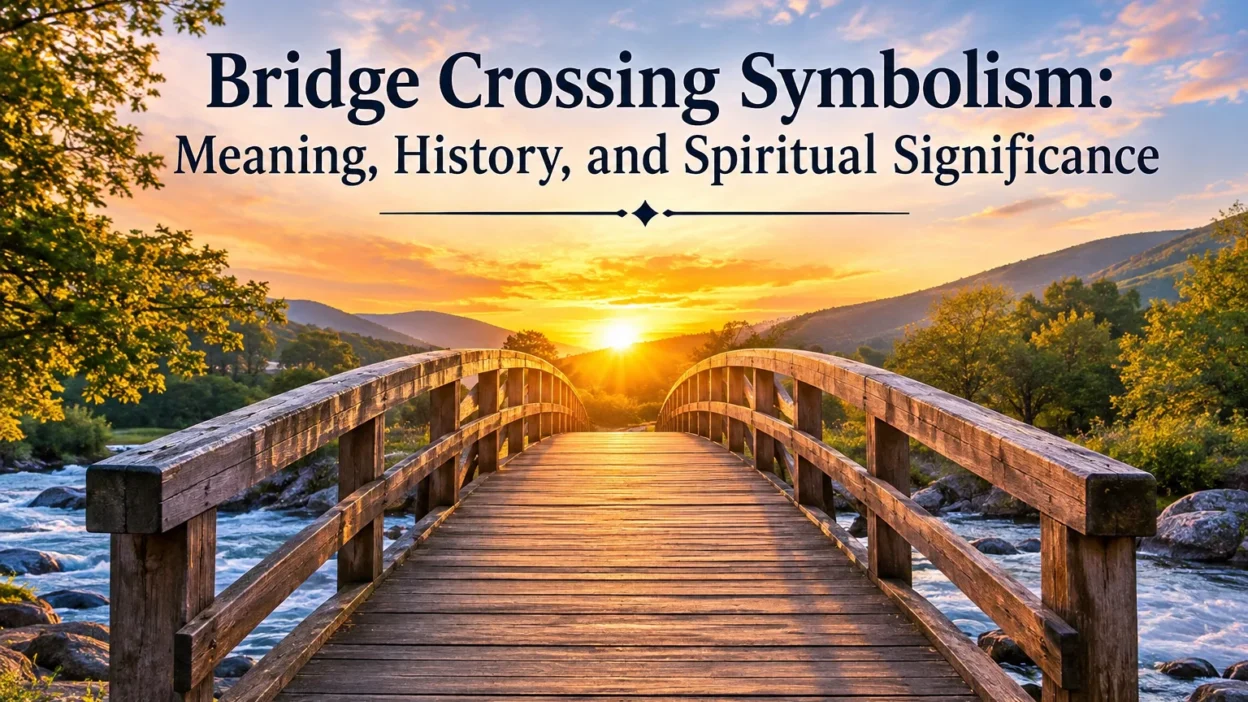
Bridge crossing symbolism explores what it means to move from one stage of life to another. In the United States, crossing a bridge often represents change, personal growth, courage, and the hope of reaching a better future. Whether someone walks across an old stone bridge or drives over a modern suspension bridge, the journey can suggest more than physical movement.
A bridge connects two places that would otherwise remain separated. Crossing it adds another layer of meaning because the traveler must move beyond a familiar starting point. The experience can represent leaving childhood behind, starting a new career, rebuilding a relationship, or beginning life in a different place.
However, bridge crossing doesn’t always symbolize an easy journey. A narrow bridge, a damaged crossing, or a bridge disappearing into fog can suggest uncertainty and fear. Understanding these details helps explain why bridges appear so often in American stories, personal artwork, spiritual reflections, and everyday expressions about moving forward.
Quick Answer
Bridge crossing symbolism in the United States primarily represents transition, courage, connection, and new beginnings. Crossing a bridge can symbolize leaving the familiar behind, overcoming obstacles, and moving toward a new opportunity. In broader spiritual and cultural traditions, it may also represent transformation, reconciliation, and the passage between different states of existence.
TL;DR
- Crossing a bridge symbolizes change, progress, and movement into a new chapter.
- Bridges connect separated places, people, communities, and ideas.
- A difficult crossing can represent fear, uncertainty, or a personal challenge.
- American culture often connects bridges with freedom, opportunity, travel, and unity.
- Spiritual interpretations may associate crossing with transformation or a passage between worlds.
- Bridge tattoos and artwork can express resilience, hope, and personal growth.
What Does Bridge Crossing Symbolism Mean?
Bridge crossing symbolism comes from the simple act of moving between two separate places. Symbolically, the starting point represents what you know, while the opposite side suggests a new experience or possibility.
In American culture, this image often reflects progress, independence, and the willingness to face change. However, the meaning depends on the bridge, the journey, and the traveler’s circumstances.
The Main Symbolic Meanings
- Transition: Moving from one stage of life into another.
- Courage: Facing uncertainty instead of remaining in familiar surroundings.
- Connection: Bringing together people, communities, or opposing ideas.
- Freedom: Leaving restrictions behind and exploring new possibilities.
- Personal growth: Learning from challenges and becoming more confident.
- Hope: Believing that something better may exist beyond present difficulties.
Why Crossing Matters More Than Standing Still
A bridge represents possibility, but crossing it suggests action. The traveler must decide whether to move forward, pause, or turn back.
For example, someone starting college might view a bridge crossing as a symbol of independence. Similarly, a person rebuilding their life after a difficult experience might see it as a reminder that progress begins with one step.
Historical Origins of Bridge Symbolism
Bridges have connected settlements, trade routes, and distant communities for thousands of years. Their practical purpose gradually gained symbolic importance as people connected physical journeys with personal, social, and spiritual experiences.
Although bridge crossing symbolism has no single origin, similar ideas appear in ancient mythology, religious traditions, and folklore. These interpretations developed independently across different societies.
Ancient Bridges and Human Progress
Early bridges often consisted of fallen trees, stones, planks, or ropes placed across natural obstacles. Later, stronger wooden and stone structures made travel safer and helped communities expand.
As bridges connected distant places, they also became signs of cooperation and human achievement. Building a bridge required knowledge, resources, and shared effort.
In ancient societies, crossing a river could also mark entry into unfamiliar territory. Therefore, the crossing naturally became associated with exploration, risk, and change.
Bridges in Ancient Mythology
Ancient stories frequently describe rivers and other boundaries separating different worlds. In Greek mythology, the River Styx marks a boundary associated with the realm of the dead.
Norse mythology includes Bifröst, a radiant bridge connecting the world of humans with Asgard, the realm of the gods. This bridge represents a connection between different levels of existence.
These stories aren’t identical, but they share an important theme: crossing a boundary can mean entering a different state of being.
From Practical Structures to Personal Metaphors
Over time, bridges became powerful images in literature, philosophy, and everyday speech. Writers used journeys across bridges to represent decisions, discoveries, and changes in identity.
Today, phrases such as “crossing a bridge” can describe dealing with a future problem or entering an unfamiliar situation. The physical structure remains the same, but its meaning reaches far beyond engineering.
Bridge Crossing Symbolism in American Culture
In the United States, bridges often represent opportunity, movement, and the ability to overcome obstacles. This meaning fits a culture shaped by migration, transportation, regional connections, and stories of personal reinvention.
American bridges also carry local and national significance. Some become symbols of a city’s identity, while others represent major achievements in engineering and public cooperation.
Bridges as Symbols of Freedom and Opportunity
American history includes long journeys across rivers, mountain ranges, and other difficult landscapes. Bridges helped people travel, establish communities, exchange goods, and connect distant regions.
As a result, crossing a bridge can suggest the freedom to explore new places and pursue a different future. For immigrants, travelers, and people moving between states, the image may also represent a fresh start.
However, this symbolism doesn’t mean every journey offers equal opportunities. Historical barriers, unequal access, and social divisions have affected who could travel freely and benefit from new connections.
Famous American Bridges and Their Meanings
The Golden Gate Bridge often represents California, exploration, and ambitious engineering. Crossing it can evoke the excitement of travel and the promise of discovering something new.
The Brooklyn Bridge connects Manhattan and Brooklyn across the East River. It can symbolize connection, urban identity, ambition, and the relationship between communities.
The Edmund Pettus Bridge in Selma, Alabama, is closely associated with the 1965 voting rights marches and the violence of Bloody Sunday. It represents the struggle for civil rights, collective courage, and the continuing pursuit of equal access to democracy.
Why These Crossings Matter
American bridges can represent very different experiences. One may inspire wonder, another may celebrate everyday connection, and another may recall painful struggles for justice.
Their shared symbolism comes from movement across a divide. Yet the history attached to each bridge gives that movement a distinct meaning.
Spiritual Meaning of Crossing a Bridge
Spiritually, crossing a bridge can represent moving from an old understanding toward a new one. Some people interpret the journey as personal awakening, renewed faith, or a closer connection with their inner values.
These meanings depend on individual beliefs and cultural traditions. There isn’t one universal spiritual interpretation that applies to everyone.
Crossing Into a New Stage of Life
A bridge may symbolize the transition between familiar beliefs and a different outlook. For example, someone questioning their priorities might imagine crossing a bridge toward greater peace or understanding.
The image can also represent leaving behind habits that no longer fit. However, spiritual growth doesn’t always require rejecting the past; sometimes it means understanding it differently.
A Bridge Between Earth and Heaven
Several religious and mythological traditions describe bridges connecting earthly existence with a spiritual realm.
In Zoroastrian tradition, the Chinvat Bridge is associated with the soul’s passage after death and the consequences of one’s life. Islamic tradition includes the Sirat, a bridge associated with the passage over Hell on the Day of Judgment.
These beliefs have specific theological meanings and shouldn’t be reduced to a general metaphor. Nevertheless, they demonstrate how crossing a bridge can represent a consequential passage between states of existence.
What a Spiritual Crossing May Represent
- Releasing outdated beliefs and welcoming deeper understanding.
- Seeking peace after conflict or emotional hardship.
- Moving toward forgiveness without denying past harm.
- Finding meaning during an uncertain period of life.
- Exploring a stronger connection with personal values or faith.
Emotional and Psychological Meaning of Crossing a Bridge
Crossing a bridge can feel exciting, frightening, peaceful, or overwhelming. These reactions often depend on whether the traveler feels prepared for the journey and trusts the path ahead.
Psychologically, a bridge offers a useful image for thinking about change. It provides a way to picture the space between a current situation and a desired future.
Courage in the Face of Uncertainty
A person standing before a long bridge may feel nervous about what lies beyond it. Taking the first step can represent a willingness to act despite uncertainty.
For example, accepting a new job might feel like crossing a bridge. You leave a familiar routine behind without knowing exactly how the next chapter will unfold.
The symbolism emphasizes action rather than guaranteed success. Crossing represents a decision to engage with change, not proof that every outcome will be positive.
Connection and Emotional Healing
Bridges can also symbolize the effort required to reconnect with another person. Rebuilding trust often involves communication, patience, and repeated acts of understanding.
In this context, crossing a bridge doesn’t mean pretending that disagreements never happened. Instead, it can represent a willingness to work toward a healthier relationship.
Common Emotional Associations
| Bridge or crossing experience | Possible emotional meaning | Common life connection |
|---|---|---|
| Crossing a sturdy bridge | Confidence and stability | Starting a planned project |
| Walking across a narrow bridge | Vulnerability and courage | Making a difficult decision |
| Reaching the opposite side | Relief and accomplishment | Completing a major goal |
| Crossing in heavy fog | Uncertainty and anticipation | Entering an unfamiliar stage |
| Stopping midway | Hesitation or reflection | Reconsidering a choice |
These associations are interpretive rather than fixed psychological rules. Your personal experiences may give the same bridge an entirely different meaning.
What Does Crossing a Bridge Mean in Dreams?
A bridge in a dream is often interpreted as an image of transition, uncertainty, or connection. However, dreams don’t have universally established symbolic meanings, and a bridge doesn’t predict a specific event.
Your feelings during the dream and your current circumstances may offer more useful clues than the bridge alone.
Walking Across a Bridge
Walking across a bridge may reflect a change you’re considering or already experiencing. If the journey feels calm, you might associate it with confidence or readiness.
However, feeling frightened while crossing could reflect concerns about an uncertain decision. It doesn’t necessarily mean the decision is wrong.
Crossing a Broken or Dangerous Bridge
A damaged bridge may bring to mind an unreliable plan, strained relationship, or fear of failure. It could be a useful prompt to consider what currently feels uncertain in your life.
Still, the image isn’t proof that something bad will happen. Dreams can combine memories, emotions, and ordinary experiences in unpredictable ways.
Reaching the Other Side
Arriving safely may symbolize relief, progress, or the hope of completing a difficult task. You might connect the image with an exam, a career change, or a personal challenge.
Rather than treating the dream as a prediction, ask yourself what transition you’re currently facing. That question may help you understand why the image feels meaningful.
Bridge Crossing Symbolism in Love and Relationships
In relationships, crossing a bridge often symbolizes understanding, reconciliation, and the willingness to meet another person halfway. It suggests that connection sometimes requires effort from both sides.
This meaning appears in romantic relationships, friendships, family life, and even disagreements between communities.
Crossing a Bridge Together
Two people crossing a bridge together can represent shared goals and mutual support. They may be entering a new stage of their relationship or facing a challenge as a team.
For couples, the image might suggest commitment during a move, marriage, or other major life change. The bridge becomes a reminder that relationships involve journeys, not just destinations.
Building Bridges After Conflict
The phrase “building bridges” usually refers to creating understanding where separation once existed. However, reconciliation requires more than one person making an effort.
A bridge can represent the possibility of dialogue, but it shouldn’t suggest that someone must tolerate mistreatment to restore a relationship. Healthy connection also requires boundaries and respect.
What Different Relationship Crossings Can Suggest
- Crossing together may symbolize cooperation and shared commitment.
- Meeting in the middle can represent compromise and mutual understanding.
- Crossing toward someone may suggest taking the first step toward reconciliation.
- Leaving a bridge behind may symbolize accepting distance or ending a chapter.
- Repairing a bridge can represent rebuilding trust through consistent effort.
What Bridge Colors, Shapes, and Materials Symbolize
A bridge’s appearance can influence its symbolic meaning in art, photography, storytelling, and personal design. Color, structure, lighting, and surrounding scenery can change the mood of the crossing.
These visual associations aren’t universal codes. Instead, they provide common ways to communicate feelings and ideas.
Color Symbolism
- White: Peace, clarity, innocence, or a fresh beginning.
- Gold: Achievement, hope, value, or spiritual aspiration.
- Gray: Practicality, uncertainty, endurance, or the passage of time.
- Blue: Calmness, reflection, trust, or emotional depth.
- Green: Renewal, growth, nature, and new opportunities.
- Black: Mystery, seriousness, endings, or the unknown.
Shape and Structure
A high arch may create a sense of ambition or elevation. Meanwhile, a simple wooden footbridge can suggest an intimate, personal journey.
A long suspension bridge may emphasize distance, scale, and the courage required to cross. A narrow rope bridge can create tension because it appears less stable.
Natural Settings and Lighting
The landscape around a bridge also matters. A bridge surrounded by spring flowers may suggest renewal, while one emerging from mist may represent uncertainty.
Sunrise often creates a mood of hope and possibility. In contrast, nighttime lighting may suggest mystery, introspection, or a journey through an unfamiliar period.
Bridge Crossing in Tattoos, Art, and Modern Culture
Bridge imagery remains popular because it expresses complex life experiences through a familiar object. A person can use a bridge to represent a difficult chapter, a meaningful relationship, or a decision that changed their direction.
In American culture, this imagery appears in tattoos, paintings, photography, jewelry, home decor, and social media posts.
Bridge Crossing Tattoos
A bridge tattoo can represent a personal milestone or a willingness to keep moving forward. Some people choose a recognizable landmark, while others prefer a simple bridge silhouette.
Common design choices include:
- A bridge leading toward the sun to represent hope and renewal.
- A stone bridge to suggest endurance and lasting connections.
- A bridge over water to represent emotional change or reflection.
- Two figures crossing together to express companionship and support.
- A broken bridge to represent separation, loss, or a difficult ending.
The personal story behind a tattoo usually matters more than any standard interpretation.
Art and Photography
Artists often place bridges between contrasting landscapes or areas of light and shadow. This composition creates a visual journey from one emotional state to another.
Photographers may capture someone crossing a bridge to emphasize solitude, freedom, or determination. The viewer sees both the destination and the distance that remains.
Social Media and Everyday Expression
Online, bridge imagery can accompany messages about personal growth, new beginnings, travel, and reconciliation. A photograph of a bridge at sunrise might express optimism without needing a lengthy explanation.
People also use bridge-related expressions when discussing future problems or difficult transitions. These familiar phrases keep bridge symbolism relevant in ordinary American conversation.
Negative Meanings, Misunderstandings, and Controversies
Although bridges often symbolize hope and connection, they can also represent danger, separation, or painful change. A crossing may demand sacrifice, expose someone to risk, or lead toward an uncertain destination.
Understanding these possibilities prevents bridge symbolism from becoming overly simplistic.
When a Crossing Represents Fear
A bridge can be frightening when it appears unstable, unusually high, or difficult to cross. In stories, this can represent a challenge that demands courage but offers no guarantee of success.
However, fear isn’t always a sign that someone should move forward. Sometimes it highlights a genuine risk that deserves careful consideration.
Bridges and Historical Conflict
Bridges have served as military routes, strategic chokepoints, and targets during wars. Their destruction can isolate communities, interrupt daily life, and symbolize the breakdown of cooperation.
Even in peaceful settings, a bridge can reflect unequal access to transportation or resources. Therefore, the image of connection doesn’t automatically mean that everyone benefits equally.
When Bridge Symbolism Is Misused
Some interpretations turn a bridge into a message that people must always forgive, compromise, or reconnect. That approach can overlook harmful relationships and unequal power.
A bridge can represent an opportunity for reconciliation without making reconciliation compulsory. Likewise, crossing into a new chapter can mean choosing distance rather than restoring an old connection.
How Bridge Crossing Symbolism Has Changed Over Time
The meaning of crossing a bridge has expanded alongside changes in travel, technology, religion, and popular culture. Its physical purpose remains practical, but its symbolic meaning continues to evolve.
From Survival to Connection
Early crossings helped people overcome natural barriers. As settlements grew, bridges supported trade, travel, and communication between communities.
These practical functions helped establish bridges as symbols of cooperation and shared progress. Over time, people also used them to describe emotional and spiritual journeys.
Read More: Waterfall Symbolism: Meaning, History, and Spiritual Power
From Religious Passage to Personal Growth
In some older religious and mythological stories, a bridge marks a passage between worlds or a journey after death. Such crossings can involve judgment, danger, or transformation.
Modern interpretations often focus more on individual experience. A bridge may represent graduating, changing careers, moving away, or developing a new understanding of oneself.
However, older religious meanings haven’t disappeared. They remain important within the traditions that preserve them.
The Meaning of Crossing Today
In contemporary American life, crossing a bridge can suggest independence, resilience, and the courage to face change. It can also represent community cooperation and the effort to repair divisions.
The symbolism remains flexible because people continue to experience transitions in different ways. A bridge can represent a hopeful beginning for one person and a difficult goodbye for another.
FAQs
What does crossing a bridge symbolize in life?
Crossing a bridge commonly symbolizes moving through a major life transition. It can represent leaving a familiar situation, overcoming a challenge, or beginning a new chapter.
What is the spiritual meaning of crossing a bridge?
Spiritually, crossing a bridge may represent transformation, personal growth, or movement toward a deeper understanding. Specific meanings depend on the religious or spiritual tradition involved.
What does crossing a bridge symbolize in a dream?
A bridge in a dream may reflect a transition, an uncertain decision, or a desire for connection. However, dreams don’t have fixed meanings, so your emotions and personal circumstances matter.
What does crossing a bridge symbolize in love?
In relationships, crossing a bridge can represent commitment, reconciliation, and mutual understanding. It may suggest working through differences, provided both people respect each other’s boundaries.
What does a broken bridge symbolize?
A broken bridge can represent separation, interrupted progress, mistrust, or a difficult transition. It may also suggest that an old connection or approach needs to change.
What does crossing a bridge symbolize in American culture?
In the United States, crossing a bridge often represents opportunity, freedom, travel, and overcoming obstacles. Historic bridges can also symbolize collective struggle, civil rights, and community identity.
Conclusion
Bridge crossing symbolism represents the movement between what is familiar and what lies ahead. In the United States, it often expresses courage, freedom, connection, and the hope of reaching new possibilities. Its meaning can also reflect spiritual transformation, emotional healing, and the challenges involved in change. Throughout history, bridges have connected places while inspiring stories about life’s boundaries. Today, a bridge can represent a new relationship, a personal milestone, or the decision to leave an old chapter behind. When you encounter a bridge in a photograph, dream, tattoo, or real journey, consider what lies on either side. Sometimes its most meaningful message isn’t simply about reaching the destination. It’s about finding the courage to take the next step.