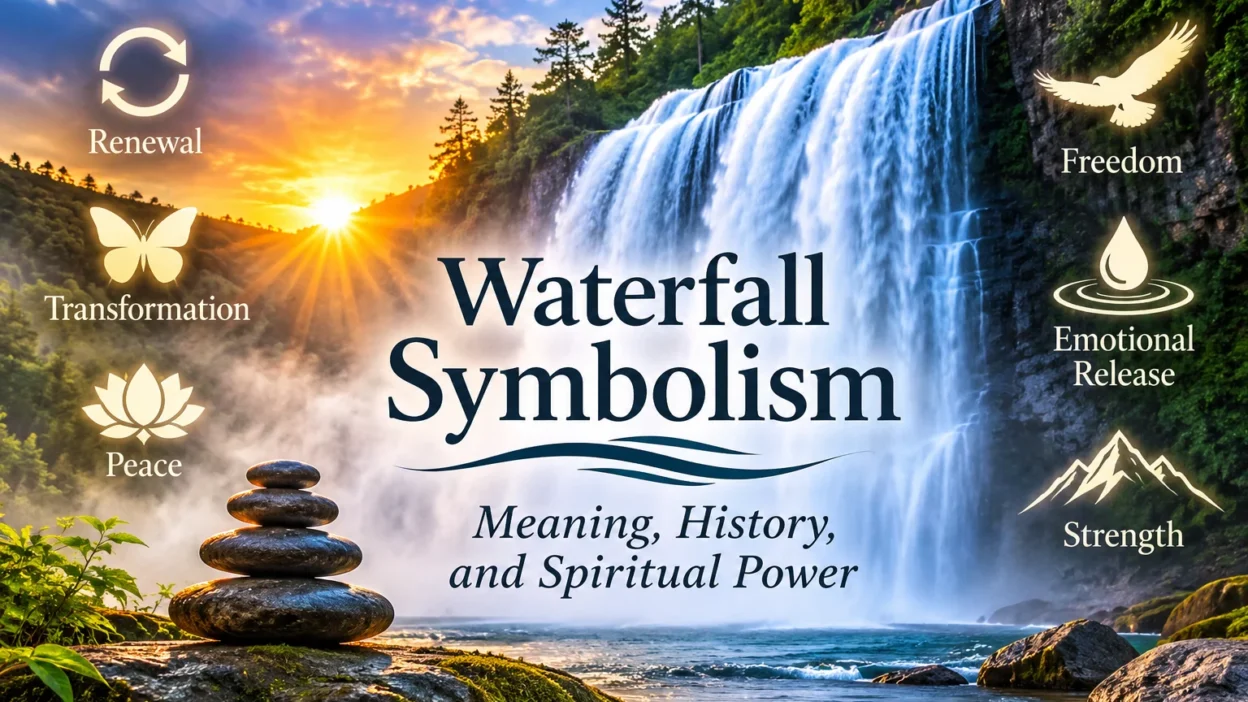
Waterfalls have a special way of capturing our attention. Their powerful movement, rushing water, and natural beauty can make us feel peaceful, energized, or deeply connected to nature. Waterfall symbolism often represents renewal, emotional release, freedom, and the constant movement of life.
In 2026, waterfalls appear in national parks, landscape photography, travel destinations, artwork, and personal tattoos. Some people visit them to escape daily stress, while others see them as reminders to let go of the past. Their beauty also makes them powerful symbols of strength, change, and fresh beginnings. However, a waterfall doesn’t have just one meaning. Its symbolism can change with its size, surroundings, water conditions, and the feelings it creates. A gentle waterfall flowing through a green forest may suggest peace, while a massive waterfall plunging over a cliff may represent courage and overwhelming power.
Across history, people have connected flowing water with life, purification, and spiritual renewal. Today, waterfalls continue to inspire those seeking balance, personal growth, or a fresh perspective on life’s challenges.
Quick Answer
Waterfall symbolism in the United States commonly represents renewal, freedom, emotional release, and the courage to embrace change. More broadly, waterfalls can symbolize life’s continuous flow, spiritual cleansing, nature’s power, and the transition from one stage of life to another.
TL;DR
- Waterfalls symbolize renewal, transformation, freedom, and emotional release.
- Their flowing water represents life’s movement and the passage of time.
- In America, waterfalls connect with wilderness, adventure, recreation, and conservation.
- Spiritual interpretations often associate waterfalls with cleansing and fresh beginnings.
- Waterfall tattoos can express resilience, personal growth, and inner peace.
- Their meanings depend on cultural context, personal experience, and natural appearance.
What Does a Waterfall Represent?
A waterfall forms when water flows over a steep drop in a river or stream. Its movement creates a striking contrast between still surroundings and powerful, falling water. This combination gives waterfalls several symbolic meanings.
For American readers, waterfalls often connect with outdoor adventure, personal freedom, and the beauty of untouched landscapes. They can also remind people that change is natural, even when it feels sudden or difficult.
The Main Symbolic Meanings
Waterfalls commonly represent:
- Renewal: Water continually moves forward, suggesting fresh starts and new opportunities.
- Transformation: A sudden drop symbolizes moving through major life changes.
- Freedom: Unrestrained water can represent independence and the release of limitations.
- Emotional release: Falling water may reflect tears, relief, or feelings finally expressed.
- Strength: Powerful currents demonstrate nature’s ability to overcome resistance.
- Peace: The sound and sight of flowing water can evoke calmness and reflection.
These meanings can overlap. For example, someone recovering from a difficult period might see a waterfall as both emotional release and a new beginning.
Why the Waterfall’s Appearance Matters
The size, speed, and setting of a waterfall influence how people interpret it. A quiet cascade suggests a different mood from a roaring torrent.
Likewise, sunlight, mist, surrounding trees, and rocky cliffs can change the atmosphere. These details help explain why waterfalls appear in so many different forms of art and personal expression.
Waterfall Symbolism in History and Ancient Traditions
Water has carried deep symbolic meaning throughout human history, long before modern photography and nature tourism. Although waterfalls weren’t interpreted identically across societies, their movement and power made them compelling images of life, change, and the natural world.
Ancient Connections to Water
Ancient civilizations often connected water with creation, fertility, cleansing, and renewal. Rivers and springs supported communities, while floods reminded people that nature could also be dangerous and unpredictable.
Waterfalls fit into this broader history of water symbolism. Their downward movement can suggest a transition from one state to another, while their continuous flow can represent life’s ongoing cycle.
However, it’s important to distinguish general water symbolism from specific waterfall traditions. Not every ancient culture assigned a special religious meaning to waterfalls themselves.
Mythology and Sacred Landscapes
In ancient Greek and Roman traditions, springs, rivers, and other water sources could be associated with gods, nymphs, healing, and sacred places. Such beliefs reflected the importance of water in everyday survival and religious life.
In other societies, powerful natural features became places for prayer, contemplation, or offerings. Waterfalls could inspire similar feelings of wonder because they combine dramatic movement with an environment that often feels removed from ordinary life.
These historical connections help explain why waterfalls still appear in spiritual art, fantasy stories, and modern reflections on nature.
Waterfall Symbolism in American Culture
In the United States, waterfalls often represent wilderness, freedom, adventure, and the beauty of the natural world. They feature prominently in national parks, travel photography, outdoor recreation, and American landscape art.
For many Americans, visiting a waterfall means stepping away from busy routines. The experience can symbolize a return to simplicity and a reminder that life extends beyond work, technology, and everyday responsibilities.
Waterfalls and the American Wilderness
American landscapes have shaped how people understand nature and national identity. Waterfalls in protected parks and remote forests can evoke independence, exploration, and respect for the outdoors.
Famous destinations such as Niagara Falls demonstrate another side of this symbolism. Their enormous scale can represent power, wonder, and the ability of nature to inspire people across generations.
Waterfalls also encourage conversations about conservation. Protecting rivers, forests, and surrounding habitats helps preserve the natural places that hold personal, cultural, and recreational meaning.
Common American Associations
- Adventure: Hiking to a waterfall can symbolize exploration and personal challenge.
- Freedom: Open landscapes suggest escape from restrictions and daily pressures.
- Conservation: Waterfalls remind visitors of the value of healthy ecosystems.
- Wonder: Powerful cascades create a sense of awe and human humility.
- Togetherness: Families and friends often associate waterfall visits with shared memories.
- Personal renewal: Nature retreats can mark a fresh chapter in someone’s life.
These associations aren’t universal, even within the United States. A waterfall may represent recreation to one person and a deeply personal memory to another.
The Spiritual Meaning of Waterfalls
Spiritually, waterfalls often represent cleansing, renewal, release, and a connection with something larger than oneself. People may interpret their continuous movement as a reminder that life is always changing.
These meanings don’t require a particular religious belief. Someone might find spiritual significance in a waterfall through prayer, meditation, personal reflection, or simply experiencing nature’s beauty.
Cleansing and Letting Go
Water has long played a role in purification practices across various religious traditions. Consequently, a waterfall may serve as a personal image of washing away emotional burdens or beginning again.
For example, someone leaving a difficult relationship might imagine standing beneath a waterfall as a symbolic act of release. The image can express a desire to leave old pain behind without denying what happened.
However, this is a personal interpretation rather than a guaranteed spiritual effect. Watching a waterfall doesn’t automatically remove emotional pain or resolve life’s difficulties.
Connection With the Present Moment
The steady sound of falling water can draw attention away from distracting thoughts. Its movement also offers a simple reminder to notice the present rather than remain focused on the past or future.
For some people, this experience feels sacred. Others describe it as peaceful, inspiring, or grounding without attaching religious meaning to it.
Both responses reflect the waterfall’s ability to encourage attention, reflection, and a renewed appreciation for the natural world.
Waterfall Symbolism in Different Cultures
Waterfall meanings vary across cultures because people understand landscapes through their own histories, beliefs, and experiences. Some traditions emphasize water’s spiritual importance, while others focus more on beauty, power, or the relationship between humans and nature.
A Respectful Cross-Cultural View
In Japan, waterfalls can appear in religious practice, landscape painting, and traditions involving purification or disciplined engagement with nature. Some practitioners of misogi, a Japanese purification practice, use flowing water in ritual settings, including waterfalls.
In Hindu traditions, rivers and other natural waters can hold sacred significance, while particular waterfalls may become important pilgrimage or devotional sites. Their meanings depend on local traditions rather than a single universal interpretation.
In Buddhist settings, flowing water can inspire reflection on impermanence and the continual changing of life. However, the meaning of a waterfall depends on the particular teaching, community, and practice involved.
Indigenous traditions across the Americas are also diverse. Certain water places hold deep cultural or spiritual importance, but beliefs vary widely between nations and communities. It’s best not to assume that every Indigenous community views waterfalls in the same way.
Shared Themes and Important Differences
| Cultural or personal context | Possible symbolic meaning | Important distinction |
|---|---|---|
| American outdoor culture | Freedom, adventure, conservation | Often shaped by recreation and landscape |
| Japanese spiritual practice | Purification and disciplined attention | Depends on the specific practice |
| Hindu sacred landscapes | Devotion and spiritual renewal | Meanings vary by place and tradition |
| Buddhist reflection | Impermanence and change | Not every waterfall has a formal religious meaning |
| Personal spirituality | Release, hope, and transformation | Individual interpretations differ |
These comparisons reveal recurring themes without suggesting that all cultures share the same beliefs. A respectful understanding recognizes both the similarities and the differences.
The Emotional and Psychological Meaning of Waterfalls
Waterfalls can create strong emotional responses because they combine movement, sound, scale, and natural beauty. Depending on the setting, they may feel soothing, exciting, overwhelming, or inspiring.
For many people, a waterfall becomes a symbol for feelings that are difficult to express in words. Its movement offers a vivid image of emotions rising, breaking through, and eventually moving onward.
Emotional Release and Inner Strength
A powerful waterfall may represent the freedom to express feelings rather than keep them hidden. Its rushing water can mirror grief, excitement, anger, relief, or a long-awaited sense of release.
At the same time, a waterfall can symbolize resilience. Water encounters rocks and steep drops, yet continues along its course. People may connect this image with adapting to obstacles without losing their sense of direction.
Peace, Awe, and Reflection
A quieter cascade can inspire calmness and reflection. Meanwhile, a massive waterfall may create awe by reminding visitors how powerful nature can be.
These responses are personal, not fixed psychological rules. Someone who enjoys busy environments may find a waterfall energizing, while another person may prefer its quieter surroundings.
The symbolism becomes especially meaningful when people connect the experience with their own lives.
Waterfall Symbolism in Dreams
Dreams about waterfalls can be interpreted in several ways, depending on the dream’s emotional tone and personal circumstances. A waterfall might represent changing feelings, a fresh start, a sense of freedom, or a situation that feels difficult to control.
However, dream symbolism isn’t an exact science. There is no single interpretation that applies to everyone, and a dream doesn’t reliably predict future events.
Common Waterfall Dream Interpretations
- A clear waterfall: May represent clarity, hope, or a desire for renewal.
- A powerful waterfall: Can reflect intense emotions or a major life transition.
- A peaceful waterfall: May suggest a wish for rest and emotional balance.
- Standing beneath a waterfall: Could symbolize release or facing a difficult experience.
- Falling over a waterfall: Might reflect uncertainty, fear, or feeling overwhelmed.
- A dry waterfall: May represent disappointment, stalled progress, or changing priorities.
Context matters more than any fixed dream dictionary. For instance, a frightening waterfall dream may reflect anxiety about losing control, while an enjoyable dream about the same scene may suggest excitement about change.
Consider what happened in the dream and how you felt afterward. Your own experiences often provide more useful context than a universal symbolic definition.
Waterfall Symbolism in Art, Literature, and Photography
Artists and writers use waterfalls to express ideas that extend beyond the physical landscape. Their dramatic movement makes them useful symbols of change, power, beauty, and the passing of time.
In paintings, waterfalls can dominate a scene or appear as a small feature within a vast landscape. Either choice influences the viewer’s response and changes the role of the waterfall within the composition.
Waterfalls as Symbols in Stories
In literature, a waterfall may mark a turning point in a character’s journey. A character who reaches one after a difficult climb might experience relief, discovery, or a new understanding of life.
In fantasy and adventure stories, waterfalls sometimes conceal entrances, hidden worlds, or mysterious places. These scenes build on the contrast between what people can see and what remains beyond their view.
However, these are storytelling techniques rather than established meanings shared by every culture.
The Visual Power of Waterfalls
Photographers often capture waterfalls to highlight movement, scale, and atmosphere. Mist can create mystery, sunlight can suggest hope, and dark rocks can make falling water appear especially powerful.
These visual choices also affect symbolism:
- White water against dark rock can suggest clarity emerging from difficulty.
- Golden sunlight may evoke optimism, warmth, and new beginnings.
- Green forests can strengthen associations with growth and natural balance.
- Foggy surroundings can create feelings of mystery or spiritual wonder.
In each case, the meaning comes from the complete scene rather than the waterfall alone.
Waterfall Tattoos and Their Personal Meanings
Waterfall tattoos can represent transformation, freedom, resilience, emotional healing, or a lasting connection with nature. Some people choose them to commemorate a meaningful journey or an important period of personal change.
Unlike a widely recognized symbol with a specific established meaning, a waterfall tattoo can be highly personal. Its significance often depends on the design and the story behind it.
Popular Waterfall Tattoo Designs
- Waterfall with mountains: May represent adventure, endurance, and overcoming challenges.
- Waterfall in a forest: Can express peace, solitude, and a love of nature.
- Waterfall with a sunrise: Often suggests hope, renewal, and a fresh beginning.
- Waterfall with a river: May symbolize continuity and life’s ongoing journey.
- Minimalist waterfall: Can express simplicity, freedom, or a quiet personal reminder.
- Waterfall with a meaningful location: May preserve memories of a special place or experience.
Some designs incorporate flowers, birds, moon imagery, or other natural elements. These additions can deepen the personal meaning, although their interpretations depend on the individual.
Before choosing a design, consider what you want it to express. A waterfall can stand for many things, so your own connection to the image matters most.
Waterfalls in Home Decor and Modern Lifestyle
Waterfalls also appear in home decor, wall art, garden features, and digital backgrounds. Their popularity reflects a desire to bring the atmosphere of nature into everyday spaces.
In American homes, waterfall imagery may evoke peaceful vacations, outdoor adventure, or the feeling of escaping a crowded city. A photograph of a forest cascade can create a different mood from a dramatic image of a massive waterfall.
Decorative and Lifestyle Uses
- Wall art: Creates a focal point associated with nature and calmness.
- Garden fountains: Bring movement and water sounds into outdoor spaces.
- Digital wallpapers: Offer a visual reminder of favorite landscapes or destinations.
- Meditation spaces: Provide natural imagery for reflection and quiet attention.
- Travel photography: Preserves memories of meaningful outdoor experiences.
Some people also use waterfall videos or recordings as part of their relaxation routines. However, responses to water sounds vary, and no particular recording guarantees better sleep or emotional well-being.
Waterfall imagery works best when it reflects the atmosphere a person wants to create. For some, that means tranquility; for others, it means energy, adventure, and natural power.
Negative Meanings and Misunderstandings of Waterfall Symbolism
Waterfalls are often viewed positively, but their symbolism can also express danger, loss of control, destruction, or overwhelming change. These interpretations arise naturally from the physical force of falling water.
A waterfall may appear beautiful from a distance while remaining hazardous up close. This contrast makes it a useful symbol of nature’s dual character: attractive and inspiring, yet powerful enough to demand respect.
When Waterfalls Represent Danger
In stories and personal interpretations, a waterfall can represent a point of no return. Water moving over a steep edge may suggest a decision whose consequences are difficult to reverse.
Likewise, a violent cascade can symbolize emotions that feel too intense to manage. These meanings don’t make the waterfall inherently negative; they highlight another side of its power.
Common Misunderstandings
- One meaning fits everyone: Personal experience and cultural background influence interpretation.
- Waterfalls always symbolize healing: They can also represent fear, grief, or uncertainty.
- Every waterfall is sacred: Spiritual importance depends on the beliefs and history associated with a place.
- Dreams predict the future: Symbolic interpretations don’t establish reliable predictions.
- Waterfall imagery guarantees peace: A person’s response depends on their preferences and circumstances.
Another important distinction concerns cultural appropriation. Using a waterfall as a general symbol of nature or personal growth isn’t automatically a misuse of cultural traditions. However, copying sacred designs, ceremonial practices, or restricted cultural imagery without understanding their context can be disrespectful.
A thoughtful approach recognizes the difference between personal symbolism and traditions that belong to particular communities.
How Waterfall Symbolism Has Changed Over Time
Waterfall symbolism has evolved alongside people’s relationships with nature. Earlier interpretations often emerged from practical dependence on water, local religious beliefs, and the power of natural landscapes.
Today, waterfalls retain many older associations while gaining new meanings through tourism, photography, environmental awareness, and personal expression.
Read More: Chain Link Symbolism: Connection, Strength, and Unity
From Sacred Landscapes to Personal Expression
In earlier societies, particular water sources could hold religious importance because they supported life or formed part of a sacred landscape. Their meanings developed through local customs, stories, and practices.
Later, landscape art and nature writing helped present waterfalls as places of beauty, wonder, and reflection. In the United States, outdoor travel and the preservation of natural landscapes further shaped their cultural importance.
Today, people also interpret waterfalls through personal growth and emotional well-being. A waterfall might represent leaving an old identity behind, starting a new career, or moving through a major life transition.
Which Meanings Remain Relevant?
Several themes have endured because they connect closely with the physical qualities of falling water.
- Renewal remains central: Flowing water continues to suggest movement and fresh beginnings.
- Power remains visible: A waterfall’s force still inspires awe and humility.
- Freedom remains appealing: Natural landscapes offer an image of escape and exploration.
- Spiritual interpretations continue: Some people still associate waterfalls with purification and sacred experience.
- Environmental awareness has grown: Waterfalls increasingly remind people of conservation and ecosystem protection.
These shifts don’t mean older meanings have disappeared. Instead, traditional associations and modern personal interpretations often exist side by side.
FAQs
What does a waterfall symbolize spiritually?
A waterfall can symbolize spiritual cleansing, renewal, release, and a closer connection with nature. The meaning depends on the person’s beliefs and the traditions associated with that particular place.
Is a waterfall a symbol of new beginnings?
Yes, many people interpret waterfalls as symbols of new beginnings. Their continuous movement can represent leaving the past behind and entering a new stage of life.
What does a waterfall symbolize in love?
In a romantic context, a waterfall may represent deep emotions, passion, emotional openness, or a relationship that continues to grow. Its meaning can change depending on whether the image feels peaceful, powerful, or overwhelming.
What does a waterfall mean in a dream?
A waterfall in a dream may represent emotional change, release, uncertainty, or renewal. Consider the water’s appearance and your feelings during the dream rather than treating any interpretation as a definite answer.
What does a waterfall tattoo mean?
A waterfall tattoo can express resilience, freedom, transformation, peace, or a connection with nature. Many people choose a specific landscape because it reminds them of a meaningful experience or turning point.
Does a waterfall symbolize good luck?
Some people associate waterfalls with positive change, abundance, and fresh opportunities. However, a waterfall isn’t a universal or established symbol of good luck across all cultures.
Conclusion
Waterfall symbolism brings together renewal, freedom, emotional release, transformation, and the power of nature. In the United States, waterfalls often represent adventure, wilderness, conservation, and the opportunity to step away from everyday pressures. Their meanings also extend into spiritual reflection, dreams, tattoos, art, and personal memories. While some traditions connect water with purification and sacred experience, individual interpretations remain varied and deeply personal. Ultimately, a waterfall can remind you that change is part of life. Whether you see it as a source of strength, a place of peace, or a symbol of starting over, its flowing water offers a simple invitation: keep moving forward while making room for moments of reflection.