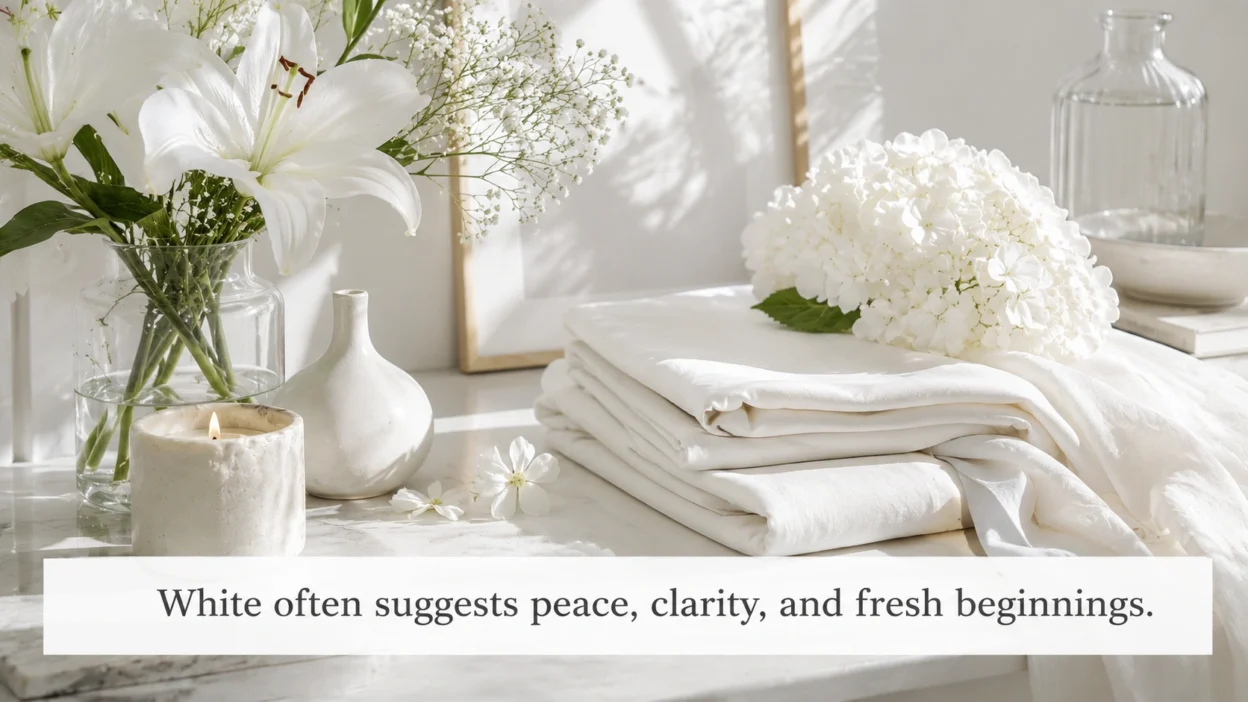
White is one of the most familiar colors in daily life, but it is never just “plain.” It shows up in snow, paper, clouds, candles, wedding dresses, uniforms, and flags. Because of that, White Symbolism carries a wide range of meanings that can feel gentle, formal, sacred, or even unsettling.
In the United States, white often points to peace, cleanliness, honesty, and new beginnings. However, it can also suggest distance, emptiness, or strict rules. That mix makes it a powerful symbol in art, religion, fashion, and public life.
People care about white because it is everywhere, yet its message changes with the setting. A white dress can mean a wedding, a white flag can mean surrender, and a white room can feel calm or cold. The same color can comfort one person and unsettle another.
Quick Answer
White symbolism in the USA usually stands for purity, peace, cleanliness, and fresh starts. It can also suggest simplicity, honesty, mourning in some settings, or surrender in others.
TL;DR
• White often means purity, peace, and new beginnings.
• In the USA, it appears in weddings, flags, and clean design.
• Older traditions linked white to sacredness and ceremony.
• In some cultures, white is tied to mourning and farewell.
• Today, white signals minimalism, calm, and modern style.
Overview of White Symbolism
White is the color people often connect with snow, milk, clouds, chalk, and light. It looks bright, open, and unfinished, which is why it can feel both peaceful and empty. In symbolism, that visual simplicity gives white a lot of power.
White also stands out because it works through contrast. It can make other colors look stronger, or it can make a space feel larger and quieter. For a USA reader, that matters because white is used constantly in homes, clothing, rituals, and media.
What White Looks Like
White can appear soft, sharp, warm, cool, matte, or glossy. Linen, paint, marble, pearls, paper, and fabric all create slightly different feelings.
• Snow white feels pure and bright.
• Cream white feels warmer and softer.
• Ivory feels elegant and traditional.
• Stark white feels clean and modern.
Core Meanings at a Glance
White often signals purity, peace, openness, and clarity. It can also suggest blankness, silence, or a fresh page.
Historical Background and Ancient Roots
White symbolism did not begin in modern fashion or home design. Long before that, people linked white with light, sacred space, and special moments. Because white reflects light so strongly, many early cultures treated it as a sign of the divine or the untouched.
In ancient times, white often marked ritual clothing, holy objects, and ceremonial spaces. At the same time, it could also relate to bone, winter, ghost stories, and death. That older mix still shapes how people read the color today.
Early Sacred Uses
Ancient Egypt, Greece, Rome, and many early societies used white in ritual clothing and sacred objects. White garments often showed respect, status, or a special role in ceremony.
In pre-Christian Europe, white was also tied to winter, moonlight, and spirits. Because of that, it could mean both blessing and mystery. White was never only “good” or only “bad.”
From Ceremony to Everyday Life
As time passed, white moved from temples and rituals into ordinary life. Cloth, paper, paint, and ceramics helped make white a daily presence. However, the older sense of purity never disappeared.
That history is why white still feels formal in many settings. A white candle, robe, or dress can quietly carry centuries of symbolic memory.
White Symbolism in the USA
In the USA, white is one of the most loaded colors in everyday culture. It often suggests cleanliness, order, peace, and a clear beginning. However, American history also gave white some sharper meanings, especially in politics, social norms, and public identity.
White shows up in weddings, hospitals, schools, architecture, uniforms, and the flag. Because it appears in both private and public life, Americans tend to read it very quickly. That makes white feel familiar, but also culturally specific.
National and Civic Associations
White appears in the American flag as one of the three core colors. In that setting, it is usually read as a sign of purity, innocence, or peace. In public life, white uniforms can suggest service, care, or authority.
It also appears in memorials, courtrooms, churches, and government spaces. In those places, white often supports ideas of dignity, silence, and seriousness.
Common American Settings
| Context | Meaning in the USA | Common Associations | Notes |
| Weddings | New starts, tradition, hope | Dresses, flowers, veils | Strong cultural meaning |
| Flags and civic imagery | Peace, innocence, unity | Public ceremonies, emblems | Often tied to national identity |
| Health and care spaces | Cleanliness, order, trust | Lab coats, hospitals, clinics | Can also feel cold or sterile |
| Home decor | Calm, light, openness | Walls, linens, kitchens | Popular in minimal design |
| Memorial use | Respect, remembrance, quiet | Candles, flowers, ribbons | Often gentle and reflective |
Everyday American Associations
White often suggests cleanliness because it shows stains easily. It also suggests a “fresh start,” which is why people use it in moving into a new home, beginning a new job, or planning a wedding.
• White can feel neat and controlled.
• White can make spaces feel bigger.
• White often signals a formal occasion.
• White may also feel bare or unfinished.
Cross-Cultural and Spiritual Meanings
White does not mean the same thing everywhere. In the USA, many people connect it with celebration and purity. However, in other cultures, white can point toward mourning, farewell, or spiritual transition.
This difference matters because color meanings travel, but they do not stay identical. A white dress, flower, or envelope may feel joyful in one place and solemn in another. Respecting that difference helps avoid simple assumptions.
Religious and Spiritual Uses
In Christianity, white often stands for holiness, resurrection, baptism, and divine light. White robes and candles can mark sacred moments, especially in springtime ceremonies and holiday services.
In other faiths, white may also signal devotion, renewal, or spiritual simplicity. The exact meaning depends on the tradition, the ritual, and the community.
Meanings in Other Cultures
In parts of China, Korea, and Japan, white is often tied to mourning or funerals. That does not make white negative by itself. Instead, it shows that white can mark endings as well as beginnings.
White can also suggest calm detachment in some spiritual paths. Because of that, it may symbolize inner stillness more than outward beauty.
Emotional and Psychological Meaning
White often creates a strong mood before people even notice it. It can feel clean, calm, quiet, and open. However, in large amounts, it can also feel empty, strict, or emotionally cold.
For a USA reader, that emotional range explains why white is used so often in both healing spaces and luxury spaces. It can soothe the eye, but it can also remind people of rules and control. The same color can invite rest or make a room feel impersonal.
What White Signals
White often suggests honesty, simplicity, and a desire for order. It can also signal distance, restraint, or a blank slate.
People may read white as:
• peaceful and gentle
• neat and disciplined
• modern and uncluttered
• honest, open, or neutral
• quiet, lonely, or emotionally thin
Why It Feels So Strong
White gives the eye very little to hold onto. Because of that, it can make other details feel sharper. A single white flower, shirt, or wall can change the whole mood of a scene.
White in Fashion, Design, and Branding
White plays a huge role in American style. It shows up in summer clothing, sneakers, bridal fashion, product packaging, and interior design. Because it looks clean and simple, white often feels timeless.
In branding, white can suggest honesty, freshness, and high quality. It can also suggest a premium feel when paired with gold, black, silver, or soft neutrals. Still, white only works well when the surrounding design supports the message.
Clean, Open, and Modern
White interiors often feel bright and calm. Many people use white walls, bedding, and furniture to create a sense of order.
Common modern uses include:
• minimalist decor
• skincare and wellness branding
• clean product packaging
• neutral clothing basics
• sleek technology design
Luxury, Health, and Simplicity
White can also suggest luxury when it appears in crisp fabrics, polished surfaces, or careful styling. At the same time, it is common in health-related spaces because people link it with cleanliness and trust.
However, too much white can feel severe. Designers often soften it with texture, wood, plants, or warm lighting.
White in Weddings, Holidays, and Rituals
White is deeply tied to ceremony in the USA. Weddings are the clearest example, but white also appears in baptisms, memorials, and winter celebrations. Because of that, the color often marks important life changes.
In ritual settings, white can suggest hope, respect, or a clean break from the past. It can also make a moment feel formal and memorable. That is one reason white still holds strong emotional value.
Weddings and New Beginnings
White wedding dresses became a powerful American tradition over time. Today, many people read white as a sign of purity, freshness, and a new chapter.
Yet not everyone sees it the same way. For some, white simply means elegance or tradition. For others, it reflects family custom more than personal belief.
Winter, Memorials, and Seasonal Symbols
White also appears in winter holidays, candles, paper decorations, and snowy imagery. In those settings, it can suggest quiet beauty, rest, and reflection.
At memorials, white flowers or ribbons often create a gentle tone. They help express memory without loud display.
White Tattoos, Art, and Social Media
White has become popular in modern visual culture because it looks subtle and clean. It appears in white ink tattoos, digital graphics, phone backgrounds, and social media aesthetics. These uses often emphasize softness, minimalism, or a quiet identity.
Because white is less bold than black or bright color, people often use it to create a private or understated effect. That can make a design feel intimate rather than loud. It also means white often works best when the artist or designer thinks carefully about contrast.
White Ink and Visual Style
White tattoos can look delicate and almost hidden. Some people choose them for small symbols, names, stars, or spiritual signs.
That subtle look is part of the appeal. The design can feel personal, quiet, and almost secret.
Why People Choose It
White often matches online moods that value simplicity and softness. It also fits modern decor styles that favor light tones and open space.
People may choose white because it feels:
• gentle and elegant
• private and personal
• airy and uncluttered
• calm and self-controlled
Misunderstandings, Misuse, and Controversies
White is not always innocent in meaning. In some contexts, it has been used to claim moral superiority, social exclusion, or racial power. That is a serious misuse of a color that also has many peaceful and ordinary meanings.
It helps to separate symbolic tradition from hateful appropriation. White in a wedding, church, or home is not the same as white used in extremist messaging. Context matters more than the color alone.
Purity Language and Exclusion
The word “purity” can sound beautiful, but it can also be used in harmful ways. In some historical and political settings, purity language was tied to exclusion or superiority.
That does not erase the positive meaning of white. It does, however, remind us that symbols can be misused when people turn them into social rules.
Hateful or Extreme Uses
Some extremist groups have used white imagery to promote racial ideas. That use is not a normal cultural meaning of the color. It is a distortion of it.
Most everyday white symbolism in the USA has nothing to do with that. Still, readers should recognize the difference when they see the color used in a strongly political or coded way.
How Meaning Has Shifted Over Time
White has changed a lot across history. In earlier settings, it often pointed to sacredness, ritual, and life changes. Today, it also stands for design, branding, and personal style.
At the same time, some older meanings have faded. Many Americans no longer think about sacred purity when they buy white shoes or paint a wall white. Instead, they may think about calmness, simplicity, or modern taste.
Read More: Red Symbolism: Meaning, History, and USA Use
Older Meanings That Fade
White once carried stronger ceremonial weight in daily life. Today, many people use it without thinking about those older roots.
That shift is especially clear in fashion and home design. White has moved from a ritual color to a practical style choice.
Meanings That Grew Stronger
In recent decades, minimalism made white even more popular. Clean interiors, quiet branding, and soft digital aesthetics all helped white feel current.
However, the deeper meanings never fully disappeared. White still carries hints of peace, fresh starts, and moral clarity.
FAQs
What does white symbolize in America?
In the USA, white usually symbolizes purity, peace, cleanliness, and new beginnings. It also appears in weddings, memorials, and civic imagery.
Is white a spiritual color?
Yes, many traditions treat white as spiritual or sacred. It often suggests holiness, light, devotion, or renewal.
Why do brides wear white?
In American culture, white bridal clothing became linked with tradition, elegance, and purity. Today, many brides choose it for style, custom, or family meaning.
Does white mean mourning anywhere?
Yes, in some cultures white is strongly linked to mourning and funerals. That shows how symbolic meanings change across regions and traditions.
What does a white flag mean?
A white flag usually means surrender, truce, or a request to stop fighting. It is one of the clearest and most widely recognized uses of white symbolism.
Conclusion
White symbolism is broad, but its core ideas are easy to feel. In the USA, white often suggests peace, purity, clarity, and a fresh start. It can also feel formal, modern, quiet, or emotionally distant, depending on where it appears. Because white shows up in so many places, its meaning keeps shifting with the moment. White Symbolism still matters today because it connects history, ritual, design, and identity in one simple color. When you see white now, notice the setting first. A wedding dress, a flag, a hospital wall, and a winter candle all tell different stories, even when they share the same color.