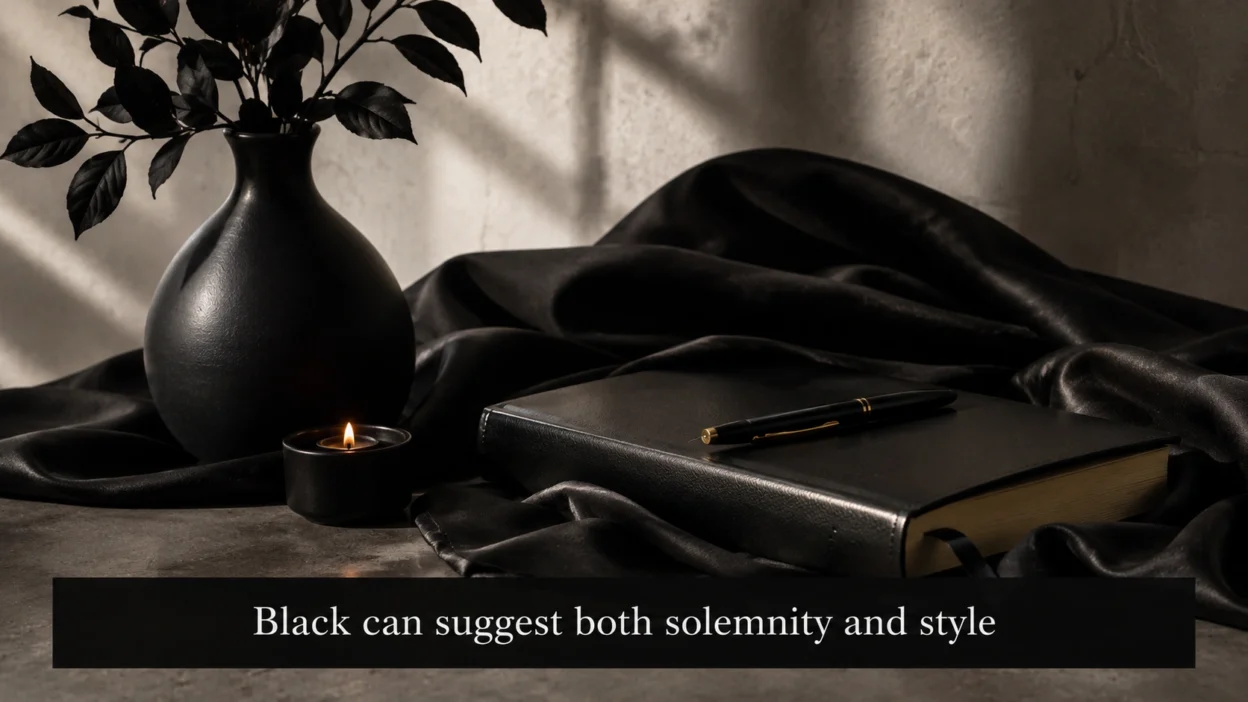
Black symbolism is one of the richest ideas in color meaning. It can feel serious, calm, elegant, or even unsettling, depending on the setting. In the United States, people often read black as a sign of mourning, formality, strength, and mystery.
At the same time, black is not only about loss or darkness. It also appears in fashion, art, activism, and design. Because of that, it can suggest power, restraint, and confidence just as easily as grief.
That mix makes black especially interesting. It is one of the few symbols that can feel sacred, stylish, and rebellious at once. Americans often understand it through culture, history, and personal experience, not just through color alone.
Quick Answer
Black symbolizes mourning, authority, elegance, mystery, and resistance in the United States. It can also suggest depth, privacy, and self-control. In other cultures, black may carry different spiritual or social meanings.
TL;DR
- Black often means mourning in the U.S.
- It also suggests power and formality.
- Black has ancient roots in darkness and death symbolism.
- American culture turned black into a style code.
- It can signal rebellion, dignity, or privacy.
- Modern uses include fashion, tattoos, decor, and protest.
What Black Symbolism Means at a Glance
This section gives the fast version. It helps readers see why black means so many things at once, especially in American life.
Core meanings people most often notice
Black usually feels weighty and deliberate. In daily life, it often points to seriousness, control, and quiet strength.
• Mourning and loss
• Authority and formality
• Elegance and sophistication
• Mystery and the unknown
Black can also suggest separation. For that reason, people use it to create distance, focus attention, or add dramatic contrast.
What Black Looks Like in Everyday Life
Black appears in many forms, not just as clothing or paint. It shows up as fabric, ink, smoke, night, leather, lettering, and background space.
Color, material, and setting
A black object often stands out because it absorbs attention. In design, it creates strong contrast and makes other colors feel brighter.
It also changes with texture. Matte black feels restrained, while glossy black can feel luxurious or sleek.
Why context matters so much
The same black dress can feel formal at a wedding or somber at a funeral. However, a black jacket can feel rebellious, stylish, or practical.
• Black suits often read as professional
• Black walls can feel modern and dramatic
• Black candles may feel spiritual or ritual-based
• Black logos often suggest premium quality
Ancient Roots of Black Symbolism
Black symbolism did not begin in modern fashion. It grew over thousands of years through art, burial customs, night imagery, and religious thought.
Early human use and dark pigments
Black was one of the earliest colors used by artists. People made it from charcoal, soot, and natural minerals.
Because it came from ash, earth, and burned material, black often carried ideas of ending and transformation. That link still matters today.
Ancient ideas of the underworld and night
Many early cultures tied black to night, hidden places, and the dead. Darkness naturally suggested what people could not see or explain.
However, black was not always negative. In some ancient traditions, it also suggested depth, fertility, or the beginning before creation.
How Black Became a Western Mourning Color
In much of the West, black became the standard mourning color over time. That practice shaped American funerals, memorial wear, and solemn public events.
European customs and lasting influence
Medieval and early modern Europe linked black with grief, discipline, and sacred seriousness. Clergy, judges, and mourners often wore dark clothing.
That tradition crossed the Atlantic. As a result, black became deeply familiar in U.S. funeral culture and formal dress.
Why mourning and black fit together
Black visually steps back. It lowers brightness and reduces distraction, which matches the mood of grief.
In that sense, black helps people signal respect. It says the moment is serious and that attention belongs elsewhere.
Black Symbolism in the USA
In the United States, black is one of the most layered symbols in daily life. It can mean grief in one setting and luxury in another.
The American mix of meanings
Americans often connect black with funerals, legal authority, business wear, and evening style. At the same time, black can feel cool, private, or powerful.
This mix comes from history, media, religion, and fashion. It also reflects how Americans like symbols to do more than one job.
Black in institutions, dress, and public life
Black robes make judges look formal and neutral. Black uniforms can suggest discipline, order, or seriousness.
In fashion, black often means confidence and refinement. In homes, it can add a clean, modern edge.
| Context | Meaning in the USA | Common Associations | Notes |
| Funerals | Mourning and respect | Loss, silence, solemnity | The most familiar use for many people |
| Courtrooms | Authority and rule of law | Judgments, seriousness, order | Black robes remain highly symbolic |
| Fashion | Elegance and control | Formal wear, luxury, minimalism | Often used for a polished look |
| Activism | Resistance and strength | Solidarity, protest, self-definition | Often used in visual unity |
| Home decor | Drama and modern style | Contrast, depth, sophistication | Works best with strong lighting |
Why U.S. meanings feel so familiar
Black appears in American movies, school clothes, business attire, and memorial events. Because of that, people learn its meaning almost without trying.
The symbol feels direct. Even before anyone explains it, black suggests something important is happening.
Black in Religion and Spiritual Traditions
Black has spiritual meaning in many traditions. Those meanings are not identical, but they often involve mystery, hidden knowledge, or sacred seriousness.
Respectful cross-cultural views
In some African, Asian, and Indigenous traditions, black can represent maturity, power, or spiritual protection. In others, it may connect with mourning or the unseen world.
A few broad patterns
• Darkness as the place before creation
• Night as sacred rest and mystery
• Black as protection against danger
• Black as a sign of humility or depth
These meanings do not erase each other. Instead, they show how black can be both feared and honored.
Black and Power, Authority, and Formality
Black often communicates control. That is one reason it shows up in law, ceremonies, uniforms, and formal dress.
Why black feels authoritative
Black reduces visual noise. It makes shapes look sharp, clean, and intentional.
Because of that, it can suggest discipline and confidence. It can also create a feeling of distance, which some people read as strength.
Formal wear and professional image
A black suit or dress usually says, “This is a serious moment.” It can feel polished without being loud.
That is why black remains popular for interviews, performances, and high-end events. It gives the wearer a sense of focus.
Black and Rebellion in American Culture
Black is not only about order. In American history, it also became a color of resistance, independence, and challenge.
From outsider style to cultural force
Different groups used black to reject convention. Beat poets, punk fans, goth style, and motorcycle culture all helped shape that image.
Black can feel like a refusal to perform for others. It can say, “I choose my own rules.”
Black Power and political meaning
In U.S. civil rights history, black also became a symbol of pride and self-determination. The Black Panther Party used black clothing and strong visual identity to project unity and readiness.
That meaning matters because it changed the tone of the color. Black was no longer only about mourning. It also became a statement of dignity and force.
Emotional and Psychological Associations
Black affects people fast. It can feel calming to some and heavy to others, depending on the situation and personal memory.
Common feelings black can trigger
Black often suggests privacy, seriousness, and inner control. It can also make people think of fear, uncertainty, or solitude.
However, many people experience black as comforting. It can feel clean, quiet, and protective.
What black may signal about a person
People often read black as a choice, not just a color. It can suggest confidence, restraint, or a desire to stay understated.
• A black outfit can feel self-assured
• A black room can feel intimate
• A black tattoo can feel timeless
• A black symbol can feel weighty
Modern Usage in Tattoos, Social Media, Decor, and Style
Black is everywhere now, especially in modern visual culture. It is one of the most flexible symbolic colors in the United States.
Tattoos and body art
Black ink is the backbone of tattoo art. It creates outline, shadow, detail, and lasting contrast.
People choose black tattoos for many reasons. Some want elegance, while others want a look that feels strong or serious.
Social media, branding, and design
Black backgrounds often make text and images pop. That is why black is common in sleek brands, minimalist pages, and dramatic posts.
It can also help a message feel modern. In digital spaces, black often suggests confidence and high contrast.
Decor, holidays, and everyday style
Black decor can feel stylish, moody, or upscale. Around Halloween, it often connects with shadows, mystery, and costume imagery.
At the same time, black is not limited to spooky themes. In homes, it can also feel neat, balanced, and mature.
Misunderstandings, Misuse, and Controversies
Black is powerful, so it can be misunderstood. Some people treat it as only negative, but that is too simple.
When black gets read too narrowly
Black does not always mean evil or sadness. In many settings, it means elegance, authority, or thoughtful restraint.
The meaning changes with context. A black candle, black dress, or black logo may each carry a very different message.
Harmful uses and careful distinctions
Black has also been used in racist imagery and hateful symbols. That misuse does not define the color itself, but it does matter.
It is important to separate ordinary symbolism from harmful appropriation. A color can carry beauty and dignity, even when some groups misuse it.
How the Meaning of Black Has Shifted Over Time
Black symbolism has never stayed still. Its meaning has shifted from ritual and mourning toward style, identity, and design.
From death to elegance
Older Western traditions focused heavily on grief and solemnity. Today, black still carries that meaning, but it also signals taste and polish.
This shift reflects modern life. People now use black to express mood, taste, and personal brand as much as sorrow.
Why the symbol stays so powerful
Black works because it is simple and deep at the same time. It can disappear into the background or command attention.
That flexibility keeps it relevant. It still speaks clearly to modern Americans, even as the message changes.
Read More: White Symbolism: Meaning, History, and Use
FAQs
What does black symbolize in America?
In the United States, black often symbolizes mourning, power, formality, and elegance. It can also suggest mystery, privacy, and rebellion. The meaning depends on where and how it appears.
Is black always a negative symbol?
No. Black can feel negative in some settings, but it is not limited to that. It also represents strength, dignity, sophistication, and self-control.
Why is black worn at funerals?
Black helps express grief and respect without distraction. Its dark tone fits solemn moments well. That custom became deeply rooted in Western and American funeral culture.
What does black mean spiritually?
Spiritually, black can suggest the unknown, protection, hidden wisdom, or the beginning before creation. Different traditions read it in different ways. The meaning is usually tied to depth, mystery, or sacred silence.
What does black mean in tattoos?
Black tattoos often symbolize permanence, strength, elegance, or memorial meaning. Some people choose black because it looks bold and ages well. Others like its simple, serious look.
Why is black so popular in fashion?
Black is easy to wear and easy to pair. It can make a person look polished, modern, or powerful. It also lets shape and texture stand out more clearly.
Conclusion
Black symbolism stays powerful because it can hold opposite ideas at once. It can mean grief and elegance, silence and strength, distance and confidence. In the United States, black remains one of the most meaningful colors in daily life. People see it in mourning, fashion, protest, art, and formal settings, and those meanings keep building on each other. That is why black symbolism still matters. It helps us read mood, memory, and identity in one simple shade.