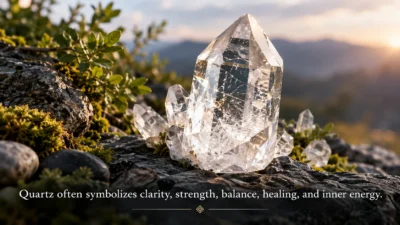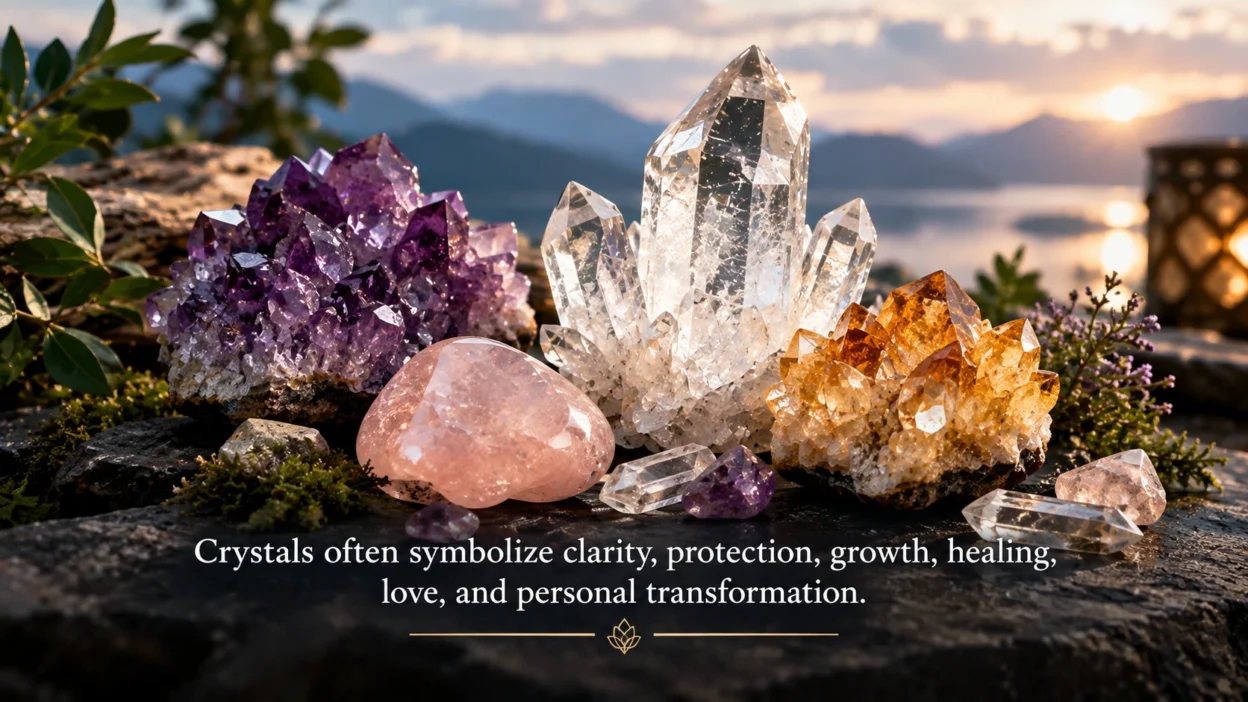
Crystals have fascinated people for thousands of years. Their colors, shapes, transparency, and natural patterns have made them powerful symbols of beauty, mystery, strength, and transformation. Today, Crystal Symbolism appears in jewelry, home decor, spiritual practices, tattoos, social media, and personal rituals.
In the United States, crystals often carry both cultural and personal meanings. Some people appreciate them for their natural beauty, while others connect certain stones with intentions such as calm, protection, confidence, or love.
However, crystal meanings aren’t fixed rules. They developed through history, religion, folklore, art, commerce, and personal experience. As a result, the same crystal can mean different things to different people.
Quick Answer
Crystal Symbolism in the USA commonly represents clarity, protection, personal growth, beauty, and emotional intention. Across wider traditions, crystals can also symbolize purity, spiritual connection, balance, strength, and transformation.
TL;DR
- Crystals commonly symbolize clarity, protection, beauty, growth, and transformation.
- Ancient cultures valued crystals as ornaments, sacred objects, and signs of status.
- American culture blends spiritual, decorative, historical, and personal crystal meanings.
- Different stones developed distinct associations through color, folklore, and tradition.
- Today, crystals appear in jewelry, tattoos, decor, rituals, and online communities.
What Do Crystals Symbolize?
Crystals can symbolize different ideas depending on their type, color, shape, and setting. Clear quartz, for example, often suggests clarity, while rose quartz is commonly connected with love.
For American readers, these meanings often work as personal symbols rather than strict beliefs. A crystal on a desk might represent focus, while a necklace may serve as a reminder of someone important.
Common Crystal Meanings
- Clarity and understanding
- Protection and personal boundaries
- Love and emotional connection
- Growth and transformation
- Strength and resilience
- Peace and balance
The symbolism also changes with context. A crystal used in jewelry can communicate beauty or identity, while the same stone used during meditation may represent an intention.
How Did Crystal Symbolism Begin?
The symbolic use of crystals reaches far beyond modern spiritual trends. Ancient societies collected colorful minerals, polished stones, and unusual geological formations because they were rare, beautiful, and difficult to obtain.
However, early meanings weren’t always the same as modern crystal beliefs. People often connected stones with kingship, burial practices, protection, decoration, or religious traditions.
Ancient Roots
Ancient Egyptians used many stones and minerals in jewelry, amulets, sculpture, and burial objects. Lapis lazuli, turquoise, carnelian, quartz, and other materials held important artistic and cultural roles.
In ancient Greece and Rome, gemstones appeared in jewelry, seals, ornaments, and protective objects. Some stones also became connected with myths, planets, gods, or particular qualities.
From Medieval Europe to the Renaissance
During the medieval period, gemstones appeared in religious objects, royal treasures, and ceremonial clothing. Some writings also assigned symbolic or protective qualities to particular stones.
Later, Renaissance thinkers became increasingly interested in the natural world, including minerals and their supposed hidden qualities. These ideas helped preserve older traditions while encouraging new interpretations.
What Did Crystals Mean in Ancient Cultures?
Ancient crystal meanings depended heavily on local customs and the specific material involved. A rare stone could signal wealth, while another might be used as an amulet or burial object.
Because ancient societies weren’t identical, it’s misleading to claim that every culture believed crystals had the same powers.
Stones and Status
Rare stones often represented wealth because obtaining them required trade, travel, craftsmanship, or political connections. Their beauty made them especially useful for royal jewelry and ceremonial objects.
Stones and Protection
Amulets made from minerals, gems, and other materials were used in many ancient societies. Their symbolic role could involve protection, identity, religious devotion, or connection with a particular tradition.
The important point is that ancient crystal symbolism was varied. Modern interpretations often combine several historical traditions rather than continuing one single ancient system.
What Is the Spiritual Meaning of Crystals?
Spiritual crystal meanings often focus on intention, connection, balance, and personal reflection. However, these meanings vary between traditions and individuals.
Some modern spiritual practices assign particular qualities to specific stones. These associations are usually part of a belief system rather than scientifically established properties.
Common Spiritual Associations
- Clear quartz may represent clarity and intention.
- Amethyst may suggest calm, reflection, and spiritual awareness.
- Rose quartz commonly represents love and compassion.
- Black stones often symbolize protection or grounding.
- Citrine is frequently linked with optimism and abundance.
For many people, the value comes from the ritual itself. Holding a meaningful object can create a moment for reflection, just as a photograph can remind someone of a loved one.
What Does Crystal Symbolism Mean in America?
In the United States, crystals occupy several cultural spaces at once. They’re sold as jewelry and decorations, discussed in spiritual communities, displayed in homes, and used as personal symbols.
American crystal culture also reflects a long interest in nature, self-expression, wellness, alternative spirituality, and individual identity. At the same time, many Americans simply enjoy crystals as attractive geological objects.
American Cultural Associations
| Context | Meaning in the USA | Common Associations | Notes |
| Jewelry | Beauty and personal identity | Birthstones, gifts, fashion | Meaning often depends on the stone |
| Home decor | Calm and natural beauty | Shelves, desks, bedrooms | Often decorative rather than spiritual |
| Meditation | Intention and reflection | Mindfulness, rituals | Personal beliefs vary |
| Gifts | Affection and encouragement | Love, friendship, milestones | Stone choice can carry a message |
| Collecting | Curiosity and appreciation | Geology, rarity, craftsmanship | Not necessarily spiritual |
Crystals in American History
The United States has a strong tradition of mineral collecting and gemstone use. Museums, rock shops, jewelry stores, fairs, and national geological collections have helped make minerals familiar to the public.
As a result, crystal culture isn’t only spiritual. It also belongs to American interests in geology, craftsmanship, collecting, fashion, and natural beauty.
What Do Different Crystal Colors Mean?
Color strongly influences how people interpret crystals. Human beings naturally connect colors with emotions, seasons, landscapes, and cultural ideas.
However, color meanings aren’t universal. They can shift according to culture, personal memory, and the particular stone.
Common Color Associations
- Clear crystals often suggest purity, clarity, and openness.
- Purple stones commonly evoke mystery, reflection, and spirituality.
- Pink crystals often symbolize love, tenderness, and compassion.
- Green stones may represent nature, renewal, and growth.
- Blue crystals can suggest peace, trust, and communication.
- Black stones frequently symbolize protection, strength, or grounding.
These associations can also overlap. A green crystal may represent nature for one person and prosperity for another.
What Do Popular Crystals Symbolize?
Different stones have developed recognizable symbolic identities. These meanings come from combinations of color, folklore, cultural history, modern spiritual practices, and popular culture.
For American audiences, the following associations are especially common.
Quartz
Clear quartz is often associated with clarity, focus, intention, and amplification. Its transparent appearance naturally supports ideas of openness and purity.
Amethyst
Amethyst is commonly connected with calm, wisdom, reflection, and spirituality. Its purple color has also given it a long association with luxury and mystery.
Rose Quartz
Rose quartz is widely associated with love, compassion, friendship, and emotional warmth. Its soft pink color makes it especially popular in romantic and self-care settings.
Citrine
Citrine often symbolizes optimism, confidence, abundance, and positive energy. Its golden appearance contributes strongly to these associations.
Black Tourmaline and Similar Dark Stones
Dark stones are often given meanings involving grounding, boundaries, strength, and protection. These ideas are particularly common in contemporary spiritual communities.
What Is the Psychological Meaning of Crystals?
Crystals can function as meaningful objects even when people don’t view them as supernatural. Their symbolic value can come from attention, memory, ritual, and personal association.
For example, someone might keep a crystal on a work desk as a reminder to stay calm. The object becomes a visual cue connected with a chosen mindset.
Symbolic Objects and Emotion
People often attach emotions to objects that mark important moments. A necklace may remind someone of a relationship, while a stone collected during a trip may preserve a memory.
Therefore, a crystal can become meaningful through experience. Its importance doesn’t have to come from a universal definition.
Intention and Personal Ritual
Modern crystal practices often involve setting an intention. Someone may hold a stone while thinking about confidence, change, gratitude, or emotional balance.
The ritual can provide structure for reflection. In that sense, the crystal acts as a physical reminder of an idea the person wants to keep in mind.
Why Are Crystals Popular in Modern American Culture?
Crystal culture has expanded beyond traditional jewelry. Today, people encounter crystals through fashion, interior design, wellness communities, social media, gift shops, and personal collections.
The visual appeal matters, too. Crystals photograph well because their surfaces catch light and display striking colors and natural patterns.
Social Media and Online Culture
Platforms such as Instagram, TikTok, Pinterest, and YouTube have helped spread crystal collecting and decorative trends. Photos often highlight crystal arrangements, jewelry, shelves, and personal rituals.
However, online content can simplify complicated traditions. A single graphic may present one meaning as universal even though crystal symbolism has always varied.
Home Decor
Crystals can create a natural, earthy feeling in American homes. People may place them beside plants, books, candles, artwork, or other meaningful objects.
In this setting, the crystal can represent nature, calm, individuality, or simply appreciation for geology.
Why Do People Wear Crystal Jewelry and Tattoos?
Crystal jewelry combines symbolic meaning with personal style. A person might choose a stone because its color looks attractive or because its traditional meaning reflects something important.
Tattoos take this idea further because they create a permanent visual statement. The selected crystal can represent a relationship, personal transformation, resilience, spirituality, or a cherished memory.
Crystal Jewelry
Popular choices often include clear quartz, amethyst, rose quartz, turquoise, emerald, ruby, and other recognizable stones. The meaning may come from the stone itself or from the reason behind the gift.
Crystal Tattoos
A crystal tattoo can symbolize something different for each wearer. Its meaning may relate to inner strength, healing as a metaphor, transformation, individuality, or an important period of life.
The design also matters. Faceted geometric crystals can suggest structure and precision, while raw formations can emphasize nature and imperfection.
Are Crystal Meanings the Same in Every Culture?
No. Crystal symbolism changes across cultures, religions, historical periods, and communities.
Some stones have traveled widely through trade, causing meanings to overlap. Others developed highly local meanings that shouldn’t be generalized to everyone who shares a culture or religion.
Cross-Cultural Connections
Gemstones have appeared in royal traditions, religious art, burial objects, protective amulets, and personal ornaments across many parts of the world.
However, a modern spiritual interpretation shouldn’t automatically be presented as an ancient belief. Historical evidence and contemporary practice are not always the same.
Respecting Religious Traditions
Some crystals appear in religious objects or traditions, but their meanings depend on specific teachings and historical contexts. A stone’s presence in a religious setting doesn’t necessarily mean that tradition teaches modern crystal practices.
It’s best to describe these connections carefully rather than treating every use as interchangeable.
Are Crystal Healing Claims Scientifically Proven?
Crystal symbolism and crystal healing are different subjects. Symbolism concerns meaning, culture, emotion, and personal interpretation, while healing claims make claims about physical or medical effects.
There isn’t strong scientific evidence that crystals themselves can treat diseases or replace medical care. Therefore, symbolic or spiritual use shouldn’t be presented as a proven medical treatment.
Symbolism Versus Science
A person can find a crystal calming without claiming that the crystal medically changes the body. The experience may come from ritual, expectation, attention, memory, or personal meaning.
This distinction allows people to appreciate crystal traditions without presenting unsupported health claims as established facts.
Are There Misunderstandings About Crystal Symbolism?
Yes. One common misunderstanding is that every crystal has one ancient, universal meaning.
In reality, meanings have changed considerably. Modern crystal lists often combine folklore, newer spiritual traditions, color psychology, commercial descriptions, and personal interpretations.
Common Misunderstandings
- Every culture does not assign identical meanings to crystals.
- Modern spiritual meanings aren’t always ancient historical beliefs.
- A beautiful crystal doesn’t automatically have religious significance.
- Symbolic value doesn’t prove a physical or medical effect.
- One stone can carry several different meanings.
Another issue involves commercialization. Selling crystals can turn complex cultural traditions into simple products with fixed meanings.
That doesn’t make every commercial use harmful. It simply means readers should understand where an interpretation comes from.
How Has Crystal Symbolism Changed Over Time?
Crystal symbolism has continually evolved. Ancient societies valued stones for status, beauty, ritual, and protection, while later traditions added religious and mystical interpretations.
Today, American culture adds another layer. Crystals can now represent self-expression, interior style, mindfulness, spirituality, collecting, friendship, romance, or personal growth.
Read More: Turquoise Symbolism: Meaning, History, and Modern Uses
From Ancient Objects to Modern Lifestyle Symbols
The physical crystals haven’t changed much, but their cultural meanings have. A stone that once served as a royal ornament can now appear on a bedroom shelf.
Likewise, a gemstone once valued mainly for rarity may now symbolize an emotional quality. This flexibility helps explain why crystals remain culturally relevant.
FAQs
What is the main symbolism of crystals?
Crystals commonly symbolize clarity, protection, beauty, growth, transformation, and personal intention. Their specific meaning depends on the stone and context.
What does a crystal symbolize spiritually?
Spiritually, crystals may represent reflection, balance, intention, protection, or connection. These interpretations vary widely between modern practices and individual beliefs.
Why are crystals considered powerful symbols?
Their rarity, natural beauty, unusual shapes, and long cultural history make crystals visually and emotionally striking. People also give them meaning through personal rituals and memories.
What does a clear crystal symbolize?
Clear crystals, especially quartz, are often associated with clarity, purity, focus, and openness. These meanings partly reflect the stone’s transparent appearance.
What crystal symbolizes love?
Rose quartz is one of the most widely recognized symbols of love and compassion. However, other pink or red stones can also carry romantic meanings.
Do crystals have the same meaning everywhere?
No. Crystal meanings differ between cultures, historical periods, spiritual traditions, and individuals. Modern interpretations may also differ from older historical uses.
Conclusion
Crystals have carried meanings of beauty, rarity, protection, clarity, and transformation across many periods. In modern America, Crystal Symbolism has expanded into jewelry, collecting, home decor, personal rituals, tattoos, and online culture. However, no single meaning explains every crystal or every person’s experience. The most useful approach is to consider the stone’s history, appearance, cultural setting, and personal significance. Whether you admire crystals as geological wonders or use them as reminders of personal intentions, their appeal comes from the connection between nature and meaning. A small stone can become a lasting symbol when you give it a story of your own.