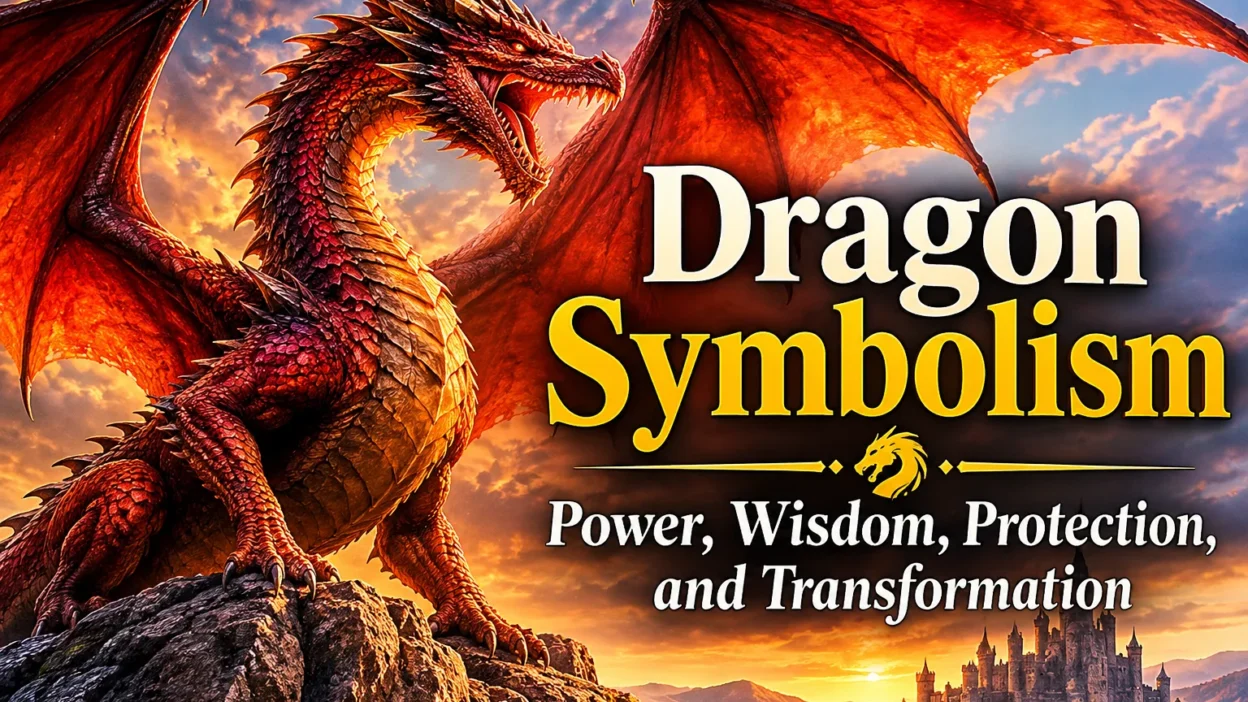
Dragons have fascinated people for thousands of years. In Dragon Symbolism, these legendary creatures often represent power, wisdom, protection, courage, and transformation. However, their meanings change depending on the culture, story, color, and setting in which they appear.
Dragons also carry deep historical meanings. In Chinese traditions, they have long been associated with good fortune, authority, rain, and prosperity. In many European legends, dragons appear as dangerous creatures that heroes must confront. These differences reveal how one mythical animal can express very different human hopes and fears.
Understanding dragon symbolism helps you recognize these meanings without treating every dragon as the same symbol. Whether you encounter one in a dream, on a tattoo, in ancient mythology, or in modern entertainment, its details can offer clues about what it represents.
Quick Answer: What Does Dragon Symbolism Mean?
Dragon Symbolism in the United States commonly represents power, courage, wisdom, protection, mystery, and personal transformation. In broader cultural traditions, dragons can symbolize prosperity and good fortune, natural forces, spiritual authority, or dangerous chaos, depending on their historical and cultural context.
TL;DR
- Dragons commonly symbolize strength, courage, wisdom, protection, and transformation.
- Chinese dragons traditionally connect with prosperity, authority, rain, and good fortune.
- Many European legends portray dragons as dangerous opponents or guardians of treasure.
- Americans encounter dragon imagery in tattoos, fantasy stories, games, and decorative art.
- Dragon colors, postures, and surroundings can change their symbolic meanings.
- Modern dragon interpretations often emphasize individuality, resilience, freedom, and inner strength.
What Is Dragon Symbolism?
Dragon symbolism explores the meanings people attach to dragons in mythology, religion, art, storytelling, and everyday life. Although dragons are mythical creatures, their symbolic power comes from recognizable experiences such as fear, ambition, danger, wonder, and the desire for protection.
Their appearance often combines features of familiar animals. A dragon might have a serpent-like body, powerful claws, enormous wings, horns, scales, or the ability to breathe fire. These features make it seem stronger and more mysterious than an ordinary creature.
Common Meanings of Dragons
The most widely recognized interpretations include:
- Power: A dragon’s enormous size and supernatural abilities suggest extraordinary strength.
- Wisdom: Ancient dragons often appear as knowledgeable beings with long memories.
- Protection: Guardian dragons defend sacred places, valuable treasures, or important people.
- Transformation: A dragon can represent overcoming challenges and entering a new stage of life.
- Mystery: Its mythical nature connects it with the unknown and the limits of human understanding.
- Danger: Fire, claws, and destructive abilities can symbolize uncontrolled power.
However, these meanings aren’t universal. A friendly dragon on a child’s bedroom wall communicates something different from a terrifying dragon threatening an ancient kingdom.
The most useful approach is to consider the dragon’s role rather than assuming its presence always carries the same message.
Why Dragons Remain Powerful Symbols
Dragons combine beauty and danger in a single image. They can appear noble and protective while remaining frightening and unpredictable.
That contrast makes them useful symbols for complicated human qualities. A dragon may express confidence without suggesting kindness, or strength without promising safety.
The Ancient Origins of Dragon Symbolism
Dragon-like creatures appear in ancient stories from different parts of the world. However, these traditions developed independently, and their creatures didn’t all share the same appearance or meaning.
Many ancient communities used powerful mythical beings to explain natural forces, express religious ideas, and describe struggles between order and chaos. Serpents, storm creatures, sea monsters, and composite animals sometimes shared characteristics with what modern audiences call dragons.
Dragons in Mesopotamian and Ancient Near Eastern Mythology
In ancient Mesopotamian traditions, powerful serpent-like or dragon-like beings appeared in stories about creation, divine authority, and conflict. One well-known example is Tiamat, a primordial figure associated with salt water in Babylonian mythology.
The Babylonian creation epic, the Enuma Elish, describes a struggle involving Tiamat and the god Marduk. Later artistic representations associated with this mythic world include the mušḫuššu, a horned, scaled creature connected with the god Marduk.
These beings don’t correspond perfectly to modern Western dragons. Nevertheless, they demonstrate how extraordinary creatures could express cosmic forces, divine power, and the challenge of establishing order.
Ancient Greek and Roman Traditions
In Greek mythology, the word drakōn referred to a large serpent or serpent-like creature. Some such beings guarded sacred objects, while others appeared in heroic stories.
The Python associated with Delphi and the dragon guarding the Golden Fleece illustrate how serpent-like creatures could stand between humans and something valuable or sacred.
Roman writers and artists also inherited and adapted Greek stories involving dragons and monstrous serpents. Over time, these traditions contributed to the wider European image of dragons as formidable creatures.
Importantly, the ancient world didn’t have one universal dragon symbol. Meanings depended on the particular myth, deity, location, and cultural tradition.
Dragon Symbolism in European Mythology
European dragons are often portrayed as dangerous creatures that heroes must defeat. This familiar image became especially influential through medieval legends, religious art, and later fantasy literature.
Yet European traditions also include dragons as guardians, powerful emblems, and creatures connected with the natural world. Their roles are more varied than the simple idea of an evil monster suggests.
Dragons as Challenges for Heroes
In many European stories, a dragon guards a treasure, threatens a community, or blocks access to something important. The hero must overcome the creature through courage, intelligence, divine assistance, or extraordinary skill.
The dragon’s defeat can represent the triumph of order over chaos. It may also suggest the courage required to confront a serious personal or communal challenge.
For example, the legend of Saint George and the Dragon became an influential Christian story. Saint George’s victory over the dragon is commonly interpreted as a triumph of faith and goodness over evil.
Dragons as Symbols of Power
Not every European dragon represents a force that must be destroyed. Some became emblems of strength, sovereignty, and national identity.
The red dragon associated with Wales is a prominent example. Its historical development connects it with Welsh identity, tradition, and pride rather than simply with danger.
This contrast matters because a dragon’s cultural role can completely change its meaning. In one story, a dragon threatens the kingdom; in another, it helps represent the kingdom itself.
Dragon Symbolism in the United States
Dragon symbolism in the United States reflects the country’s mixture of cultural traditions, fantasy entertainment, artistic expression, and personal identity. Americans encounter dragons through books, films, video games, Asian cultural celebrations, tattoos, and decorative objects.
Unlike a symbol with one official national meaning, the dragon has no single interpretation across American society. Its message depends on the person using it and the context in which it appears.
Dragons in American Popular Culture
Fantasy stories have helped establish the dragon as a symbol of extraordinary power and adventure. Dragons may appear as terrifying enemies, loyal companions, ancient teachers, or majestic creatures worthy of respect.
Role-playing games and video games have also made dragons familiar to American audiences. Players may battle them, form alliances with them, collect their treasures, or discover their hidden histories.
As a result, dragons often suggest imagination, mastery, adventure, and the possibility of becoming stronger through difficult experiences.
Dragons and Personal Identity
Some Americans choose dragon imagery to express traits they admire or wish to develop. The creature’s dramatic appearance makes it especially useful for statements about confidence, independence, and perseverance.
In other situations, a dragon may represent family heritage, interest in mythology, or appreciation for a particular artistic tradition.
Common American interpretations include:
- Personal strength during a difficult period.
- Confidence in expressing an unconventional identity.
- Protection of family, home, or personal boundaries.
- Creative imagination and a love of fantasy.
- Respect for cultural traditions or ancestral connections.
However, the meaning should never be assumed from appearance alone. A person wearing a dragon pendant might appreciate its artistic design without assigning it a deeper spiritual message.
Chinese Dragon Symbolism: Luck, Wisdom, and Authority
Chinese dragon symbolism has a long and distinctive history. Unlike many European stories centered on dragon-slaying, Chinese traditions frequently portray dragons as powerful, beneficial beings associated with water, weather, prosperity, and authority.
The Chinese dragon is commonly called lóng (龙 or 龍). Its appearance varies across artworks, but it often has an elongated body, scales, claws, horns, whiskers, and a flowing, serpentine shape.
The Dragon as a Symbol of Good Fortune
Chinese dragons are strongly associated with auspiciousness, meaning good fortune or favorable outcomes. They may also represent vitality, success, strength, and the ability to influence important events.
Their historical connections with rain and water are especially significant. Because farming communities depended on rainfall, the ability to influence water and weather carried practical as well as spiritual importance.
Dragons consequently appear in traditions connected with rainmaking, festivals, temples, and other community practices.
Dragons and Imperial Authority
Chinese emperors historically used dragon imagery to express their authority and elevated status. Specific dragon designs, including differences in claws and ceremonial use, could carry distinctions within imperial systems.
The dragon was therefore not merely a decorative creature. In particular contexts, it communicated political power, legitimacy, and the ruler’s connection with the wider order of the world.
Today, dragon imagery continues to appear during Lunar New Year celebrations and other cultural events. Dragon dances commonly express hopes for prosperity, good fortune, community well-being, and an auspicious year.
For American readers, understanding this background is important. Treating every dragon as an aggressive monster overlooks a major and influential tradition in which dragons frequently carry positive meanings.
Dragon Symbolism Across Other Cultures and Spiritual Traditions
Dragon-like creatures also appear in several Asian, European, and Indigenous American traditions. However, similarities in their appearance don’t mean that their histories, religious roles, or meanings are identical.
Comparing them carefully reveals different ways communities have represented nature, creation, authority, and the relationship between human beings and the world.
Japanese Dragons
Japanese dragons, often called ryū or tatsu, have been shaped by indigenous traditions and cultural exchange with China and other parts of Asia.
They are frequently associated with water, rainfall, bodies of water, and powerful supernatural beings. In some Buddhist traditions, dragon kings are connected with water and important religious narratives.
A Japanese dragon may therefore represent protection, natural power, or a connection with water rather than the evil commonly associated with some European dragons.
South Asian Serpent Beings
South Asian traditions include nāgas, powerful serpent beings found in Hindu, Buddhist, and Jain contexts. They are not simply interchangeable with dragons from European fantasy, although modern art may depict them in similar ways.
Depending on the tradition and story, nāgas can be associated with water, fertility, protection, hidden treasures, or spiritual significance.
Feathered Serpents in Mesoamerica
Several Mesoamerican cultures developed traditions involving feathered serpents. One well-known example is Quetzalcoatl, a major deity in traditions associated with Central Mexico.
The combination of serpent and bird imagery conveyed meanings that included connections between the earth and sky, although interpretations varied across historical periods and communities.
These traditions should be understood on their own terms, not reduced to versions of a European dragon myth.
The Emotional and Psychological Meaning of Dragons
Dragons can evoke fascination, fear, admiration, and excitement at the same time. Their symbolic appeal often comes from this mixture of emotions, allowing people to explore qualities that might otherwise feel difficult to express.
A dragon may represent the powerful part of someone that wants independence, recognition, or greater control over life. For another person, it may represent a challenge that seems frightening but can eventually be faced.
Dragons and Inner Strength
A dragon can symbolize the ability to stand firm under pressure. People who identify with this meaning may associate the creature with courage, resilience, and self-confidence.
For example, someone recovering from a difficult life experience might choose a dragon design to represent a personal turning point. The image can serve as a reminder of the strength they discovered along the way.
Dragons and Uncontrolled Emotions
Fire-breathing dragons also offer a picture of power that can become destructive. Their fire may suggest anger, ambition, jealousy, or intense passion when a story emphasizes loss of control.
However, this interpretation doesn’t mean dragons always symbolize negative emotions. Instead, they can represent the challenge of directing powerful feelings responsibly.
Dragons and the Unknown
Because dragons belong to mythology rather than ordinary experience, they often stand for things humans cannot fully predict or understand.
They may symbolize curiosity about the future, attraction to mystery, or the desire to discover something beyond familiar boundaries. This makes them especially effective in stories about exploration, personal growth, and difficult choices.
Dragon Colors and Their Symbolic Meanings
A dragon’s color can affect how people interpret its character. Modern fantasy art often uses color to communicate personality, elemental power, moral alignment, or magical abilities.
These associations are not universal rules. Their meanings can change across traditions, fictional worlds, and individual works of art.
Common Dragon Colors and Interpretations
| Dragon Color | Common Symbolic Meaning | Possible Associations |
|---|---|---|
| Red | Power, passion, courage | Fire, determination, intensity |
| Gold | Wisdom, prosperity, authority | Success, wealth, nobility |
| Green | Nature, renewal, growth | Forests, healing, vitality |
| Blue | Calm, wisdom, mystery | Water, loyalty, emotional balance |
| Black | Mystery, strength, protection | Darkness, independence, the unknown |
| White | Purity, peace, spiritual power | Renewal, clarity, sacredness |
| Purple | Magic, imagination, transformation | Royalty, mystery, creativity |
Why Color Matters
A red dragon may appear fierce and energetic, while a blue dragon may seem calm or connected with water. However, these impressions depend on the artwork and the story surrounding the creature.
In Chinese traditions, color associations can carry historical and cultural significance that differs from modern fantasy conventions. Gold, for example, may evoke imperial authority and prosperity, but it shouldn’t be treated as a universal code for every dragon image.
When interpreting a dragon, consider its color alongside its posture, environment, expression, and cultural origin.
Dragon Symbolism in Tattoos, Fashion, and Home Decor
Dragon imagery remains popular in the United States because it combines striking visual design with many possible personal meanings. People use dragon designs in tattoos, jewelry, clothing, artwork, gaming accessories, and home decorations.
The same creature can communicate different messages depending on its style and placement.
Dragon Tattoos
Dragon tattoos often represent qualities that the wearer values. Their large, detailed forms also allow artists to create distinctive designs using scales, wings, flames, and flowing bodies.
Common interpretations include:
- Strength and courage: A reminder to face difficult experiences.
- Protection: A personal symbol of safety or resilience.
- Transformation: Recognition of a major life change.
- Freedom: An expression of independence and self-direction.
- Wisdom: Appreciation for knowledge, patience, and thoughtful decisions.
- Cultural identity: A connection with family heritage or a specific artistic tradition.
A dragon tattoo’s meaning ultimately belongs to the person wearing it. Its cultural background can inform its interpretation, but it doesn’t automatically reveal the wearer’s beliefs.
Dragons in Fashion and Interior Design
Dragon imagery appears on rings, pendants, jackets, decorative screens, wall art, and collectible objects. Some designs emphasize traditional craftsmanship, while others use a modern fantasy style.
In a home, a dragon sculpture might create a dramatic focal point or express the owner’s interest in mythology. A more traditional dragon artwork may reflect appreciation for a particular cultural aesthetic.
Context matters here, too. A decorative object can be meaningful without serving a spiritual or religious purpose.
Dragon Symbolism in Dreams and Spiritual Interpretations
Dreams involving dragons can feel powerful because dragons often combine danger, mystery, and extraordinary strength. However, there’s no scientifically established universal meaning for a dragon dream.
Personal experiences, cultural influences, recent entertainment, and emotions can all shape the way a dream feels and what it means to the dreamer.
Common Interpretations of Dragon Dreams
A dragon protecting you might bring to mind safety, confidence, or a desire for support. A dragon chasing you could reflect feelings of pressure or a challenge you haven’t yet addressed.
A friendly dragon may suggest that you’re becoming more comfortable with your own strength. A flying dragon might evoke freedom, ambition, or the desire to look beyond familiar limits.
These are possibilities, not predictions. A dream about a dragon doesn’t prove that a supernatural event will occur or that a particular future is guaranteed.
Spiritual Meanings
In some spiritual interpretations, dragons represent powerful energy, protection, transformation, or wisdom. In Chinese traditions, their associations with water, prosperity, and auspiciousness provide an important cultural background.
Other people view dragons as fictional or mythological figures without spiritual significance. Both approaches can exist without requiring a single explanation for everyone.
If a dragon appears in a dream or personal reflection, consider what you felt during the experience and which qualities the creature represents to you.
Misunderstandings and Controversies Surrounding Dragon Symbolism
Dragon imagery can be interpreted incorrectly when people assume that every tradition uses dragons in the same way. The most common mistake is treating all dragons as evil monsters or, conversely, assuming that every dragon represents good fortune.
Neither interpretation reflects the full range of dragon traditions.
Why Dragons Don’t Always Mean Evil
Some European legends portray dragons as destructive enemies, especially in stories involving heroic battles. However, other European dragons represent national identity, power, or guardianship.
Chinese dragons have especially important associations with good fortune, water, and authority. Their meanings cannot be accurately explained by applying the European dragon-slaying tradition to them.
Understanding the original context helps prevent these different histories from being confused.
Cultural Appreciation and Misuse
Dragon imagery can also raise questions about cultural representation. A design rooted in Chinese, Japanese, or another specific tradition may carry meanings that go beyond its decorative appearance.
Using such imagery isn’t automatically disrespectful. However, treating distinct cultures as interchangeable or describing every Asian dragon as an evil monster can misrepresent the traditions involved.
A respectful interpretation recognizes the particular history of the image and avoids presenting one culture’s meaning as universal.
Modern Fantasy and Changing Interpretations
Modern entertainment often combines dragon features and meanings from several traditions. A fictional dragon may resemble an East Asian serpent, breathe fire like a European monster, and behave like a loyal animal companion.
Such creative combinations are common in fantasy. Nevertheless, they shouldn’t be confused with accurate descriptions of the original cultural traditions.
How Dragon Symbolism Has Changed Over Time
Dragon symbolism has changed as societies developed new stories, religious ideas, artistic styles, and forms of entertainment. Some meanings have continued for centuries, while others have become more prominent through modern media.
From Mythical Forces to Cultural Emblems
In ancient stories, dragon-like beings could represent powerful natural forces, cosmic struggles, sacred places, or divine authority. Their meaning often depended on the community’s religious and social world.
During medieval European periods, dragons became prominent in heroic tales and Christian art. They were frequently used to represent danger, temptation, or forces that needed to be overcome.
Meanwhile, Chinese dragon imagery developed its own enduring connections with prosperity, authority, and the natural world.
Read More: Magic Symbolism: Meaning, History, and Modern Uses
From Fantasy Monsters to Personal Symbols
Modern books, movies, games, and television have broadened the dragon’s possible roles. Dragons can now appear as villains, companions, wise teachers, endangered creatures, or complex characters with their own goals.
This variety has helped make dragons useful symbols of individuality, self-discovery, and personal power. It has also encouraged people to interpret dragon imagery in ways that reflect their own experiences.
The result is not one replacement meaning but a wider collection of interpretations. Historical meanings remain important, while modern audiences continue to add new layers.
FAQs
What Does a Dragon Symbolize Spiritually?
A dragon may represent wisdom, protection, transformation, power, or spiritual energy in some traditions. However, its meaning depends on the culture and belief system, and not everyone interprets dragons spiritually.
Are Dragons Symbols of Good Luck?
Dragons are strongly associated with good fortune in Chinese traditions. Their connections with prosperity, rain, vitality, and auspiciousness help explain their positive role in many celebrations and works of art.
What Does a Dragon Tattoo Mean?
A dragon tattoo can represent strength, courage, independence, protection, wisdom, or personal transformation. Its meaning often depends on the wearer’s experiences, the dragon’s design, and any cultural traditions that inspire it.
What Does a Black Dragon Symbolize?
In modern fantasy and personal symbolism, a black dragon may represent mystery, power, protection, independence, or the unknown. These meanings aren’t universal, so the surrounding imagery and cultural context matter.
What Does It Mean to Dream About a Dragon?
A dragon dream might bring up feelings about power, fear, ambition, protection, or a difficult challenge. However, dreams don’t have one fixed interpretation, and their meaning depends on personal experiences and emotions.
Why Are Dragons Important in Chinese Culture?
Chinese dragons have historically been associated with water, rain, prosperity, authority, and good fortune. They also appear in festivals, artistic traditions, and historical symbols connected with imperial power.
Conclusion
Dragon Symbolism brings together many ideas, including strength, wisdom, courage, protection, mystery, and transformation. Its meaning changes across cultures and historical periods, from European stories about dangerous creatures to Chinese traditions that associate dragons with prosperity and beneficial natural forces. When you encounter a dragon, look beyond its claws, wings, and fire. Consider its color, behavior, cultural background, and setting. These details can help you discover whether the dragon represents protection, ambition, wisdom, danger, or something uniquely meaningful to you.