Magic has fascinated people for thousands of years. From ancient protective charms to modern fantasy stories, it offers a way to explore mysteries that ordinary explanations sometimes seem unable to capture. Magic Symbolism examines the objects, signs, rituals, and images people associate with supernatural power, hidden knowledge, and transformation.
In the United States, magic appears in many different settings. You might encounter it in Halloween decorations, fantasy movies, tarot-inspired artwork, stage performances, or spiritual practices. For some people, magic represents wonder and creativity. For others, it connects with personal beliefs, nature, intuition, or sacred traditions.
However, magic doesn’t have one universal meaning. Its symbolism changes with historical period, cultural background, religious beliefs, and personal experience. A candle might represent spiritual focus to one person and mystery to another. Understanding these differences helps explain why magical imagery remains so appealing in modern American life.
Quick Answer
Magic Symbolism in the United States commonly represents mystery, transformation, hidden knowledge, imagination, and personal power. More broadly, magical symbols can express spiritual beliefs, protection, the relationship between humans and nature, or the desire to influence forces beyond ordinary understanding.
TL;DR
- Magic symbolizes mystery, transformation, wonder, and hidden knowledge.
- Ancient cultures connected magical practices with healing, protection, divination, and religious life.
- American culture blends magic with folklore, entertainment, Halloween, and personal spirituality.
- Wands, circles, candles, moons, and crystals carry different meanings across traditions.
- Magical imagery can express creativity, curiosity, identity, and a search for meaning.
- Modern interpretations range from fantasy entertainment to sincerely practiced spiritual traditions.
What Is Magic Symbolism?
Magic symbolism explores the meanings attached to objects, gestures, words, and images associated with supernatural or extraordinary power. These symbols often represent things people cannot easily see or explain, such as fate, spiritual forces, hidden knowledge, or personal transformation.
In American culture, magical imagery can appear in both fictional and serious contexts. A wizard’s wand in a movie may represent imagination, while a protective charm used in a spiritual practice may express a person’s sincere beliefs.
Common Symbols Associated With Magic
Several familiar images appear repeatedly in magical stories and traditions.
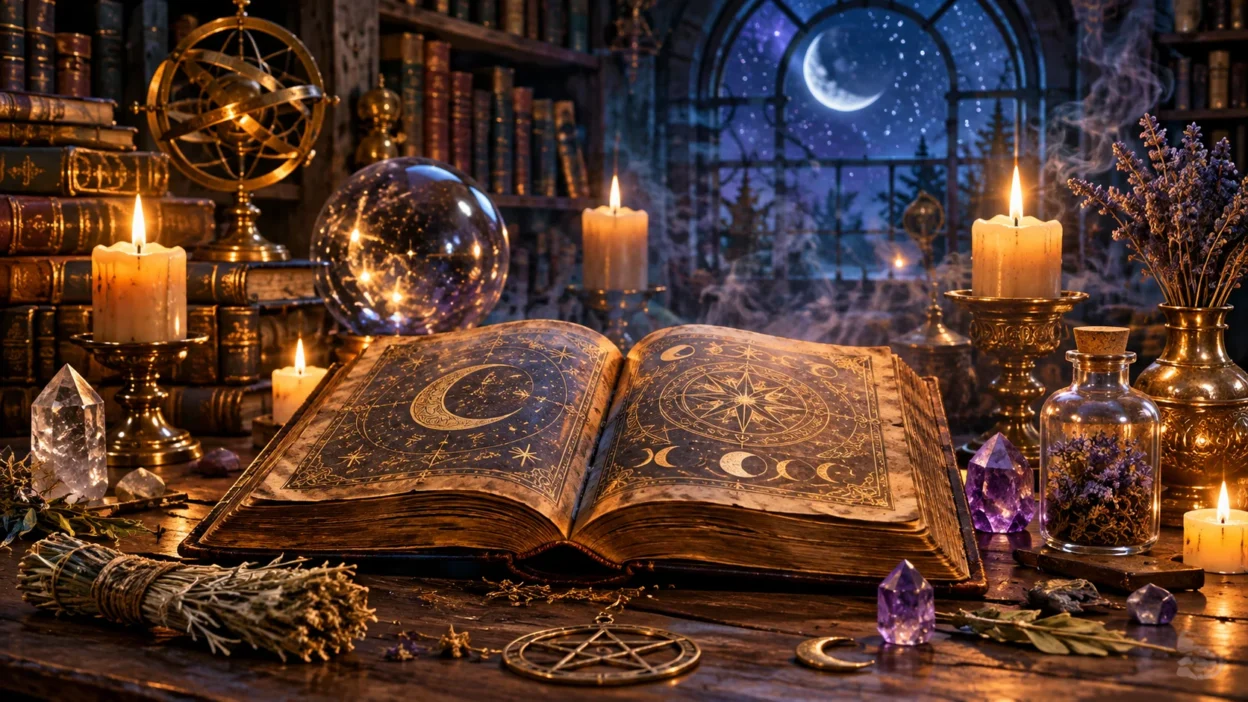
- Wands: Often represent focused intention, authority, or the ability to direct power.
- Circles: May symbolize unity, boundaries, protection, or sacred space.
- Crystals: Can represent clarity, energy, beauty, or spiritual focus.
- Candles: Often suggest hope, intention, remembrance, or ritual attention.
- Crescent moons: May connect with cycles, intuition, mystery, and change.
- Spellbooks: Commonly symbolize hidden knowledge, learning, and forbidden secrets.
These meanings aren’t fixed rules. Their significance depends on who uses them and the tradition in which they appear.
How Colors Shape Magical Meaning
Color also influences how people interpret magical imagery. Purple often suggests mystery and imagination, while gold can communicate power, wisdom, or sacred importance.
Black may evoke secrecy, protection, or the unknown. White can suggest purity, clarity, or spiritual light. However, these associations vary, and no color has one universal magical meaning.
The Historical Origins of Magic Symbolism
Magic symbolism developed through many ancient societies rather than from one original tradition. People used signs, objects, spoken formulas, and rituals to seek protection, understand uncertainty, and influence events they believed were beyond ordinary control.
For readers in the United States, this history helps explain why modern magical images combine ideas from so many different periods and cultures.
Ancient Roots of Magical Practices
In ancient Egypt, magical practices were closely connected with healing, protection, religious life, and ideas about the afterlife. Amulets featuring particular shapes or sacred figures could serve as protective objects.
Ancient Mesopotamian communities also used rituals, incantations, and protective objects. These practices reflected their understandings of illness, misfortune, divine power, and the natural world.
In ancient Greece and Rome, magical practices included charms, curse tablets, divination, and rituals intended to influence uncertain outcomes. Some activities existed alongside established religious practices, while others attracted suspicion.
Magic in Medieval and Renaissance Europe
During medieval European history, magic became connected with several overlapping traditions. These included folk healing, astrology, alchemy, ceremonial rituals, Christian religious beliefs, and accusations of harmful sorcery.
However, people didn’t always agree on what counted as magic. A practice regarded as useful protection in one setting might be condemned as dangerous or forbidden in another.
During the Renaissance, some educated Europeans explored ancient philosophical writings, astrology, alchemy, and forms of ceremonial magic. Printed books later helped circulate magical ideas beyond small circles of practitioners.
From Folklore to Modern Fantasy
European settlers brought many folk beliefs and stories to North America. Over generations, these traditions mixed with local folklore, religious ideas, literature, and popular entertainment.
By the nineteenth century, stage magicians, spiritualist movements, and popular stories helped shape different American ideas about the mysterious. In the twentieth century, fantasy novels, comics, films, and television made wizards, spells, and enchanted objects familiar to mass audiences.
Today, magical symbolism draws from this long history while continually developing new meanings.
Magic Symbolism in American Culture
In the United States, magic exists at the intersection of entertainment, folklore, religion, art, and personal belief. Its meaning often depends on whether people encounter it in a fictional story, a performance, a holiday, or a spiritual setting.
American culture has helped turn certain magical images into widely recognized visual shorthand.
Halloween and American Folklore
Halloween is one of the clearest settings for magical imagery in the United States. Witches, black cats, cauldrons, spellbooks, and pointed hats commonly appear in decorations, costumes, greeting cards, and seasonal displays.
These images combine older folklore with literary inventions and modern entertainment. For many Americans, they communicate playful mystery rather than an actual religious or spiritual commitment.
However, the same imagery can carry different meanings for people who practice contemporary witchcraft or other spiritual traditions.
Magic in American Entertainment
American films, television, games, and books have made magic a powerful storytelling device. A spell can reveal a character’s hidden potential, while an enchanted object can introduce danger, responsibility, or temptation.
Magical stories also explore familiar human struggles. Characters may seek power, struggle with their abilities, or learn that knowledge carries responsibilities.
Consequently, magic often symbolizes the hope that ordinary limitations can be overcome. It can also warn against the desire to control everything.
Magic and Personal Expression
Some Americans use magical imagery to communicate individuality, creativity, or an interest in the mysterious. Clothing, jewelry, artwork, and home decorations may feature moons, stars, herbs, crystals, or mystical illustrations.
For others, these objects reflect sincere spiritual beliefs. Understanding the difference between decorative interest and religious or spiritual practice helps avoid making assumptions about someone’s identity.
Spiritual Meaning of Magic Symbolism
The spiritual meaning of magic depends on the beliefs and practices involved. Some people view it as a way to focus intention, seek protection, explore intuition, or express a relationship with nature. Others understand magical practices through religious frameworks or reject supernatural explanations altogether.
For American readers, the important distinction is that magical symbolism describes a range of beliefs rather than one unified spiritual system.
Magic as Intention and Transformation
In some contemporary spiritual practices, rituals provide a structured way to concentrate attention on a personal goal. Lighting a candle, speaking an intention, or arranging meaningful objects can mark a moment of reflection.
The symbolism may be as important as the ritual itself. A candle can remind someone to remain hopeful, while a circle may create a sense of focus or separation from everyday distractions.
These experiences can hold personal meaning without proving that supernatural forces have changed external events.
Magic and Nature
Some magical traditions associate natural objects with particular qualities or symbolic relationships. Herbs, stones, trees, water, and celestial bodies may feature in rituals or personal practices.
For example, a moon symbol might represent cycles and renewal. A leaf could suggest growth, while water might evoke cleansing or emotional change.
However, these associations differ across traditions. It’s best to understand a symbol within its specific cultural or spiritual setting rather than treating all practices as interchangeable.
Magic and the Unknown
Magic also represents humanity’s long-standing interest in unanswered questions. People have used supernatural stories and rituals to interpret dreams, uncertainty, suffering, and experiences that seemed difficult to explain.
Today, some people continue to explore these questions through spiritual practices. Others approach magical themes through philosophy, art, literature, or imaginative play.
Both approaches demonstrate how magic can provide a language for exploring mystery.
The Psychological Meaning of Magic
Magic has a strong psychological appeal because it brings together wonder, uncertainty, hope, and the desire for control. Magical stories and symbols allow people to explore possibilities that ordinary routines may leave unexplored.
However, psychological meaning isn’t the same as proof of supernatural power.
Why People Are Drawn to Magic
Magical imagery can make abstract feelings easier to express. A key might represent access to hidden knowledge, while a transformation spell might symbolize the hope of becoming a different version of oneself.
Several common associations help explain this appeal:
- Wonder: Magical images encourage curiosity about possibilities beyond everyday experience.
- Control: Rituals can provide structure when circumstances feel uncertain.
- Hope: Enchanted objects and spells can represent the possibility of change.
- Identity: Mystical imagery allows people to express interests and personal values.
- Discovery: Secret books and symbols suggest learning, exploration, and hidden truths.
These associations don’t apply equally to everyone. Personal experiences, cultural backgrounds, and individual beliefs all shape how magical symbols feel.
Magic as a Metaphor for Change
In everyday language, people often describe a powerful experience as magical. A memorable performance, a surprising reunion, or a beautiful night sky may seem to transform an ordinary moment.
Here, magic represents emotional intensity rather than a literal supernatural event. It captures the feeling that something meaningful has happened.
This metaphor helps explain why magic remains relevant even among people who don’t believe in spells or supernatural forces.
Common Magical Symbols and Their Meanings
Magical symbols appear in many different traditions, artistic styles, and fictional worlds. Their meanings become clearer when you consider their visual form, historical setting, and intended use.
The following table describes common modern associations, especially in American popular culture.
| Symbol | Common Meaning in the USA | Typical Context | Important Note |
|---|---|---|---|
| Wand | Focused power, skill, transformation | Fantasy stories and stage performances | Meanings vary by fictional setting |
| Circle | Unity, boundaries, protection | Ritual imagery and magical illustrations | Not exclusive to magic |
| Crystal | Clarity, beauty, spiritual focus | Jewelry, decor, contemporary spiritual practices | Beliefs about effects vary |
| Candle | Hope, intention, remembrance | Rituals, meditation, and home settings | Also common in ordinary religious practices |
| Crescent moon | Cycles, mystery, intuition | Jewelry, artwork, and celestial imagery | Has distinct cultural and religious meanings |
| Spellbook | Knowledge, secrets, discovery | Fantasy fiction and themed decorations | Often a fictional image of magical learning |
Why Context Matters
A symbol rarely communicates its complete meaning by itself. A crescent moon on a necklace, for example, might represent a personal aesthetic, a spiritual interest, or a religious identity.
Likewise, a circle in a fantasy illustration may simply establish a magical atmosphere. In a ritual setting, it may have a more specific purpose.
Before interpreting a symbol, consider its surroundings, the person using it, and the tradition behind it.
Magic Symbolism in Tattoos and Jewelry
Magical tattoos and jewelry let people carry meaningful images into everyday life. In the United States, these designs can express creativity, personal growth, spiritual interests, or an attraction to fantasy and folklore.
However, a tattoo’s meaning usually comes from the person wearing it. The same image can communicate different ideas to different people.
Popular Magical Tattoo Designs
Certain designs appear frequently in modern magical and mystical artwork.
- Magic circles: May represent wholeness, personal boundaries, or protection.
- Mystical eyes: Can suggest awareness, perception, or the search for hidden truths.
- Wands and staffs: Often represent creativity, direction, or personal authority.
- Moon phases: Can symbolize change, natural cycles, and personal growth.
- Stars and constellations: May express wonder, guidance, or a connection with the cosmos.
- Alchemical imagery: Can represent transformation, experimentation, and the pursuit of wisdom.
These interpretations are possibilities, not fixed definitions. A person might choose a design simply because it looks beautiful or connects with a favorite story.
Jewelry as a Personal Symbol
Pendants, rings, bracelets, and decorative charms often feature magical motifs. Some wearers treat them as reminders of personal intentions or meaningful experiences.
Others appreciate their historical associations or artistic appearance. Therefore, it’s wise not to assume that wearing a mystical symbol automatically signals a particular belief.
Magic Symbolism in Home Decor and Everyday Life
Magical imagery has become a familiar part of American interior design and personal style. Bookshelves, candles, celestial artwork, crystal displays, and botanical decorations can create an atmosphere of mystery without requiring a spiritual explanation.
For some households, these objects support personal rituals. For others, they simply make a room feel imaginative, peaceful, or distinctive.
Creating a Mystical Atmosphere
Certain design choices help establish a magical mood. Dark blue and violet can suggest night and mystery, while gold accents add warmth and a sense of wonder.
Natural materials, old books, botanical illustrations, and soft lighting can strengthen the effect. Meanwhile, stars, moons, and intricate patterns create visual connections with the night sky and traditional fantasy imagery.
The overall effect depends on balance. A few meaningful objects may communicate more than filling every available space with mystical decorations.
Everyday Objects With Magical Associations
Ordinary objects can acquire magical meanings through stories, personal experiences, or cultural traditions.
- A key may suggest access to hidden knowledge or new opportunities.
- A mirror can represent self-reflection, mystery, or another world in folklore.
- A candle may mark a moment of remembrance or personal intention.
- A doorway can symbolize transition between familiar and unfamiliar experiences.
- A book may represent discovery, learning, or secrets waiting to be revealed.
These associations make magical symbolism easy to incorporate into everyday settings. They also show how ordinary things can become powerful storytelling devices.
Magic in Social Media and Popular Culture
Social media has made mystical imagery easy to share, remix, and reinterpret. In the United States, users encounter magical themes through fantasy artwork, short videos, themed photography, book communities, and discussions of contemporary spiritual practices.
As a result, magic now operates as both a cultural aesthetic and a subject of personal belief.
The Rise of Mystical Aesthetics
Online content often combines celestial imagery, vintage illustrations, dark colors, crystals, and handwritten-looking designs. These visual choices can suggest mystery, individuality, creativity, or a connection with nature.
Some users share rituals or discuss spiritual experiences. Others create fictional worlds, costume designs, or decorative mood boards.
Because these activities can look similar, appearance alone doesn’t reveal someone’s intentions or beliefs.
Magic in Books, Games, and Movies
Fantasy stories frequently use magic to explore power, responsibility, courage, and temptation. A magical artifact may solve a problem, but it can also create new dangers.
Likewise, a character’s magical abilities may represent hidden talents or emotional struggles. These themes make magic useful for telling stories about ordinary human experiences.
American popular culture continues to adapt magical imagery for new audiences. However, fictional systems of magic shouldn’t be confused with the beliefs or rituals of real-world communities.
Misunderstandings and Controversies About Magic
Magic can be interpreted as harmless entertainment, meaningful spiritual practice, cultural heritage, or a source of religious concern. Disagreements often arise when people treat these different perspectives as though they were identical.
A respectful understanding recognizes that people may hold very different beliefs about supernatural claims.
Magic Is Not One Unified Belief System
The word magic covers a wide range of practices and ideas. Stage illusion, fantasy fiction, folk traditions, contemporary witchcraft, and historical ceremonial systems aren’t interchangeable.
For example, a magician performing a card trick relies on practiced techniques and misdirection. Someone participating in a spiritual ritual may understand the experience through personal or religious beliefs.
Using the same word for both doesn’t mean their purposes are the same.
Religious Concerns and Historical Persecution
Some religious communities reject particular forms of magic because they conflict with their teachings about spiritual authority or forbidden practices. Other communities have incorporated protective rituals, blessings, or related customs into their religious lives.
Historically, accusations of harmful magic and witchcraft sometimes contributed to persecution, social conflict, and executions. The details differed across societies and periods, so these events shouldn’t be reduced to one universal explanation.
In the United States, the Salem witch trials of 1692 remain a well-known example of the dangers of fear, accusation, and social pressure. Modern references to Salem often symbolize injustice and the consequences of treating suspicion as proof.
Cultural Appropriation and Misrepresentation
Magical symbols may come from traditions with deep religious or cultural significance. Using them without understanding their context can distort their meaning or turn sacred practices into decorative stereotypes.
This doesn’t mean every use of mystical imagery is disrespectful. Instead, it encourages people to learn where a symbol comes from and whether a particular use ignores important cultural boundaries.
- Research the origins of symbols before presenting them as universal.
- Avoid portraying unfamiliar religious traditions as inherently frightening or evil.
- Distinguish fictional inventions from practices documented in living communities.
- Respect cultural restrictions surrounding sacred objects and ceremonies.
Context, accuracy, and respect help people appreciate magical symbolism without flattening important cultural differences.
Cross-Cultural Meanings of Magic
Magical symbolism appears in many societies, but its meaning depends on local history, religious beliefs, and cultural practices. Comparing traditions can reveal shared human questions while preserving the differences that make each tradition distinctive.
Magic in Ancient Egypt and Greece
Ancient Egyptian practices connected magic with protection, healing, religious devotion, and the proper order of the world. Protective amulets and ritual words formed part of a broader religious landscape.
In ancient Greece, magical practices included divination, spoken formulas, and objects believed to influence particular outcomes. Meanwhile, Greek myths often used extraordinary powers to explore fate, desire, knowledge, and the limits of human control.
These examples show that ancient magic wasn’t simply entertainment. It could form part of how people understood their world and responded to uncertainty.
Magic in Asian Traditions
Across Asia, different religious and philosophical traditions developed distinctive approaches to ritual, spiritual cultivation, divination, and protective practices. There isn’t one shared Asian understanding of magic.
For example, some Daoist traditions include ritual practices associated with spiritual protection and cosmic order. In Japan, onmyōdō developed as a historical system involving divination, cosmology, and ritual practice.
These traditions have their own histories and meanings. They shouldn’t be treated as interchangeable versions of Western fantasy magic.
Magic in Contemporary Spiritual Communities
Modern spiritual communities may use ritual objects, natural materials, symbols, or spoken intentions in different ways. Some practitioners describe their activities as witchcraft, folk magic, or other forms of spiritual practice.
Others prefer different terms or don’t identify with magic at all. Understanding the language practitioners use for themselves is an important part of respectful interpretation.
How Magic Symbolism Has Changed Over Time
Magic symbolism has shifted from ancient ritual settings to medieval folklore, printed literature, modern entertainment, and digital culture. Yet its central themes—mystery, transformation, knowledge, and power—continue to appear in new forms.
Understanding these changes helps explain why familiar magical images can carry several meanings today.
From Ritual Objects to Popular Entertainment
In many ancient societies, magical objects were associated with practical concerns, including protection, illness, fertility, and uncertain outcomes. Their meanings were often linked to specific religious or cultural systems.
Later, folklore and literature developed recognizable characters and objects, including witches, enchanted forests, magical rings, and spellbooks. These images became increasingly influential as stories circulated through books, theater, and popular entertainment.
Modern films and games further expanded the possibilities. Today, a magical symbol might refer to a centuries-old motif, an entirely fictional invention, or a blend of both.
Older Meanings and Modern Interpretations
Some magical associations remain recognizable, while others have changed considerably.
- Protective charms may now appear as fashion accessories or personal keepsakes.
- Alchemy has become a metaphor for personal transformation in some modern writing.
- Witches appear in stories as villains, wise figures, outsiders, or independent heroes.
- Celestial symbols connect ancient cosmological ideas with contemporary art and spirituality.
- Spellbooks can represent learning and creativity as easily as secret supernatural knowledge.
These changes demonstrate that symbols don’t remain frozen in the past. People continually reinterpret them to reflect new interests, fears, and values.
How to Interpret Magic Symbols in Daily Life
Interpreting magical imagery requires more than memorizing a list of meanings. The most useful approach considers the symbol’s appearance, surroundings, cultural origins, and personal significance.
For American readers, this method helps distinguish familiar entertainment imagery from religious symbols and meaningful cultural practices.
Consider the Symbol’s Context
Start by examining where the symbol appears. A wand in a children’s fantasy book may suggest imagination, while a ritual object may have a specific meaning within a spiritual tradition.
Next, consider its visual details. Colors, materials, surrounding objects, and repeated patterns can change the overall impression.
Finally, look for reliable historical or cultural information when a symbol comes from a tradition you’re unfamiliar with. Avoid assuming that a modern interpretation explains every earlier use.
Connect the Symbol With Personal Meaning
Personal reflection can also help explain why certain magical images appeal to you. You might associate a moon with change, a key with opportunity, or a spellbook with curiosity.
These connections can be meaningful without being universal truths. Recognizing the difference between personal symbolism and documented cultural meaning makes interpretation more thoughtful and accurate.
FAQs About Magic Symbolism
What Does Magic Symbolism Mean?
Magic symbolism refers to the meanings associated with objects, signs, rituals, and images connected with supernatural power or extraordinary change. Common themes include mystery, protection, transformation, imagination, and hidden knowledge.
The meaning depends on the tradition, situation, and person interpreting the symbol.
What Does Magic Symbolize Spiritually?
Spiritually, magic may symbolize intention, transformation, protection, intuition, or a search for deeper understanding. Some practitioners connect it with particular religious or spiritual beliefs, while others interpret it as a personal practice.
There is no single spiritual meaning accepted by everyone.
What Are the Most Common Symbols of Magic?
Common examples include wands, spellbooks, circles, candles, crystals, stars, and crescent moons. These images frequently represent power, knowledge, focus, mystery, or change.
However, their meanings vary across cultures and fictional settings.
Is Magic Symbolism Good or Bad?
Magic symbolism isn’t inherently good or bad. Stories may portray magic as a force for healing, wisdom, temptation, or destruction, depending on how characters use it.
Likewise, real-world views differ according to personal beliefs, religious teachings, and cultural traditions.
Why Is Magic So Popular in American Culture?
Magic offers a way to explore wonder, uncertainty, imagination, and possibilities beyond ordinary experience. American Halloween traditions, fantasy entertainment, folklore, and contemporary spiritual communities have all contributed to its popularity.
Its flexibility allows people to enjoy magical imagery without necessarily sharing the same beliefs.
Read More: Spell Symbolism: Meaning, History, and Modern Uses
What Does a Magic Symbol Tattoo Mean?
A magic symbol tattoo may represent personal growth, mystery, protection, creativity, or spiritual interest. Its meaning can also reflect a favorite book, fictional character, or important life experience.
The wearer’s intention is usually the best guide to understanding its personal significance.
Does Magic Symbolism Have Ancient Origins?
Yes. Ancient Egyptian, Mesopotamian, Greek, and Roman societies all developed practices and objects associated with magic, protection, divination, or supernatural influence.
However, these societies had different beliefs and customs. Modern magical imagery draws from many historical sources rather than one single ancient tradition.
Conclusion
Magic symbolism reflects humanity’s enduring fascination with mystery, transformation, hidden knowledge, and extraordinary possibilities. From ancient protective objects to American fantasy stories and contemporary spiritual practices, magical images have helped people express ideas that ordinary language sometimes struggles to capture. Today, Magic Symbolism can represent creativity, personal growth, spiritual exploration, or simply the wonder of an imaginative story. Its meaning depends on historical context, cultural background, and individual experience. When you encounter a magical symbol, look beyond its appearance. Consider where it originated, how people use it, and what it means to those who value it. You may discover that its most interesting meaning lies in the questions it inspires.