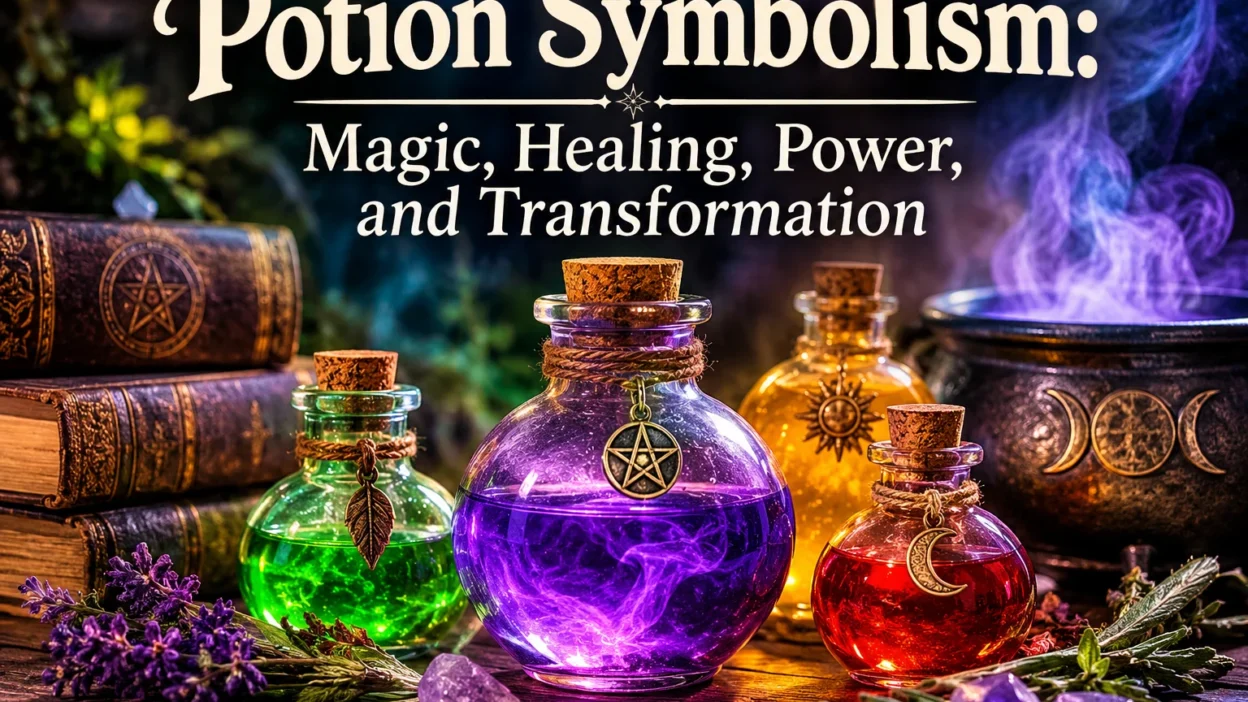
Potion Symbolism explores the meanings behind magical drinks, healing mixtures, and mysterious liquids found in myths, folklore, and popular culture. A potion often represents transformation, hidden knowledge, healing, temptation, or the desire to change something in life. Its meaning depends on its ingredients, appearance, purpose, and the story surrounding it.
In 2026, potions are especially familiar through fantasy novels, Halloween decorations, movies, video games, and witchcraft-inspired aesthetics. A glowing purple bottle might suggest mystery, while a golden liquid may represent wisdom, vitality, or extraordinary power. Meanwhile, a dark potion could symbolize danger, forbidden knowledge, or an uncertain choice.
However, potions aren’t always symbols of supernatural magic. Historically, people prepared herbal mixtures, medicinal drinks, and other substances for practical purposes. Over time, these real practices blended with legends about alchemy, enchanted brews, and magical transformation. Understanding this history helps explain why potions remain powerful symbols of hope, curiosity, danger, and change.
Quick Answer
Potion Symbolism in the United States commonly represents magic, healing, transformation, hidden power, and the possibility of changing one’s circumstances. More broadly, potions can symbolize wisdom, temptation, spiritual renewal, or the risks of seeking power beyond ordinary limits.
TL;DR
- Potions symbolize magic, healing, transformation, and hidden knowledge.
- Ancient traditions connected special mixtures with medicine, rituals, and divine power.
- American folklore and fantasy media make potions symbols of wonder and danger.
- Potion colors often suggest different emotions, purposes, and magical qualities.
- Modern potion imagery appears in tattoos, Halloween decor, games, and fashion.
- Dark potions can represent temptation, control, uncertainty, and unintended consequences.
What Does a Potion Symbolize?
A potion is a liquid mixture associated with a particular purpose, such as healing, transformation, enchantment, or harm. In symbolic art, it often appears in a glass vial, ornate bottle, bubbling cauldron, or glowing container.
For American readers, a potion can represent both the hope of improvement and the fear of unexpected change. Its meaning depends on whether the mixture is presented as helpful, mysterious, dangerous, or forbidden.
The Core Symbolic Meanings
Potion symbolism often centers on these connected ideas:
- Transformation: Changing your identity, circumstances, abilities, or outlook.
- Healing: Recovering from pain, restoring balance, or finding renewal.
- Hidden knowledge: Discovering secrets or learning something beyond ordinary understanding.
- Power: Gaining influence, strength, control, or unusual abilities.
- Temptation: Wanting an easy solution despite possible risks.
- Mystery: Exploring the unknown and accepting that some answers remain unclear.
These meanings frequently overlap. For example, a healing potion might symbolize hope, while a potion promising unlimited power could suggest ambition and temptation.
Why Potions Make Powerful Symbols
A potion begins as one substance but can produce a different result after mixing, brewing, or drinking. This makes it a natural metaphor for change.
The container also matters. A sealed bottle suggests hidden potential, while a bubbling cauldron represents an active process. Likewise, a glowing liquid may suggest that something extraordinary lies beneath an ordinary appearance.
The History of Potion Symbolism
Potions have roots in the long human history of preparing liquids for medicine, ritual, and everyday use. However, the modern image of a magical potion developed through many traditions, stories, and changing beliefs.
Ancient Mixtures and Sacred Practices
Ancient Egyptians, Greeks, Romans, and other societies prepared medicinal mixtures using plants, minerals, oils, and other ingredients. Some substances also appeared in religious ceremonies or traditional healing practices.
People didn’t always separate medicine, religion, and magic as sharply as many people do today. Depending on the culture and historical period, a special drink could serve a practical purpose while also carrying spiritual significance.
However, not every ancient remedy was considered magical. The symbolism depended on the community, the ingredients, the healer’s role, and the intended result.
Greek and Roman Mythology
Greek and Roman stories helped establish several familiar themes associated with magical mixtures. The Greek goddess Circe, for example, used enchanted substances to transform people, including Odysseus’s companions in Homer’s Odyssey.
The story links potions with altered identity, temptation, and the limits of human control. Other classical traditions associated special drinks with divine vitality, extraordinary strength, or the possibility of overcoming ordinary human limitations.
These stories helped shape a lasting idea: a liquid could change more than the body. In mythology, it could alter identity, fate, knowledge, or a person’s relationship with the supernatural.
Medieval Alchemy and Magical Brews
During the medieval period, European alchemy combined practical experimentation with philosophical, spiritual, and sometimes mystical ideas. Alchemists studied substances and transformations, although their goals varied widely.
Legends about the philosopher’s stone and the elixir of life strengthened the association between special mixtures and extraordinary results. The elixir represented the dream of longevity, renewal, or perfection.
Later European folklore and literature developed stories about witches, healers, enchanted drinks, and poisonous brews. These traditions contributed to the familiar fantasy image of a potion prepared through secret knowledge and unusual ingredients.
Potion Symbolism in American Culture
In the United States, potions appear across entertainment, seasonal traditions, fantasy fandoms, and modern spiritual aesthetics. Their meanings often combine older European folklore with contemporary ideas about personal change and imaginative freedom.
Halloween and Witchcraft Imagery
Halloween has made potion bottles a recognizable part of American seasonal decoration. They often appear alongside cauldrons, spellbooks, artificial cobwebs, candles, and other spooky objects.
Green, purple, and black liquids are popular because they create a mysterious atmosphere. Labels such as “poison,” “elixir,” or “magic brew” help establish a fictional purpose without requiring an explanation.
However, Halloween potion imagery is usually playful. A bubbling bottle on a porch may represent spooky fun rather than an actual spiritual belief.
Fantasy Books, Movies, and Games
American audiences encounter potions in fantasy stories, role-playing games, animated films, and adventure franchises. These stories frequently give each potion a clear function, such as restoring health, granting invisibility, changing appearance, or increasing strength.
The familiar red health potion, for example, often symbolizes recovery and survival in video games. A rare glowing elixir might represent an important opportunity or a reward earned through persistence.
Potion imagery also appeals to audiences because it makes invisible ideas visible. Healing becomes a drink, transformation becomes a glowing bottle, and hidden knowledge becomes a secret recipe.
The American Appeal of Reinvention
The potion also fits a broader American cultural interest in self-improvement and reinvention. People may use potion imagery to express the wish to become stronger, discover new possibilities, or move beyond a difficult period.
This doesn’t mean potions have one fixed national meaning. Rather, American stories often use them to explore a familiar question: What would you change if you had the chance?
Spiritual Meaning of Potions
Spiritually, a potion can symbolize intention, renewal, protection, or a search for deeper understanding. Its meaning varies considerably across traditions, so it’s important not to treat every spiritual practice as part of one universal system.
Intention and Personal Transformation
In some contemporary spiritual and witchcraft practices, prepared mixtures may serve as symbols of personal intention. Herbs, water, flowers, and other objects can represent qualities such as peace, courage, love, or abundance.
The symbolic value may come from the meaning a person assigns to the ingredients and the ritual surrounding them. For example, a decorative bottle filled with lavender-colored water might represent calm or emotional renewal.
These meanings are personal or tradition-specific. They shouldn’t be presented as proof that a mixture possesses supernatural powers.
Renewal, Cleansing, and Protection
Liquids have long carried symbolic associations with washing, purification, and renewal in different cultures and religious traditions. However, these associations don’t mean that every cleansing ritual involves a potion.
In a fictional or personal symbolic setting, a clear potion may suggest a fresh beginning. A golden mixture might represent hope or protection, while a green one could evoke growth and restoration.
The surrounding context determines whether these images express spiritual faith, artistic imagination, or simply an interest in magical aesthetics.
Elixirs and the Search for Immortality
The elixir of life is one of the most enduring potion-related ideas. In legends and alchemical writing, it represents the possibility of extending life, renewing vitality, or overcoming human limitations.
Today, the elixir remains a popular image in fantasy art and storytelling. It can symbolize a desire to preserve youth, escape loss, or discover something that makes life feel more meaningful.
Importantly, the legendary elixir isn’t a scientifically established way to achieve immortality. Its continuing power lies largely in what it represents about human hopes and fears.
Potion Colors and Their Symbolic Meanings
Color helps communicate a potion’s purpose before anyone explains what it does. In American fantasy art, games, and Halloween displays, bright liquids and unusual lighting make these meanings easy to recognize.
Common Potion Colors
These are common creative associations, not universal rules.
| Potion Color | Common Symbolic Meaning | Typical Context |
|---|---|---|
| Red | Vitality, passion, strength, or danger | Health potions, love brews, dramatic spells |
| Green | Growth, nature, healing, or poison | Herbal mixtures, forest magic, dangerous concoctions |
| Blue | Calm, wisdom, clarity, or protection | Magical shields, peaceful enchantments |
| Purple | Mystery, intuition, power, or transformation | Witchcraft aesthetics, rare magical elixirs |
| Gold | Success, immortality, abundance, or divine power | Legendary elixirs, treasure, alchemical imagery |
| Black | Secrecy, fear, forbidden knowledge, or corruption | Dark fantasy, curses, ominous brews |
How Bottle Shapes Change the Meaning
The container can strengthen the message of a potion. A tiny glass vial may suggest a rare substance, a precious gift, or a carefully preserved secret.
An oversized cauldron often implies a complex process or powerful magic. Meanwhile, an ornate bottle with a cork stopper may suggest an old tradition, an ancient secret, or knowledge passed between generations.
Lighting also affects interpretation. Warm light makes a potion feel inviting, while cold blue or green light can create an eerie atmosphere.
The Psychological Meaning of Potions
Potion imagery appeals to people because it gives physical form to the desire for change. It turns abstract hopes, fears, and ambitions into something visible and easy to imagine.
The Desire to Change Something
People often imagine a potion that could solve a difficult problem instantly. In stories, a single drink might restore health, create confidence, reveal the truth, or transform a person’s appearance.
Psychologically, this can reflect a wish for control when life feels uncertain. A potion becomes a symbol of the solution someone wants but cannot easily obtain.
However, the same symbol can encourage reflection. Instead of asking which magical drink would solve a problem, a person might ask what kind of change they genuinely need.
Curiosity and the Unknown
A mysterious potion can represent curiosity about hidden possibilities. Its unusual color, unfamiliar ingredients, or secret label encourages the viewer to imagine what might happen next.
An unopened vial may symbolize potential that hasn’t yet been explored. By contrast, a spilled potion can suggest a lost opportunity or the consequences of an impulsive decision.
Temptation and Control
Not every potion represents a positive change. A love potion, for example, can symbolize the desire to influence another person’s feelings rather than build a genuine relationship.
Likewise, a potion that grants unlimited power may reveal an underlying fear of losing control. These stories invite people to consider whether the desired outcome is worth the cost.
Potion Symbolism in Dreams
A potion in a dream may be interpreted as a symbol of change, healing, temptation, or uncertainty. However, dreams don’t have one proven symbolic dictionary that applies to everyone.
Personal experiences and emotions matter more than a fixed interpretation.
Drinking a Potion
Drinking a potion in a dream might reflect a desire to change your circumstances or accept an unfamiliar opportunity. If the experience feels pleasant, it may connect with hope or anticipation.
If the potion tastes unpleasant or causes fear, it could reflect uncertainty about a choice. The most useful question is often how you felt during the dream.
Making or Discovering a Potion
Creating a potion may suggest experimentation, patience, or an attempt to combine different parts of your life. Discovering an old bottle might evoke hidden memories, curiosity, or an opportunity you haven’t considered.
A broken or spilled potion could represent frustration or fear of losing control. Still, these are possible associations rather than predictions about future events.
Potion Tattoos and Modern Aesthetics
Potion imagery has become a recognizable choice for people who enjoy fantasy, gothic design, gaming, and witch-inspired art. Its appeal comes from the way a small object can communicate several ideas at once.
Popular Potion Tattoo Designs
Common designs include:
- Small glass vials: Hidden potential, personal secrets, or quiet transformation.
- Bubbling bottles: Creativity, experimentation, and change in progress.
- Herbal potion jars: Nature, renewal, and an interest in traditional folklore.
- Dark elixirs: Mystery, individuality, or an attraction to gothic imagery.
- Glowing fantasy potions: Imagination, hope, and the search for extraordinary possibilities.
Fashion, Decor, and Online Identity
Potion bottles also appear in jewelry, stickers, collectible miniatures, room decor, and digital illustrations. They fit especially well with fantasy-inspired bedrooms, gothic interiors, and whimsical desk displays.
On social media, potion imagery can communicate a person’s interest in games, magical fiction, or creative self-expression. A personalized “potion” illustration might represent someone’s mood, artistic identity, or favorite fictional world.
The symbolism doesn’t have to be spiritual. Sometimes, a potion simply represents the joy of imagining a world with different rules.
Love Potions, Healing Potions, and Other Types
Different potion types communicate different hopes and fears. Their meanings depend on the intended effect, especially in folklore and fantasy stories.
Love Potions
Love potions represent attraction, longing, romance, and the desire to be loved. However, stories often give them a troubling side because they can remove another person’s freedom to choose.
This makes the love potion a symbol of the difference between affection and control. It can express romantic fantasy while also warning against manipulation.
Healing Potions
Healing potions symbolize recovery, relief, resilience, and renewed strength. They’re especially familiar in fantasy games, where a character drinks one after a difficult battle.
The symbol can also represent emotional recovery or the hope of feeling whole again. Its meaning is usually encouraging, although it can sometimes suggest a wish for instant relief from problems that require time.
Poison Potions and Dark Elixirs
Poisonous potions often represent betrayal, hidden threats, revenge, or destructive ambition. Their danger may come from their appearance, secret ingredients, or the person who prepares them.
In stories, a harmless-looking bottle can make the danger even stronger. This contrast creates a warning about appearances and the importance of understanding what lies beneath the surface.
Transformation Potions
Transformation potions symbolize identity, reinvention, and the desire to become someone different. They may change a person’s body, age, abilities, or appearance.
Such stories can explore the freedom and excitement of change. They can also raise questions about authenticity, acceptance, and whether becoming someone else solves an underlying problem.
Misunderstandings and Controversies Around Potion Symbolism
Potion imagery can seem straightforward, but its meaning changes across different settings. A symbol used for Halloween fun may have a different significance in a spiritual practice or a story about coercion.
Fiction Isn’t the Same as Historical Practice
Modern fantasy often combines ideas from different eras and cultures. Its witches, alchemists, magical ingredients, and enchanted drinks may not accurately represent any single historical tradition.
For example, a fantasy potion might contain glowing crystals and unusual herbs chosen for visual appeal. That doesn’t establish that the mixture reflects a real historical recipe or religious custom.
It’s helpful to distinguish creative invention from documented history, especially when discussing living spiritual traditions.
The Stereotype of the Dangerous Witch
Some potion imagery draws on historical stories that portrayed witches as threatening or deceptive. In the United States, these images remain common in horror and Halloween entertainment.
However, not every witch-related image carries the same meaning. Some people use witchcraft imagery as fiction, some as personal spirituality, and others as an aesthetic choice.
Treating every use as evidence of harmful intent ignores these differences. Context, intention, and the person’s own explanation matter.
Magical Claims and Real-World Safety
Potion symbolism can also become confusing when fictional mixtures are presented as genuine remedies. Historical herbal practices are varied, and some plants or substances can be harmful when swallowed or mixed.
A decorative potion bottle should not be confused with a safe drink. Likewise, an imagined elixir shouldn’t be treated as a proven cure or a substitute for established care.
The symbol can inspire curiosity without requiring anyone to believe that every magical claim is real.
How Potion Symbolism Has Changed Over Time
Potion symbolism has shifted alongside changes in medicine, religion, literature, and entertainment. Although the basic idea of a powerful liquid remains familiar, its meaning has expanded considerably.
From Practical Mixtures to Enchanted Brews
In ancient societies, special liquids could be associated with ordinary healing, religious rituals, or traditional knowledge. Their meanings depended on the historical setting rather than one universal concept of magic.
During later periods, folklore and alchemical traditions added stories about transformation, extraordinary longevity, and hidden wisdom. These stories helped connect potions with the dream of overcoming natural limits.
From Folklore to Fantasy Entertainment
Printed fairy tales, novels, theater, and later films helped popularize the image of a witch’s brew or a mysterious elixir. The potion became an easy storytelling device because its purpose could be understood quickly.
In modern American entertainment, potions often function like tools with specific abilities. A red bottle restores health, a purple one grants unusual powers, and a dark mixture introduces danger.
Read More: Alchemy Symbolism: Meaning, History, and Modern Uses
From Magical Power to Personal Expression
Today, potions can represent much more than supernatural ability. In tattoos, artwork, and decor, they may communicate creativity, individuality, healing, curiosity, or an interest in fantasy worlds.
This change doesn’t erase older meanings. Instead, modern uses draw from several layers of history, allowing the same image to feel playful, spiritual, mysterious, or deeply personal.
FAQs
What Does a Potion Symbolize Spiritually?
A potion may symbolize intention, renewal, healing, protection, or transformation in a spiritual context. Its meaning depends on the tradition and the personal significance of its ingredients and preparation.
What Does a Potion Represent in Dreams?
A potion in a dream may reflect a desire for change, a search for healing, or uncertainty about a choice. Consider the potion’s appearance and your feelings during the dream rather than assuming it predicts the future.
What Does a Love Potion Symbolize?
A love potion often symbolizes romantic longing and the wish to attract someone’s affection. However, it can also represent manipulation because magically forcing love removes the other person’s freedom to choose.
What Does a Green Potion Mean?
A green potion commonly represents nature, growth, healing, or poison in fantasy imagery. Its meaning depends on the story, lighting, ingredients, and whether the potion is presented as helpful or dangerous.
What Does a Potion Tattoo Mean?
A potion tattoo can express transformation, curiosity, healing, mystery, or a love of fantasy. Some people choose it for spiritual reasons, while others simply enjoy its artistic style.
Are Potions a Real Part of Ancient History?
People in ancient societies prepared liquids for medicine, rituals, and other purposes, and some traditions included magical beliefs. However, the supernatural powers assigned to fantasy potions are storytelling elements, not established historical facts.
Conclusion
Potion Symbolism brings together magic, healing, hidden knowledge, transformation, and the desire for change. From ancient mixtures and alchemical legends to American Halloween traditions and fantasy games, potions have remained powerful images of extraordinary possibilities. Their meanings aren’t always positive. A potion can represent hope and renewal, but it can also suggest temptation, deception, or the danger of seeking an effortless solution. Color, context, and purpose help reveal which interpretation fits best. Ultimately, a potion is a symbol of what people hope to change, discover, or become. Whether you encounter one in a story, a tattoo, or a decorative bottle, consider what the mixture promises—and what its promise might reveal about human desires.