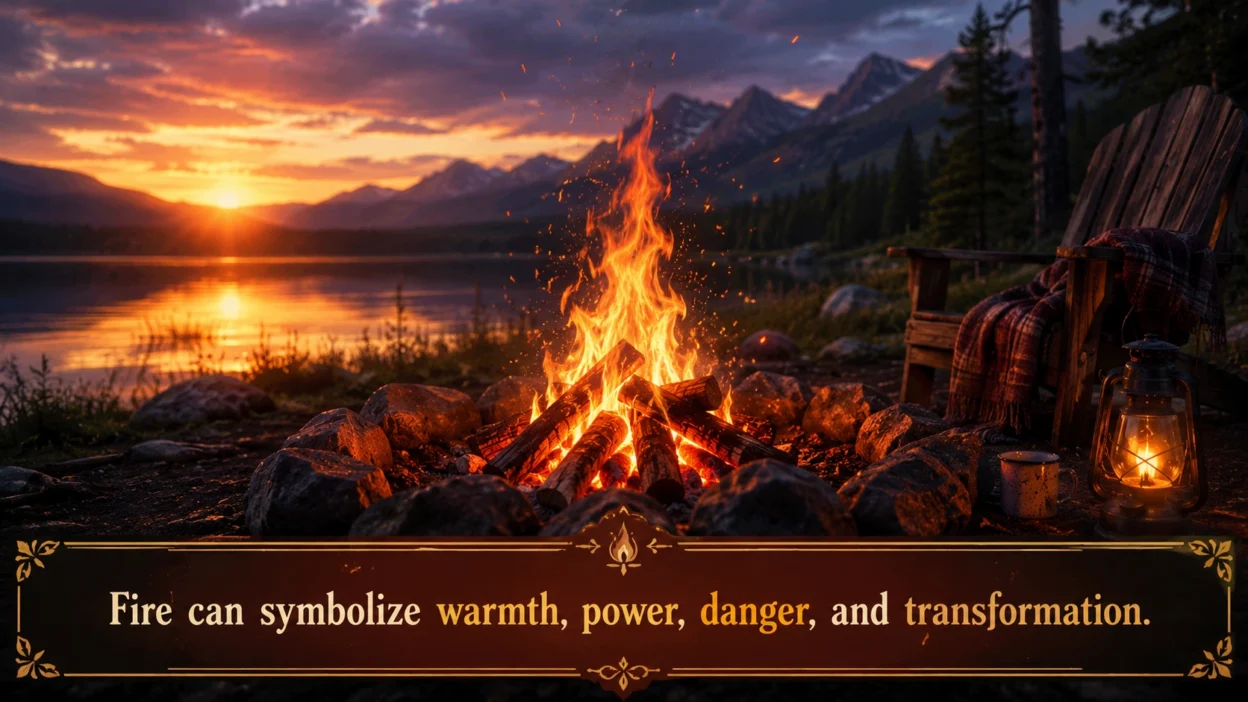
Fire Symbolism reveals how Fire carries deeper meanings through symbolism, connecting ancient, powerful symbols with traditions, cultures, religions, myths, dreams, and art worldwide. From my experience studying symbolic traditions, Fire consistently represents creative force and destructive power. Every belief and systems of thought give it a unique role, while its nature continues to inspire people because it can warm, illuminate, and transform lives. This lasting image of change and renewal explains why Fire has remained meaningful across generations.
Throughout history, Fire symbolizes spiritual energy, divine presence, sacred flames, passion, purification, rebirth, and awakening. It reminds us that destruction can clear the way for transformation, helping inner strength as it grows through every challenge. This enduring connection between humanity and Fire reflects the ability to face difficulty with courage and embrace new beginnings.
From my own observations, Fire Symbolism teaches that true transformation requires intensity and release. Whether viewed through history, personal reflection, or spiritual practice, Fire remains one of the clearest signs of change. Real growth begins when we accept both heat and light as part of the journey.
Quick Answer
Fire symbolism in the USA often means passion, transformation, power, and warning. It can also suggest cleansing, inspiration, and survival. In broader traditions, fire may represent spirit, sacrifice, or divine presence.
TL;DR
- Fire often means passion, energy, and strong emotion.
- In the USA, it can also signal danger or renewal.
- Ancient cultures linked fire to gods, ritual, and survival.
- Fire appears in religion, holidays, tattoos, and branding.
- It can feel comforting, fierce, purifying, or destructive.
- Meanings shift based on color, size, and setting.
What Fire Symbolism Means at a Glance
Fire is one of the oldest symbols people still use. Its meaning is easy to feel, but it changes fast depending on the scene.
Core ideas people connect with fire
In general, fire suggests heat, light, movement, and change. However, it can also warn people that something is unstable or risky.
• Passion and desire
• Power and intensity
• Cleansing and renewal
• Danger and destruction
In American life, that range matters. A candle flame can feel peaceful, while a wildfire feels threatening.
How Fire Looks and Why That Matters
Fire symbolism often depends on how fire appears. A small flame, a bonfire, a wildfire, or blue gas flame can all send different signals.
Color, shape, and setting
Orange and red flames often feel warm and human. Blue flames can seem sharper, colder, or more controlled. Also, a steady candle flame often feels sacred, while chaotic fire looks wild.
Common visual cues
• Small flames suggest hope or guidance
• Large flames suggest power or crisis
• Smoke can add mystery or loss
• Sparks often suggest energy or inspiration
Because of these details, artists use fire carefully. The same image can mean comfort in one story and ruin in another.
Ancient Roots of Fire Symbolism
Fire symbolism goes back to the earliest human communities. People depended on fire for survival, so it became more than a tool.
Early human meaning
Fire gave warmth, protection, and cooked food. It also extended the day and helped people gather together. As a result, many cultures treated fire as a gift with sacred value.
Pre-Christian and ancient traditions
Long before modern America, fire appeared in ritual and myth. In ancient Persia, fire had a sacred role in worship. In Greek stories, fire could represent knowledge and defiance. In many early cultures, fire marked purification, sacred space, and divine power.
Fire was also linked to change. It could clear land, melt metal, and transform raw material into something useful. That practical reality helped turn fire into a symbol of human progress.
Fire in Religious and Spiritual Traditions
Fire often carries spiritual meaning, even when different traditions interpret it differently. In the USA, many people still recognize these older associations.
Sacred presence and moral testing
In the Bible, fire can signal judgment, guidance, or holy presence. In some spiritual settings, flames represent prayer, devotion, or the light of truth. However, fire can also stand for testing and hardship.
Respectful cross-cultural meanings
In Hindu traditions, fire is central to ritual and offering. In some Indigenous traditions, fire can be tied to ceremony, responsibility, and community life. Also, many Buddhist and mystical traditions use fire as a sign of cleansing or awakening.
These meanings are not all the same. Still, they share one idea: fire changes what it touches.
Fire Symbolism in the USA
In the USA, fire carries some of the strongest and most mixed meanings. It can mean home, freedom, rebellion, renewal, or emergency.
National and cultural associations
American culture often links fire with the fireplace, the campfire, the candle, and the Fourth of July. These images feel familiar because they mix comfort with energy. Also, fire appears in songs, sports imagery, and political language.
Everyday American meanings
Fire can suggest ambition in business or sports. It can also mean anger, urgency, or social unrest. Because Americans use fire in both positive and negative ways, the symbol stays very flexible.
| Context | Meaning in the USA | Common Associations | Notes |
| Candlelight | Peace, prayer, memory | vigils, romance, reflection | Often feels calm and personal |
| Fireplace | Home, comfort, family | winter, warmth, safety | Strong domestic symbolism |
| Campfire | Community, stories, freedom | camping, bonding, tradition | Often tied to outdoor life |
| Torch | Guidance, protest, victory | ceremonies, marches, games | Can signal leadership or defiance |
| Wildfire | Loss, danger, urgency | climate events, evacuation, fear | Usually negative and intense |
| Bonfire | Celebration, release, energy | sports, festivals, rituals | Depends on setting and tone |
Why Americans respond strongly to fire
Fire fits a culture that values independence and reinvention. It can suggest a fresh start, but it can also remind people how fast control can disappear. That tension is part of its power.
Fire as a Symbol of Passion and Desire
One of the most common meanings of fire is emotional intensity. Americans often use fire language to describe attraction, creativity, and motivation.
Love, ambition, and drive
People say someone has “fire” when they show confidence or strong purpose. Also, a “fire” idea or performance means something exciting and memorable. In relationships, fire can point to passion, chemistry, or longing.
Emotional intensity in daily life
• Strong attraction
• Creative energy
• Competitive spirit
• Fierce determination
However, fire is not always positive. It can also describe jealousy, rage, or obsession. That double meaning makes it a useful symbol in books, music, and film.
Fire as a Symbol of Cleansing and Renewal
Fire is often linked to change because it destroys old forms and makes room for new ones. This idea appears in mythology, religion, and modern self-help language.
Burning away the old
Many people picture fire as a purifier. It can clear dry land, melt metal, or remove what is no longer useful. Symbolically, that makes fire a sign of letting go.
Renewal after hardship
In American culture, fire sometimes stands for survival after a hard season. A burned-down structure may later represent rebuilding and resilience. For that reason, fire can feel painful and hopeful at the same time.
Fire in Holidays, Rituals, and Public Life
Fire appears in many shared moments across the USA. These moments give the symbol a social meaning, not just a personal one.
Seasonal and civic uses
Candles are common at memorials, religious services, and holidays. Bonfires show up at school events, local festivals, and some winter traditions. Also, fireworks add a fiery feel to patriotic celebrations.
Common public roles
• Mourning and remembrance
• Celebration and spectacle
• Ritual and devotion
• Warning and emergency response
Fire in public life often carries emotion quickly. A single flame can feel like honor, grief, unity, or alarm.
Fire in Art, Tattoos, and Social Media
Modern fire symbolism is everywhere now. It has moved from ancient ritual into style, self-expression, and digital language.
Tattoos and body art
People choose fire tattoos to show transformation, intensity, survival, or rebellion. Sometimes flames wrap around names, skulls, hearts, or phoenix images. Also, fire can represent a person who has “been through” a lot.
Social media and visual culture
The fire emoji often means approval, excitement, or something “hot.” However, people also use fire imagery for mood boards, music edits, and motivational posts. In design, flames can make a brand feel bold and energetic.
Psychological Meanings of Fire
Fire works so well as a symbol because it speaks to emotion. People feel it before they explain it.
What fire signals inside the mind
It can represent energy, alertness, and confidence. It can also reflect fear, stress, or anger. Because fire is so immediate, it often mirrors strong inner states.
Why it feels so powerful
• It moves constantly
• It can spread fast
• It changes what it touches
• It demands attention
That is why fire often shows up during life transitions. It matches moments when people feel pressure, ambition, or deep change.
Misunderstandings, Misuse, and Controversies
Fire symbolism is not always positive. It can be misunderstood when people ignore context.
When fire means harm
In real life, fire can signal destruction, arson, war, or disaster. In those settings, the symbol loses any romantic feel. Instead, it becomes a warning about loss and instability.
When fire imagery is used carelessly
Some groups use fire to glorify violence or hate. That misuse should be read carefully, not accepted as normal symbolism. Also, wildfire images can be used loosely online in ways that ignore the real suffering they cause.
Because fire has such a strong emotional charge, context matters more than ever. The same flame can honor a memory or threaten a community.
How Fire Symbolism Has Changed Over Time
Fire has kept its core meaning, but the details have shifted. Older societies often saw it as sacred or magical. Today, Americans still respect those ideas, but they also see fire through science, media, and personal identity.
From survival to self-expression
At first, fire meant safety, cooking, and light. Later, it became a symbol of ritual, power, and transformation. Today, it also means style, energy, and emotional intensity.
Read More: Earth Symbolism: Meaning, History, and USA Use
What stayed the same
• Fire still signals change
• Fire still commands attention
• Fire still mixes beauty and danger
• Fire still feels bigger than ordinary life
That lasting tension is why the symbol remains so strong in the USA.
FAQs
1. What does fire symbolize?
Fire commonly symbolizes transformation, passion, purification, energy, power, renewal, and spiritual awakening. Its meaning often depends on the cultural, religious, or personal context in which it appears.
2. Why is fire considered a symbol of transformation?
Fire changes everything it touches. It can destroy old forms while making way for something new, which is why it is widely seen as a symbol of change, growth, rebirth, and personal transformation.
3. What does fire symbolize in spiritual traditions?
In many spiritual traditions, fire represents divine presence, sacred energy, purification, enlightenment, and the connection between the physical and spiritual worlds. It is often used in ceremonies, rituals, and meditation practices.
4. Is fire always a positive symbol?
No. Fire has both positive and negative meanings. It can represent warmth, inspiration, courage, and life, but it can also symbolize danger, destruction, anger, or uncontrolled power when it is out of balance.
5. What does dreaming about fire usually mean?
Dreaming about fire often reflects strong emotions or significant life changes. Depending on the dream, it may point to renewal, passion, inner strength, purification, or a need to let go of something from the past.
Conclusion
Fire Symbolism has remained meaningful throughout history because it reflects both creation and destruction, reminding us that growth often comes through change. Whether viewed through ancient traditions, spiritual beliefs, or personal experiences, fire continues to represent courage, renewal, passion, and the strength to move forward. Understanding its symbolism can offer valuable insight into both cultural traditions and our own journeys of transformation.