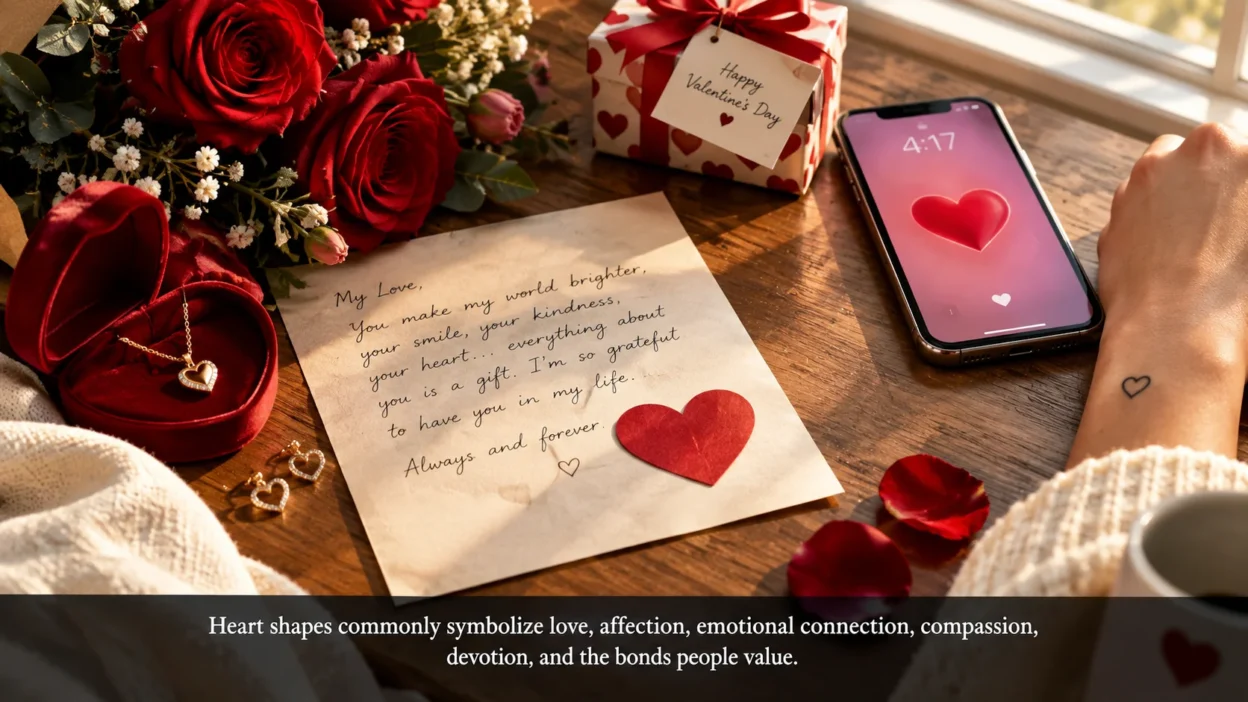
The heart shape is one of the most recognizable symbols in American culture. Heart Shape Symbolism usually points to love, affection, emotional connection, and care. You see it on greeting cards, jewelry, tattoos, clothing, decorations, and digital messages.
However, the familiar heart shape isn’t the same as the human heart. Its rounded sides and pointed bottom developed through a long history of art and visual tradition. Over time, the shape became easier to recognize and reproduce.
Today, Americans often connect the heart with romantic love. Yet its meaning can extend to friendship, family, kindness, compassion, courage, and personal identity. Its meaning also changes with color, setting, size, and surrounding symbols.
Quick Answer
Heart Shape Symbolism in the USA most commonly represents love, affection, emotional connection, and caring relationships. More broadly, the shape can express compassion, devotion, life, unity, gratitude, and emotional openness.
TL;DR
- The heart shape is a widely recognized symbol of love and affection.
- Its visual history reaches back centuries through European art and manuscripts.
- American culture strongly connects it with romance and Valentine’s Day.
- Colors can change the emotional message of a heart symbol.
- Tattoos often give the heart a personal meaning beyond romance.
- Digital hearts now communicate affection, approval, support, and connection.
What Does the Heart Shape Symbolize?
The heart shape carries several meanings, but love remains its strongest modern association. In the United States, people often recognize it instantly without needing an explanation.
However, context can change the message. A heart on a wedding invitation feels different from a heart used for friendship or charity.
Love and Affection
The heart commonly represents romantic love and emotional attachment. Couples may use it on cards, gifts, jewelry, and keepsakes.
At the same time, people use hearts for family love and close friendships. The symbol can therefore express connection without implying romance.
Common Meanings
The heart can suggest:
• Romantic love and emotional intimacy
• Friendship, loyalty, and close connection
• Compassion, kindness, and emotional warmth
• Gratitude, appreciation, and personal affection
• Life, vitality, and emotional importance
History of the Heart Shape
The history of the heart symbol is more complicated than its modern appearance suggests. Ancient societies understood the human heart as an important organ, but they didn’t always draw it like today’s symbol.
Early visual traditions often represented the heart through different shapes. Later European art helped establish the familiar pointed form.
Ancient Ideas About the Heart
Ancient Egyptians treated the heart as an important part of human identity. It also played a major role in religious ideas about judgment and the afterlife.
Greek and Roman writers connected the heart with emotion, thought, courage, and desire. These ideas helped reinforce the heart’s symbolic importance, even though the modern icon wasn’t yet standard.
Medieval European Development
During the Middle Ages, artists increasingly used heart imagery in religious manuscripts and devotional art. Some images showed a heart as an object of spiritual devotion.
By the late medieval period, the heart had become increasingly recognizable as a symbol of inner feeling. Artists gradually emphasized its visual simplicity.
How Did the Heart Shape Become a Love Symbol?
The heart became strongly connected with love through medieval and later European artistic traditions. Literature, religious imagery, heraldry, and courtly romance all helped strengthen that connection.
However, the exact moment when the modern heart icon appeared remains difficult to identify. Several historical images resemble today’s shape, but they don’t all represent the symbol in exactly the same way.
Medieval Love Imagery
Medieval European culture often described the heart as the center of love and desire. Stories about romantic devotion helped turn the heart into a visual shorthand for emotional attachment.
Over time, artists made the shape more recognizable. The pointed bottom and rounded upper sections eventually became familiar features.
Printing and Reproduction
Printing helped symbols travel farther and appear more consistently. Once a simple heart could be reproduced easily, it became useful for books, cards, decorations, and other objects.
This helped transform a complex idea into a quick visual message.
Heart Symbolism in the United States
American culture made the heart especially visible in everyday life. Romantic cards, advertising, jewelry, clothing, entertainment, and holidays all reinforced its meaning.
Valentine’s Day plays a major role. Every February, hearts appear across homes, stores, schools, restaurants, greeting cards, and social media.
American Romantic Culture
In the USA, a heart often communicates romantic interest without words. A red heart can make a message feel warmer and more personal.
However, American usage isn’t limited to romance. Hearts also appear in fundraising campaigns, family products, children’s art, friendship messages, and community events.
Everyday American Associations
| Context | Meaning in the USA | Common Associations | Notes |
| Valentine’s Day | Romantic affection | Cards, flowers, gifts | Strong seasonal association |
| Family life | Love and belonging | Photos, crafts, keepsakes | Often non-romantic |
| Friendship | Care and loyalty | Messages, bracelets, gifts | Common among younger users |
| Charity | Compassion and support | Fundraisers, campaigns | Meaning depends on context |
| Tattoos | Personal emotion | Memory, relationships, identity | Often highly individual |
Spiritual and Cross-Cultural Heart Meanings
The heart carries symbolic importance in many cultures and religious traditions. However, those meanings aren’t identical everywhere.
In several traditions, the heart represents the inner self, moral character, devotion, wisdom, or spiritual life. These ideas can be much broader than modern romantic symbolism.
Religious Symbolism
Christian art has long used heart imagery to express devotion and spiritual love. Some traditions use specific heart symbols connected with religious teachings and sacred devotion.
These symbols shouldn’t automatically be treated as romantic. Their meanings depend strongly on the religious context.
Broader Cultural Meanings
Across cultures, the heart can represent:
• Inner character and personal sincerity
• Spiritual devotion and sacred love
• Courage, strength, and emotional endurance
• Compassion toward other people
• The center of a person’s emotional life
What Do Different Heart Colors Mean?
Color can change how people interpret a heart. In American culture, some meanings are widely recognized, while others depend heavily on context.
Red Heart
A red heart is strongly associated with romantic love and passion. It can also communicate warmth, care, or strong emotional attachment.
Because red is visually intense, it often feels more emotionally powerful than softer heart colors.
Other Heart Colors
Pink hearts can suggest tenderness, sweetness, affection, or playful romance. White hearts may suggest purity, peace, remembrance, or simplicity.
Black hearts can communicate grief, dark humor, alternative style, or emotional complexity. Therefore, color should never be interpreted without considering the surrounding message.
Emotional and Psychological Meaning of the Heart
The heart symbol works because people already connect the physical heart with strong feelings. Even though emotions involve complex biological processes, everyday language often places feelings “in the heart.”
This makes the heart an easy visual shortcut for emotional importance.
What a Heart Can Communicate
A heart may signal:
• Emotional openness and willingness to connect
• Warmth toward another person
• Appreciation without a long explanation
• Vulnerability within a close relationship
• Hope, kindness, or emotional support
Why the Symbol Feels Personal
A heart can communicate something quickly that words might make awkward. For example, someone may send a heart after saying thank you.
The same symbol can therefore soften a conversation. It adds emotional tone without requiring a long explanation.
Heart Shape Symbolism in Tattoos
Heart tattoos are popular because the shape is simple, recognizable, and easy to personalize. People can combine it with names, dates, flowers, animals, words, or other symbols.
However, a heart tattoo doesn’t automatically mean romantic love. Its meaning often comes from the person’s life story.
Common Heart Tattoo Ideas
People may use heart tattoos to represent:
• A lasting romantic relationship
• A family member or close friend
• Remembrance after someone’s death
• Personal growth after emotional hardship
• Self-love and acceptance
Traditional and Modern Styles
Classic red hearts can create a vintage or traditional appearance. Anatomical hearts offer a more realistic alternative.
Minimalist outlines can feel modern and understated. Broken, stitched, burning, or decorated hearts can communicate more complicated emotional stories.
Hearts in Social Media and Digital Communication
Digital communication has expanded the heart’s meaning. People can now send a heart with one tap, making it one of the fastest emotional symbols online.
The meaning still depends on the platform and relationship. A heart reaction may show agreement, affection, appreciation, or simple support.
Heart Emojis
Different heart colors can carry slightly different emotional tones. Users may choose them based on friendship, romance, humor, identity, or visual preference.
However, emoji meanings aren’t fixed rules. The same heart can mean different things between different people.
Likes and Reactions
Heart-shaped reactions often communicate approval or positive emotion. They can also make online conversations feel more personal.
Because digital messages lack facial expressions and voice tone, symbols like hearts help fill that emotional gap.
Heart Symbols in American Holidays and Traditions
The heart is especially visible during Valentine’s Day, but Americans use it throughout the year. It appears in weddings, anniversaries, birthdays, family celebrations, and remembrance events.
Valentine’s Day
Valentine’s Day gives the heart its strongest seasonal association in the United States. Hearts appear alongside roses, chocolates, cards, jewelry, and romantic messages.
Yet Valentine’s Day also increasingly includes friendship and family affection. Children often exchange heart-themed cards without any romantic meaning.
Weddings and Anniversaries
Hearts can symbolize partnership, commitment, and lasting affection. Wedding stationery, decorations, cake designs, and jewelry sometimes use heart motifs.
However, many couples choose other symbols, such as rings or flowers. The heart is one option within a much wider visual language of love.
Heart Shapes in Fashion, Jewelry, and Decor
The heart’s simple outline works well across many materials. Designers can place it on metal, glass, fabric, wood, ceramics, paper, and digital artwork.
Because the shape is instantly recognizable, it can make an object feel sentimental.
Jewelry
Heart pendants, bracelets, rings, and earrings often communicate affection. They can mark relationships, anniversaries, family connections, or personal milestones.
A heart-shaped gift doesn’t always indicate romance. Parents, friends, and relatives may exchange heart jewelry as a sign of affection.
Home Decor
Heart decorations can create feelings of warmth and familiarity. They often appear in bedrooms, kitchens, children’s spaces, seasonal decorations, and handmade crafts.
In American homes, the heart can therefore represent the idea of love within a shared space.
Heart Symbol Misunderstandings and Controversies
Most heart symbols have positive or affectionate meanings. Still, interpretation can change when the symbol appears alongside other imagery.
A heart alone rarely communicates a single universal message. Its meaning depends on color, words, setting, audience, and surrounding symbols.
Broken Hearts
A broken heart commonly represents heartbreak, loss, disappointment, or grief. It has become a familiar symbol in American popular culture.
However, it can also be used humorously. Someone might use a broken heart after a minor disappointment, showing how flexible the symbol has become.
Dark or Aggressive Uses
Black or heavily stylized hearts can sometimes appear in darker artistic settings. They may represent grief, emotional pain, rebellion, or alternative identity.
That doesn’t make the symbol inherently negative. The surrounding design and personal context matter more than color alone.
How Heart Symbolism Has Changed Over Time
The heart has moved from a symbol connected with the inner emotional self to one of the world’s simplest visual messages.
Earlier traditions often treated the heart as a deeper symbol of character, devotion, courage, or spiritual life. Modern American culture often emphasizes romance and affection.
From Sacred to Everyday
Heart imagery once appeared heavily in religious and devotional art. Today, people may encounter the same basic shape on a text message, coffee mug, shirt, or social media screen.
This doesn’t erase older meanings. Instead, the symbol has accumulated new layers.
From Romance to Wider Connection
Modern users increasingly apply hearts to friendship, family, self-expression, community, and emotional support.
As a result, the heart remains romantic while also becoming more inclusive as a symbol of human connection.
What Does a Heart Shape Say About Identity?
Using a heart can communicate something about what a person values. It may suggest openness to affection, appreciation for relationships, or interest in sentimental design.
Still, it’s important not to make strong assumptions about someone from a single symbol. People often choose hearts simply because they like the shape.
Read More: Foot Symbolism: Meaning, History, and Modern Uses
Personal Meaning
A person might use a heart because it reminds them of:
• A loved one or important relationship
• A meaningful memory from childhood
• A personal experience of loss or healing
• Their appreciation for friendship and family
• Their own values surrounding kindness and care
FAQs
What does a heart shape symbolize?
A heart shape most commonly symbolizes love, affection, and emotional connection. Depending on context, it can also represent friendship, compassion, family, remembrance, or support.
Why is the heart shape associated with love?
European art and literature helped connect the heart with emotional love over centuries. The simple shape later became an easy visual symbol for romantic affection.
What does a red heart symbolize?
A red heart commonly represents strong love, passion, affection, and emotional attachment. In American culture, it is especially associated with romance and Valentine’s Day.
What does a heart tattoo symbolize?
A heart tattoo can represent romantic love, family, friendship, remembrance, healing, or self-love. Personal details often determine its specific meaning.
What does a black heart symbolize?
A black heart can represent grief, emotional complexity, dark humor, alternative style, or sadness. Its meaning depends strongly on the design and context.
Why are hearts used for Valentine’s Day?
The heart had already become strongly associated with love before modern Valentine’s Day traditions developed. Cards, gifts, and decorations helped make the connection especially familiar in American culture.
Conclusion
Heart Shape Symbolism has developed through centuries of art, language, religion, romance, and popular culture. In the USA today, the heart most often represents love, affection, connection, compassion, and emotional importance. However, its meaning isn’t limited to romance. A heart can honor family, celebrate friendship, express support, remember someone, or simply show that something matters deeply. The next time you see a heart, consider its color, setting, and surrounding symbols. Those small details often reveal which kind of love or connection the symbol is meant to express.