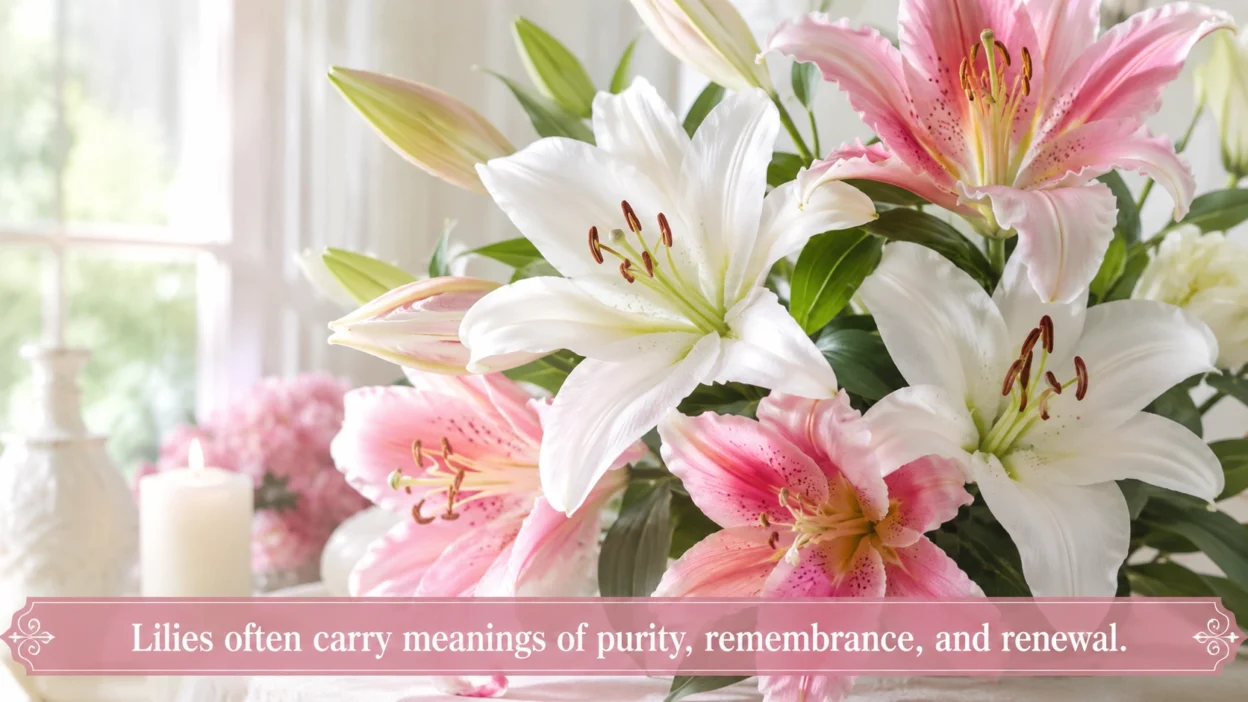
Lily Symbolism has remained meaningful because the flower feels both simple and elegant. With its wide petals, strong stem, and trumpet-shaped bloom, a lily naturally draws attention and has inspired symbolic meanings for centuries.
In the United States, lilies are often associated with purity, faith, sympathy, and new beginnings. Their symbolism can also shift depending on the flower’s color, the occasion, and the cultural or spiritual tradition in which they appear.
That is why lilies are common in wedding bouquets, memorial arrangements, church decorations, and spring celebrations. Lily Symbolism can express joy, hope, remembrance, or quiet reverence, making the flower meaningful in many different moments of life.
Quick Answer
Lily symbolism in the USA often points to purity, renewal, sympathy, and spiritual grace. More broadly, lilies can also stand for beauty, devotion, and hope.
TL;DR
- Lilies often symbolize purity, renewal, and remembrance.
- White lilies are strongly linked with innocence and peace.
- American culture often connects lilies with Easter, weddings, and funerals.
- Ancient cultures linked lilies to fertility, divinity, and beauty.
- Lily meaning changes by color, species, and setting.
- Today, lilies appear in decor, tattoos, gifts, and social posts.
What a Lily Looks Like and Why It Matters
Lilies stand out because their shape feels bold and elegant at the same time. Most have layered petals, a visible center, and a strong fragrance that people notice quickly.
That appearance matters because flower symbolism often grows from what people see and feel. A lily looks open, lifted, and pure, so many people read it as a sign of grace.
The Flower’s Visual Language
• White petals suggest calm and innocence.
• Tall stems create a sense of strength.
• Open blooms feel honest and welcoming.
• Strong scent makes the flower feel memorable.
Different lilies also carry different moods. A stargazer lily feels dramatic, while a white Easter lily feels quiet and sacred.
Ancient Roots and Early Meanings
Lilies have been meaningful for a very long time. Long before modern flower gifts, they appeared in ancient art, palace imagery, and sacred stories.
In older Mediterranean traditions, lilies could point to fertility, divine beauty, and life itself. Their clean shape and bright color made them feel special in both daily life and ritual life.
Early Symbolic Uses
• Ancient art used lilies to signal status and beauty.
• Some cultures linked them with goddesses and sacred femininity.
• Royal imagery often used flowers to show elegance and power.
• The flower’s white form later deepened its purity meaning.
Over time, lilies became less tied to only one idea. Instead, they gathered layers of meaning as they moved through religion, art, and ceremony.
Lily Symbolism in Christian Tradition
For many Americans, lily symbolism is closely tied to Christian imagery. The flower appears often in church art, Easter displays, and memorial settings.
The white lily, especially the Madonna lily and Easter lily, became linked with the Virgin Mary, resurrection, and spiritual purity. Because of that, the flower often feels sacred even outside formal worship.
Sacred Associations
• White lilies often represent holiness and grace.
• Easter lilies point to resurrection and hope.
• Church art uses lilies to suggest purity and blessing.
• Memorial services use lilies to express peace and remembrance.
This religious meaning still shapes how many people in the USA view the flower today. Even people who are not deeply religious often feel that a lily carries a quiet, respectful mood.
Lily Symbolism in the USA
In the United States, lilies usually sit at the meeting point of beauty and emotion. People see them in holidays, family events, sympathy gifts, and spring decor.
American flower culture often uses lilies for moments that need dignity. That includes weddings, funerals, church services, and formal celebrations.
Common American Associations
• Weddings: love, devotion, and fresh beginnings.
• Funerals: remembrance, peace, and farewell.
• Easter: hope, renewal, and spiritual life.
• Home decor: calm, elegance, and light.
The lily also fits American ideas about restraint and grace. It is beautiful, but not loud. It feels refined, yet still warm.
Lily Colors and What They Suggest
Color changes lily symbolism more than many people realize. A white lily and a pink lily can send very different messages.
This matters in the USA because people choose flowers carefully for gifts and ceremonies. The color helps shape the emotional tone of the moment.
| Lily Type or Color | Meaning in the USA | Common Associations | Notes |
| White lily | Purity, peace, remembrance | Easter, sympathy, church art | The most traditional symbolic type |
| Pink lily | Admiration, love, tenderness | Gifts, celebrations, romance | Softer and more personal |
| Yellow lily | Joy, gratitude, warmth | Friendship, bright decor | Feels cheerful and open |
| Orange lily | Confidence, energy, passion | Bold bouquets, modern design | Often feels lively and expressive |
| Red lily | Deep love, desire, intensity | Romantic gifts, dramatic displays | Less common, but striking |
| Tiger lily | Strength, pride, boldness | Wildflower looks, strong statements | Can feel powerful and untamed |
Because lilies vary so much, people often read the whole arrangement before they read one bloom. A mixed bouquet can blend tenderness, hope, and celebration in one gift.
Emotional and Psychological Meanings
Lilies often trigger calm feelings first. Their shape, scent, and color make them feel balanced and thoughtful.
They also carry emotional depth. For many people, lilies signal care without shouting for attention, which is why they feel right in serious or tender moments.
What Lilies Often Signal
• Quiet respect and emotional maturity.
• Hope after loss or hardship.
• Beauty that feels gentle, not flashy.
• A desire for peace and clarity.
Psychologically, lilies can also feel cleansing. Their white petals and upright form often suggest a fresh start or a clear mind.
Lilies in Weddings, Memorials, and Public Life
Lilies work well in both happy and solemn settings. That range is one reason they remain so common in the USA.
At weddings, they can suggest devotion, elegance, and a clean new chapter. At memorials, they often speak for grief, peace, and lasting memory.
Where Americans Commonly See Lilies
• Bridal bouquets and centerpieces
• Funeral sprays and sympathy arrangements
• Easter church decorations
• Spring gardens and front-yard plantings
• Greeting cards and seasonal gifts
Their role in public life is subtle but steady. Lilies do not need a big cultural campaign to stay meaningful. They are already familiar, which makes them emotionally effective.
Lily Tattoos, Social Media, and Decor
Modern lily symbolism is very visible in personal style. People use lilies in tattoos, digital posts, and home decor because the flower feels timeless.
A lily tattoo can suggest purity, resilience, mourning, femininity, faith, or personal renewal. The exact meaning often depends on the style and color.
Modern Uses
• Tattoos often turn lilies into a sign of growth.
• Social posts use lilies for gentle, graceful aesthetics.
• Home decor uses them for brightness and calm.
• Gift wrapping and cards use them for heartfelt messages.
In decor, lilies often suggest a tidy, peaceful space. In tattoos, they can be both delicate and strong, which gives them broad appeal.
Cross-Cultural and Spiritual Meanings
Lilies are not tied to one tradition alone. In other cultures, they can represent fertility, rebirth, mourning, or divine beauty.
That wider background matters because American meanings did not appear in a vacuum. They were shaped by older stories, migrations, and religious art over many centuries.
Wider Traditions at a Glance
• Some Asian traditions connect lilies with abundance and life.
• European art often links lilies with noble or sacred purity.
• In some settings, lilies mark mourning and respect.
• Spiritual readers may see them as signs of renewal.
These meanings are respectful and varied, not fixed. That flexibility is part of why lilies keep crossing cultural boundaries.
Misunderstandings, Misuse, and Shifting Meanings
Not every flower called a lily is symbolically the same. Calla lilies, daylilies, and lily-of-the-valley all share the word “lily,” but they are different plants.
That can create confusion. People may assume one lily means the same thing as another, when the symbolism may be softer, newer, or simply different.
Common Confusions
• “Lily” can mean several different flowers.
• White lilies are not the only symbolic type.
• Funeral use does not cancel joyful meanings.
• Decorative use can be cultural, not religious.
Meanings also shift over time. A flower once tied mainly to sacred art can later become a general sign of elegance, sympathy, or seasonal beauty.
Why Lily Meanings Still Change Today
Lily symbolism keeps evolving because people use the flower in new ways. Today, a lily can be formal, personal, spiritual, or purely decorative.
American readers often shape the meaning through context. A lily on a grave, in a wedding bouquet, or in a phone wallpaper does not carry the same message.
Modern Shifts
• Sympathy use made lilies feel more reflective.
• Wedding styling made them feel romantic and polished.
• Social media made them feel airy and aesthetic.
• Garden culture kept them tied to spring and renewal.
Because of these shifts, lilies feel both old and current. They carry history, but they still fit modern life.
Read More: Forest Symbolism: Meaning, History, and Today
How to Read Lily Symbolism in Real Life
The best way to understand a lily is to look at its setting. A flower’s message comes from color, event, and intention together.
In the USA, most people read lilies as gentle and meaningful, even when they cannot name the tradition behind them. That instinct is part of the flower’s lasting power.
Simple Ways to Read the Symbol
• White lilies usually lean toward peace and purity.
• Bright lilies often feel hopeful and celebratory.
• Formal settings give lilies a sacred tone.
• Personal gifts give lilies a more intimate meaning.
So, the flower stays flexible without losing its identity. That balance helps lilies remain one of the most expressive blooms in American culture.
FAQs
What does a lily symbolize in America?
In America, a lily often symbolizes purity, peace, renewal, and sympathy. It can also suggest faith, beauty, and grace depending on the color and setting.
Is a lily a symbol of death or life?
It can point to both, depending on context. Lilies are common at funerals, but they also stand for rebirth, spring, weddings, and hope.
What does a white lily mean spiritually?
A white lily often suggests holiness, innocence, and spiritual peace. Many people also connect it with Easter and resurrection imagery.
Are lilies a good tattoo symbol?
Yes, lilies are a strong tattoo choice for people who want a symbol of growth, beauty, and emotional strength. The meaning shifts with the color and design.
Why are lilies used at funerals and weddings?
Lilies fit both moments because they can express honor and new beginnings. At funerals, they offer comfort. At weddings, they suggest devotion and a fresh chapter.
Conclusion
Lily symbolism remains powerful because the flower speaks in a calm, elegant voice. It can mean purity, renewal, love, memory, or faith without needing many words. In the USA, that flexibility makes the lily especially meaningful. Lily Symbolism still feels personal and timeless, whether it appears in a church, a garden, a bouquet, or a tattoo.