Forest Symbolism often feels simple at first. A forest is just trees, shade, and distance. However, people often see much deeper meaning in it. In stories, dreams, and everyday life, forests can represent growth, mystery, peace, danger, and personal discovery.
These deeper meanings are one reason forests continue to hold a special place in many people’s lives. They appear in literature, art, folklore, and spiritual traditions, where they often symbolize life’s challenges, hidden wisdom, or the journey toward self-understanding.
In the United States, forests are also woven into national parks, outdoor traditions, children’s stories, and cultural symbols. Because of this, Forest Symbolism can feel both deeply personal and widely shared, connecting individual experiences with broader cultural meaning.
What Forest Symbolism Looks Like
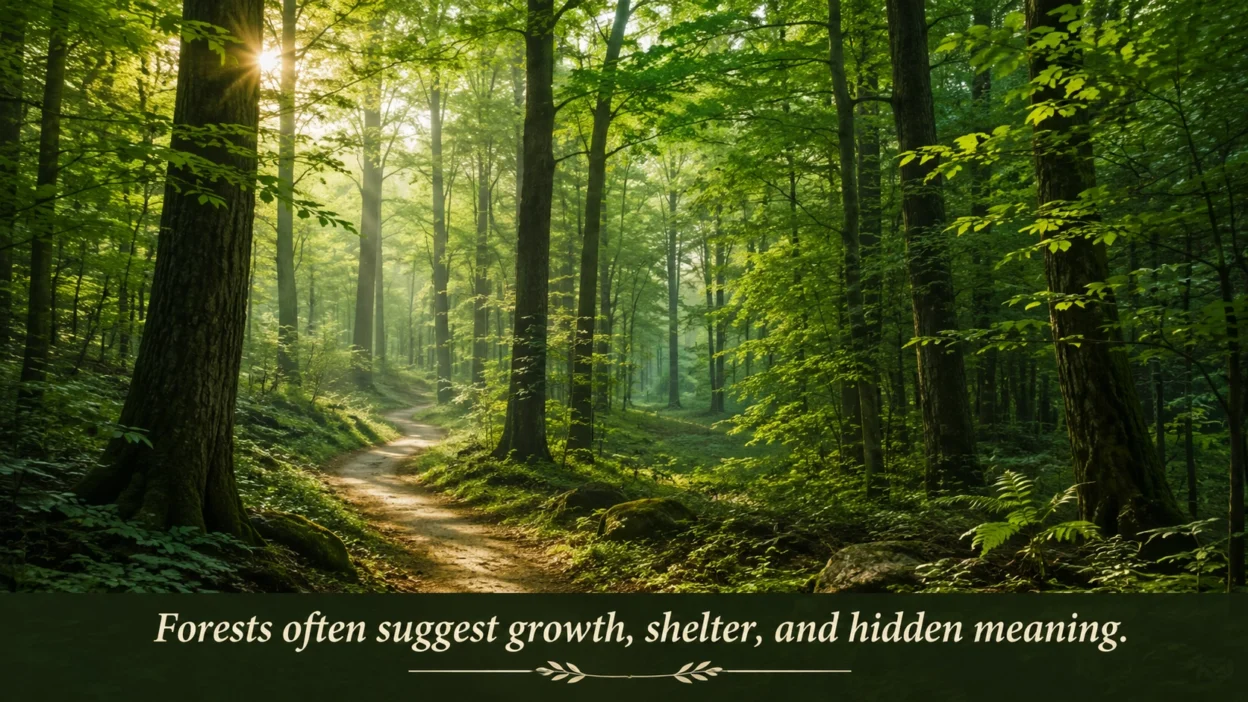
Forests usually appear as groups of trees, thick branches, layered leaves, and deep shade. They can look wild, quiet, bright, foggy, or almost endless. However they appear, the setting often feels larger than one person.
Shape, Color, and Mood
Green usually leads the visual message, but brown trunks, dark shadows, and mist matter too. A dense forest can feel protective or unknown. A clearing can suggest relief, hope, or a fresh start.
• Tall trees often suggest strength and stability.
• Dense growth can signal mystery or complexity.
• A path through woods can suggest a life journey.
• Light through leaves often suggests guidance or hope.
• Bare trees can add loss, silence, or winter hardship.
Core Meanings at a Glance
People usually connect forests with a few strong ideas right away. These meanings stay common in the United States, even when the setting changes from myth to movie to everyday speech. Also, they often blend together instead of standing alone.
The Main Ideas People See
• Growth and renewal
• Mystery and hidden truth
• Shelter and protection
• Wilderness and freedom
• Healing and reflection
A forest can hold danger and comfort at once. That contrast is part of its power. Instead of giving one clear message, it often invites people to look deeper.
Ancient and Historical Roots
Forests have mattered to humans for a very long time. Long before modern cities, woodlands shaped how people hunted, traveled, prayed, and survived. Because of that, forests entered myth and belief early.
Older Traditions and Early Meaning
In many older European traditions, forests were places of spirits, gods, and tests. In Greek stories, sacred groves carried special power. In Celtic and Germanic traditions, wooded places often felt holy, hidden, or dangerous.
Across many Indigenous North American traditions, forests also hold deep meaning. However, those traditions are diverse, so no single view fits them all. In general, forests can reflect relationship, balance, responsibility, and respect for living land.
What Changed Over Time
As farming and cities grew, forests became less about survival and more about imagination. They started to represent the unknown, the wild, and the untamed mind. Later, Romantic art and literature turned forests into places of emotion, beauty, and inner searching.
Forest Symbolism in the USA
In the United States, forests carry a strong mix of nature, identity, and memory. They appear in national parks, state parks, local trails, and conservation language. However, they also live in books, films, and family trips.
American Ideas Connected to Forests
| Context | Meaning in the USA | Common Associations | Notes |
| National parks | Natural beauty and public treasure | Hiking, camping, preservation | Often linked to freedom and shared land |
| Childhood stories | Mystery and lessons | Lost paths, animals, wonder | Forests often mark a turning point |
| Environmental talk | Protection and renewal | Clean air, wildlife, climate care | Strong in modern public life |
| Holidays and decor | Cozy seasonal mood | Pine, evergreen, cabin life | Common in winter and rustic design |
| Outdoor culture | Skill and self-reliance | Trails, tents, firewood, maps | Often tied to independence |
Why Forests Feel So American
American culture often celebrates both wilderness and comfort. That makes forests meaningful in two ways at once. They can suggest adventure, but they can also suggest home, especially in cabin and mountain imagery.
Forests also connect to conservation in a very visible way. For many Americans, a forest is not only scenery. It is a place worth protecting.
Forests in Spiritual and Cross-Cultural Traditions
Forests carry spiritual weight in many cultures. They can stand for a sacred meeting place, a place of testing, or a space for silence. However, the details change a lot from one tradition to another.
Sacred Space, Hidden Space, Living Space
In some religious traditions, groves and wooded areas are treated as holy. In others, the forest is a place where a person faces fear before finding wisdom. That pattern shows up again and again because forests separate people from ordinary life.
In modern spiritual language, forests often suggest stillness and grounding. People may use forest imagery in prayer, meditation, retreats, or nature-based reflection. Also, the idea of walking under trees can feel like entering a quieter mind.
A Respectful Note
It helps to avoid flattening all forest traditions into one meaning. Different cultures read the land in different ways. A respectful approach keeps the meaning broad without making false claims.
Emotional and Psychological Meaning
Forests speak strongly to the inner life. They can calm people, but they can also unsettle them. Because of that, forest imagery often reflects both comfort and uncertainty.
What Forests Often Signal
• A need to slow down
• A wish for healing
• Curiosity about the unknown
• A feeling of being tested
• A hope for deeper growth
Why the Mood Feels So Strong
A forest hides some things and reveals others. That mix can feel like the human mind itself. For that reason, forests often stand for emotion, memory, intuition, and change.
People also use forests as a mental picture for recovery. A walk among trees can feel like a reset. Even a picture of woods can suggest peace after stress.
Forest Symbolism in Art and Literature
Forests appear everywhere in stories, paintings, and film. They often mark a shift in the plot or in a character’s life. However, the meaning changes depending on the tone of the work.
The Forest as a Turning Point
In fairy tales, the forest is often where rules break down. A character gets lost, learns a lesson, or meets a guide. In that way, the forest becomes a place of transformation.
In poetry and visual art, forests often carry softer meaning. They may suggest solitude, wonder, or a return to nature. Also, the density of trees can mirror emotional depth.
Common Story Functions
• A place to get lost
• A place to meet truth
• A place to face fear
• A place to begin again
• A place to find wisdom
Forest Tattoos, Decor, and Social Media
Forest imagery is popular because it feels calm, deep, and personal. It works well in tattoos, room decor, and online posts. Also, it can carry many meanings without needing a long explanation.
Where People Use Forest Imagery
Tattoos often use trees, pine lines, mountain forests, moons, or foggy woods. These designs can point to growth, resilience, memory, or a love of nature. However, they can also be purely aesthetic.
In home decor, forests appear in rustic themes, cabin styles, green color palettes, and wall art. On social platforms, forest photos often suggest peace, travel, mindfulness, or escape from noise. That makes them useful for personal identity as well as style.
Why People Choose It
• It feels private but still universal.
• It suggests depth without saying too much.
• It looks peaceful in simple designs.
• It connects well with outdoor identity.
• It works for both dark and light moods.
Forest Symbolism in Holidays and Identity
Forests also show up in seasonal life, especially in winter. Evergreens, pine branches, and wooded scenes often bring a sense of warmth and endurance. However, the meaning is broader than holiday decor alone.
Seasonal and Personal Meanings
During winter, evergreens can symbolize life that continues through cold weather. That is one reason they appear in holiday settings. They suggest endurance, hope, and continuity.
For identity, forest imagery can say a lot without words. It may reflect someone who loves solitude, nature, hiking, privacy, or spiritual reflection. Also, it can suggest a calm but resilient personality.
Misunderstandings, Misuse, and Controversies
Forest symbols are usually positive, but they are not always neutral. A peaceful forest image can be used in harmful ways, especially when tied to exclusionary ideas about land or identity. So context matters.
Where Confusion Happens
• Romantic wilderness can hide painful land histories.
• “Untouched nature” can erase Indigenous presence.
• Dark forest imagery can be misread as evil by default.
• Nature symbols can be used for simple branding, not deep meaning.
Keeping the Meaning Honest
It is fair to enjoy forest imagery for its beauty and calm. However, it is also fair to remember that real forests have history, ownership, and human impact. A thoughtful reading keeps both sides in view.
Read More: Buttercup Symbolism: Bright Meaning and History
How the Meaning Has Shifted Over Time
Forest meaning has changed with society. In older settings, forests were often places to fear or respect. Today, many people see them as places to protect, visit, and heal in.
From Threat to Treasure
As American life became more urban, forests gained a different kind of value. They became escape spaces, recreation spaces, and conservation symbols. Instead of only meaning danger, they now often mean balance.
That shift also changed how people use forest imagery. It moved from myth and survival into design, wellness, and personal expression. However, the older sense of mystery never fully disappeared.
FAQs
What does forest symbolism mean?
Forest symbolism usually points to growth, mystery, shelter, and change. In the United States, it often adds ideas of nature, freedom, and reflection. However, the exact meaning depends on the setting.
Is a forest a positive symbol?
Yes, it often is. Forests can suggest peace, healing, and renewal. At the same time, they can also suggest the unknown, so the meaning is not always simple.
Why do forests show up so often in stories?
Forests work well in stories because they change the mood right away. They can hide danger, reveal truth, or mark a turning point. Also, they give characters a space outside normal life.
What does a dark forest symbolize?
A dark forest often symbolizes fear, confusion, or hidden truth. It may also suggest a hard inner journey. However, darkness can also mean depth and quiet, not just danger.
Why is forest symbolism popular in the USA?
Many Americans connect forests with national parks, outdoor life, and seasonal comfort. Forest imagery also fits ideas like independence, healing, and environmental care. That makes it easy to use in everyday life.
Conclusion
Forest meaning stays powerful because it holds opposites together. It can feel peaceful and wild, simple and deep, familiar and unknown. That balance is a big part of why people keep returning to it. In the United States, Forest Symbolism connects nature with memory, identity, and hope. It reminds people to slow down, look closely, and respect what grows quietly.