Spell Symbolism explores the meanings people attach to spells, magical words, ritual objects, and symbolic actions. In the United States, spells appear in Halloween traditions, fantasy stories, spiritual practices, books, movies, and modern witchcraft. Some people view them as tools for expressing personal intentions, while others see them as cultural traditions or fictional forms of magic.
A spell often involves spoken words, gestures, objects, or repeated actions intended to produce a particular effect. However, its symbolic meaning can extend beyond the result someone hopes to achieve. A candle might represent hope, a written charm might express protection, and a spoken phrase might reflect confidence or a desire for change.
Throughout history, people have used symbolic actions to express their hopes, fears, beliefs, and relationships with the unknown. Today, these practices carry different meanings depending on personal beliefs, religious backgrounds, cultural experiences, and social settings. Understanding spell symbolism doesn’t require believing in supernatural powers. Instead, it offers a way to explore how people use symbols to express intentions, face uncertainty, and imagine new possibilities.
Quick Answer
Spell Symbolism in the United States commonly represents intention, protection, transformation, and the desire to influence uncertain situations. More broadly, spells can symbolize spiritual connection, personal empowerment, mystery, and the human desire to understand the unknown.
TL;DR
- Spells commonly symbolize intention, protection, transformation, and hope.
- Ancient societies used spoken formulas, ritual objects, and written charms.
- American culture connects spells with Halloween, witches, fantasy, and mystery.
- Candles, herbs, and written charms can express personal meanings.
- Spiritual interpretations differ across religions, cultures, and individual beliefs.
- Modern spell imagery can represent creativity, identity, empowerment, or fear.
What Does Spell Symbolism Represent?
Spell symbolism describes the ideas and emotions expressed through magical words, ritual actions, and meaningful objects. In American culture, these symbols can suggest supernatural power, but they can also represent personal goals, imagination, and the hope for change.
The Core Meanings of Spells
Although interpretations vary, several themes appear repeatedly in spell-related traditions and imagery.
- Intention: Focusing thoughts on a particular hope, goal, or desired change.
- Protection: Expressing a wish for safety, peace, or spiritual security.
- Transformation: Representing a transition from one stage of life to another.
- Mystery: Exploring questions about hidden forces, fate, and the unknown.
- Empowerment: Symbolizing personal agency when circumstances feel uncertain.
- Connection: Expressing relationships with nature, ancestors, deities, or spiritual beliefs.
These meanings aren’t universal rules. For example, a protective charm may represent spiritual comfort to one person and cultural heritage to another.
Spell Symbolism Versus Spell Practice
A spell is an action or formula associated with an intended effect. Spell symbolism concerns the meaning attached to that action and its elements.
For example, someone might light a candle while reflecting on a new beginning. The candle symbolizes hope, while lighting it marks a personal commitment.
However, the symbolic importance of an action doesn’t prove that supernatural forces caused a particular outcome. Meaning and measurable effects are different questions.
The History and Ancient Roots of Spell Symbolism
Spells have a long history in human societies. Ancient records show that people used spoken formulas, written charms, amulets, and ritual objects to address everyday concerns.
Ancient Civilizations and Magical Words
In ancient Egypt, people connected magic with healing, protection, religious knowledge, and life after death. The Egyptian concept of heka referred to a powerful force involved in maintaining and influencing the world.
Meanwhile, Mesopotamian communities used incantations and inscribed objects in protective rituals. Archaeologists have also discovered ancient Greek and Roman curse tablets intended to influence relationships, disputes, competitions, and other personal matters.
These practices reveal how people understood their place in the world. Spoken formulas could carry religious authority, while written charms gave intentions a lasting physical form.
Medieval Europe and Early American Beliefs
During medieval and early modern Europe, spell practices appeared in folk traditions, healing customs, religious settings, and ceremonial magic. Some practices combined older local customs with Christian prayers, sacred names, and religious objects.
However, authorities sometimes treated suspected magic as dangerous or forbidden. During the European witch persecutions and the Salem witch trials of 1692–1693 in colonial Massachusetts, accusations of witchcraft could have devastating consequences.
Early American beliefs developed from several sources, including European traditions, African diasporic practices, Indigenous cultures, and religious communities. These histories shouldn’t be treated as one shared system because each tradition has its own beliefs, practices, and experiences.
From Private Rituals to Popular Culture
Printed books, folklore collections, spiritual movements, and mass media helped spread images of spells and magic. By the twentieth century, American books, stage performances, television, and movies had made spellcasting familiar to broad audiences.
Today, a spellbook might appear in a fantasy novel, a historical collection, a spiritual shop, or someone’s personal journal. Its meaning depends on the setting and the person interpreting it.
Spell Symbolism in American Culture
In the United States, spells occupy several cultural spaces at once. They appear in entertainment, Halloween traditions, spiritual communities, historical discussions, and everyday expressions about changing life’s circumstances.
Halloween and the American Witch Image
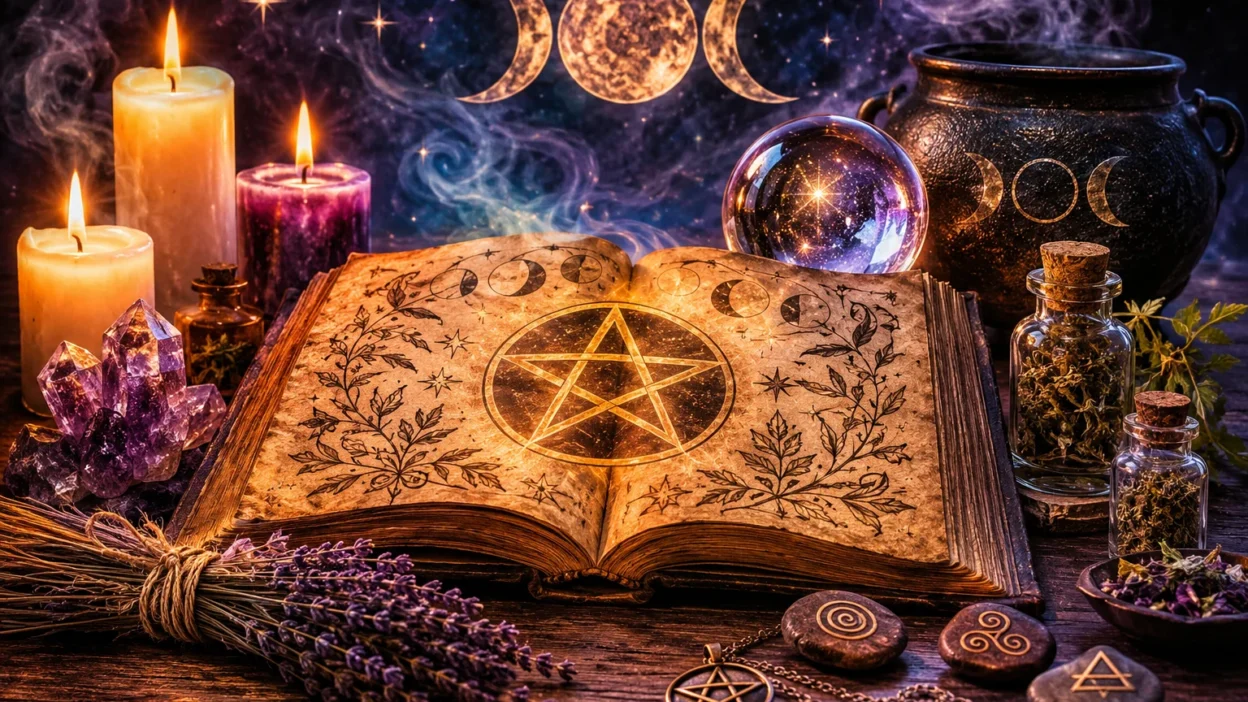
Halloween has helped make spell imagery widely recognizable. Pointed hats, bubbling cauldrons, black cats, spellbooks, and glowing candles often appear in decorations and costumes.
These images are usually playful or theatrical. However, some Americans also use Halloween to explore folklore, historical witchcraft, and contemporary Pagan traditions.
The familiar Halloween witch doesn’t represent every person who practices witchcraft. Instead, it reflects a popular cultural character shaped by storytelling, advertising, and changing social attitudes.
Religion, Freedom, and Personal Identity
American religious life includes a wide range of views about magic. Some Christian communities reject spellcasting, while some Pagan and other spiritual practitioners understand ritual work as part of their beliefs.
Freedom of religion also allows people to explore different spiritual identities within applicable legal limits. Consequently, spell symbolism can express devotion for one person, artistic curiosity for another, or fictional fantasy for someone else.
Everyday American Associations
Spell-related language has entered ordinary conversation, too. People might describe a romantic experience as magical or say a difficult period finally feels different after a positive change.
| American context | Symbolic meaning | Common association |
|---|---|---|
| Halloween | Mystery and supernatural power | Costumes, witches, and decorations |
| Fantasy entertainment | Transformation and hidden knowledge | Magical worlds and enchanted objects |
| Personal spirituality | Intention and spiritual connection | Rituals, charms, and reflection |
| Popular romance | Attraction and emotional influence | Love spells in stories |
| Self-expression | Identity and independence | Jewelry, artwork, and tattoos |
These associations explain why spell imagery can feel familiar even to people who don’t believe in magic.
Common Spell Symbols and Their Meanings
Spell symbolism often relies on recognizable objects. Their meanings can come from religious traditions, folklore, personal experiences, or modern storytelling.
Candles, Herbs, and Written Charms
Candles can represent hope, focus, remembrance, or spiritual attention. Their flames may suggest life, awareness, and the possibility of change.
Herbs and plants can symbolize growth, renewal, protection, or a connection with nature. Their meanings depend on the plant, the tradition, and the way people use it.
Spellbooks and written charms often symbolize knowledge, intention, secrecy, or authority. Historically, writing a formula could give a ritual a lasting physical form.
Circles, Stars, and Protective Marks
Stars often suggest guidance, wonder, or spiritual ideas. In some modern Pagan traditions, an upright pentagram represents the elements and their relationship with spirit.
Circles can suggest unity, wholeness, continuity, or a defined sacred space. Certain ritual traditions also use circles to mark boundaries.
The same symbol may carry different meanings across communities. A five-pointed star, for instance, can appear in religious practice, historical diagrams, decorative art, or fantasy fiction.
The Spiritual Meaning of Spell Symbolism
Spiritual interpretations of spells depend heavily on the beliefs of the people using them. Some practitioners view spells as ways to direct intention, while others emphasize prayer, devotion, ritual discipline, or symbolic reflection.
Intention and Spiritual Connection
In some modern Pagan and witchcraft traditions, spellwork expresses a relationship with nature, seasonal cycles, deities, or spiritual forces. Ritual objects may help practitioners focus their attention and mark meaningful moments.
For others, a ritual’s value comes from the thoughts and actions it encourages. Writing down an intention, for example, can help someone clarify what they hope to change.
However, spiritual interpretations shouldn’t be confused with scientifically established effects. Beliefs about supernatural influence vary, and symbolic importance alone doesn’t establish that a spell can control external events.
Different Traditions, Different Understandings
Many religions include sacred words, blessings, prayers, or repeated formulas. Yet these practices aren’t automatically equivalent to spells, even when they share features such as repetition or symbolic objects.
Some Buddhist traditions use mantras as part of spiritual practice. Certain Indigenous traditions include ceremonial knowledge that belongs within specific communities and relationships. African diasporic religions also have distinct ritual systems shaped by their own histories.
It’s important not to treat these traditions as interchangeable examples of magic. Their meanings depend on particular teachings, communities, and religious contexts.
The Psychological Meaning of Spells
Spell symbolism can offer insight into how people handle uncertainty, strong emotions, and personal goals. Even without a belief in supernatural powers, symbolic actions can provide a sense of structure during confusing moments.
Why Rituals Feel Meaningful
People often find comfort in repeated actions. A familiar routine can create a pause for reflection, helping someone organize thoughts or acknowledge an important change.
For example, writing a hope on paper may help someone identify what matters most. The paper becomes a physical reminder of an idea that previously existed only in the mind.
However, not every ritual produces the same psychological effect. Personal expectations, cultural background, and the situation itself influence how an action feels.
Spells as Symbols of Control
Uncertainty can make people feel powerless. Consequently, spells in stories and spiritual settings often symbolize attempts to regain control.
- A protection charm may express the desire to feel safe.
- A transformation spell may represent the courage to change.
- A love spell may symbolize longing or fear of rejection.
- A curse may represent anger, resentment, or revenge.
- A healing spell may express hope during a difficult period.
These associations reveal emotional themes without proving that a spell changes another person’s feelings or controls events.
Shadow, Fear, and the Unknown
Spells don’t always represent positive intentions. Dark magic in stories often reflects guilt, jealousy, ambition, or fear of consequences.
However, darker imagery can also represent curiosity about forbidden knowledge or the limits of human control. Its meaning depends on whether a story presents magic as threatening, liberating, destructive, or morally complicated.
Spell Symbolism in Colors and Materials
Colors and materials help establish the mood of a spell. In American entertainment and contemporary spiritual imagery, certain combinations have become familiar, although their meanings aren’t universal.
Common Color Associations
| Color | Common symbolic associations | Typical use in imagery |
|---|---|---|
| White | Clarity, peace, renewal | Light and fresh beginnings |
| Black | Mystery, boundaries, protection | Night scenes and Gothic art |
| Red | Passion, vitality, desire | Love stories and intense emotions |
| Green | Nature, growth, renewal | Plants and abundance themes |
| Purple | Mystery, imagination, spiritual insight | Fantasy and mystical artwork |
| Blue | Calm, trust, reflection | Water imagery and peaceful settings |
These are broad cultural associations rather than fixed rules. A color’s meaning can change according to the tradition, the object, and the surrounding imagery.
Natural and Handmade Materials
Wood, stone, paper, metal, and plants can make a ritual feel connected to nature or history. Handmade objects may also represent personal effort, memory, and individual expression.
An old wooden wand in a fantasy film might suggest inherited wisdom. In another context, a simple stone might represent stability or a personal connection with a meaningful place.
Material alone doesn’t establish an object’s spiritual significance. Its history and intended use matter just as much.
Modern Uses of Spell Symbolism
Spell imagery appears in fashion, entertainment, home decoration, digital art, and personal spirituality. For many Americans, it offers a way to express creativity, individuality, or fascination with the mysterious.
Tattoos and Jewelry
Spell-related tattoos can represent personal transformation, independence, protection, or an interest in folklore. Common designs include moons, stars, botanical forms, books, candles, and symbolic lettering.
Jewelry offers a similar form of expression. Someone might wear a charm because it reminds them of a loved one, reflects their spiritual beliefs, or simply appeals to their artistic taste.
However, a symbol’s meaning isn’t always obvious to strangers. The wearer’s personal explanation may be more important than a general interpretation.
Home Decor and Personal Spaces
Some people incorporate spell-inspired imagery into their homes through candles, botanical arrangements, antique-looking books, celestial artwork, or handmade objects.
These decorations can create a mood of calm, curiosity, or fantasy. For spiritual practitioners, a dedicated space may also provide a setting for reflection or ritual.
In contrast, a person who enjoys Gothic design may use the same objects purely for aesthetic reasons. Appearance alone doesn’t reveal someone’s beliefs.
Social Media and Digital Culture
Online communities have helped spread spell-related vocabulary and imagery. Short videos, illustrations, fantasy edits, and personal posts frequently present spells as symbols of self-confidence, romance, transformation, or setting intentions.
However, online content often simplifies complex traditions into quick explanations. A symbol described as having one universal meaning may actually have several different histories.
It’s useful to distinguish personal interpretations from documented historical meanings. Both can be interesting, but they aren’t the same thing.
Spell Symbolism in Books, Movies, and Halloween
American popular culture has played a major role in shaping modern ideas about spells. Fictional magic often uses familiar visual clues to help audiences understand a character’s abilities, intentions, or moral choices.
Fantasy and Supernatural Stories
Spellcasting in books, television, and movies can represent more than supernatural power. It often provides a way to explore ordinary human struggles through extraordinary situations.
- Transformation spells can symbolize identity and personal growth.
- Love spells can explore attraction, consent, and emotional insecurity.
- Curses can represent revenge, guilt, or inherited conflict.
- Healing spells can express hope, compassion, and restoration.
- Forbidden magic can explore ambition and the consequences of power.
These meanings are especially useful when a story treats magic as a metaphor for human choices.
Halloween and Seasonal Traditions
Halloween imagery commonly portrays spells through witches, cauldrons, black cats, mysterious books, and glowing potions. In many American settings, these elements are playful rather than religious.
Still, Halloween’s popular imagery can blur the distinction between fictional witches and people who practice modern witchcraft. The familiar costume character is a cultural stereotype, not a complete picture of real spiritual communities.
The season can also encourage interest in folklore and historical beliefs. Understanding those origins makes the symbolism richer than simply associating spells with frightening decorations.
Misunderstandings and Controversies About Spell Symbolism
Spell symbolism can be misunderstood when people assume every symbol has one fixed meaning. Problems can also arise when fictional portrayals, religious judgments, and historical evidence are treated as interchangeable.
Are All Spells Harmful or Dangerous?
No. Across different historical and contemporary settings, people have associated spells with protection, healing, love, success, revenge, and many other aims.
Some traditions reject spellcasting, while others incorporate forms of ritual practice. Neither position should be used to make blanket assumptions about everyone who holds a particular belief.
The purpose of a practice matters when interpreting its symbolism. A protective charm and a fictional curse may both involve ritual objects, but their intended meanings differ.
Religious Prejudice and Historical Accusations
In parts of Europe and colonial America, accusations of witchcraft contributed to persecution, fear, and punishment. These histories continue to influence how some people interpret witch-related symbols.
Today, someone may view a spellbook as harmless fantasy, while another person may associate it with religious concerns. Respectful discussion recognizes these differences without mocking either group.
It’s also important to distinguish a historical accusation from proof that someone practiced harmful magic. Fear, rumor, social conflict, and religious tensions often shaped accusations.
Cultural Appropriation and Misrepresentation
Some ritual symbols belong to specific cultural or religious communities. Removing them from their original setting can strip away important meanings or misrepresent the people who use them.
Before adopting an unfamiliar symbol, consider its origin and whether the community treats it as restricted or sacred. General decorative motifs may raise different concerns from ceremonial objects connected to specific cultural responsibilities.
Context matters more than appearance alone. A symbol shouldn’t automatically be labeled harmful, sacred, or magical simply because it looks unfamiliar.
How Spell Symbolism Has Changed Over Time
Spell symbolism has never had one permanent meaning. Its interpretation has shifted alongside religious beliefs, social attitudes, scientific understanding, literature, and entertainment.
From Everyday Belief to Historical Study
In some ancient societies, magical practices formed part of ordinary religious and practical life. People used charms and incantations while seeking protection, healing, love, or help with uncertain events.
Later, certain religious and political authorities condemned practices they considered forbidden. In Europe and colonial America, these changing attitudes contributed to fear and witchcraft accusations.
Over time, folklore research, archaeology, and historical scholarship helped document the variety of practices that existed. Ancient objects now provide evidence of past beliefs, although their exact meanings sometimes remain uncertain.
Read More: Gnome Symbolism: Meaning, History, and Spiritual Significance
From Fear to Creativity and Identity
Modern American culture often presents spells through fantasy, Halloween, Gothic art, and supernatural entertainment. These settings can make spell imagery entertaining even for audiences without spiritual interests.
At the same time, some contemporary practitioners use spell symbolism to express personal beliefs or identity. Others reinterpret familiar symbols as reminders of self-reflection, independence, or connection with nature.
Older meanings haven’t simply disappeared. Fear, fascination, spiritual devotion, and artistic curiosity can all exist around the same imagery today.
FAQs
What Does a Spell Symbolize Spiritually?
A spell may symbolize intention, protection, transformation, or a connection with spiritual beliefs. Its meaning depends on the tradition and the person practicing or interpreting it.
What Does Seeing a Spell in a Dream Mean?
A spell in a dream might reflect a desire for change, uncertainty, fascination with the unknown, or a feeling of influence over a situation. Dreams don’t have one universally established interpretation, so personal experiences and emotions provide useful context.
What Do Spells Symbolize in American Culture?
In the United States, spells commonly represent supernatural power, mystery, creativity, and transformation. Their meaning ranges from playful Halloween imagery to serious spiritual practice.
What Does a Love Spell Symbolize?
A love spell often symbolizes attraction, longing, hope, or a desire for emotional connection. In fiction, it can also explore jealousy, manipulation, and the importance of consent.
What Does a Protection Spell Symbolize?
A protection spell usually represents safety, boundaries, reassurance, or the desire to avoid harm. Depending on the setting, it may appear as a charm, written formula, ritual object, or fictional magical act.
Are Spell Symbols Always Connected to Witchcraft?
No. Some symbols associated with spells also appear in religious art, folklore, literature, historical manuscripts, and ordinary decoration. Their meaning depends on their origin and context, not just their appearance.
Conclusion
Spell Symbolism brings together ideas about intention, protection, transformation, mystery, and human hopes for change. From ancient incantations to modern American entertainment, spells have offered people ways to express beliefs, explore uncertainty, and imagine possibilities beyond ordinary experience. However, no single interpretation explains every spell or ritual object. History, culture, personal beliefs, and the setting all influence what a symbol communicates. Some people approach spells spiritually, while others appreciate them as expressions of folklore, storytelling, or creativity. When you encounter spell imagery, look beyond its mysterious appearance. Consider its origins, the emotions it evokes, and the meaning it holds for the person using it. That approach reveals why spell symbolism continues to capture the imagination across generations.