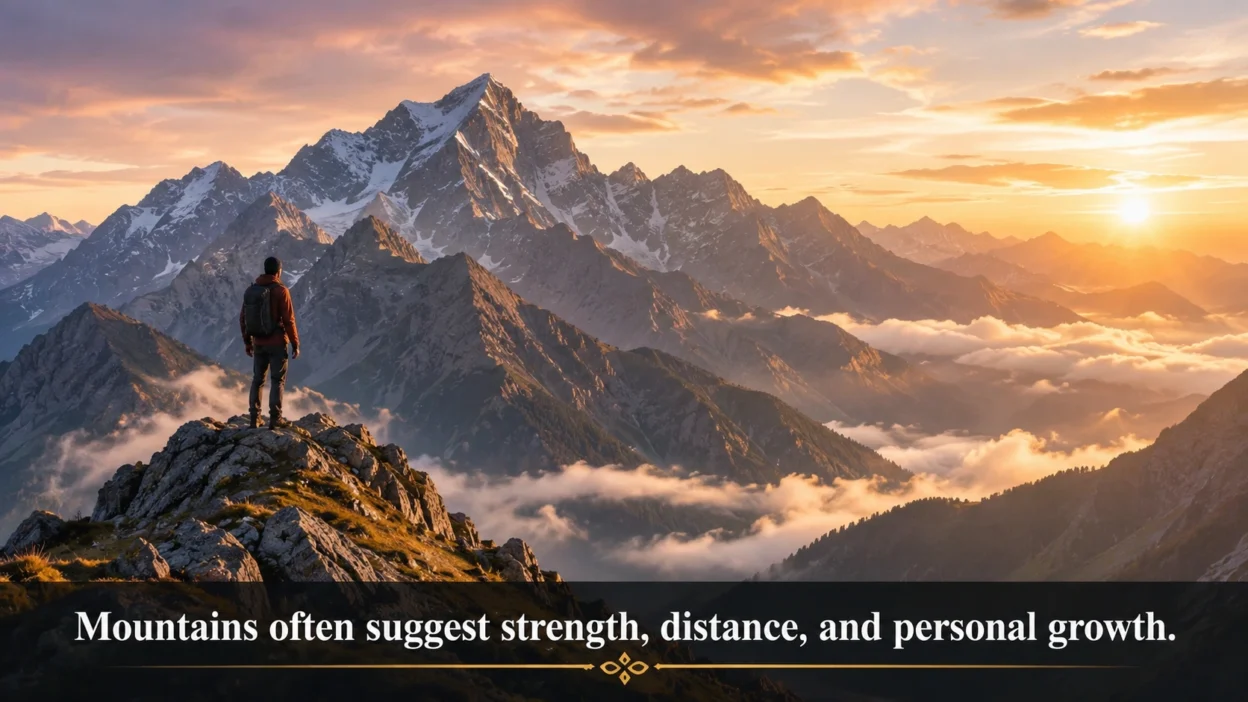
Mountain Symbolism reveals how a mountain can express symbolic meanings through its height, permanence, closeness to the sky, and rising above the land, inspiring strength and higher truth daily. Across many cultures, religions, spiritual traditions, and belief systems, mountains create a powerful image that people represent in art, dreams, and stories. These natural landmarks symbolize endurance, transcendence, spiritual ascent, and the pursuit of wisdom. From my own experience exploring mountain trails, I have noticed that standing among majestic, unmoving landscapes naturally changes your perspective and encourages quiet reflection.
For many people, a mountain is both a challenge and a series of challenges that demand great effort before reaching the top. That journey often leads to higher understanding, enlightenment, and personal revelation. Mountains have long been viewed as sacred places, where the physical climb mirrors inner growth and the search for wisdom, reminding us that lasting progress comes through patience and determination.
Whether appearing in ancient stories or modern artwork, mountains continue to represent hope and determination. Their lasting presence reminds us that overcoming obstacles to overcome is rarely easy, yet every step can build character and deepen our appreciation for life’s bigger purpose.
Quick Answer
Mountain Symbolism in the USA usually stands for strength, resilience, and rising above hardship. It can also suggest spiritual depth, stability, and perspective. In a broader sense, mountains often point to challenge, wisdom, and a journey upward.
TL;DR
- Mountains often symbolize strength and endurance.
- They can also mean challenge, growth, and perspective.
- In the USA, they suggest freedom, nature, and grit.
- Many traditions connect mountains with sacred places.
- Modern use includes tattoos, decor, and identity.
- Meanings can shift between peace, isolation, and power.
What Mountain Symbolism Looks Like
Mountains are easy to picture, but their meaning changes with shape, setting, and mood. A sharp peak can feel bold and ambitious. A wide, rounded mountain can feel steady, ancient, and calm.
Shapes, Colors, and Setting
Snow-covered peaks often suggest purity, distance, or quiet grandeur. Dark, rocky mountains can feel rugged and tough. Also, mountains at sunrise or sunset often carry hope, because light changes the mood.
Why Appearance Matters
A mountain in a lone landscape can feel lonely or holy. A mountain near a town can feel protective or grounding. However, the same image can also suggest danger, since mountains are hard to cross and slow to climb.
• Steep peaks often suggest ambition and struggle.
• Snowy tops can imply purity or spiritual height.
• Green slopes often feel peaceful and life-giving.
• Jagged rocks can suggest toughness and survival.
What Mountain Symbolism Means at a Glance
This section gives the core meanings people usually attach to mountains. It helps American readers see the symbol quickly before the deeper history.
Core Meanings
Mountains commonly symbolize strength, stability, and endurance. They also stand for growth, because climbing a mountain takes effort. In contrast, standing on a mountain can suggest clarity and a wider view.
A Symbol of the Hard Road
Mountains also represent obstacles. Because they are hard to climb, they often mirror personal challenges. However, that is exactly why they also symbolize victory when the climb is finished.
• Strength that lasts through change
• Challenges that test character
• Perspective after a hard climb
• Peace found at higher ground
The Ancient Roots of Mountain Symbolism
Mountain meaning goes back far beyond modern travel and outdoor culture. Long before maps and hiking trails, people saw mountains as places that touched the sky. That made them feel special, rare, and sometimes sacred.
Ancient and Early Beliefs
Many ancient cultures linked mountains with gods, heavens, or creation stories. High places seemed closer to divine power because they rose above ordinary life. Also, mountains often marked boundaries, so they carried a sense of mystery.
Mountains as Sacred Heights
In older stories, a mountain could be the place where heaven and earth met. That idea gave mountains a lasting spiritual meaning. Even today, many readers feel that stillness and awe when they see a huge peak.
Why Mountains Matter in the USA
Mountains have a special place in American culture. They are tied to road trips, national parks, frontier stories, winter sports, and the idea of open land. For many people, mountains feel like both escape and home.
American Identity and Landscape
In the USA, mountains often symbolize independence and self-reliance. They also suggest endurance, because life in mountain areas can be harsh. However, they can also mean beauty, calm, and a deep connection to nature.
A Table of Common American Meanings
| Context | Meaning in the USA | Common Associations | Notes |
| Hiking and climbing | Personal challenge | Effort, grit, success | Often used as a life metaphor |
| National parks | Natural beauty | Awe, freedom, preservation | Strong in travel culture |
| Small mountain towns | Quiet identity | Tradition, closeness, resilience | Can feel both remote and rooted |
| Sports and teams | Strength | Victory, toughness, pride | Common in branding |
| Spiritual retreats | Reflection | Peace, renewal, silence | Often linked to retreat and healing |
Why Americans Keep Returning to Mountains
Mountains fit a lot of American stories. They can mean hard work, but they can also mean escape from noise. Also, they appear in films, tourism, and outdoor brands, so the image stays fresh.
Mountain Symbolism in Religion and Spiritual Traditions
Mountains have deep spiritual meaning in many traditions. This is not about telling people what to believe. Instead, it shows why mountains often feel sacred across cultures.
Mountains as Places of Revelation
In many faith stories, mountains are places where people receive guidance or insight. The height matters because it suggests closeness to the divine or to truth. Because of this, mountains often carry a serious and reverent tone.
Cross-Cultural Meaning
Different cultures may read mountains in different ways. Still, common themes appear again and again: holiness, endurance, and transformation. In some traditions, mountains are also linked with silence and discipline.
• Sacred meeting place between earth and sky
• Location of guidance, vows, or change
• Symbol of ascent toward wisdom
• Setting for solitude and reflection
Emotional and Psychological Meaning
Mountains speak strongly to the mind and emotions. People often use them to describe inner strength, life goals, or recovery after difficulty. Because the image is so large, it easily fits big feelings.
What Mountains Signal Emotionally
A mountain can feel reassuring because it does not move easily. It can also feel intimidating because it is hard to reach. However, that tension is part of its power.
Inner Life and Personal Growth
Many people connect mountains with self-discipline. A mountain climb can represent patience, effort, and the ability to keep going. Also, reaching the top can feel like perspective after confusion.
Psychological Associations
Mountains often bring up these feelings:
- Confidence and calm
- Challenge and perseverance
- Solitude and clarity
- Humility and awe
Mountains in Art, Tattoos, and Decor
Modern mountain symbolism is everywhere. It appears in minimalist line art, bold tattoos, home decor, and travel branding. Because the shape is simple, it works in many styles.
Tattoos and Body Art
Mountain tattoos often mean strength, survival, or a life journey. Some people choose them to remember a place that changed them. Others use them to mark recovery, growth, or a personal goal.
Home, Fashion, and Branding
In decor, mountain images can make a room feel peaceful and grounded. In fashion, they can suggest adventure or outdoor identity. Also, many brands use mountain shapes because they feel stable and trustworthy.
Social Media and Personal Identity
On social media, mountain photos often signal reflection, travel, or a love of nature. They can also show independence. For some people, the mountain becomes a quiet way to say, “I have been through something hard.”
Mountains in Holidays, Travel, and Identity
Mountains are not just symbols in books or art. They also shape real habits, trips, and traditions. That makes them a living symbol in the USA.
Travel and Outdoor Culture
American mountain trips often mean hiking, camping, skiing, or scenic drives. Because of that, mountains are tied to rest, adventure, and family memory. They can also mark major life changes, like a first solo trip or a healing break.
Seasonal and Holiday Feelings
In winter, mountains can suggest snow, quiet, and reflection. In summer, they often stand for freedom and escape. Also, mountain settings are common in holiday cards and seasonal advertising because they feel timeless.
• Weekend escape from daily stress
• Landmark for family trips and memories
• Symbol of outdoor skill and confidence
• Quiet backdrop for personal milestones
Common Misunderstandings and Mixed Meanings
Mountain symbolism is strong, but it is not always simple. A mountain can mean peace to one person and hardship to another. That difference matters, especially in modern use.
Not Every Mountain Means the Same Thing
Some people see mountains as goals. Others see them as barriers. However, both readings can be true at once, which is why the symbol stays useful.
Respect and Context
Mountains also matter in sacred and cultural settings. It is best to avoid turning every mountain image into a vague spiritual cliché. Instead, the meaning should match the setting and tradition.
Read More: River Symbolism: Meaning, History, and USA Use
How Mountain Symbolism Has Changed Over Time
Mountain meaning has shifted as life has changed. In older times, mountains were often feared, revered, or seen as unreachable. Today, they are also associated with recreation, wellness, and personal identity.
From Distant Power to Personal Metaphor
In the past, mountains often stood for the divine or the unknown. Now, they also stand for therapy, endurance, and self-discovery. However, the older sense of awe has not disappeared.
Modern Shifts in Meaning
Today, mountain symbolism can feel more personal than religious. It may represent healing, recovery, or a “next level” in life. Also, social media has made mountain images more common, which has softened some of their mystery.
FAQs
What does a mountain symbolize spiritually?
Spiritually, a mountain often symbolizes closeness to truth, wisdom, or the divine. It can also stand for stillness and reflection. Because of its height, it often feels like a place of uplift.
What do mountains symbolize in America?
In the USA, mountains often symbolize strength, freedom, and resilience. They also suggest adventure and a deep bond with nature. For many people, they feel like a place to reset.
Why are mountains used in tattoos?
Mountain tattoos usually stand for growth, endurance, or a personal journey. Some people get them to mark hardship they survived. Others choose them because they love the outdoors.
Do mountains always mean strength?
Not always. Mountains can also suggest distance, isolation, or a difficult obstacle. However, even those meanings usually connect back to challenge and endurance.
Are mountains a sacred symbol?
In many traditions, yes. Mountains often appear as sacred places in religious stories and cultural memory. Still, their exact meaning depends on the tradition and the context.
Conclusion
Mountain images keep their power because they hold many meanings at once. They can suggest strength, peace, challenge, faith, and a better view of life. That is why people keep returning to them.
In the USA, Mountain Symbolism feels especially strong because it connects nature, identity, and personal growth. Whether seen in art, travel, or a tattoo, the mountain still speaks to the idea of rising, enduring, and becoming steady.