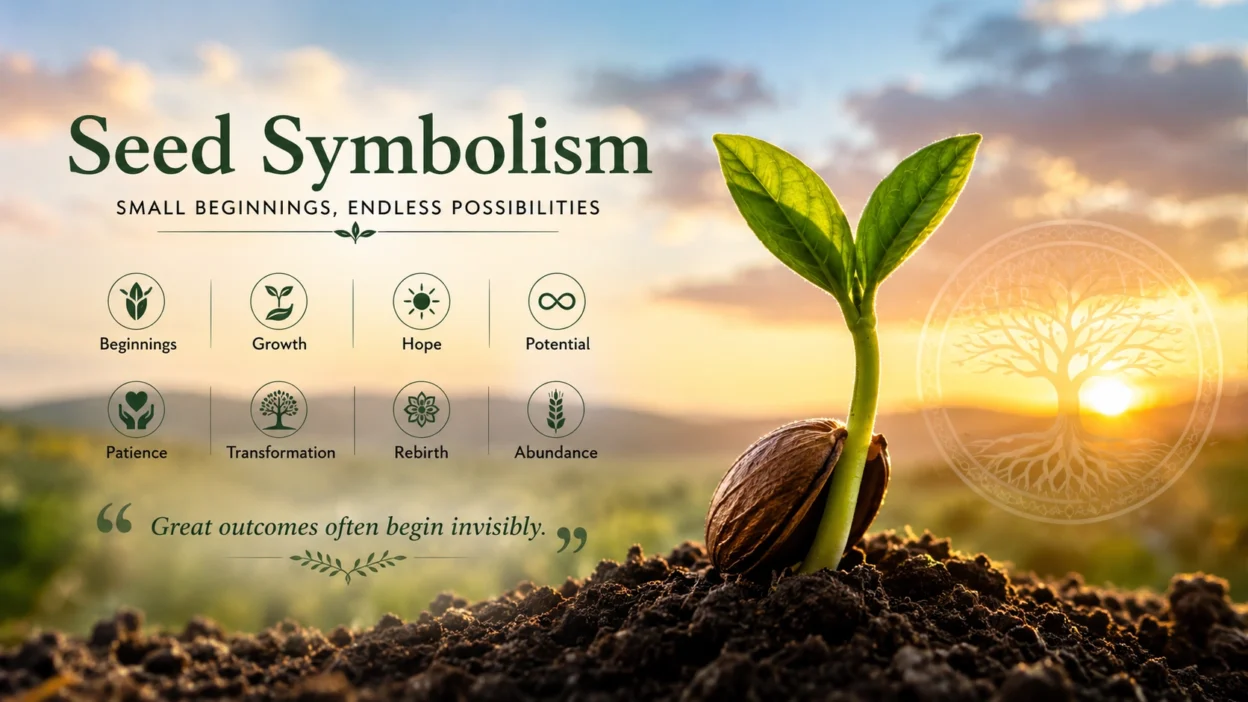
Seed Symbolism reveals how a tiny seed can express hidden potential, hope, growth, and transformation, inspiring lasting change.
Across many spiritual traditions, cultures, religions, and belief systems, seed symbolism gives seed and seeds deep symbolic meanings. From my own experience studying symbols, a small, unassuming tiny form has the amazing ability to contain life while holding the promise of life, beginnings, creation, rebirth, future growth, and lasting growth. It also represents and can symbolize potential, hidden potential, abundance, patience, quiet power, and the strength to slowly unfold into something meaningful.
The image of a seed appears in dreams and art as a powerful image that reminds us great outcomes often begin invisibly. During times of real change, people may spend time waiting beneath the surface, yet the symbol encourages us to trust the process. This simple lesson continues to inspire people searching for meaning, renewal, and steady personal growth, showing why Seed Symbolism remains relevant today.
Quick Answer
Seed symbolism in the USA usually stands for growth, hope, potential, and renewal. It also suggests patience, because real change often starts quietly and slowly.
TL;DR
• Seeds often symbolize new beginnings and future growth.
• They also represent patience, care, and hidden potential.
• In the USA, seeds connect strongly with spring and gardening.
• Religious and spiritual traditions link seeds with faith and renewal.
• Modern uses include tattoos, decor, branding, and seasonal imagery.
What Seed Symbolism Looks Like
Seeds are usually small, hard, and simple-looking. They may be round, flat, oval, striped, speckled, black, brown, gold, or pale, depending on the plant.
Common Forms
A seed can appear as a single grain, a pod, a kernel, or a tiny nut. Sometimes people use seed imagery with soil, hands, water, sprouts, or sunlight to show growth.
• Tiny size often suggests hidden strength.
• Dry shells can imply protection and waiting.
• Sprouts show the moment growth becomes visible.
• Soil often adds a sense of grounding and care.
Why Appearance Matters
The look of a seed shapes its meaning. Because it seems small and unfinished, people naturally connect it with possibility rather than certainty.
That visual contrast is part of its power. A seed looks modest, but it carries life, timing, and transformation inside it.
Core Meanings at a Glance
Seed symbolism brings together a few strong ideas that show up again and again. These meanings are easy to understand, which is one reason the image stays popular.
The Main Ideas
At the center, seeds usually point to growth, hope, and future potential. They also suggest that good things take time and care.
Other Common Associations
Seeds can also stand for beginnings, fertility, resilience, and abundance. In some settings, they even suggest trust, because planting a seed means believing something unseen will happen later.
• Growth begins before anyone notices.
• Small actions can lead to large outcomes.
• Patience is part of transformation.
• Life often starts in hidden places.
Ancient Roots and Early Farming
Seed symbolism is old because agriculture is old. As soon as people began planting and harvesting, seeds became tied to survival, seasons, and renewal.
Seeds in Early Farming
For early farming communities, seeds were never just food. They were a promise that the next season would come and that a family or village could endure.
That made seeds meaningful in a practical and spiritual sense. They represented stored life, future harvests, and trust in cycles bigger than any one person.
Sacred Growth Stories
Many ancient traditions used seeds to explain life, death, and rebirth. A seed falls into the earth, seems lost, and then returns in another form.
That pattern made it a natural symbol for transformation. Even today, people still understand a seed as a sign that endings can lead to new beginnings.
Seed Symbolism in the USA
In the United States, seed symbolism is closely tied to gardening, farming, education, and the idea of self-made growth. It feels both ordinary and hopeful, which makes it easy to use in daily life.
Everyday American Meanings
Seeds often suggest fresh starts in American culture. People see them in spring planting, school projects, community gardens, and even personal growth sayings.
They also fit the American love of practical optimism. A seed says, “Start small, keep going, and something can grow.”
Culture, History, and Identity
American history gives seeds extra weight because farming shaped so much of the country’s early life. Families passed down seeds, growing habits, and land-based knowledge across generations.
Today, seeds can still represent independence and stewardship. They can also stand for home, care, and the belief that effort matters.
| Context | Meaning in the USA | Common Associations | Notes |
| Spring gardens | New beginnings | Hope, renewal, growth | Strong seasonal connection |
| Farming | Survival and continuity | Harvest, work, patience | Deep historical roots |
| Schools | Learning and development | Curiosity, progress, potential | Often used in classroom projects |
| Personal growth | Inner change | Healing, habits, self-improvement | Popular in quotes and journaling |
| Family traditions | Continuity across generations | Memory, legacy, belonging | Often tied to heirloom seeds |
Why Americans Keep Returning to It
The seed idea fits American storytelling well. It is simple, visual, and hopeful, so it works in speeches, books, business names, and everyday advice.
It also feels personal. Most people understand what it means to wait for something small to become something real.
Cross-Cultural and Spiritual Meanings
Seeds carry meaning in many cultures, not just in the United States. The details differ, but the core idea is often the same: life is hidden before it is visible.
Spiritual Themes
In spiritual language, a seed often represents faith, intention, or the beginning of change. People may use it to describe a prayer, a goal, or a quiet inner shift.
The image also fits growth from the unseen. Something planted in the heart or mind may not show right away, but it can still change a life.
Broader Cultural Views
In some traditions, seeds relate to fertility, ancestry, and continuity. In others, they point to wisdom that must be cultivated carefully, not rushed.
• Some cultures link seeds with sacred harvest cycles.
• Others see them as signs of endurance and blessing.
• Many connect them with rebirth after struggle.
• Several traditions use seed images in creation stories.
Emotional and Psychological Associations
Seed symbolism often feels comforting because it promises future change without denying the present. It speaks to people who are waiting, healing, learning, or starting over.
What Seeds Suggest Emotionally
A seed can feel quiet, gentle, and encouraging. It reminds people that growth is happening even when it cannot be seen yet.
It can also feel grounding. Because seeds come from nature, they often bring thoughts of balance, simplicity, and trust.
What It Signals About Identity
People drawn to seed imagery often value progress, patience, and purpose. They may like messages about resilience, renewal, or building something meaningful over time.
That is why the symbol works so well in reflective spaces. It feels hopeful without being loud.
Seeds in Nature, Gardens, and Home Decor
Seed imagery shows up often in nature-centered lifestyles. It fits gardens, kitchens, windowsills, and any space that celebrates quiet growth.
Home and Lifestyle Use
People use seed motifs in prints, table decor, kitchen items, and wall art. The look is usually natural, earthy, and calm.
It also works in seasonal decorating. Spring displays, garden themes, and harvest settings often use seeds or sprouting imagery to create a sense of life returning.
Why It Feels So Popular
Seeds are easy to pair with other natural symbols like leaves, soil, flowers, and rain. Because of that, they feel balanced and welcoming in home spaces.
They also offer a message people like to live with: growth can begin in simple places.
Seeds in Tattoos, Fashion, and Identity
Seed imagery has become popular in tattoos and personal style because it carries meaning without being overly obvious. It can be small, minimal, and deeply personal.
Tattoo Meanings
A seed tattoo may stand for a new chapter, recovery, family, fertility, or a dream in progress. Some people choose it to mark change after a hard season.
Others like it because it feels private. A seed can represent hope without needing a long explanation.
Style and Self-Expression
In fashion and accessories, seed shapes and plant themes often suggest earthiness and renewal. They can feel soft, thoughtful, and connected to nature.
• Minimal designs keep the meaning quiet.
• Botanical styles make the symbol feel fresh.
• Small placements often suggest personal growth.
• Mixed with roots or sprouts, it feels more complete.
Seeds in Holidays, Rituals, and Seasonal Life
Seeds are closely tied to timing, which is why they fit seasonal traditions so well. They naturally belong to spring, planting, harvest, and moments of renewal.
Seasonal Meaning
In the United States, seeds often show up when people talk about spring cleaning, garden starts, and fresh beginnings. They also appear in harvest-related themes that celebrate abundance and gratitude.
That seasonal role keeps the symbol practical. A seed reminds people that every growing thing has a starting point.
Ritual and Intention
Some people use seed imagery in personal rituals, goal-setting, or reflective practices. Planting a seed can become a symbol for setting an intention and giving it time.
This is part of why the symbol feels timeless. It gives shape to hope in a very ordinary way.
Misunderstandings, Misuse, and Controversies
Seed symbolism is usually positive, but its meaning can shift depending on context. A seed can represent nourishment and life, yet it can also be used in ways that are commercial, vague, or misleading.
When the Meaning Gets Shallow
Sometimes seed language is used too casually in branding or motivational quotes. In those cases, the deeper ideas of patience, care, and responsibility can get lost.
It is also easy to treat growth as automatic. In reality, a seed only becomes something larger when it gets the right conditions.
Careful and Neutral Context
Traditional seed imagery is about life, not instant success. It reminds people that growth depends on time, attention, and the right environment.
• A seed is potential, not a guarantee.
• Growth still needs water, light, and care.
• Promises of instant change ignore the symbol’s real meaning.
• The strongest readings stay grounded and honest.
How Seed Meanings Have Shifted Over Time
Seed symbolism has stayed consistent in some ways, but modern life has added new layers. Today, people still think of growth and renewal, yet they also connect seeds with wellness, sustainability, and personal development.
Then and Now
In older settings, seeds were tied closely to survival and harvest. Today, those meanings remain, but they are joined by ideas about self-care, healing, and long-term goals.
That shift makes the symbol feel both ancient and current. It still speaks to life, but now it also speaks to mindset.
Read More: Flower Symbolism: Meanings, History, and USA Use
Why It Still Matters
Seed symbolism lasts because it is simple and true. Everyone understands that small beginnings can lead to big change.
That is why the symbol keeps showing up in art, gardens, gifts, and everyday language. It still helps people name hope in a clear, human way.
FAQs
What does Seed Symbolism mean?
Seed Symbolism represents new beginnings, hidden potential, growth, hope, and the promise of future success. It reminds us that even the smallest start can lead to great change.
Why are seeds important in spiritual traditions?
Many spiritual traditions see seeds as symbols of life, creation, rebirth, patience, and transformation. They reflect the belief that growth often begins quietly before becoming visible.
What do seeds symbolize in dreams?
In dreams, seeds often symbolize new opportunities, personal growth, future plans, hidden talents, or positive changes that are beginning to develop in your life.
Why is a seed connected with hope and patience?
A seed must spend time beneath the ground before it grows. Because of this natural process, it symbolizes hope, patience, trust, and the belief that good things take time to unfold.
How is Seed Symbolism used today?
Today, Seed Symbolism appears in art, literature, gardening, education, personal development, and spiritual practices. People use it to represent fresh starts, resilience, and the possibility of a better future.
Conclusion
Seed Symbolism continues to inspire people because it reflects the quiet strength found in every beginning. A tiny seed holds the promise of life, growth, transformation, and abundance, reminding us that meaningful change often starts unseen. Whether viewed through culture, spirituality, dreams, or everyday life, the seed remains a timeless symbol of hope, patience, and the power of reaching one’s full potential.