River Symbolism reveals how river symbolism refers to symbolic meanings associated with rivers across spiritual traditions, cultures, religions, belief systems, dreams, and art.
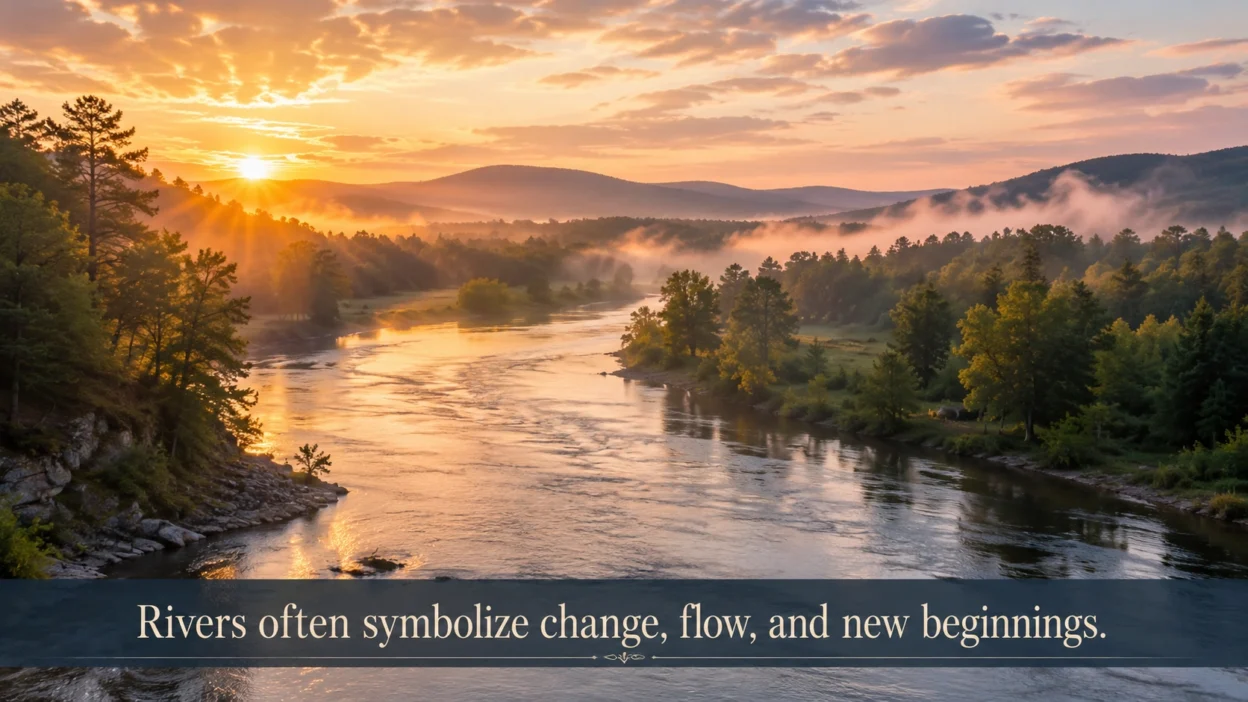
It appears as a powerful image of movement and continuity, where constant, ever flowing, and changing water is shaped by a life-giving force. From my own experience studying symbolism, rivers often represent and symbolize life’s journey, showing how life continues through flow, transition, renewal, time, and transformation.
Whether they are gentle streams or fast currents, rivers reflect the unstoppable nature of growth and change. Their emotional depth reminds us that every experience moves us forward, sometimes gently and sometimes fiercely. This lasting symbolism explains why rivers continue to inspire people who seek hope, resilience, and a deeper understanding of life’s path.
Quick Answer
River symbolism in the USA often stands for change, passage, and renewal. It can also suggest freedom, memory, healing, and the movement of life itself.
TL;DR
• Rivers often symbolize change because they never stay still.
• In the USA, rivers also suggest travel, borders, and settlement.
• Many people connect rivers with cleansing, healing, and release.
• Rivers can represent life’s journey, from source to sea.
• Modern use includes tattoos, poetry, decor, and identity art.
What River Symbolism Means at a Glance
This section gives the basic meaning first. That helps readers quickly understand why rivers matter as symbols in American life and beyond.
Core Ideas People See in Rivers
A river usually symbolizes movement, change, and passage. It can also stand for life, because it keeps going without pause.
• Flow and transition
• Time and life’s journey
• Cleansing and renewal
• Freedom and direction
• Depth, mystery, and memory
Rivers are rarely just one thing. A quiet stream and a flooding river can carry very different moods. However, both still point to change.
Why the Symbol Feels So Strong
Rivers are easy to picture and hard to control. That makes them powerful symbols for human experience.
They remind people that life moves forward. They also remind people that strength can be calm, not loud.
What a River Looks Like as a Symbol
This section explains the visual side of the symbol. In American writing, design, and art, the look of a river often shapes its meaning.
Common Visual Features
A river is usually shown as a flowing line, a bend, or a broad moving surface. It may appear blue, green, silver, brown, or dark, depending on the setting.
Sometimes a river is shown in motion. Other times it appears still, wide, and reflective. Both looks matter.
Context Changes the Meaning
A river in a desert scene feels precious. A river cutting through a city feels historic and social. A river in a forest feels natural and peaceful.
Because of that, context matters as much as shape. The same river can suggest hope in one image and danger in another.
Historical Roots of River Symbolism
This section looks at older meanings. Rivers were symbolic long before modern American culture shaped the idea further.
Ancient Roots and Early Beliefs
Many early cultures saw rivers as sacred or life-giving. They brought water, food, travel, and fertile land.
In ancient stories, rivers often marked boundaries between worlds. Some stood for life and death. Others stood for purification, wisdom, or divine presence.
Why Rivers Became Timeless Symbols
People have always lived near rivers. So rivers naturally became part of myth, religion, trade, and settlement.
They were also unpredictable. A river could feed a city or destroy it. That mix of gift and risk made the symbol feel complete.
From Survival to Meaning
At first, rivers mattered because people needed them. Later, they came to mean more than survival.
They became symbols of continuity, direction, and transformation. That shift still shapes how Americans read river imagery today.
River Symbolism in the USA
This section is the heart of the topic for American readers. Rivers helped build the country, and they still shape how people think about place and identity.
A Symbol of Movement and Expansion
In U.S. history, rivers supported exploration, trade, and westward movement. They were highways before modern roads became common.
Because of that, rivers often suggest journey and opportunity. They can also suggest risk, since travel was never easy.
Rivers in American Memory
Many major American stories are tied to rivers. They appear in songs, folklore, regional pride, and national memory.
Rivers can also symbolize division. They have marked state lines, battle lines, and cultural edges. At the same time, they connect communities.
Common American Associations
| Context | Meaning in the USA | Common Associations | Notes |
| Travel and migration | Movement and opportunity | Journey, expansion, discovery | Rivers once served as major routes |
| Borders and geography | Separation and definition | State lines, maps, territory | Rivers can divide as well as connect |
| Faith and ritual | Cleansing and renewal | Baptism, rebirth, grace | Water imagery is often spiritually rich |
| Literature and film | Reflection and change | Life paths, memory, escape | Rivers often mark turning points |
| Environmental identity | Care and stewardship | Clean water, land, survival | Modern use often includes conservation |
Why Americans Respond to River Images
Many Americans connect rivers with freedom. However, others connect them with ancestry, migration, or home.
Because rivers run through so much of U.S. history, they can feel personal. A river may remind someone of childhood, work, loss, or return.
Rivers in Religion and Spiritual Traditions
This section covers broader spiritual meanings. These ideas are respected in many traditions and still influence modern symbolism in the USA.
Purification and Renewal
Across traditions, rivers often stand for washing away what is old. That can mean sin, grief, fear, or confusion.
This is one reason river imagery appears in spiritual poetry and ceremony. It suggests a fresh start.
Passage and Sacred Journey
Rivers also represent crossing from one stage of life to another. In some beliefs, they mark the boundary between states of being.
That idea still appears in modern American thought. People may not use formal religious language, but they still speak about “crossing over” or “going with the flow.”
Respectful Cross-Cultural Range
Different cultures have their own river stories and sacred waters. Some see rivers as mothers, teachers, or divine gifts.
Others connect them with ancestors or the spirit world. These meanings vary widely, so it helps to treat each tradition carefully.
Emotional and Psychological Meanings
This section explains what rivers tend to signal emotionally. That is often the part people feel most strongly, even when they do not say it out loud.
Calm, but Never Passive
A river can feel soothing because it keeps moving. That movement can suggest emotional release and steady progress.
However, rivers also suggest depth. What looks calm on the surface may hide strong currents underneath.
What Rivers Often Evoke
• Acceptance of change
• Recovery after hardship
• Quiet strength
• Emotional depth
• Trust in timing
Rivers can also suggest surrender. That does not mean giving up. It often means adapting wisely.
Why the Symbol Feels Personal
Many people see their own lives in river imagery. A slow river can feel like patience. A fast river can feel like urgency.
Because of that, river symbolism often shows up during life transitions. People use it when they move, grieve, heal, or start over.
River Symbolism in Art, Books, and Film
This section shows how the symbol works in culture. Artists use rivers because they carry meaning without needing many words.
A Common Story Device
In stories, a river often marks a turning point. Characters cross it, follow it, or fear it.
That makes the river a natural symbol for choice. It can suggest leaving one life behind and entering another.
Rivers as Memory and Mood
Writers often use rivers to show reflection. A river can mirror the sky, a face, or a past moment.
It can also shape mood. A dark river may feel threatening. A bright river may feel hopeful.
Why Creators Keep Returning to Rivers
Rivers are flexible symbols. They can stand for peace, danger, history, sorrow, or freedom.
That range makes them useful in film, fiction, painting, and photography. They can do a lot without saying much.
River Symbolism in Tattoos and Body Art
This section focuses on modern personal use. Tattoos often turn river symbolism into identity.
Why People Choose River Tattoos
Many people choose river tattoos to show growth or healing. Others use them to honor a hometown, a memory, or a major life change.
A river tattoo can also suggest resilience. The water keeps moving, even after obstacles.
Common Tattoo Styles
Rivers are often drawn as winding lines, mountain-water scenes, or realistic landscape pieces. Some designs include birds, trees, bridges, or moons.
Because rivers are flexible, the style can be simple or detailed. Either way, the meaning stays personal.
Emotional Messages Behind the Ink
• I kept going
• I changed without losing myself
• I came through hardship
• I belong to a place
• I trust the path ahead
These messages make river tattoos feel intimate. They are often quiet symbols, not flashy ones.
River Symbolism in Home Decor and Branding
This section explains how the symbol appears in everyday design. In the USA, river imagery is often used to create a feeling, not just a look.
In Home Decor
River imagery in homes often suggests calm, space, and balance. It appears in wall art, rugs, prints, and natural color palettes.
People may use it to bring in a sense of flow. That can make a room feel softer and more open.
In Branding and Public Identity
Rivers are also used in names and logos. They can suggest movement, trust, freshness, and continuity.
Businesses often use river imagery to feel natural or local. The symbol works well because it feels both grounded and open-ended.
Why the Symbol Works So Well
A river is easy to recognize and hard to over-explain. It feels familiar, but it still carries depth.
That makes it useful in spaces where people want calm meaning. It can also imply progress without sounding aggressive.
Misunderstandings and Controversies
This section handles the difficult parts carefully. Like many symbols, rivers can be used in ways that are misleading or harmful.
Not Every River Means the Same Thing
Some people assume river symbolism always means peace. That is not true.
A river can also mean danger, boundary, flood, or loss. Its meaning depends on the setting.
When the Symbol Gets Simplified
Modern design sometimes turns rivers into decoration only. That can flatten older meanings.
In other cases, river imagery is used to sell a mood without real connection to place or history. That does not make it wrong, but it can make it shallow.
Respect Matters
When river symbols come from sacred stories or local heritage, context matters. It is better to describe them carefully than to treat them as generic.
This is especially important when water imagery ties to ceremony, ancestry, or spiritual practice.
How River Symbolism Has Shifted Over Time
This section shows how the meaning has changed. The symbol is old, but its modern use is still evolving.
From Practical Waterway to Personal Metaphor
Originally, rivers were about survival and transport. Later, they became symbols of movement, rebirth, and change.
Today, people also use them to talk about identity and healing. That shift feels very modern, but it rests on ancient ideas.
Read More: Ocean Symbolism: Meaning, History, and USA Use
What Feels Older, and What Feels Modern
Older meanings often include sacred water, boundaries, and life force. Modern meanings often include self-growth, emotional flow, and personal journey.
Both layers still exist. However, the modern layer is more visible in American tattoos, art, and social media.
A Living Symbol
River symbolism stays relevant because rivers still move. They do not freeze in one meaning.
That is why the symbol feels so human. It reflects change without losing continuity.
FAQs
1. What does river symbolism usually mean?
River symbolism usually represents the continuous flow of life, personal growth, change, renewal, and the passage of time. It reminds people that life is always moving forward.
2. Why are rivers important in spiritual symbolism?
Many spiritual traditions view rivers as symbols of purification, healing, transformation, and the connection between the physical and spiritual worlds. They often represent new beginnings and inner renewal.
3. What does a river symbolize in dreams?
In dreams, a river often reflects emotions, life direction, or personal transitions. A calm river may suggest peace, while a fast or rough river can symbolize challenges, strong emotions, or major life changes.
4. How do different cultures interpret river symbolism?
Although interpretations vary, many cultures see rivers as symbols of life, fertility, wisdom, abundance, movement, and the ongoing cycle of nature. Rivers frequently appear in myths, legends, and religious stories around the world.
5. Why do rivers represent change?
Because rivers are always flowing and never remain exactly the same, they naturally symbolize change, progress, resilience, and the ability to adapt while continuing life’s journey.
Conclusion
River symbolism continues to inspire people because it reflects the natural rhythm of life. Whether viewed through spirituality, culture, dreams, or art, rivers remind us that growth often comes through movement, change, and renewal. Their constant flow encourages us to embrace new experiences, move beyond obstacles, and trust that every stage of life’s journey has meaning.