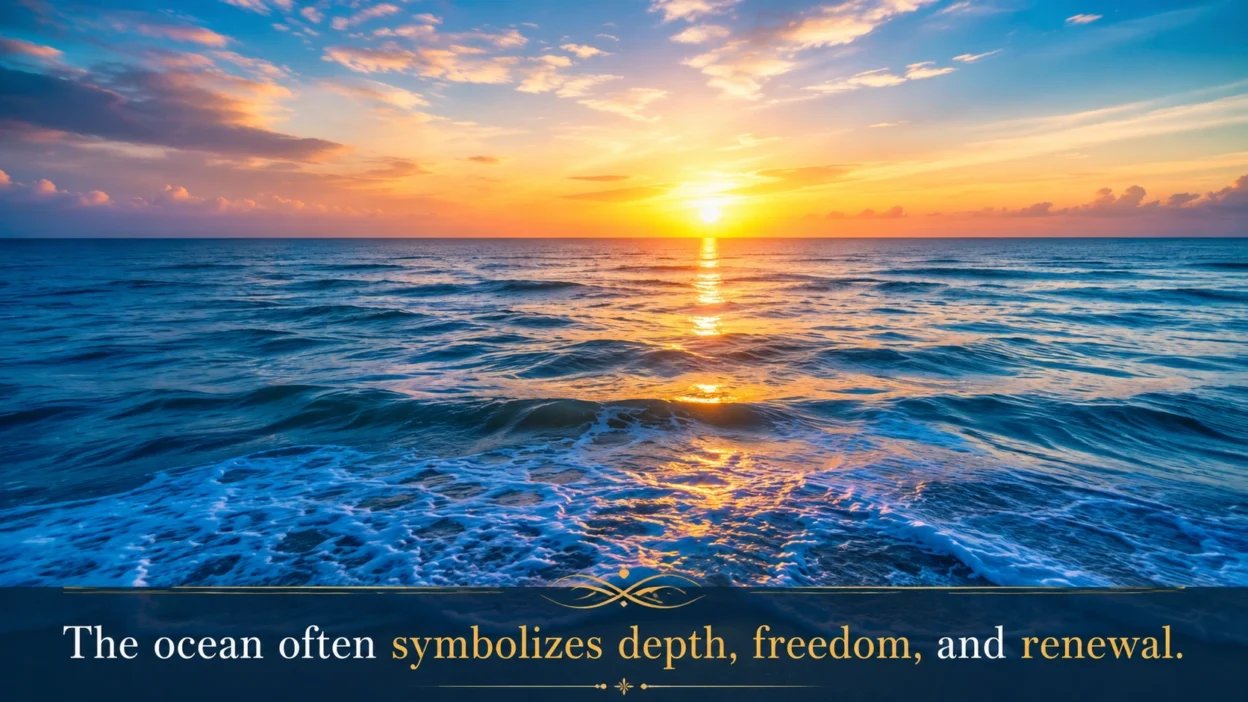
Ocean Symbolism reveals how the sea reflects symbolic meanings, mystery, depth, and life, inspiring people across generations to seek deeper understanding. Across spiritual traditions, cultures, religions, and belief systems, the ocean symbolizes emotional depth, creation, and the unknown. Its vastness, immensity, boundless reach, and ever moving waters reflect the complexity of the human soul and the subconscious. From my own experience studying symbols, I have noticed that these natural images feel both familiar and difficult to fully understand, even after thousands of years of human thought.
The ocean often appears in dreams and art as a profound image of nature that mirrors the inner world. What we notice on the surface is only part of the story, while beneath the surface lie hidden thoughts, feelings, and unseen experiences. This timeless picture reminds us that every person carries deep emotions that are not always easy to express.
Many traditions see the ocean as a source of transformation, power, infinite possibility, and infinite potential. Through faith, personal reflection, or creativity, it continues to inspire respect and curiosity. Its changing waters reflect both the visible and invisible parts of our journey through life, making the sea one of the richest symbols of growth and discovery.
Quick Answer
Ocean Symbolism in the USA usually points to freedom, mystery, emotional depth, and renewal. More broadly, it can also suggest the unknown, power, cleansing, and the vastness of life.
TL;DR
• The ocean often symbolizes depth, power, and change.
• In America, it also suggests freedom and open possibility.
• Ancient cultures linked the sea to creation, gods, and danger.
• Many people see it as a sign of healing and renewal.
• Tattoos, decor, and media keep ocean meanings popular today.
What Ocean Symbolism Means Today
Ocean symbolism brings together many ideas that seem opposite. It can feel peaceful, but it can also feel overwhelming. That mix is why the sea still speaks to so many people.
The Core Ideas
Today, most people connect the ocean with three big meanings: freedom, mystery, and emotional depth. It also often suggests movement, change, and a life that keeps unfolding. Because of that, it works well as a symbol for both comfort and uncertainty.
Why It Feels So Universal
The ocean covers most of the planet, yet we cannot fully control it. That makes it a natural symbol for forces larger than ourselves. Also, its waves, tides, and deep waters give it a sense of rhythm and emotion that people recognize quickly.
What the Ocean Looks Like as a Symbol
The ocean is rarely just one image. It may appear as calm blue water, crashing waves, dark depths, sea foam, or a distant horizon. Each version adds a different layer of meaning.
Common Visual Clues
A still ocean usually suggests peace, reflection, or healing. In contrast, rough water often signals struggle, pressure, or emotional conflict. The color blue often adds trust, clarity, and calm, while gray or black water can feel more serious or unknown.
Shape, Motion, and Setting
The sea is often shown with wide open space, which makes it feel free and limitless. However, waves and storms turn that same space into something powerful and demanding. Sunlight on water can feel hopeful, while night water can feel secretive or deep.
Ancient and Pre-Christian Roots
Long before modern use, the sea already carried strong symbolic weight. Many early cultures saw oceans as sacred, dangerous, and life-giving at the same time. That older view still shapes how people understand it today.
Early Mythic Meaning
In ancient stories, seas often stood for creation, chaos, or divine power. Some traditions imagined the world emerging from waters. Others pictured sea gods, sea monsters, or cosmic floods as signs of great change.
Why Those Roots Still Matter
These old ideas made the ocean more than a place. It became a symbol of origin and transformation. Even now, people often feel that the sea connects to birth, mystery, and deep change.
Ocean Symbolism in the USA
In the USA, the ocean carries both personal and cultural meaning. It is tied to coastlines, vacations, migration stories, military history, and the simple idea of looking beyond the horizon. For many Americans, the sea feels both familiar and symbolic.
American Associations That Stand Out
The ocean often suggests freedom in American culture. It also brings up travel, leisure, surfing, and life near the coast. Because of the country’s size, the sea can feel like an edge, a gateway, or a place to begin again.
How Americans Commonly Read It
People in the USA often see the ocean as a sign of openness. It can also feel like emotional release, especially when linked to long drives, beach trips, or quiet time near water. In stories and films, the sea often signals adventure, loss, or self-discovery.
| Context | Meaning in the USA | Common Associations | Notes |
| Beach life | Relaxation and escape | Vacation, summer, family time | Often feels personal and nostalgic |
| Navy and coastlines | Duty and endurance | Service, protection, travel | Can carry patriotic meaning |
| Art and design | Calm and openness | Blue tones, waves, horizon lines | Popular in homes and public spaces |
| Spiritual life | Renewal and cleansing | Baptism, surrender, reflection | Meaning depends on tradition |
| Pop culture | Freedom and transformation | Surfing, road trips, ocean views | Often used to show big life changes |
Why It Feels So American
The sea fits a culture that values movement, new starts, and personal space. It also appears often in music, film, and home design. As a result, ocean imagery can feel both ordinary and deeply emotional at the same time.
Spiritual and Cultural Meanings Around the World
Ocean symbolism is not only American. Around the world, different traditions connect the sea with life, spirit, and the unknown. These meanings are diverse, so it helps to stay respectful and broad.
Sacred Water and Inner Change
In many spiritual traditions, water cleanses, renews, or marks a turning point. The ocean can carry that same feeling on a larger scale. It may represent surrender, wisdom, or a crossing from one state of life to another.
Different Cultural Lenses
Some cultures link the sea with gods, ancestors, or travel between worlds. Others see it as a source of abundance and protection. Because the ocean touches so many lands, it often becomes a shared symbol even when the details differ.
Emotional and Psychological Associations
People often react to the ocean before they even explain it. That is because the sea speaks to feeling as much as thought. It can settle the mind or stir it up.
Calm, Fear, and Awe
A calm ocean can soothe stress and slow the body down. However, deep or stormy water can bring up fear, uncertainty, or overwhelm. That range makes the ocean a strong mirror for human emotion.
Identity and Inner Life
For many people, ocean imagery signals depth of feeling. It can suggest someone who is reflective, adaptable, or hard to fully read. It may also point to healing, since water often feels cleansing and restorative.
Ocean Symbolism in Art, Decor, and Fashion
The ocean appears everywhere in design. It shows up in paintings, wallpapers, clothing, jewelry, and room themes. Because it is so visually strong, it can shape a mood very fast.
In Homes and Personal Style
Blue water tones often create a restful space. Wave patterns can make a room feel soft, open, and airy. Sea-inspired decor is popular because it brings a sense of space and freshness indoors.
In Creative Expression
Artists often use the ocean to show longing, distance, or emotional depth. Fashion may use marine shapes, shells, or colors to suggest freedom and ease. Even small details can hint at wide open possibilities.
Ocean Tattoos and Personal Identity
Ocean tattoos are popular because they can mean many things without saying too much. A wave, shell, anchor, or horizon can express personal history in a quiet way. That flexibility is part of the appeal.
Common Tattoo Meanings
For some, an ocean tattoo marks a love of travel or coastal life. For others, it represents survival, healing, or a major life change. It can also reflect a person’s link to peace, solitude, or emotional depth.
Why People Choose It
The design works for many styles, from simple line art to detailed scenes. Also, the meaning can stay private while still feeling personal. That makes it useful for identity, memory, and self-expression.
Ocean Symbolism in Media and Holidays
Movies, songs, ads, and holiday imagery all keep ocean symbolism alive. The sea often appears when a story needs freedom, danger, or a turning point. It also fits seasonal moments, especially in summer.
In Stories and Pop Culture
Writers often use the ocean to show a journey into the unknown. It may stand for leaving home, finding clarity, or facing fear. Because of that, it often appears in stories about growth and change.
In Seasonal and Holiday Settings
In the USA, ocean imagery is common in summer gatherings, beach trips, and coastal celebrations. It also appears in postcards, travel ads, and relaxed holiday themes. That keeps the symbol tied to joy, rest, and open air.
Misunderstandings, Misuse, and Controversies
Ocean symbolism is usually positive, but it can be misunderstood. Not every wave image means peace, and not every sea reference is spiritual. Meaning depends on context.
When the Symbol Becomes Darker
Stormy oceans can represent grief, chaos, or emotional pain. In some cases, sea imagery can also be used to romanticize danger. So, the same symbol may comfort one person and unsettle another.
Avoiding Oversimplification
It helps not to reduce the ocean to one fixed meaning. Also, some cultural or religious uses should not be copied casually. Respect matters because the sea can carry sacred meaning in many traditions.
Read More: Key Symbolism: What Keys Mean Today
How Ocean Symbolism Has Changed Over Time
Ocean symbolism has grown from ancient myth into modern personal expression. The older idea of the sea as a cosmic force still exists, but today people also read it through psychology and lifestyle. That shift makes it feel both ancient and current.
From Sacred Power to Personal Meaning
In the past, the ocean often stood for divine power, chaos, or origin. Today, many people see it as healing, freedom, or emotional honesty. However, the older meanings still live inside the newer ones.
Why It Still Feels Relevant
The sea stays relevant because it never stops moving. That makes it a useful symbol for change, growth, and uncertainty. It also gives people a way to talk about feelings that are hard to name.
FAQs
What does Ocean Symbolism mean?
Ocean Symbolism refers to the deeper ideas connected with the ocean. It often represents mystery, emotion, transformation, creation, and the unknown, while reminding people of life’s endless possibilities.
Why is the ocean linked to the subconscious?
The ocean is often connected with the subconscious because much of it lies hidden beneath the surface. In the same way, human thoughts, memories, and feelings are not always visible but still shape our lives.
How is the ocean viewed in different cultures and religions?
Many cultures, religions, and spiritual traditions see the ocean as a symbol of life, renewal, wisdom, power, and spiritual growth. Although meanings vary, it is widely respected as a source of deep meaning.
What does the ocean symbolize in dreams?
In dreams, the ocean often reflects emotional depth, personal change, inner feelings, or unexplored parts of the mind. Calm water may suggest peace, while rough seas can represent challenges or uncertainty.
Why does the ocean inspire artists and storytellers?
The ocean’s vastness, immensity, and constant movement make it a powerful image in art and storytelling. It helps express ideas about nature, the human soul, hope, fear, and the journey through life.
Conclusion
Ocean Symbolism has remained meaningful across generations because it speaks to experiences shared by people everywhere. Its endless waters remind us of mystery, depth, transformation, and the limitless possibilities that exist both within ourselves and in the world around us. Whether viewed through dreams, art, belief systems, or personal reflection, the ocean continues to encourage curiosity, self-discovery, and a deeper appreciation of life’s visible and hidden layers.