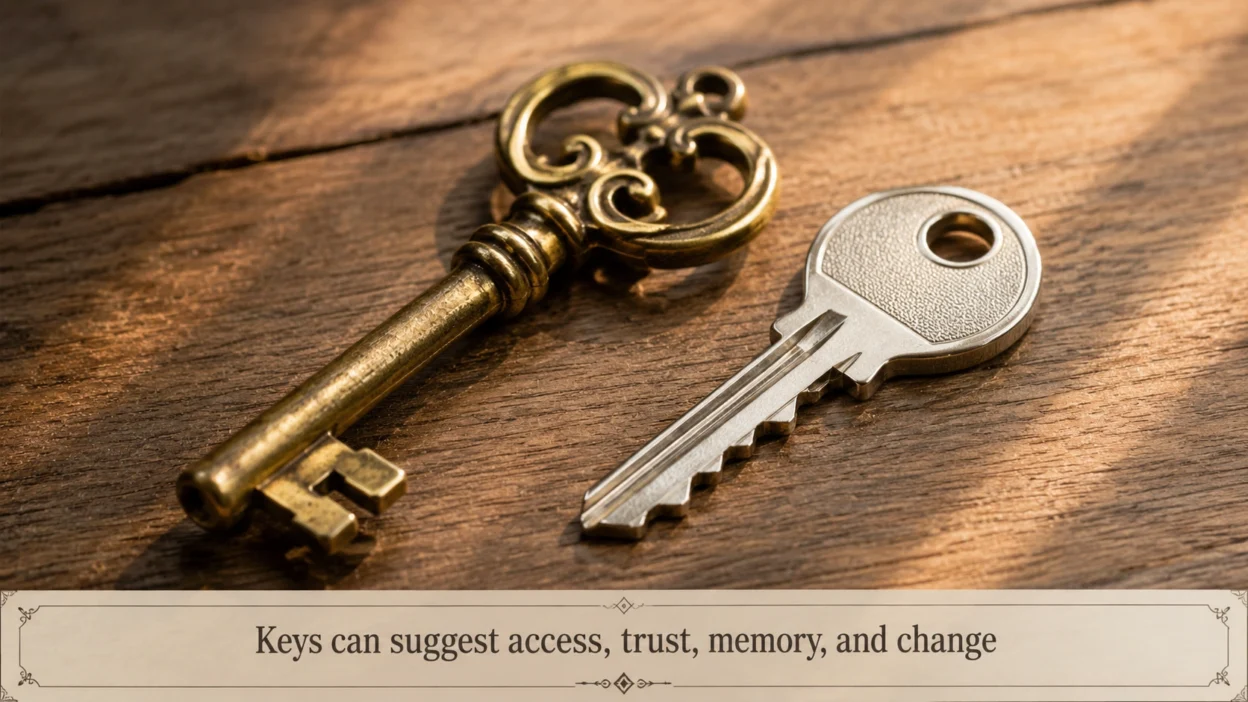
Keys are small objects, but they carry big meaning. Key Symbolism often points to access, control, trust, and new beginnings. In the USA, keys also connect to home ownership, freedom, privacy, and the feeling of being “let in.”
People notice keys because they are simple and useful. However, they also feel personal. A key can open a door, protect what is private, or mark a major life change. Because of that, keys show up in stories, religion, art, tattoos, weddings, and everyday speech.
Today, key imagery still feels familiar and powerful. It can suggest opportunity, secrets, responsibility, or a turning point. That is why this small object keeps its place in modern American culture.
Quick Answer
Key symbolism in the USA usually means access, trust, responsibility, and opportunity. It can also stand for freedom, secrecy, knowledge, and the power to unlock something important.
TL;DR
- Keys often symbolize access, trust, and control.
- In America, keys are tied to home, privacy, and ownership.
- Historically, keys marked status, authority, and protection.
- Religious traditions also use keys for power and spiritual access.
- Modern keys appear in tattoos, decor, logos, and gifts.
- The meaning can shift from security to secrecy or freedom.
What a Key Looks Like and Why It Matters
A key is usually a small metal tool with a shaped blade and a head for holding. Some are simple and modern. Others are ornate, old, and heavy. Because keys are made to fit one lock, they naturally suggest exclusivity and access.
Shape, Material, and Context
A key’s meaning changes with its look. A plain house key feels practical. An antique skeleton key feels mysterious. A gold decorative key may suggest honor, ceremony, or special access.
• Long, old keys often feel historic and secretive.
• Small house keys suggest daily life and responsibility.
• Golden keys can signal prestige or special access.
• Broken keys may suggest loss, closure, or freedom.
A Brief History of Keys
Keys have existed for thousands of years, and their meaning grew with their usefulness. Early locks appeared in ancient civilizations, including Egypt and Mesopotamia. However, keys were not just tools. They were also signs of wealth, status, and protection.
Ancient Roots and Early Power
In older societies, not everyone owned a lockable space. Because of that, a key often pointed to rank. The person holding it controlled entry, goods, or important information. Over time, that control became symbolic.
From Practical Tool to Meaningful Emblem
As cities, homes, and institutions became more complex, keys took on deeper meaning. They came to represent access to property, knowledge, and authority. In many places, giving someone a key was like giving them trust.
Keys also appear in ancient and medieval imagery tied to gates, treasure, and sacred spaces. That older pattern still shapes how people read key symbols today.
Key Symbolism in the USA
In the United States, keys are strongly linked to independence and private life. A key to a house, apartment, car, or locker feels like proof of ownership and control. Because American culture values personal space, keys often carry a sense of earned trust.
Home, Freedom, and Responsibility
For many Americans, receiving a key means more than opening a lock. It means becoming a homeowner, a tenant, a worker, or a trusted person. It can mark adulthood, stability, and a place in the world.
Common American Meanings
The most common meanings in the USA include:
• Access to a home, job, or private space
• Trust from another person or institution
• Freedom to come and go
• Responsibility for what is protected
• A new stage of life
Symbolism in Public Life
Keys also appear in American ceremonies and public gestures. A “key to the city” is an honor, even if it is mostly symbolic. It suggests respect, welcome, and recognition. However, it also keeps the older idea of access and privilege alive.
Keys in Religion, Folklore, and Other Cultures
Keys are not only American symbols. They appear across faith traditions and folklore in many forms. These meanings are diverse, but they often center on access, authority, and revelation.
Spiritual Access and Sacred Power
In some Christian traditions, keys symbolize authority over heaven, church leadership, or spiritual access. In other traditions, keys can represent wisdom, hidden truth, or the opening of divine understanding. Because of that, the key can feel both practical and sacred.
Folklore and Storytelling
In stories, keys often unlock hidden rooms, forgotten memories, or magical worlds. That pattern is common in fairy tales and myths. Also, it gives keys a strong emotional charge. A key may mean not just entry, but transformation.
What Keys Mean Emotionally and Psychologically
Keys feel powerful because they affect how people think about safety and belonging. They can calm us, because they protect what matters. However, they can also create anxiety if they are lost, stolen, or withheld.
Common Feelings Linked to Keys
Keys often suggest:
• Security and peace of mind
• Privacy and personal boundaries
• Trust and acceptance
• Hope and possibility
• Control over one’s own space
What a Key Says About Identity
When someone carries or gifts a key, it can signal maturity, closeness, or readiness. A key can say, “You are trusted here.” It can also say, “You belong.” That is why keys often appear in love stories, family stories, and rites of passage.
Different Key Types and What They Suggest
Not all keys feel the same. Their style, age, and setting shape their meaning. A modern key and an antique key may both open locks, but they communicate different ideas.
Old Keys, New Keys, and Decorative Keys
A vintage key often suggests the past, memory, or mystery. A house key suggests everyday life and stability. A decorative or oversized key can point to ceremony, celebration, or symbolic access rather than actual use.
| Context | Meaning in the USA | Common Associations | Notes |
| House key | Home and stability | Ownership, trust, adulthood | One of the most familiar meanings |
| Antique key | Mystery and history | Secrets, old stories, legacy | Often used in decor and art |
| Gifted key | Honor and welcome | Access, respect, inclusion | Common in ceremonies |
| Broken key | Loss or change | Closure, frustration, release | Meaning depends on context |
| Golden key | Prestige and special status | Success, reward, opportunity | Often symbolic rather than practical |
Why the Type Matters
A key is never just a key. The metal, size, and setting all shape the message. Because of that, the same symbol can feel warm, formal, romantic, or eerie.
Keys in Tattoos, Jewelry, and Fashion
Keys are popular in body art and accessories because they are easy to recognize and rich in meaning. They can look elegant, old-fashioned, or minimal. Also, they work well alone or paired with other symbols.
Popular Tattoo Meanings
In tattoos, keys often stand for love, new beginnings, freedom, or secrets. Some people choose a key to mark recovery or personal growth. Others use it to honor a person who opened a meaningful door in their life.
Jewelry and Style
Key necklaces, earrings, and charms remain popular because they feel personal and flexible. A tiny key can look sweet and romantic. However, a large decorative key can feel bold, antique, or magical.
• Key and heart designs often suggest love and trust.
• Small gold keys can feel elegant and sentimental.
• Skeleton key jewelry often suggests mystery and nostalgia.
• Matching key charms can symbolize partnership or connection.
Keys in Homes, Rituals, and Holidays
Keys also show up in domestic life and seasonal traditions. Because keys are linked to doors, they naturally fit moments of transition. In American homes, they can mark a move, a wedding, a first apartment, or a new job.
Gifts, Housewarmings, and Milestones
Giving a key at a housewarming or celebration can mean welcome and belonging. In some families, a first key is a small but serious milestone. It says someone now has independence and responsibility.
Holiday and Decorative Use
Keys appear in ornaments, winter decor, and symbolic displays. They can suggest “unlocking” hope, love, or change in the coming year. Also, antique keys are common in rustic or vintage home styling.
Modern Digital Keys and Security
Today, the idea of a key has expanded beyond metal. Digital access codes, key cards, and app-based entry systems still use the same symbolic idea. Even when the object changes, the meaning stays familiar.
From Door Locks to Digital Access
A key card or passcode still represents permission. It separates the inside from the outside. Because of that, the old symbol survives in modern life, even when the tool looks different.
Why the Symbol Still Works
People still understand keys because they understand doors. A door creates a boundary, and a key grants entry. That basic idea remains powerful in a world full of passwords, badges, and account logins.
Misunderstandings, Misuse, and Darker Meanings
Key symbolism is usually positive, but it can also carry darker or more complicated meanings. A withheld key may signal control, exclusion, or secrecy. A stolen key can suggest intrusion or broken trust.
Neutral but Important Context
Sometimes keys are used in ways that feel manipulative. For example, giving someone a key and then taking it away can symbolize unstable trust. In stories, a missing key often means a problem that has not been solved yet.
When the Meaning Shifts
The same symbol can move from hopeful to uneasy. A key can open a future, but it can also lock someone out. That tension is part of why the symbol stays interesting.
How Key Symbolism Has Shifted Over Time
The meaning of keys has changed, but the core idea remains the same. Keys once pointed mainly to rank and physical control. Today, they also suggest privacy, identity, and personal choice.
Old Meaning, New Life
In older settings, a key often belonged to a gatekeeper, noble household, or religious authority. Now, the symbol appears in a broader range of places. It can be romantic, artistic, practical, or even playful.
What Changed Most
The biggest shift is from external authority to personal access. Earlier, keys often meant “someone else controls the door.” Today, they often mean “this space belongs to me” or “I have earned entry.”
Read More: Door Symbolism: Meaning, History, and Modern Use
FAQs
1. What does Key Symbolism usually represent?
Key Symbolism commonly represents access, opportunity, authority, trust, and the ability to move into new stages of life. It often reminds people that the right path becomes clear at the right time.
2. Why are keys important in spiritual traditions?
In many spiritual traditions and belief systems, keys symbolize wisdom, permission, and the opening of spiritual understanding. They are often connected with growth, responsibility, and divine guidance.
3. What does dreaming about a key mean?
A key in a dream often suggests discovery, hidden potential, or a new opportunity. The exact meaning depends on the situation, but it frequently points to personal transformation and positive change.
4. Why do keys appear so often in art and culture?
Keys appear in art, literature, and many cultures because they are simple objects with deep symbolic value. They can represent mystery, freedom, protection, knowledge, and the chance to unlock new possibilities.
5. Is Key Symbolism still relevant today?
Yes. Key Symbolism remains meaningful in modern life because it reflects personal growth, important decisions, and the confidence to embrace new experiences. Its message continues to connect with people across different backgrounds.
Conclusion
Key Symbolism has remained meaningful for centuries because it combines practical purpose with deep symbolic value. Whether viewed through spiritual traditions, cultures, dreams, or art, the key represents access, authority, discovery, and transformation. Its lasting message encourages people to recognize opportunities, trust the right timing, and move forward with confidence as new doors open in life.