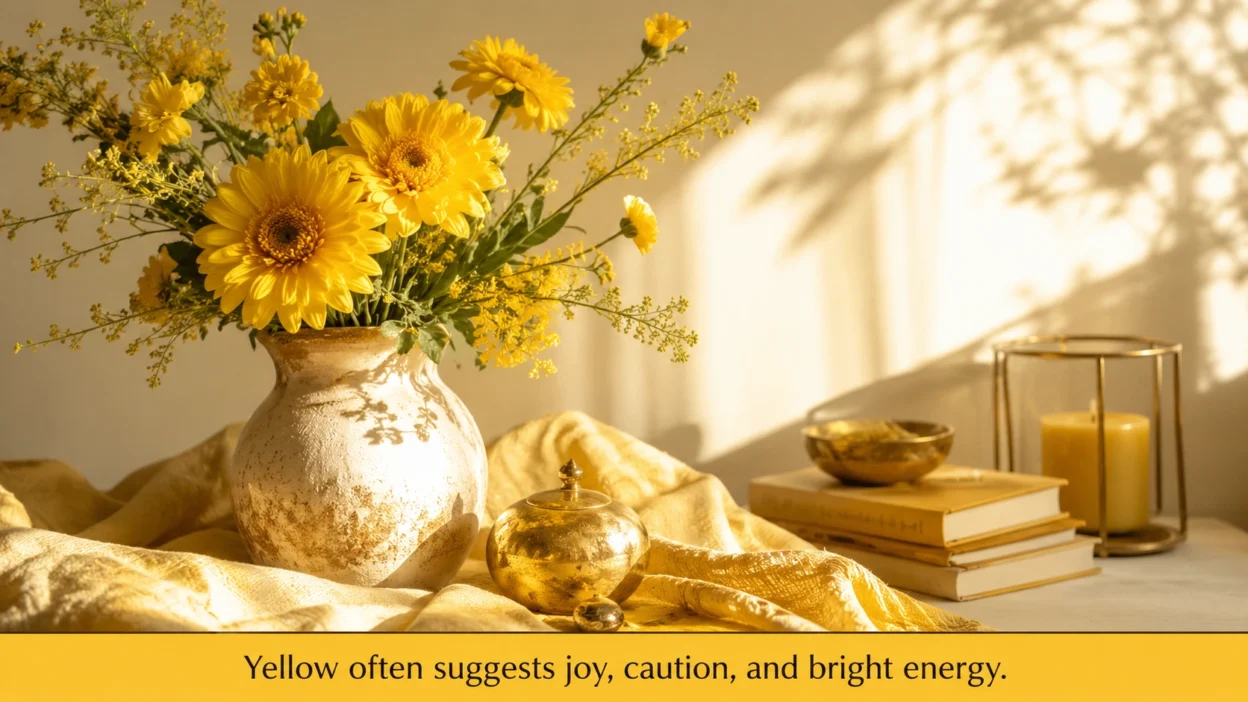
Yellow can feel cheerful at first glance, but it carries much more than brightness. In everyday life, Yellow Symbolism can suggest happiness, energy, warning, faith, attention, or even jealousy, depending on the setting.
That range makes yellow one of the most flexible colors in visual culture. In the USA, people see it in school buses, caution signs, sunflowers, sports gear, spring decor, and digital design. Because of that, yellow often feels friendly, alert, and impossible to ignore.
At the same time, its meaning changes fast. A soft pastel yellow can feel gentle and hopeful. A sharp neon yellow can feel urgent, loud, or unsafe.
Quick Answer
Yellow symbolism in the USA usually stands for happiness, warmth, optimism, and attention. However, it can also signal caution, warning, or anxiety when used in signs, traffic, and safety designs.
TL;DR
• Yellow often means joy, sunlight, and hope.
• It also signals caution and warning in the USA.
• Ancient cultures linked yellow to gold and divine power.
• American life uses yellow in signs, decor, and branding.
• Modern meanings shift with shade, context, and culture.
• Yellow can feel cheerful, nervous, or highly visible.
What Yellow Looks Like and Why It Stands Out
Yellow is one of the easiest colors to notice. It sits between green and orange on the color wheel, and it often looks bright even in small amounts. Because it catches the eye so quickly, people use it when they want something seen fast.
In symbolic use, yellow rarely works alone. It appears in flowers, clothing, warning signs, ribbons, flags, pencils, lights, and digital icons. The shade matters a lot, too, because pale yellow feels softer while neon yellow feels louder.
Common Visual Forms
• Bright gold-like yellow suggests wealth or sacred value.
• Pale yellow often feels calm, soft, or springlike.
• Neon yellow usually signals urgency or high visibility.
• Mustard yellow can feel vintage, earthy, or nostalgic.
Why Shape and Context Matter
A yellow flower feels different from a yellow warning cone. A yellow dress at a picnic feels different from a yellow hazard vest at a worksite. In symbolism, the setting often matters more than the color alone.
Historical Roots of Yellow Symbolism
Yellow has ancient roots because humans noticed sun, fire, gold, and ripened grain early on. Long before modern design, yellow was tied to light, life, and power. That early link still shapes how many people read the color today.
In many ancient societies, yellow was close to gold in meaning. Gold was rare, bright, and hard to ignore, so yellow became connected with status, sacred power, and divine shine. Over time, that positive meaning mixed with caution, illness, betrayal, and decay in some traditions.
Ancient and Early Meanings
Yellow often connected to the sun, which made it feel life-giving. It also linked to harvests, since grain and ripe crops carry yellow tones. Because of that, yellow could mean abundance and survival at the same time.
A Shift Through Time
Later periods added more mixed meanings. In some European traditions, yellow could stand for jealousy or shame. In other settings, it kept its bright, sacred side. That split explains why yellow can feel both cheerful and uneasy today.
Yellow Symbolism in the USA
In the United States, yellow is deeply tied to visibility, safety, and everyday optimism. Americans see it in road signs, taxi cabs, school buses, sports uniforms, and seasonal decor. Because of that, yellow often feels practical, familiar, and alert.
The USA also uses yellow in emotional and commercial ways. Brands use it to appear friendly, playful, or fast-moving. Home decor uses it to bring warmth into a room, especially when people want a space that feels sunny without being too heavy.
Why Americans Read Yellow Fast
Yellow often means “look here” before it means anything else. That is why it appears in warning signs and school transportation. It is also why designers use it sparingly when they want a strong visual message.
Everyday American Associations
• School buses and safety gear
• Sunflowers and springtime
• Lemon flavor and fresh energy
• Warning signs and alert markings
• Cheerful logos and fast-food branding
USA Meanings at a Glance
| Context | Meaning in the USA | Common Associations | Notes |
| Traffic and safety | Caution | Signals attention and care | Often linked to warning |
| Flowers and nature | Happiness | Sunlight, spring, warmth | Feels gentle and alive |
| Home decor | Cheerful energy | Bright rooms, cozy accents | Depends on shade |
| Branding | Friendly attention | Youth, speed, playfulness | Often used to stand out |
| Sports and school life | Visibility | Teams, buses, uniforms | Easy to spot from far away |
Yellow in Religion, Myth, and Older Traditions
Yellow has long carried spiritual meaning, even outside the USA. Many traditions connect it with light, wisdom, sacred power, or divine presence. At the same time, some cultures also connect it with mourning, warning, or social status.
This matters because American symbolism often borrows from older traditions. When people see yellow in a religious robe, a sacred icon, or a ritual object, they may sense reverence even without knowing the full history.
Sacred and Symbolic Uses
In several traditions, yellow appears alongside gold because both suggest brilliance and value. It can also represent enlightenment, learning, or spiritual awakening. However, the exact meaning depends on the religion and region.
Respectful Cross-Cultural Notes
• In Buddhism, yellow can suggest wisdom and humility.
• In Hindu traditions, yellow may connect with learning and purity.
• In some East Asian settings, yellow has signaled imperial power.
• In parts of Europe, yellow has also carried warning or shame.
What Yellow Means Emotionally and Psychologically
Yellow often affects mood before it affects thought. People tend to link it with warmth, hope, mental energy, and openness. However, too much bright yellow can also feel tiring, noisy, or stressful.
Psychologically, yellow works like a spotlight. It pulls attention outward and can make a space feel more active. That is why many people use it when they want to feel awake, creative, or lifted.
Positive Feelings Yellow Can Suggest
• Optimism
• Joy
• Curiosity
• Fresh starts
• Warmth
• Playfulness
Harder Feelings It Can Suggest
• Anxiety
• Irritation
• Overstimulation
• Envy
• Carefulness
• Nervous energy
Why Shade Changes the Mood
A soft yellow wall can feel nurturing. A strong yellow highlighter can feel urgent. A dusty yellow can feel older, quieter, and more reflective. So the emotional meaning always depends on tone and context.
Yellow in Nature and Seasonal Symbolism
Nature gives yellow many of its strongest symbolic meanings. Sunshine, daffodils, corn, bananas, marigolds, bees, and autumn leaves all show yellow in different ways. Because nature uses yellow so often, people instinctively connect it with life and change.
In the USA, yellow often feels tied to spring and late summer. It can suggest a new season, fresh growth, and outdoor energy. At the same time, it can also mark harvest time and the shift toward fall.
Natural Symbols Linked to Yellow
Yellow flowers usually suggest happiness or renewal. Yellow sunlight suggests life, guidance, and hope. Yellow leaves can suggest change, aging, or the beauty of transition.
Seasonal Feeling
Spring yellow feels light and awake. Summer yellow feels bold and full of heat. Autumn yellow feels quieter, richer, and more reflective.
Yellow in Fashion, Beauty, and Personal Style
In fashion, yellow is rarely invisible. It makes a statement, whether someone wears a bright jacket or a soft pastel accessory. That is why it often signals confidence, creativity, and a willingness to stand out.
Yellow also appears in beauty trends, nail polish, makeup looks, and hair color accents. Some people choose it to show joy or youth. Others use it to signal individuality, especially when they want a look that feels bold but still playful.
Style Meanings in Everyday Life
• Bright yellow can feel brave and fun.
• Soft yellow can feel tender and romantic.
• Gold-yellow can feel rich and polished.
• Mustard yellow can feel retro and artistic.
Why People Choose It
Yellow often says something before the person says a word. It can suggest a sunny personality, a creative mindset, or a love of bold color. Because of that, it works well for people who want attention without using dark or heavy tones.
Yellow in Tattoos, Social Media, and Pop Culture
Yellow appears in tattoos, digital art, emojis, memes, and social posts because it reads quickly on screens. On apps, it often helps content feel lively, fun, or easy to notice. In tattoos, yellow may represent sunshine, memory, hope, or a personal turning point.
Pop culture also shapes yellow’s meaning. Animated characters, sports teams, cartoon suns, and bright logos help make yellow feel youthful and energetic. However, the exact meaning can shift depending on whether the design is cute, ironic, nostalgic, or serious.
Modern Uses Today
• Sun and star tattoos
• Yellow hearts in messages
• Bright phone wallpapers
• Cheerful brand logos
• Seasonal photo edits
• Artistic streetwear accents
Why It Works Online
Yellow stands out on dark screens and busy feeds. It also signals friendliness fast, which makes it useful in casual digital spaces. Still, too much yellow can feel harsh, so many creators use it as an accent.
Yellow in Holidays, Traditions, and Public Life
Yellow shows up often in holidays and public celebrations. In the USA, people connect it with Easter flowers, spring parties, school themes, and sunny summer events. It can also appear in memorial ribbons, awareness colors, and civic design.
This section matters because yellow is not only decorative. In public life, it can carry messages of care, caution, remembrance, and hope. That is why the same color can feel festive in one place and serious in another.
Common Public Meanings
Yellow can suggest celebration during spring. It can signal alertness in traffic and work zones. It can also support awareness campaigns when used as a ribbon or color theme.
Event and Ritual Feel
In ceremonies, yellow often brings light and optimism. In public safety, it becomes practical and direct. In both cases, the color asks people to pay attention.
Misunderstandings, Misuse, and Controversies
Yellow is not always positive. In some contexts, it has been used to mock, stereotype, or exclude people. In other settings, it has simply taken on a tired or negative tone because of bad associations over time.
It is important to separate ordinary symbolism from harmful use. A color can be joyful in one setting and offensive in another if it is attached to hateful messaging. Context decides the meaning.
When Yellow Can Become Problematic
• It may carry unfair stereotypes in some older traditions.
• It can feel insulting when used in ridicule.
• It may appear harsh in unsafe or high-pressure settings.
• It can be misread when mixed with political or cultural symbols.
Neutral, Careful Reading
Yellow itself is not bad. Most of the time, its meaning comes from placement, history, and surrounding symbols. That is why people should read the whole image, not just the color.
How Yellow Has Changed Over Time
Yellow’s meaning has never stayed fixed. In older settings, it could mean gold, sun power, and sacred light. Later, it also picked up warning, jealousy, and caution.
Today, the USA uses yellow in a more flexible way. It can feel hopeful in one moment and urgent in the next. That shift is one reason yellow remains such a powerful symbol in modern life.
From Sacred Light to Everyday Signal
Yellow once belonged mostly to grand ideas like the sun and gold. Now it also belongs to signs, apps, packaging, and daily design. This shift made the color more common, but not less meaningful.
Read More: Green Symbolism: Meaning, History, and Modern Use
What Stayed the Same
Even with new uses, yellow still suggests attention. It still feels bright, warm, and visible. That steady core helps explain why it remains one of the most recognizable symbolic colors.
FAQs
What does yellow symbolize in the USA?
Yellow usually symbolizes happiness, warmth, optimism, and attention in the USA. However, it also means caution in safety signs and traffic systems.
Is yellow a spiritual color?
Yes, yellow often has spiritual meaning in many traditions. It can suggest wisdom, sacred light, purity, or awakening, depending on the culture.
Why is yellow used for warning signs?
Yellow is highly visible and easy to notice quickly. That makes it useful when people need to react fast and stay alert.
Does yellow mean jealousy?
Sometimes, yes. In some traditions, yellow has been linked with jealousy, envy, or suspicion. Still, that is only one meaning among many.
What does a yellow heart mean?
A yellow heart usually suggests friendship, warmth, and cheerful affection. It often feels more lighthearted than a red heart.
Why do people like yellow in decor?
Yellow can make a room feel brighter, warmer, and more welcoming. Many people use it to bring energy into a space without making it feel heavy.
Conclusion
Yellow symbolism is rich because yellow does many jobs at once. It can mean joy, sunlight, hope, warning, and visibility, sometimes all in the same culture. In the USA, yellow feels especially familiar because it appears in safety signs, nature, fashion, home decor, and digital life. Yellow Symbolism stays powerful because it is both cheerful and practical. When you see yellow, the best meaning often comes from the full scene. Look at the shade, setting, and purpose, and the color usually tells a clear story.