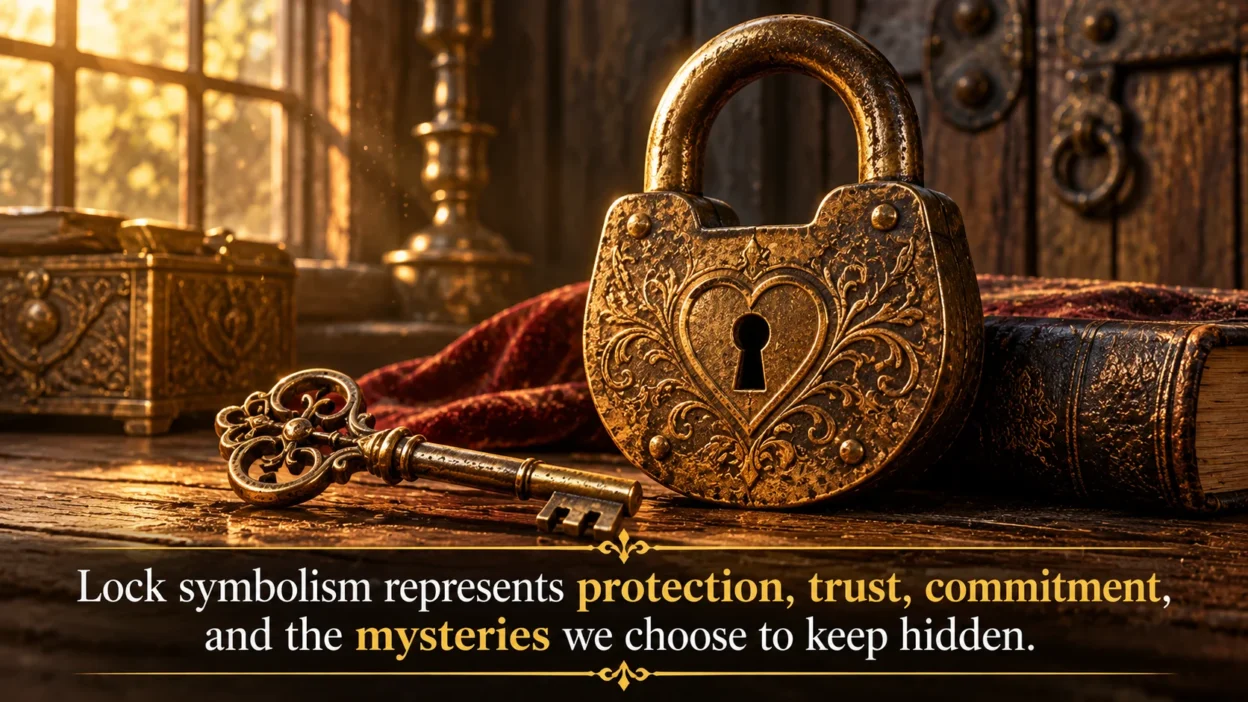
Locks are everyday objects, but their meanings reach far beyond doors and gates. Lock Symbolism connects with security, privacy, love, secrets, and the desire to protect what matters most. In the United States, locks often represent personal boundaries, home safety, and control over one’s private life.
However, a lock can also represent restriction. A locked door might suggest safety to one person and confinement to another. Similarly, a lock without its key can represent a mystery, an unanswered question, or a relationship waiting for understanding.
Today, people encounter locks in jewelry, tattoos, romantic traditions, literature, and digital life. Their meanings depend on the object, its setting, and the feelings attached to it. Understanding these different meanings reveals why such a simple object can carry powerful emotional and cultural messages.
Quick Answer
Lock symbolism in the United States most commonly represents security, privacy, trust, and personal boundaries. It can also symbolize romantic commitment, hidden truths, emotional protection, or feeling trapped, depending on its context.
TL;DR
- Locks commonly symbolize safety, protection, privacy, and control.
- An old lock can represent secrets, history, or preserved memories.
- Locks and keys often symbolize romantic commitment and trust.
- A locked door can suggest boundaries, exclusion, or confinement.
- Modern locks represent both physical security and digital privacy.
- Spiritual interpretations may connect locks with protection, mystery, and personal growth.
What Does a Lock Symbolize?
A lock is a device that prevents access unless someone has the correct key, combination, or permission. Because it controls access, it naturally becomes a symbol of protection, privacy, and authority.
However, its meaning changes with its surroundings. A lock on a treasure chest suggests something valuable, while a lock on a prison door suggests restricted freedom.
The Main Symbolic Meanings
Several common ideas explain why locks appear so frequently in stories, relationships, and everyday culture.
- Security: Keeping people, belongings, and private spaces safe.
- Privacy: Protecting personal information, thoughts, and experiences.
- Trust: Giving another person permission to access something important.
- Commitment: Representing a bond that someone wishes to preserve.
- Secrecy: Keeping knowledge hidden from outsiders.
- Restriction: Preventing movement, freedom, or access.
These meanings can overlap. For example, a locked diary may represent both healthy privacy and a secret someone fears sharing.
Why Context Matters
A lock does not always communicate a single message. Its condition, material, and location influence how people interpret it.
An open padlock may suggest freedom or release. A rusty lock might represent forgotten memories, emotional distance, or something left unresolved. Meanwhile, a new, strong lock usually emphasizes readiness and protection.
The History and Ancient Origins of Locks
Locks developed because people needed to protect their homes, possessions, food, and valuable resources. Over time, these practical devices also gained symbolic meanings connected with authority, ownership, and restricted knowledge.
Early Locks in Ancient Civilizations
Locking mechanisms existed thousands of years ago. Ancient Egyptians and other early societies developed devices that used wooden components, bolts, and pins to secure doors.
Some early designs relied on wooden keys that lifted internal pins. Although these systems differed from modern metal locks, they served a familiar purpose: controlling who could enter a protected space.
In ancient societies, access often reflected social position. A locked storehouse could protect grain or valuables, while secured rooms could mark spaces reserved for rulers, officials, or religious activities.
Locks in Ancient Greece and Rome
The Greeks and Romans developed and used different locking mechanisms, including wooden and metal designs. Metalworking allowed craftspeople to create smaller, more durable locks and keys.
Keys also became recognizable objects of authority and responsibility. Someone holding a key might control access to a household, storeroom, or important building.
However, the symbolic meaning depended on the situation. A key could suggest trust and responsibility, while the lock itself represented the boundary that made access selective.
Medieval Locks and Craftsmanship
During the Middle Ages, locks became important features of castles, churches, monasteries, workshops, and wealthy homes. Blacksmiths created increasingly elaborate mechanisms, sometimes decorating them with patterns or detailed metalwork.
These objects could communicate wealth and craftsmanship as well as practical security. An impressive lock might show that its owner possessed valuable goods or controlled an important place.
By the later medieval period, keys and locks also appeared in art and religious imagery. Their meanings could include authority, stewardship, access, and the power to open or close a threshold.
Lock Symbolism in American Culture
In the United States, locks have a strong connection to the home, personal property, and individual privacy. These associations reflect everyday experiences, including securing a front door, protecting a vehicle, and keeping personal belongings safe.
Home, Safety, and Independence
For many Americans, a house represents stability, family, and independence. A lock on the front door helps protect that space and reinforces the idea that residents control who enters.
A house key can also symbolize a major life change. Receiving one may represent moving out, gaining independence, starting a family, or becoming trusted with a responsibility.
However, locks can reveal differences in personal experience. Someone who values privacy may see a locked door as comforting, while someone who has experienced confinement may associate it with fear.
Ownership, Boundaries, and Freedom
American culture often places importance on personal choice and individual rights. Locks can reflect these values by protecting private spaces and allowing people to establish boundaries.
At the same time, a lock can represent unequal access. A locked gate might protect a private property, but it can also communicate exclusion or separation.
Therefore, the same object can represent freedom for the person holding the key and limitation for the person standing outside.
Common American Associations
| Context | Symbolic Meaning | Common Association |
|---|---|---|
| Front door lock | Safety and privacy | Home and family |
| Personal diary lock | Confidentiality | Private thoughts |
| Lock and key jewelry | Commitment and trust | Romantic relationships |
| Prison lock | Restriction and authority | Loss of freedom |
| Digital account lock | Data protection | Online privacy |
These associations explain why locks remain meaningful in American homes, media, relationships, and public conversations about security.
The Spiritual Meaning of Locks
Spiritually, a lock can represent protection, hidden wisdom, personal boundaries, or something that has not yet been revealed. These interpretations vary across traditions and personal beliefs rather than following one universal system.
Protection From Unwanted Influences
Some people interpret a lock as a reminder to protect their inner peace. In this sense, it represents the choice to limit access to personal thoughts, emotions, and spiritual practices.
A locked door may symbolize a protected space where reflection or prayer can take place. However, this is a personal interpretation rather than a fixed spiritual rule.
Hidden Knowledge and Personal Growth
A locked box or mysterious door can represent knowledge that requires patience and effort to discover. The lock becomes a symbol of a challenge, while the key represents understanding or readiness.
For someone experiencing change, this image may suggest that personal growth takes time. Not every answer is immediately available, and some experiences become clearer only through reflection.
Is a Lock a Sign From the Universe?
Some spiritual interpretations treat recurring symbols as prompts for self-reflection. If a lock repeatedly catches your attention, you might use it to consider your boundaries, fears, or unanswered questions.
However, seeing locks frequently does not establish that the universe is sending a specific message. The meaning is personal, and ordinary explanations may account for the pattern.
Lock and Key Symbolism in Love
Locks and keys have become popular symbols of romantic attachment, loyalty, and emotional connection. Together, they suggest that one person possesses something meaningful that another person is willing to share.
A Lock as a Symbol of Commitment
In romantic imagery, a lock can represent a promise to protect a relationship. It may suggest loyalty, lasting affection, and the desire to preserve a shared bond.
Some couples attach padlocks to bridges or other public structures and leave them as reminders of their relationship. The tradition has different local histories, and it is not practiced everywhere.
The Meaning of a Heart-Shaped Lock
A heart-shaped lock combines two familiar symbols: the heart and the lock. The heart suggests affection, while the lock adds ideas of protection, exclusivity, or commitment.
This combination frequently appears in necklaces, bracelets, greeting cards, and romantic gifts. Yet it can communicate different messages depending on the relationship.
- Lasting affection and devotion.
- Trust built through shared experiences.
- A private emotional bond.
- A promise to protect a relationship.
Healthy commitment still requires freedom and mutual respect. A lock should not be interpreted as ownership over another person.
What Does a Lock Without a Key Mean in Love?
A lock without a visible key can represent guarded feelings or emotional distance. It may suggest that someone has difficulty opening up or trusting another person.
Alternatively, it can represent patience and privacy. Not every feeling must be shared immediately, and emotional openness often develops gradually.
The Psychological Meaning of Locks
Locks can trigger strong emotional responses because they represent control over access. They separate what is available from what remains protected, hidden, or forbidden.
Safety and Emotional Boundaries
A lock can offer a sense of order and control. Knowing that a personal space is secure may help someone feel comfortable, especially when privacy matters.
Symbolically, this can connect with emotional boundaries. A person may choose what to share, when to share it, and whom to trust.
However, protection and avoidance are not the same thing. A boundary can support healthy relationships, while excessive isolation may prevent meaningful connection.
Secrets, Curiosity, and Mystery
A locked container naturally invites questions. What is inside? Why is it protected? Who has the key?
These questions make locks effective symbols in mysteries, adventure stories, and psychological narratives. They create a gap between what someone knows and what they want to discover.
A lock can also represent personal experiences someone is not ready to discuss. The symbol does not necessarily imply dishonesty; it may simply reflect a need for privacy.
Feeling Trapped or Shut Out
A lock can produce negative associations when it prevents someone from leaving or entering. In dreams and stories, a locked door may represent frustration, uncertainty, or a perceived barrier.
Such imagery does not have one guaranteed psychological meaning. Its interpretation depends on the person’s circumstances, emotions, and experiences.
Lock Symbolism in Dreams
Dreams involving locks often invite reflection on privacy, access, trust, and obstacles. However, dream symbols do not have scientifically established universal meanings, so personal context matters more than any fixed interpretation.
Common Lock Dreams
Different dream scenarios may suggest different themes when considered alongside real-life concerns.
- Locking a door: Wanting privacy or greater control.
- Finding a key: Discovering a possible solution or new opportunity.
- Losing a key: Feeling unprepared or uncertain about access.
- Breaking a lock: Wanting to overcome a barrier.
- Seeing a rusty lock: Thinking about an old problem or neglected connection.
- Being trapped behind a lock: Experiencing frustration or limited choices.
These are possible symbolic readings, not predictions. A dream about a lock may also reflect a recent event, a familiar object, or an ordinary worry.
How to Reflect on a Lock Dream
Consider what happened in the dream and how you felt. A locked door that brings relief may mean something different from one that creates panic.
Also, ask whether the dream connects with a current situation. You may be protecting a boundary, waiting for an opportunity, or trying to resolve a problem.
Lock Tattoos and Their Modern Meanings
Lock tattoos allow people to carry a personal symbol of protection, love, privacy, or transformation. Their meanings often come from the wearer’s experiences rather than a universal tattoo tradition.
Popular Lock Tattoo Designs
This design may represent resilience, personal boundaries, or a commitment to protecting something valuable. Dark ink and strong outlines often give it a classic appearance.
This romantic design can symbolize love, loyalty, and emotional connection. Some people choose matching tattoos to represent a shared experience or relationships.
Intricate metalwork may suggest mystery, heritage, or memories that remain important over time. Roses or other decorative elements can add themes of affection and remembrance.
Choosing a Personal Meaning
Before choosing a lock tattoo, consider what you want the design to communicate. A lock may represent a promise, a boundary, a difficult experience, or a new stage of life.
Adding a key, heart, broken chain, or open shackle changes the message. A broken lock, for instance, may express freedom from an old restriction rather than a desire for protection.
Locks in Art, Literature, and Popular Culture
Writers and artists use locks to create mystery, delay discovery, and mark important boundaries. Because most people understand their practical purpose, locks can communicate complicated ideas without lengthy explanations.
Locked Doors and Hidden Worlds
In adventure stories, a locked door often stands between a character and an important discovery. Opening it may lead to treasure, danger, forgotten knowledge, or a new beginning.
This familiar pattern appears in fairy tales, fantasy, detective fiction, and suspense stories. The lock gives the audience a visible sign that something remains unknown.
Secrets and Forbidden Knowledge
A locked diary, chest, or room can represent information someone wants to conceal. The object creates tension because the audience knows that something exists but cannot yet see it.
However, the hidden content may be positive, negative, or entirely ordinary. The lock creates mystery, but the story determines what that mystery means.
Locks as Symbols of Change
A character who opens a locked door may cross a major personal boundary. In contrast, a character who throws away a key may reject an old obligation or choose a different future.
These scenes use physical actions to represent emotional change. The lock becomes a simple visual way to show that access, knowledge, or freedom has changed.
Locks in Digital Life and Modern Technology
Today, locks represent more than physical barriers. In American digital life, lock icons frequently appear in devices, applications, browsers, and online accounts.
Digital Privacy and Security
A lock icon often signals that a system uses a security feature or that a connection is encrypted. This modern use reinforces the familiar association between locks and protected information.
However, the icon does not guarantee that a website or service is trustworthy. A secure connection can still lead to a dishonest business or misleading information.
Social Media and Personal Boundaries
Private accounts, locked profiles, and restricted messages use access controls to limit who can view information. These features make the lock a recognizable symbol of privacy and selective sharing.
For some users, this represents healthy control over their online presence. For others, it can suggest secrecy or exclusion, especially when access changes within a relationship.
Branding and Everyday Design
Locks also appear in logos, product packaging, illustrations, and interface designs. Businesses may use them to communicate safety, confidentiality, or reliability.
Because the image is widely understood, its meaning often feels immediate. Still, a lock symbol should support real protective measures rather than replace them.
Negative Meanings, Misuse, and Controversies
Locks are not always positive symbols. Their power comes from controlling access, and that control can protect people or restrict them unfairly.
Restriction and Confinement
A prison lock can symbolize punishment, captivity, or authority. A locked gate may suggest exclusion, while a locked room can represent isolation.
These meanings are not inherently abusive. Some barriers serve legitimate safety purposes, but the surrounding circumstances determine how people understand them.
Control in Relationships
A lock can represent commitment, but it can also suggest possessiveness when someone treats another person as property. This distinction matters when interpreting romantic jewelry, tattoos, or symbolic language.
Love does not require controlling another person’s movements, friendships, or private thoughts. A meaningful romantic symbol should reflect mutual trust rather than forced obedience.
Security Symbols and False Confidence
A lock icon can make a product or service appear safe. However, the image alone does not prove that the product protects personal information effectively.
The same principle applies to physical objects. A decorative lock may communicate protection without providing much actual security.
Cross-Cultural and Religious Interpretations of Locks and Keys
Locks and keys appear in many societies, but their cultural and spiritual meanings vary. Some traditions emphasize authority and access, while others use keys to represent knowledge, responsibility, or the opening of new possibilities.
Keys as Symbols of Authority
In Christian iconography, keys are associated with Saint Peter and the idea of spiritual authority. This association draws on biblical imagery involving keys and access to the kingdom of heaven.
The key is central to that symbolism, while a lock may serve as the implied barrier. However, interpretations differ across Christian communities and artistic contexts.
Locks, Thresholds, and Protection
Across many cultures, doors and thresholds carry symbolic importance because they separate different spaces. A lock can extend that meaning by representing the ability to control who crosses the boundary.
In some contemporary spiritual practices, people may use lock imagery to express personal protection or guarded intentions. Such interpretations should be understood within their specific traditions rather than treated as universal beliefs.
The Universal Idea of Access
Despite cultural differences, locks share a practical purpose across societies. They establish a boundary and determine who can cross it.
That shared experience helps explain their widespread symbolic appeal. Whether the subject is a home, a secret, a relationship, or a sacred space, a lock makes the idea of controlled access visible.
How Lock Symbolism Has Changed Over Time
The meaning of locks has expanded as technology and social life have changed. Their basic purpose remains recognizable, but the things they protect have become increasingly varied.
From Physical Possessions to Personal Privacy
Historically, locks mainly protected tangible resources and controlled access to buildings or containers. They also signaled ownership, responsibility, and the importance of what lay behind a barrier.
Today, locks still protect homes and belongings. However, digital passwords, encrypted messages, and private accounts have expanded their meaning into personal information and online identity.
From Restriction to Commitment
Locks once appeared prominently in practical settings involving ownership, authority, and confinement. Modern popular culture also uses them as romantic symbols, especially when paired with hearts and keys.
This shift has not erased their older meanings. Instead, the lock now carries several associations at once, from affectionate commitment to unwanted restriction.
Read More: Labyrinth Symbolism: Meaning, History, and Spiritual Power
Why the Symbol Remains Relevant
Locks remain familiar because people continue to make choices about access. Everyone encounters questions about what to protect, what to share, and when to let others in.
The object therefore connects everyday experience with deeper ideas about trust, freedom, privacy, and belonging.
FAQs
What Does a Lock Symbolize Spiritually?
A lock may represent protection, boundaries, hidden wisdom, or something awaiting discovery. Its spiritual meaning depends on the person’s beliefs and the context in which the symbol appears.
What Does a Lock and Key Symbolize in Love?
A lock and key commonly represent trust, affection, commitment, and emotional connection. However, the symbol is healthiest when it expresses mutual choice rather than ownership or control.
What Does a Lock Without a Key Mean?
A lock without a visible key may represent mystery, uncertainty, emotional distance, or something difficult to access. It can also suggest that a solution has not yet been found.
What Does a Lock Tattoo Mean?
A lock tattoo may symbolize privacy, protection, love, loyalty, or a personal experience someone wants to remember. The addition of a heart, key, or broken chain can change its intended meaning.
What Does a Lock Mean in a Dream?
A lock in a dream may reflect concerns about privacy, trust, barriers, or access to an opportunity. However, dreams do not have fixed symbolic meanings, so personal experiences and emotions matter.
Is a Lock a Symbol of Good Luck?
A lock is not universally recognized as a good-luck symbol. Some people associate it with protection and the preservation of good things, while others connect it with restriction or secrecy.
Conclusion
Lock Symbolism reveals how one ordinary object can express several powerful ideas. In American culture, locks commonly represent safety, privacy, independence, and control over personal boundaries. They can also symbolize romantic commitment, hidden knowledge, emotional protection, or confinement. Throughout history, locks have protected possessions and controlled access to important spaces. Today, they also represent digital privacy, personal identity, and the boundaries people establish in relationships. Their meaning depends on who holds the key, what lies behind the lock, and whether the barrier protects or restricts. The next time you notice a lock, consider what it keeps safe and what it keeps out. That simple question can reveal a great deal about the symbol’s deeper meaning.