Gnome symbolism connects small, bearded figures with hidden wisdom, protection, good fortune, and a deep relationship with nature. These familiar characters often appear in gardens, fairy tales, holiday decorations, and fantasy stories. Although they look playful, their symbolic meanings reach far beyond their cheerful faces and pointed hats.
However, gnomes haven’t always been simple decorations. Their stories developed through European folklore, literary imagination, and changing ideas about nature and magic. Today, they can represent anything from a love of gardening to a desire for comfort, protection, and a little everyday wonder.
Understanding gnome symbolism helps explain why these small figures remain popular across generations. Their meaning depends on their appearance, setting, and the beliefs of the person who displays them.
Quick Answer
Gnome symbolism in the United States commonly represents protection, good luck, wisdom, nature, and a welcoming home. In folklore, gnomes are often associated with hidden treasures, the earth, and mysterious natural forces, while modern interpretations emphasize playfulness, comfort, and imagination.
TL;DR
- Gnomes commonly symbolize protection, good fortune, and wisdom.
- European folklore connects gnomes with the earth and hidden treasures.
- American gardens use gnome figures as cheerful guardians and decorations.
- Red hats, beards, and earthy colors create recognizable gnome imagery.
- Modern gnomes represent imagination, humor, comfort, and connection to nature.
- Their meanings vary across folklore, fantasy, spirituality, and popular culture.
What Does a Gnome Look Like?
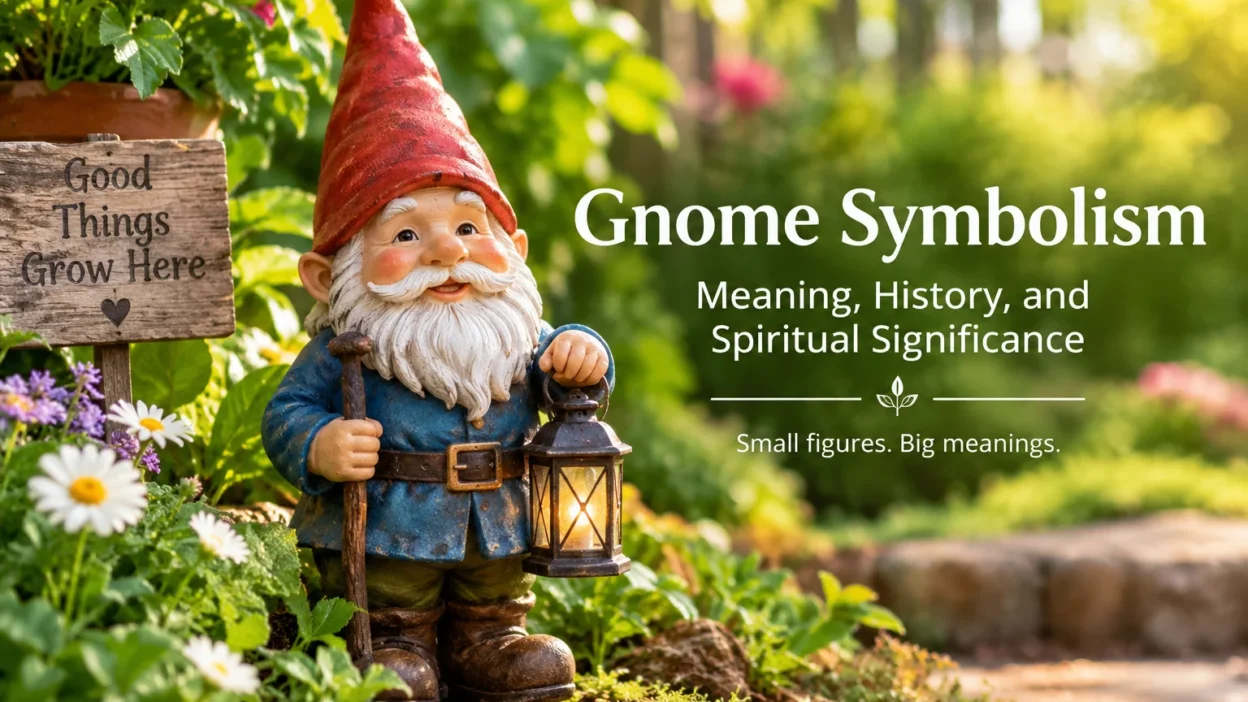
Gnomes usually appear as small humanlike figures with long beards, pointed hats, and sturdy clothing. Their traditional appearance makes them easy to recognize in gardens, illustrations, and fantasy settings. However, their colors, expressions, and accessories can change their symbolic meaning.
Common Gnome Features
A traditional garden gnome often wears a red pointed hat, a blue or green coat, and brown boots. Some carry lanterns, fishing rods, baskets, or gardening tools. These details connect them with outdoor life, practical work, and the protection of familiar spaces.
Their small size also matters. Gnomes seem to belong to a hidden world that exists alongside ordinary human life. As a result, they can symbolize the idea that something meaningful may remain unseen.
Colors and Their Associations
Different colors can suggest different qualities, although these interpretations aren’t universal rules.
- Red: Energy, good fortune, warmth, and attention.
- Green: Nature, renewal, growth, and harmony.
- Blue: Calmness, trust, and peaceful surroundings.
- Brown: Stability, earthiness, and practical wisdom.
- White: Innocence, purity, and wintertime charm.
A gnome’s setting also influences its meaning. A figure holding a lantern might suggest guidance, while one tending flowers may represent patience and care.
Historical Origins of Gnome Symbolism
Gnome symbolism developed through European folklore, early ideas about the natural world, and later literary traditions. However, the familiar garden gnome is a relatively recent creation compared with the older beliefs that influenced it.
Ancient Ideas About Earth Spirits
Many ancient cultures imagined spirits connected to mountains, forests, rivers, and underground places. These beings helped people explain natural events and the mysterious forces they believed shaped the world.
Such traditions offer useful comparisons, but they shouldn’t be treated as proof that ancient people worshiped modern-style gnomes. Different cultures developed their own beings, stories, and spiritual systems.
Paracelsus and the Elemental Gnome
A major influence on the modern idea of gnomes came from Paracelsus, a sixteenth-century physician and natural philosopher. In his writings about elemental beings, he associated gnomes with the element of earth.
Within this system, different beings represented different elements. Gnomes belonged to the earth, while other elemental spirits were associated with water, air, and fire.
This idea helped establish gnomes as supernatural beings connected to underground places, minerals, and hidden natural forces. Later writers expanded these ideas through fantasy, folklore collections, and popular storytelling.
From Folklore to Garden Ornaments
During the nineteenth century, decorative garden gnomes became popular in parts of Europe, particularly Germany. Craftspeople produced small figures designed to bring personality and charm to outdoor spaces.
Over time, these ornaments spread beyond their original settings. Their image became familiar throughout Europe and eventually in the United States.
Modern garden gnomes therefore combine older folklore with more recent decorative traditions. Their meaning reflects both the mysterious earth spirit of earlier stories and the cheerful figure found beside a flowerbed.
Gnome Symbolism in the United States
In America, gnomes are most strongly associated with gardens, home decoration, and lighthearted folklore. Their presence often makes an outdoor space feel personal, welcoming, and slightly magical.
Unlike symbols tied to a single national institution or religious tradition, gnomes have a flexible place in American culture. People can enjoy them without accepting any particular supernatural belief.
Garden Protection and Good Fortune
Many people interpret garden gnomes as symbolic guardians. Their placement near flowers, vegetable beds, or entrances suggests that someone is watching over a valued space.
This association is largely folkloric and decorative rather than a universal American belief. Still, the image of a small guardian fits familiar ideas about caring for a home and protecting what grows there.
A Symbol of Home and Belonging
Gnomes often appear outside family homes, community gardens, and neighborhood landscapes. Their familiar faces can create a sense of warmth and continuity.
For some Americans, a gnome is a simple decoration. For others, it recalls childhood stories, a relative’s garden, or a family tradition passed down over time.
Gnomes in American Seasonal Traditions
Gnome decorations also appear during fall, Halloween, Christmas, and winter. Seasonal clothing, miniature pumpkins, and festive hats allow the figures to match different celebrations.
Christmas gnomes are sometimes influenced by Scandinavian folklore, particularly traditions involving the tomte or nisse. These household or farm-associated beings are related to gnomes in popular imagination, although they belong to distinct folkloric traditions.
Spiritual Meaning of Gnomes
Spiritually, gnomes are often associated with grounding, stability, nature, and the unseen forces of the earth. These meanings are especially common in modern interpretations influenced by folklore, elemental traditions, and contemporary nature-centered spirituality.
However, there isn’t one universal spiritual meaning. Interpretations depend on individual beliefs and the particular tradition being followed.
Connection to the Earth Element
In elemental symbolism influenced by Paracelsus, gnomes represent earth. The earth element is commonly linked with stability, material substance, patience, and practical concerns.
Within this symbolic framework, a gnome can serve as a reminder to build strong foundations. It may encourage someone to care for their surroundings, remain patient, or pay attention to everyday responsibilities.
Grounding and Natural Balance
Some modern spiritual practitioners use gnome imagery to express a desire for a closer relationship with nature. Their small size and underground associations make them suitable symbols for hidden growth and quiet strength.
A gnome displayed near plants may represent the value of tending to small things. Similarly, a woodland gnome can evoke respect for natural spaces and the life they support.
These are personal or contemporary interpretations, not evidence that gnomes possess supernatural powers.
Gnome Symbolism Across Cultures
Gnomes belong primarily to European folklore and later fantasy traditions. Nevertheless, their image sometimes overlaps with other cultures’ stories about household guardians, nature spirits, and supernatural beings.
These similarities can help explain their broad appeal, but they don’t mean every tradition describes the same kind of being.
European Folklore
European stories include many small supernatural figures associated with the earth, forests, mines, or household spaces. Gnomes became especially linked with underground places and hidden treasures.
Their personalities vary across stories. Some are helpful and wise, while others are secretive, stubborn, or difficult to understand.
Scandinavian Tomte and Nisse Traditions
Scandinavian folklore includes the tomte and nisse, beings associated with farms, households, and care for the home. They are often depicted as small figures wearing caps, which makes them visually similar to modern Christmas gnomes.
However, their cultural backgrounds are distinct. In traditional stories, household beings might reward proper care or become offended by disrespectful treatment.
Similarities Without Assuming Equivalence
Other cultures also have traditions involving land spirits, household guardians, or supernatural beings connected to nature. Their roles and meanings differ according to local history and religious beliefs.
It’s best to appreciate these parallels without labeling every small folkloric figure a gnome. Respecting those differences helps preserve the richness of each tradition.
Psychological Meaning of Gnomes
Gnomes can create feelings of comfort, curiosity, amusement, and connection to childhood memories. Their small bodies, exaggerated features, and friendly expressions make them approachable rather than intimidating.
Their psychological meaning depends partly on personal experience. A figure that reminds one person of family gardening may remind another of a favorite fantasy story.
Comfort and Familiarity
A familiar garden gnome can make an outdoor space feel lived-in and personal. Its presence adds character to an otherwise ordinary setting.
For some people, this effect comes from nostalgia. Childhood books, animated stories, and family traditions can give gnomes emotional meaning long after childhood ends.
Humor and Playfulness
Gnomes often look slightly mischievous, especially when their expressions or poses are exaggerated. This appearance makes them useful symbols of humor and an uncomplicated enjoyment of life.
For example, a gnome holding a miniature sign or wearing a silly costume can turn a garden into a playful display. The figure becomes a small reminder not to take every detail of life too seriously.
Hidden Wisdom and Quiet Strength
Despite their humorous appearance, traditional gnomes can represent patience and knowledge. Their underground associations suggest familiarity with things that remain hidden from ordinary view.
This interpretation makes them suitable symbols for people who value careful observation, practical skills, or quiet confidence. Their small size also suggests that influence doesn’t always depend on outward power.
Common Gnome Symbols and Their Meanings
A gnome’s accessories and surroundings often shape how people interpret it. In American homes and gardens, these details can turn a simple ornament into a more personal symbol.
| Gnome Feature or Setting | Common Symbolic Meaning | Typical Association |
| Red pointed hat | Good fortune, vitality, warmth | Traditional garden decoration |
| Lantern | Guidance, awareness, discovery | Paths and nighttime displays |
| Gardening tools | Growth, patience, care | Vegetable and flower gardens |
| Mushrooms or woodland plants | Nature, mystery, imagination | Forest-themed decor |
| Christmas clothing | Celebration, comfort, generosity | Winter and holiday displays |
These meanings are common interpretations, not fixed definitions. A person may choose a gnome simply because its appearance matches a garden or seasonal theme.
Gnome Tattoos and Modern Personal Expression
Gnome tattoos allow people to combine folklore with personal memories, humor, or a love of nature. Their meanings depend on the design and the story behind it.
Unlike more formal spiritual symbols, gnome tattoos rarely have one established interpretation shared by everyone.
Common Gnome Tattoo Designs
A traditional bearded gnome may represent good luck, protection, or a connection to gardening. A woodland gnome can suggest imagination, mystery, and appreciation for nature.
Some people choose colorful designs inspired by storybooks. Others prefer darker fantasy styles featuring forests, mushrooms, lanterns, or underground settings.
Personal Identity and Creativity
A gnome tattoo may reflect a playful personality or an appreciation for unusual folklore. It can also honor a family member who loved gardening or collected garden ornaments.
However, the meaning shouldn’t be assumed from the image alone. The wearer’s intentions and experiences are usually more important than a general symbolic definition.
Gnome Symbolism in Home Decor and Popular Culture
Today, gnomes appear in gardens, living rooms, craft projects, clothing, illustrations, and online content. Their recognizable appearance allows people to adapt them to different tastes and occasions.
In the United States, they often combine traditional folklore with humor and seasonal design.
Garden and Interior Decorations
Outdoor gnomes are commonly placed among flowers, beside walkways, or near patios. Their small size makes them easy to include without changing the overall garden design.
Indoor versions may appear on shelves, mantels, or tables. Some designs use neutral colors and natural materials, while others feature bright clothing and exaggerated expressions.
Social Media and Gift Giving
Gnomes frequently appear in seasonal photographs, craft tutorials, and humorous posts. Their expressions and costumes make them easy to personalize for different holidays or occasions.
They also make popular gifts for gardeners and people who enjoy whimsical decorations. In this context, the figures can symbolize thoughtfulness, affection, and shared humor.
Why Their Popularity Continues
Gnomes are familiar without being tied to a single belief system. As a result, they can appeal to people who enjoy folklore, gardening, fantasy, or simple decorative objects.
Their flexibility also helps them survive changing trends. A traditional garden gnome can remain recognizable even when its clothing, materials, or artistic style changes.
Negative Meanings and Misunderstandings About Gnomes
Gnomes are generally viewed positively in modern American culture. However, folklore sometimes portrays them as secretive, mischievous, or difficult to please.
Understanding these variations prevents one interpretation from being treated as the only correct meaning.
Mischief and Unpredictability
Some stories describe supernatural beings that play tricks on people or react badly when someone disturbs their homes. These portrayals add mystery and caution to gnome folklore.
They don’t mean gnomes universally symbolize bad luck. Rather, they reflect a storytelling tradition in which the natural and supernatural worlds don’t always follow human expectations.
Are Gnomes Religious Symbols?
Gnomes aren’t a universal religious symbol, and garden ornaments don’t automatically express a spiritual belief. Although elemental traditions connect them with earth, many modern owners simply enjoy their appearance.
Likewise, a decorative gnome shouldn’t automatically be interpreted as evidence of occult practice. Context and personal intention matter.
Gnomes and Cultural Differences
Modern fantasy sometimes combines gnomes with elves, dwarfs, fairies, and other supernatural figures. These beings may share certain visual features, but their histories and traditional roles can differ.
Using the names interchangeably may overlook those differences. A more thoughtful approach recognizes that popular culture often blends distinct traditions for entertainment.
How Gnome Symbolism Has Changed Over Time
Gnome symbolism has shifted from ideas about hidden natural beings to the familiar garden figure found today. This change reflects the influence of literature, decorative arts, commercial products, and modern entertainment.
From Mysterious Earth Beings to Friendly Guardians
In early modern elemental philosophy, gnomes were associated with the earth and invisible forces of nature. Later stories expanded their personalities and made them recognizable characters.
During the nineteenth century, garden ornaments gave the figure a visible place in everyday life. Instead of existing only in stories, gnomes became objects people could display in their own surroundings.
From Traditional Gardens to Fantasy Worlds
In the twentieth century and beyond, books, films, games, and illustrations broadened the image of the gnome. Some portrayals preserve their earth-related associations, while others emphasize magic, humor, or adventure.
Today, the same figure can represent several things at once. A garden ornament may suggest good fortune, while a fantasy character may symbolize hidden knowledge or the wonder of unfamiliar worlds.
Read More: Troll Symbolism: Meaning, Origins, and Modern Interpretations
Meanings That Remain Relevant
Despite these changes, several themes continue to appear in modern interpretations:
- Protection of homes, gardens, and familiar spaces.
- Appreciation for nature and the steady work of growth.
- Curiosity about hidden worlds and unseen possibilities.
- Humor, imagination, and a sense of childhood wonder.
These continuing associations help explain why gnomes remain recognizable even as their designs evolve.
FAQs
What Does a Gnome Symbolize Spiritually?
Spiritually, a gnome often represents grounding, stability, and a connection to the earth. Some interpretations also associate gnomes with hidden wisdom and natural balance. These meanings vary by tradition and personal belief.
Are Gnomes Considered Good Luck Symbols?
Gnomes are often treated as good luck symbols, especially in garden decorations. Their association with protection and flourishing plants supports this interpretation. However, displaying a gnome doesn’t guarantee luck or protection.
What Does a Gnome at Your Front Door Mean?
A gnome near a front door may symbolize hospitality, protection, and a welcoming home. Some people place one there simply to add personality to an entrance. Its meaning depends on the owner’s intention and the surrounding decor.
What Does a Red-Hat Gnome Symbolize?
A red-hat gnome often represents traditional garden folklore, warmth, cheerfulness, and good fortune. Red makes the figure easy to recognize and creates a bright contrast with green plants. However, the hat’s color doesn’t have one universal spiritual meaning.
What Does It Mean to See a Gnome in a Dream?
A gnome in a dream may personally suggest curiosity, hidden knowledge, playfulness, or a connection to childhood memories. Its meaning depends on the dream’s emotions and circumstances. There’s no scientifically established interpretation that applies to every dream about gnomes.
Are Gnomes and Elves the Same?
No, gnomes and elves are different beings in many European folklore and fantasy traditions. Gnomes are often connected with earth and underground places, while elves have varied associations with supernatural beauty, forests, magic, or otherworldly communities. Modern stories sometimes blend their features, but their traditional backgrounds aren’t identical.
Conclusion
Gnome symbolism brings together protection, good fortune, wisdom, nature, and playful imagination. From European folklore to American garden decorations, gnomes have changed from mysterious earth-associated beings into familiar figures that add personality to everyday spaces. Their meaning isn’t limited to one belief or tradition. A gnome might represent a welcoming home, a love of gardening, a cherished memory, or the simple pleasure of enjoying something whimsical. Whether you place one among flowers or appreciate one in a story, consider what the figure means to you. Sometimes, a small symbol can remind us to care for our surroundings, stay curious, and leave room for a little wonder.