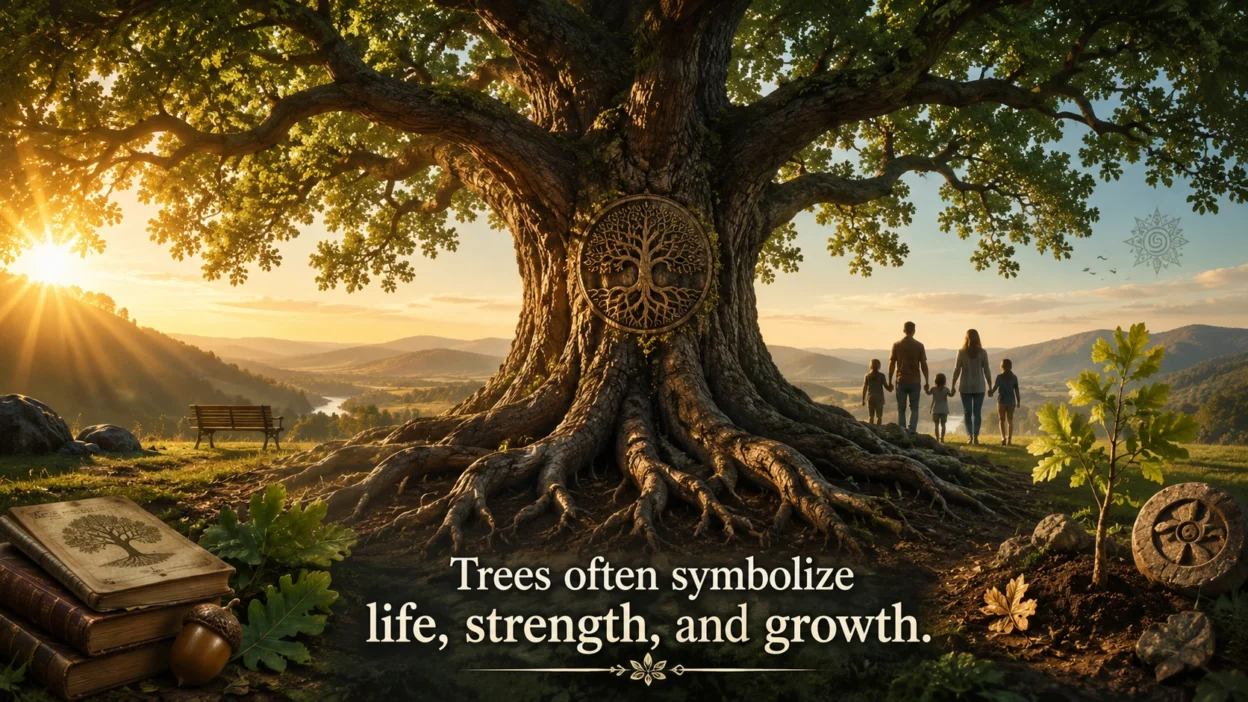
Tree Symbolism reflects universal symbolism with ancient roots found across many cultures, religions, mythologies, belief systems, and spiritual traditions, showing how a tree and trees are linked with life itself.
A tree is known for long existence, steady growth, staying rooted in the earth, and reaching toward the sky. These symbolic symbols represent, represents, and symbolize strength, balance, stability, wisdom, and the connection between different worlds. From my experience studying cultural traditions, this shared meaning appears surprisingly consistent, even when the stories come from very different places.
The meanings of Tree Symbolism are inspired by nature and can be seen in sacred texts, dreams, art, and modern culture. A tree is constantly growing, renewing, and appearing because people believe it can carry lessons of patience, resilience, and harmony. When viewed through history or everyday life, this enduring image continues to remind us of the relationship between humanity and the unseen.
Quick Answer
Tree symbolism in the USA usually stands for growth, strength, family, and life itself. It can also represent wisdom, heritage, renewal, and a strong connection between the past and the future.
TL;DR
• Trees often symbolize life, stability, and growth.
• Roots suggest ancestry, memory, and belonging.
• Branches suggest expansion, hope, and change.
• In the USA, trees appear in faith, family, and nature themes.
• Tattoos and decor often use trees for healing or legacy.
• Meanings shift by species, season, and cultural context.
What Tree Symbolism Means
This section gives the basic idea behind the symbol. For American readers, the tree is easy to recognize, but its meaning changes with the setting. A bare winter tree can feel different from a blooming spring tree.
The Tree as a Symbolic Shape
A tree has a natural structure that people read like a message. Roots point down, trunk holds steady, and branches reach upward. That shape makes the tree a simple image for how life works.
Trees also change with the seasons. They can look alive, quiet, old, or renewed. Because of that, they fit many human experiences at once.
Core Meanings at a Glance
People usually connect trees with a few major ideas.
• Growth and personal development
• Strength and endurance
• Family roots and heritage
• Renewal after hardship
• Wisdom and long life
How Trees Appear as Symbols
This section matters because the type of tree changes the message. In American culture, a pine does not feel the same as an oak or willow. The species, shape, and season all affect meaning.
Shape, Season, and Species
A tall tree can suggest ambition or protection. A wide tree can suggest shelter and generosity. A tree with deep roots can suggest family, grounding, or tradition.
Seasonal details matter too. Leafy trees often suggest life and fullness. Bare trees can suggest rest, loss, or a quiet season before change.
Common Symbolic Features
• Deep roots often suggest ancestry and stability.
• New leaves often suggest growth and fresh starts.
• Fruit can suggest reward, abundance, or fertility.
• Broken branches can suggest loss or hardship.
• A lone tree can suggest independence or resilience.
Ancient Roots of Tree Symbolism
This section shows that tree meaning is very old. Long before modern America, many cultures saw trees as special places of life and mystery. Their size and age made them feel larger than ordinary plants.
Pre-Christian and Ancient Traditions
In ancient religions, trees often stood for the bond between earth and sky. Their roots reached down, while their tops reached toward heaven. That made them powerful signs of connection between human life and the sacred.
Many old stories placed important events near a tree. Sacred groves, world trees, and life trees appear in myths across Europe, Asia, Africa, and the Middle East. The message was often similar: life is connected, rooted, and always changing.
Why Trees Became Sacred
People depended on trees for food, shelter, medicine, and tools. However, they also saw trees live far longer than people. That long life made trees feel wise and protective.
Trees also survived through seasons that looked like death and return. A tree could lose its leaves and still live. That cycle helped people connect trees with rebirth and lasting life.
Tree Symbolism in the USA
This section is the heart of the article for American readers. In the United States, trees are tied to nature, family, faith, land, and identity. They appear in national parks, hometown memories, school emblems, and seasonal traditions.
Why Americans Value Tree Imagery
Trees often stand for rootedness in American life. They can suggest home, local history, and pride in a place. They also fit a country that values both independence and community.
Because trees are common in suburbs, farms, and forests, they feel familiar to many people. That makes the symbol easy to use in art, stories, and public events.
Tree Symbolism in Public Culture
| Context | Meaning in the USA | Common Associations | Notes |
| National parks | Nature, protection, land | Wilderness, trails, conservation | Often linked to stewardship |
| Family history | Roots, ancestry, lineage | Genealogy, heritage, memory | Used in family tree charts |
| Holiday decor | Renewal, celebration, tradition | Christmas trees, ornaments, lights | Strong seasonal meaning |
| Memorial art | Legacy, remembrance, life continuing | Names, dates, engraved trunks | Common in tribute spaces |
| Community spaces | Shelter, growth, belonging | Town squares, school grounds, gardens | Suggests shared life |
Trees in American Storytelling
American stories often use trees to show character growth. A young tree may suggest childhood or hope. A damaged tree may suggest struggle or survival.
In children’s books, trees often feel friendly and wise. In historical stories, they may represent a family farm, a hometown, or a place passed down. That gives the symbol a deep emotional range.
Spiritual and Religious Meanings
This section looks at spiritual use without forcing one belief. In the USA, many people still connect trees with faith, prayer, and sacred life. Others simply see them as signs of wonder.
Trees in Religious Tradition
Trees appear in many religious stories as signs of life, testing, blessing, or wisdom. In Christian settings, the tree can stand for life, sacrifice, and hope. In other traditions, it may point to sacred knowledge or divine order.
A tree can also represent the idea that life is connected. That is why so many spiritual traditions place meaning in roots, branches, and fruit. The image works across different beliefs because it feels both earthly and elevated.
Cross-Cultural Spiritual Themes
• Life flowing between earth and sky
• Wisdom gained through age
• Sacred growth through struggle
• The return of life after rest
• Blessing that reaches outward
Trees, Family, and Ancestry
This section matters because tree symbolism is often personal. In American homes, the tree can point to family stories, shared values, and inherited memory. That is why the “family tree” is such a lasting image.
Why the Family Tree Matters
The family tree works because it shows generations as connected parts of one living system. Roots can suggest grandparents, while branches can suggest children and cousins. The image is simple, but it carries a lot of emotional weight.
People often use tree imagery when they want to honor where they came from. It can also help them think about what they are passing on. That makes the symbol useful for both memory and identity.
Family and Heritage Meanings
• Roots suggest origin and belonging.
• Branches suggest descendants and future generations.
• Rings in wood suggest the passage of time.
• Fruit suggests what a family produces or nurtures.
• Seedlings suggest the next chapter.
Emotional and Psychological Meanings
This section explains why trees feel so human. People often project their own lives onto trees. That is why the symbol can feel calming, hopeful, or even healing.
What Trees Often Signal Emotionally
A strong tree can make people feel safe. A tree growing after damage can suggest recovery. A tree standing alone can suggest quiet courage.
Trees also support the idea of patience. They grow slowly, and that can be comforting in a fast world. For many Americans, tree symbolism suggests that real change takes time.
Common Feelings Linked to Trees
• Safety and shelter
• Patience during hard seasons
• Hope after loss
• Pride in steady growth
• Peace from being grounded
Seasons, Cycles, and Renewal
This section shows how trees represent change without losing identity. A tree keeps being a tree, even while it changes with the seasons. That makes it a strong symbol for people going through transitions.
Why Seasonal Change Matters
Spring trees often suggest new life and fresh starts. Summer trees can suggest fullness, success, and energy. Fall trees may suggest release, gratitude, or maturity. Winter trees often suggest rest, endurance, or quiet hope.
That cycle matters in the USA because many people use tree imagery during personal change. It can represent healing after loss, growth after struggle, or trust during waiting.
Seasonal Symbol Meanings
• Spring means renewal and possibility.
• Summer means strength and fullness.
• Autumn means letting go with grace.
• Winter means endurance and patience.
• New buds mean future growth.
Tree Tattoos and Body Art
This section looks at modern personal use. Tree tattoos are popular because they can carry many meanings without needing many words. In the United States, people often choose them for identity, memory, or resilience.
Why People Choose Tree Tattoos
Some people choose a tree tattoo to honor family. Others choose one after a major life change. A tree can also mark survival, sobriety, healing, or a new beginning.
The design changes the message. A bare tree may feel reflective. A blooming tree may feel hopeful. A rooted tree may feel strong and grounded.
Common Tattoo Meanings
• Healing after a difficult season
• Honor for family and ancestry
• Strength through hardship
• A fresh chapter in life
• Connection to nature and self
Tree Symbolism in Decor, Fashion, and Media
This section shows how trees appear in everyday life. In American homes and media, tree imagery often creates warmth, calm, and balance. It is one of the easiest symbols to use without explanation.
Modern Uses in Daily Life
Trees appear in wall art, nursery decor, greeting cards, clothing prints, and logos. They are also common in digital graphics and social posts about growth or wellness. Because the image is so familiar, it travels well across settings.
People also use trees in seasonal decoration. Holiday trees, printed trees, and hand-drawn tree motifs all shape mood quickly. The symbol can feel festive, rustic, spiritual, or sentimental.
Why It Stays Popular
• It feels natural and universal.
• It works in both simple and detailed designs.
• It can feel personal without being private.
• It fits homes, events, and memorials.
• It suggests growth without sounding complicated.
Misunderstandings and Controversies
This section helps separate positive meaning from misuse. Trees are generally peaceful symbols, but context still matters. Some images that look decorative may carry stronger cultural or political meaning.
When Tree Symbolism Can Be Misread
A dead tree may suggest grief, not renewal. A harsh or cut-down tree may suggest loss, destruction, or protest. In some settings, a tree may symbolize land ownership, colonial history, or environmental conflict.
That does not erase the symbol’s positive meaning. However, it shows why context matters. The same tree can feel hopeful in one image and painful in another.
A Careful, Neutral View
• Not every tree image means healing.
• Cut trees can suggest loss or change.
• Sacred groves may carry local cultural meaning.
• Holiday trees are not the same as forest symbols.
• Context always shapes interpretation.
How Tree Meanings Have Shifted Over Time
This section connects older meanings with modern ones. Tree symbolism has stayed stable in some ways, but Americans now use it more broadly. It can be sacred, personal, environmental, or decorative.
Read More: Dragonfly Symbolism: Meaning, History, and Modern Life
From Sacred Symbol to Everyday Image
In older traditions, trees often carried holy or mythic importance. Today, they are still meaningful, but they also appear in ordinary places. A tree can be part of a memorial, a wedding card, or a nature logo.
That shift has made the symbol more flexible. It can speak to faith, family, and ecology all at once. It can also feel more personal than formal symbols.
Why the Symbol Still Feels Fresh
Trees continue to matter because people still need images of rootedness and growth. The world changes quickly, but trees suggest a slower wisdom. That is one reason the symbol remains so strong in the USA.
FAQs
1. What does Tree Symbolism mean?
Tree Symbolism refers to the deeper meanings connected with trees. It commonly represents life, growth, strength, wisdom, stability, and the connection between the earth and the sky.
2. Why are trees important in spiritual traditions?
Many spiritual traditions, religions, and belief systems view trees as sacred because they symbolize renewal, balance, and the link between the physical and spiritual worlds.
3. What do trees symbolize in dreams?
In dreams, trees often symbolize personal growth, inner strength, stability, family roots, healing, or a new stage in life. The exact meaning depends on the condition and type of the tree.
4. How has Tree Symbolism changed over time?
Although Tree Symbolism has ancient origins, it remains meaningful in modern culture through art, literature, environmental movements, and personal spiritual practices.
5. Why is Tree Symbolism found in so many cultures?
Trees are found around the world, so people from different cultures and mythologies naturally connected them with life, wisdom, protection, endurance, and hope, creating similar symbolic meanings across civilizations.
Conclusion
Tree Symbolism has remained one of the world’s most enduring symbols because it reflects the qualities people admire most—life, strength, wisdom, balance, resilience, and continual growth. From ancient traditions to modern culture, trees continue to inspire people with their deep roots, steady presence, and constant renewal, reminding us of the lasting connection between humanity, nature, and the wider world.