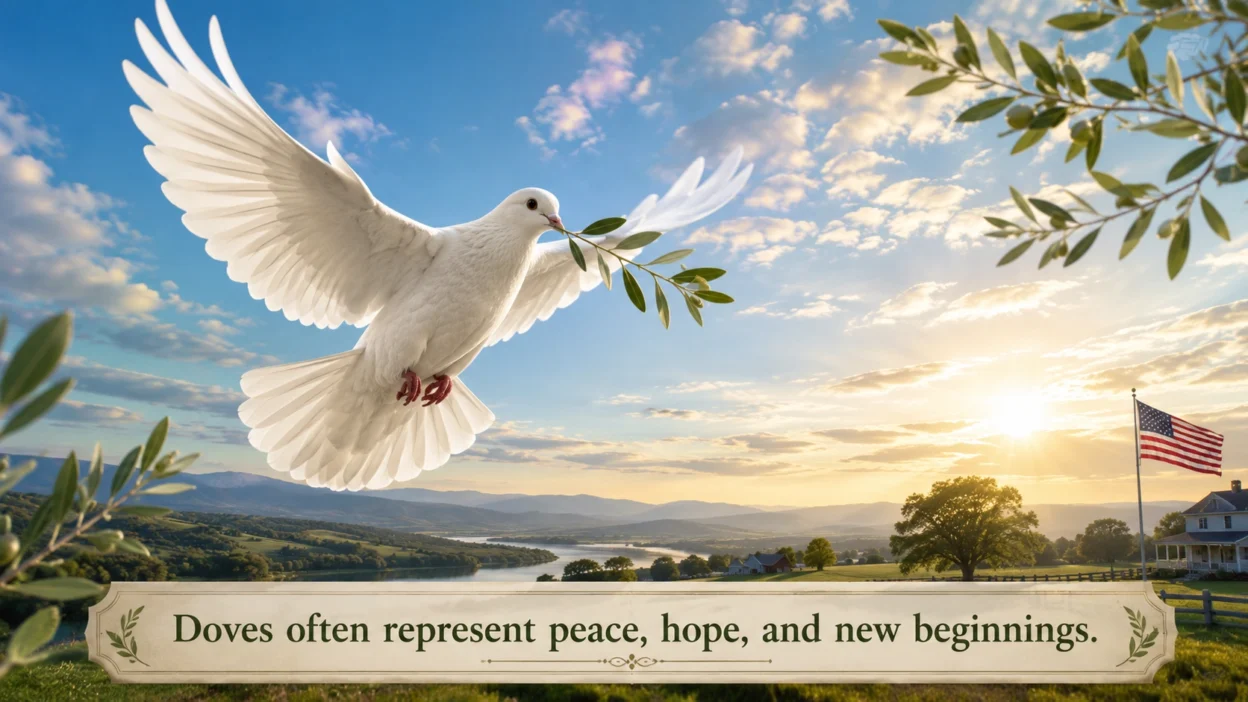
Dove Symbolism reflects peace, love, and hope, showing why the Dove remains a universally recognized symbol across many traditions. Dove Symbolism has been cherished for centuries and is deeply associated with cultures, religions, belief systems, and spiritual traditions.
The Dove is a symbol with rich symbolic meanings that have been shaped by history and human experience. In modern symbolism, doves symbolize peace, purity, love, innocence, hope, harmony, renewal, divine presence, spiritual connection, and spiritual reassurance. From my own reading of historical stories and cultural traditions, I have noticed that these ideas remain meaningful across generations.
The gentle, graceful, and calm nature of the dove creates a lasting impression. Its soft appearance and loyal behavior help explain why people believe it carries meaningful messages. Whether appearing in sacred texts, myths, dreams, or art, the dove reminds people that kindness and faith have lasting value. It teaches that true strength can exist through gentleness instead of force, making Dove Symbolism meaningful even today by connecting ancient traditions with everyday life, continuing to inspire people seeking inner peace.
Quick Answer
Dove symbolism in the USA most often stands for peace, hope, love, and spiritual comfort. It can also suggest innocence, healing, and a fresh start. In other cultures and faiths, doves may also mean the soul, blessing, or divine presence.
TL;DR
• Doves usually symbolize peace and gentle strength.
• In the USA, they often appear in religion and memorials.
• The olive branch is a major part of dove meaning.
• Doves can also represent love, hope, and renewal.
• Their meaning has roots in ancient and biblical traditions.
• Modern use includes tattoos, art, weddings, and activism.
What Is Dove Symbolism?
This section explains the basic idea behind the symbol. For American readers, it helps separate the bird itself from the meaning people attach to it. The dove is not just a bird in a story; it is a visual shorthand for calm, hope, and moral gentleness.
The Dove as a Visual Symbol
A dove is usually shown in a soft, white, or light-colored form. It may be drawn with open wings, a lifted head, or an olive branch in its beak. Those details matter because they make the bird feel peaceful instead of harsh or threatening.
• White color often suggests purity or innocence.
• Open wings suggest freedom and release.
• An olive branch points to peace and reconciliation.
• A flying dove can suggest a soul rising or moving on.
Core Meanings at a Glance
People usually connect doves with a few major ideas. These meanings overlap, so one image can hold several messages at once.
• Peace after conflict
• Hope during hardship
• Love that feels gentle and faithful
• Comfort after loss
• New beginnings and spiritual renewal
Ancient Roots of Dove Symbolism
This angle matters because dove symbolism did not begin in modern America. Its older roots shaped how later cultures, including the United States, came to understand it. Long before the dove became a peace icon, it already carried sacred and emotional meaning.
Pre-Christian and Ancient Traditions
In ancient Near Eastern and Mediterranean cultures, birds often stood for divine messages, fertility, and the link between earth and sky. Doves, in particular, were connected with goddesses, love, and blessing. Their soft behavior and caring nature helped build that early meaning.
In Greek and Roman worlds, doves were often tied to love and beauty. They appeared near gods and goddesses linked to affection, desire, and harmony. Because of that, the dove slowly became associated with tenderness and sacred femininity.
Biblical Influence
Biblical stories later gave the dove a very strong place in Western symbolism. In the story of Noah, a dove returns with an olive branch, showing that floodwaters have receded and life can begin again. That moment became one of the clearest images of hope in the Western tradition.
Later, the dove also became linked with the Holy Spirit in Christian thought. This gave the symbol a deeper spiritual meaning: not only peace, but also blessing, guidance, and divine presence. That influence remains important in the United States today.
Dove Symbolism in the USA
This is the most important section for American readers. In the United States, the dove is used across religion, politics, mourning, and celebration. Its meaning often depends on context, but peace is still the strongest theme.
Why Americans Connect Doves With Peace
The modern American peace image grew from both religious history and public culture. The dove became a natural symbol for anti-war messages, civil rights marches, memorial events, and calls for reconciliation. It is easy to understand at a glance, which helps it spread quickly in media and art.
Because the symbol feels soft and non-threatening, it works well when people want to express compassion. It can speak across age groups, faith backgrounds, and political views. That makes it one of the most flexible symbols in American life.
Common USA Contexts
| Context | Meaning in the USA | Common Associations | Notes |
| Church imagery | Holy Spirit, blessing, purity | Baptism, confirmation, stained glass | Strong Christian tradition |
| Memorials | Peace, remembrance, release | Funerals, vigils, tribute art | Often used for comfort |
| Weddings | Love, faithfulness, harmony | Rings, invitations, decor | Less formal than swans, but common |
| Activism | Nonviolence, peace, unity | Posters, rallies, campaigns | Especially strong in peace movements |
| Holiday art | Hope, goodwill, renewal | Christmas, Easter, seasonal cards | Context shapes the meaning |
Public Life and Media
In American media, the dove is often used when a message must feel gentle and hopeful. It appears in campaign art, posters, greeting cards, logos, and community events. The bird’s meaning is so familiar that people often understand it before reading any words.
However, the symbol is not only political or religious. Families also use it in personal ways, such as memorial jewelry or remembrance decorations. That private use keeps the symbol emotionally alive.
Dove Symbolism Across Cultures and Faiths
This section adds a respectful cross-cultural view. The dove does not mean exactly the same thing everywhere, but certain themes appear again and again. That shared pattern helps explain why the bird feels so universal in the USA.
Spiritual Meanings in Other Traditions
In many faiths, birds can represent the soul, guidance, or a message from the sacred. Doves often carry blessing, purity, or reconciliation in those settings. Their quiet, smooth movement makes them a natural symbol for inner calm.
In some cultures, doves are linked to love, home, and family life. In others, they may suggest loyalty or a protected relationship. The exact meaning changes, but gentleness remains common.
Shared Themes Across Cultures
• The soul leaving or rising
• Peace after suffering
• A message from beyond
• Devotion and lasting love
• Renewal after loss or change
Peace, Hope, and Renewal
This section looks at the emotional core of the symbol. For many people in the United States, a dove is not just a religious sign. It is a feeling you can see.
Why the Symbol Feels So Comforting
The dove’s shape and movement are part of its emotional power. Soft feathers, smooth flight, and quiet behavior create a sense of safety. People often respond to the symbol before they think about it.
That is why doves are used in times of grief or healing. They make difficult emotions feel lighter. They do not remove pain, but they offer a way to picture peace returning.
Emotional Associations People Commonly Feel
• Calm after conflict
• Hope during uncertainty
• Relief after a hard season
• Love without harshness
• Memory without bitterness
Dove Symbolism and Religion
Religion is one of the strongest reasons the dove matters in American culture. Even people who are not deeply religious often recognize its sacred associations. That makes it a symbol with both public and private meaning.
Christian Use
In Christian tradition, the dove is closely tied to the Holy Spirit. It can stand for divine peace, holiness, and blessing. This is why it appears often in baptisms, church art, and Easter imagery.
The dove also fits the message of forgiveness and renewal. Its peaceful image supports ideas of mercy rather than judgment. For many believers, that makes it one of the most hopeful symbols in the faith.
Broader Spiritual Use
Outside Christianity, the dove may still represent a sacred messenger or peaceful presence. Some people use it in prayer cards, spiritual memorials, or personal rituals without tying it to a single faith tradition. In those settings, the bird often becomes a bridge between grief and hope.
Dove Symbolism in Art and Literature
This section matters because symbols stay alive through stories and images. In the United States, doves appear in poems, paintings, posters, and children’s books. Each use keeps the symbol visible in daily culture.
How Artists Use the Dove
Artists often use doves to create contrast. A white dove against a dark sky can suggest hope in a troubled time. A single dove in flight can suggest freedom, while a resting dove can suggest safety.
Writers use the symbol in a similar way. A dove may appear at the end of a sad scene to suggest healing, or at the beginning of a hopeful one to suggest a fresh path. Because the image is simple, it can carry a lot of meaning without many words.
Common Artistic Themes
• Peace in a broken world
• Innocence surviving hardship
• Love that stays gentle
• Freedom after confinement
• Spiritual light in dark moments
Dove Tattoos and Body Art
Modern body art has helped keep dove symbolism visible. In the USA, dove tattoos are popular because they feel personal, meaningful, and versatile. They can honor family, faith, healing, or a new chapter in life.
Why People Choose Dove Tattoos
Many people choose a dove tattoo after a loss, a recovery, or a major life change. Others choose it to show faith or to mark a commitment to peace. The symbol is soft enough to feel personal, but strong enough to carry a clear message.
Design choices also change the meaning. A dove with an olive branch feels traditional and peaceful. A dove with an open wing or a name banner can feel more memorial or family-centered.
Modern Tattoo Meanings
• Recovery after grief
• Faith and spiritual trust
• Love that endures
• Freedom from old pain
• Personal peace and self-growth
Dove Symbolism in Holidays and Public Life
This section shows how the symbol works in everyday American culture. Doves are not limited to churches or history books. They also appear in seasonal celebrations and public memory.
Seasonal and Holiday Use
Doves are common in Christmas and Easter imagery because they fit themes of peace, hope, and renewal. They may appear on cards, ornaments, candles, and church decorations. Their presence helps soften the mood and point toward comfort.
At weddings, the dove can suggest harmony and faithful love. At memorial events, it can suggest release, rest, and the hope of reunion. The same bird can serve both joy and sorrow.
Public Meaning in American Life
In the United States, the dove often appears when people want a message that feels human and nonviolent. That is why it works in peace campaigns, community murals, and remembrance ceremonies. It says a lot without sounding aggressive.
Misunderstandings and Misuse
This section is important because symbols can be misread. The dove usually means peace, but context can change everything. Americans often need to look at the full image before deciding what it says.
When the Dove Does Not Mean Peace
A dove can be used in ways that are ironic, commercial, or politically empty. Sometimes it is printed on items that have little to do with real peace. Other times, it becomes a generic decorative bird with no deeper meaning at all.
It is also possible for the dove to be confused with other bird symbols. For example, a white bird in art might be a generic pigeon, a stylized bird, or another spiritual sign. Small visual details matter.
Careful Distinctions
• A dove is not always a religious symbol
• White color can suggest peace, but context still matters
• Some uses are decorative, not spiritual
• Memorial use often differs from wedding use
• Political use may be symbolic, not literal
Read More: Tree Symbolism: Roots, Growth, and Meaning
How Meaning Has Shifted Over Time
This section connects the past to the present. Dove symbolism has stayed stable in some ways, but its use has also widened. Today, the symbol moves easily between faith, grief, love, and activism.
From Sacred Bird to Everyday Symbol
In older traditions, the dove often carried a sacred or mythic role. Over time, it became more public and more widely understood. In modern America, even people with no religious background may still read it as peace or hope.
That shift has made the symbol powerful, but also broad. It can feel deeply spiritual in one setting and purely decorative in another. Both uses are real.
Why It Still Matters
The dove lasts because it answers a human need. People want signs of peace, and they want them to feel gentle. The dove gives that feeling in a simple, familiar form that still feels meaningful today.
FAQs
1. What does Dove Symbolism mean?
Dove Symbolism commonly represents peace, love, purity, hope, and spiritual connection. It is often seen as a sign of harmony, comfort, and new beginnings.
2. Why is the dove considered a symbol of peace?
The dove is linked with peace because of its gentle nature, calm behavior, and its appearance in many religions, sacred texts, and cultural traditions as a messenger of hope and reconciliation.
3. What does seeing a dove symbolize?
Many people believe seeing a dove symbolizes renewal, divine presence, spiritual reassurance, or a reminder to choose kindness, faith, and inner peace. The meaning can vary depending on personal beliefs and cultural traditions.
4. Does Dove Symbolism have the same meaning in every culture?
No. While peace and love are the most common meanings, different cultures, belief systems, and spiritual traditions may also associate doves with innocence, loyalty, hope, or spiritual guidance.
5. What can we learn from Dove Symbolism?
Dove Symbolism teaches that true strength can be expressed through gentleness, patience, compassion, and understanding. It reminds us that quiet actions often have the greatest impact.
Conclusion
Dove Symbolism has remained meaningful for centuries because its message is simple yet powerful. Across cultures and traditions, the dove continues to represent peace, hope, love, purity, and spiritual comfort. Whether it appears in history, art, dreams, or everyday life, the dove encourages us to value kindness, seek harmony, and move forward with a calm and gentle spirit.