Weddings are filled with objects and actions that carry meaning beyond their practical purpose. Wedding Symbolism appears in rings, flowers, clothing, vows, ceremonies, colors, and even the way two people stand together.
In the 2026, these symbols can represent love, commitment, partnership, family, identity, and a shared future. However, their meanings aren’t fixed. Couples often adapt old traditions to match their personalities, beliefs, families, and relationships.
From ancient rings and ceremonial clothing to modern personalized vows, wedding traditions have changed across centuries. Understanding these symbols can make familiar wedding details feel more meaningful.
Quick Answer
Wedding Symbolism in the USA commonly represents love, commitment, partnership, unity, and the beginning of a shared life. Broader traditions also connect weddings with fertility, family bonds, spiritual devotion, prosperity, protection, and new beginnings.
TL;DR
- Wedding rings commonly symbolize lasting commitment and connection.
- White clothing became strongly associated with Western bridal traditions.
- Flowers can express love, fertility, beauty, remembrance, and celebration.
- Wedding vows symbolize promises made between partners.
- American couples increasingly personalize traditional wedding symbols.
- Meanings vary by culture, religion, family, and individual choice.
What Does Wedding Symbolism Represent?
Wedding symbolism turns ordinary objects and actions into expressions of shared values. In the USA, these symbols often focus on commitment, affection, unity, family, and hope for the future.
However, the same object can carry different meanings for different couples. A ring may represent eternal love for one person and simply mark a marriage for another.
Common Wedding Symbols
Some of the most recognizable wedding symbols include:
- Rings representing commitment and continuity.
- White clothing associated with celebration and bridal tradition.
- Flowers expressing beauty, affection, growth, or remembrance.
- Vows representing promises and shared responsibility.
- Candles symbolizing light, warmth, unity, or spiritual presence.
- Veils representing tradition, modesty, mystery, or bridal identity.
- Wedding cakes representing celebration, abundance, and shared happiness.
Why Context Matters
A symbol gains much of its meaning from the situation surrounding it. For example, exchanging rings during a ceremony creates a different emotional message than wearing a ring as ordinary jewelry.
Today, American weddings often combine inherited traditions with personal choices. Couples may keep one tradition, replace another, or create entirely new rituals.
Ancient Roots of Wedding Traditions
Wedding customs existed long before modern American ceremonies. Ancient societies used objects, clothing, contracts, feasts, and rituals to mark relationships and connect families.
However, ancient marriage wasn’t always based on the same ideas of romantic partnership common in the United States today. Marriage could involve property, inheritance, social alliances, family duties, and religious obligations.
Rings in the Ancient World
Circular objects have long carried associations with continuity because they have no obvious beginning or end. Ancient Romans used rings in marriage and betrothal customs, although their meanings were connected to social and legal practices as well as affection.
Over time, the ring became increasingly associated with enduring partnership in Western wedding traditions.
Flowers and Fertility
Flowers have appeared in marriage rituals across different societies for centuries. Their growth, fragrance, beauty, and seasonal cycles made them natural symbols of life and renewal.
In some ancient traditions, plants and flowers were connected with fertility and prosperity. Modern American weddings usually emphasize beauty and celebration instead.
How Wedding Symbolism Evolved Through History
Wedding traditions changed as religious beliefs, social customs, fashion, economics, and ideas about relationships changed. A symbol that once had a specific social meaning could later become mainly decorative.
For American readers, this history explains why today’s weddings contain traditions from many different periods.
From Family Alliance to Romantic Partnership
In many historical societies, marriage involved families as much as individual partners. Wealth, inheritance, social position, and community relationships could influence marital arrangements.
By the modern era, especially in American popular culture, romantic love became increasingly central to the public image of marriage.
The Rise of the White Wedding
White wedding dresses have older associations with purity and celebration, but the modern Western bridal image became especially influential during the nineteenth century.
The highly recognizable white wedding grew through fashion, photography, magazines, film, television, and commercial wedding culture. Today, however, American brides may choose nearly any color.
Modern Personalization
Contemporary couples frequently reinterpret traditional symbols rather than abandoning them completely. Personalized vows, unusual ceremonies, nontraditional clothing, and family-created rituals have become common ways to make weddings feel individual.
Wedding Symbolism in American Culture
American wedding symbolism reflects both tradition and personal freedom. Weddings can bring together religious customs, family traditions, regional practices, popular culture, and individual preferences.
Because the United States includes many cultural communities, there isn’t one single American wedding tradition.
Family and Community
Weddings often symbolize more than the relationship between two people. They can also represent connections between families, friends, and communities.
For many Americans, the ceremony and reception provide a public way to celebrate belonging and shared support.
Common American Associations
| Wedding Element | Meaning in the USA | Common Associations | Notes |
| Wedding ring | Commitment | Love, continuity, partnership | Often exchanged during ceremonies |
| White dress | Bridal identity | Celebration, elegance, tradition | Color choices increasingly vary |
| Wedding flowers | Beauty and affection | Romance, growth, joy | Meanings depend on flower and color |
| Vows | Promises | Trust, devotion, responsibility | May be traditional or personally written |
| Wedding cake | Celebration | Abundance, happiness, togetherness | Often part of the reception |
What Do Wedding Rings Symbolize?
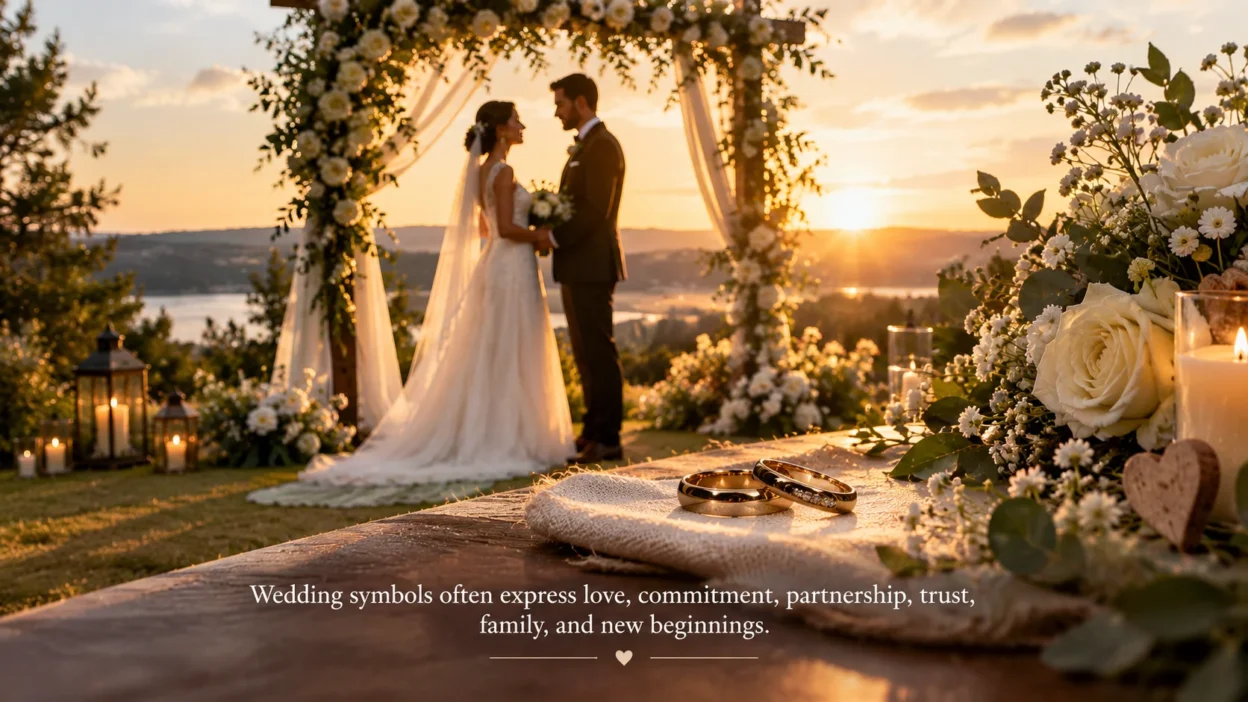
Wedding rings are among the strongest symbols of marriage in American culture. Their circular shape naturally supports ideas of continuity, connection, and an ongoing relationship.
However, the ring’s meaning comes from both its shape and its social role.
The Circle as a Symbol
A circle has no clear beginning or end. Because of this, people have often connected circular forms with continuity and completeness.
In wedding settings, that visual quality can reinforce the idea of an enduring bond.
The Meaning of Exchanging Rings
The exchange itself adds another layer of meaning. Each partner gives and receives an object publicly, turning the ring into a visible reminder of a shared promise.
Today, couples may also choose matching bands, different metals, engraved messages, or completely different ring styles.
What Do Wedding Flowers Symbolize?
Flowers bring color, fragrance, texture, and seasonal meaning into wedding ceremonies. Their symbolism can range from romance and beauty to growth, remembrance, hope, and celebration.
However, flower meanings aren’t universal rules. Their significance often depends on family traditions and personal preferences.
Popular Symbolic Associations
Roses are frequently associated with love and romance. Lilies can suggest beauty and renewal, while greenery often creates associations with life, growth, and nature.
Some couples select flowers because of personal memories rather than traditional symbolism. A flower from a childhood garden may therefore carry greater meaning than a traditionally romantic bloom.
Color Matters
Flower color can also influence interpretation. Red often suggests passion, white can suggest simplicity or purity, while soft pink may evoke tenderness.
Still, modern weddings increasingly use flowers according to personal style rather than fixed symbolic rules.
What Do Wedding Vows Symbolize?
Wedding vows are verbal expressions of promises between partners. They can communicate love, loyalty, responsibility, support, and hopes for the future.
In religious ceremonies, vows may also reflect the beliefs and commitments of that tradition.
Traditional and Personal Vows
Traditional vows connect a couple with generations of earlier ceremonies. Their repeated language can create a sense of continuity and shared heritage.
Personal vows, in contrast, allow couples to describe their relationship in their own words. Many Americans use stories, promises, humor, or personal memories to make the ceremony distinctive.
Words as Symbols
A vow isn’t simply a sentence spoken during a ceremony. Its symbolic power comes from making a private commitment visible to other people.
That public element can make the wedding feel like both a personal promise and a community event.
What Do Wedding Colors Symbolize?
Wedding colors influence the mood and visual identity of the entire celebration. Historically, certain colors carried stronger cultural meanings, but modern American couples have considerable freedom.
White
White is strongly associated with Western bridal clothing. It can suggest celebration, simplicity, purity, elegance, or a fresh beginning.
Its meaning isn’t universal, however. Other cultures have different wedding color traditions.
Red and Other Colors
Red can symbolize love, passion, vitality, celebration, or good fortune depending on cultural context. Gold may suggest prosperity, importance, or celebration.
Blue is often associated with calmness, loyalty, or tradition, while green can suggest nature, growth, and renewal.
Spiritual and Cross-Cultural Wedding Meanings
Wedding symbolism extends across many religious and cultural traditions. However, similar objects don’t always mean the same thing everywhere.
Some traditions emphasize sacred commitment, while others focus more strongly on family, community, ancestry, fertility, or social responsibility.
Religious Ceremonies
Christian, Jewish, Muslim, Hindu, Buddhist, and other traditions have developed distinct marriage customs. Some use specific prayers, clothing, objects, foods, or ceremonial actions.
The meaning of each practice depends on the particular tradition and community. It shouldn’t be treated as a universal rule for everyone who shares that background.
Global Variations
In some cultures, specific colors play major wedding roles. In others, particular foods, garments, dances, jewelry, or family rituals carry the strongest symbolic weight.
American weddings may incorporate such traditions through family heritage, multicultural relationships, or community celebrations.
Emotional and Psychological Meaning of Weddings
Wedding symbols can trigger strong emotions because they connect visible objects with important personal experiences. Rings, photographs, music, clothing, and vows can become lasting reminders of a particular moment.
Love and Belonging
Many wedding symbols reinforce feelings of connection and belonging. They can communicate, “We are building a life together.”
The ceremony also gives friends and family a shared role in celebrating the relationship.
Memory and Identity
Wedding objects often become memory markers. A dress, invitation, ring, photograph, or flower may later remind someone of the people and emotions surrounding the event.
For this reason, wedding symbolism can become part of a couple’s personal identity long after the ceremony ends.
Modern Wedding Symbolism in America
Modern weddings show how quickly symbolic meanings can adapt. Couples now combine traditional objects with new styles, technology, and personal rituals.
Tattoos and Jewelry
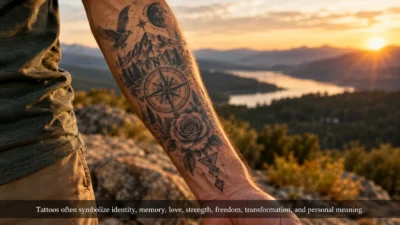
Some married couples choose symbolic tattoos instead of, or alongside, traditional jewelry. Designs may include rings, dates, initials, flowers, coordinates, or abstract shapes.
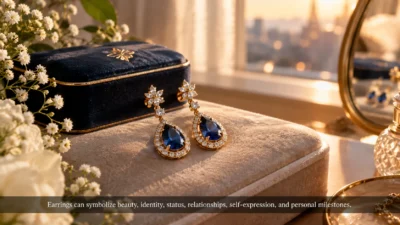
Jewelry can also become more personal through unusual stones, custom engravings, inherited pieces, or mixed metals.
Social Media and Photography
Wedding photography turns symbolic objects into highly shareable images. Rings, bouquets, dresses, invitations, and ceremony details frequently appear in digital wedding albums.
Social media also encourages couples to create visual themes that communicate their relationship and wedding style.
Home and Everyday Life
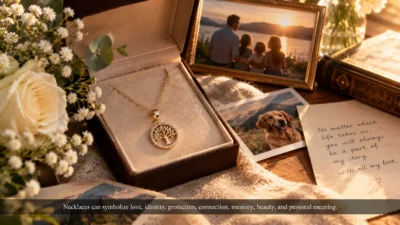
After the wedding, symbolic objects can move into everyday spaces. Framed photographs, preserved flowers, invitations, rings, and anniversary gifts can become reminders of shared history.
In this way, wedding symbolism doesn’t necessarily end when the ceremony does.
Misunderstandings and Changing Meanings
Wedding symbols sometimes become simplified through popular culture. A tradition may be presented as ancient or universal even when its history is more complicated.
Tradition Isn’t Always Ancient
Many familiar wedding practices developed gradually. Some became especially popular through nineteenth- and twentieth-century fashion, media, commerce, and social customs.
Therefore, calling every modern wedding tradition “ancient” can create a misleading picture of its history.
Symbols Can Be Personal
A couple doesn’t have to accept a traditional interpretation. Someone may choose a black wedding dress for style, a nontraditional ring for environmental reasons, or flowers simply because they love them.
The most meaningful interpretation may therefore be personal rather than historical.
Cultural Appropriation and Borrowing
Cross-cultural weddings can involve traditions borrowed from another community. This can be meaningful when approached with knowledge, respect, and appropriate participation.
However, turning sacred or culturally specific practices into decorations without understanding their significance can create concerns. Context matters, especially when a symbol has deep religious or community meaning.
Read More: Bracelet Symbolism: Meanings, History, and Modern Use
How Wedding Symbolism Has Changed Over Time
Wedding symbolism has moved from strongly prescribed traditions toward greater personal choice. Earlier societies often placed greater emphasis on family, social status, inheritance, religion, and community.
Today, American weddings may still include those influences, but couples often emphasize personal love, equality, identity, and individual expression.
From Rules to Choices
A wedding once might have followed a relatively fixed pattern within a community. Today, couples can select traditions from several sources and modify them.
This doesn’t mean traditional symbols have disappeared. Instead, many have become flexible enough to carry both inherited and personal meanings.
Old Symbols, New Meanings
The wedding ring remains recognizable, but its meaning can now include equality, partnership, and personal identity. Similarly, wedding clothing can express tradition, fashion, gender identity, heritage, or individual creativity.
The symbol stays familiar while the interpretation changes.
FAQs
What is the most common symbol of marriage?
The wedding ring is one of the most recognizable marriage symbols in the United States. Its circular shape and exchange during the ceremony often represent continuity, commitment, and partnership.
What do wedding rings symbolize spiritually?
Spiritual interpretations vary by religion and individual belief. Rings may represent an enduring bond, a sacred promise, unity, or commitment before a higher power.
Why is white associated with weddings?
White became strongly associated with Western bridal fashion during the nineteenth century. Today, it can suggest bridal identity, celebration, simplicity, elegance, or tradition.
What do wedding flowers symbolize?
Wedding flowers can symbolize love, beauty, growth, fertility, remembrance, and celebration. Their meaning can change depending on the flower, color, culture, and personal story.
Why are wedding vows important?
Vows give spoken form to the promises made during marriage ceremonies. They can express love, loyalty, responsibility, faith, and hopes for a shared future.
Do wedding symbols have the same meaning everywhere?
No. Wedding symbols vary widely across cultures, religions, families, and individuals. A color, flower, garment, or ritual may carry very different meanings in another community.
Conclusion
Wedding symbolism brings together objects, colors, words, and rituals that express love, commitment, partnership, family, and new beginnings. In the United States, these meanings continue to evolve as couples personalize long-standing traditions. From the circle of a wedding ring to the promises in a ceremony, familiar details can carry layers of history and personal meaning. Understanding Wedding Symbolism can help you see a wedding not simply as an event, but as a collection of symbols shaped by people, culture, memory, and choice.