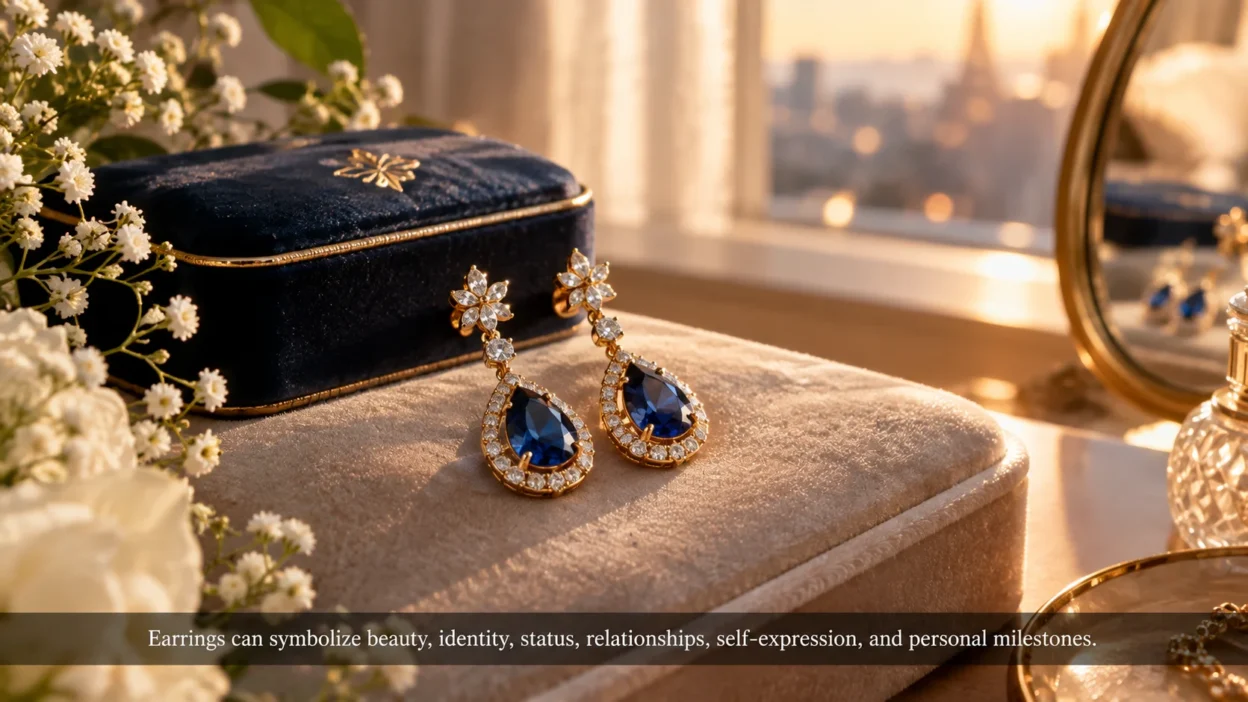
Earring symbolism goes beyond simple fashion. Earrings can represent beauty, identity, status, relationships, cultural belonging, or personal expression.
In the 2026, earrings are common across many ages and styles. Small studs may feel subtle, while hoops, gemstones, or unusual designs can make a stronger statement.
However, earrings have carried meaning for thousands of years. Ancient people used jewelry to show status, wealth, protection, community, and personal identity. Today, the meaning often depends on the wearer and setting. A gift, wedding earring, heirloom, or everyday pair can each tell a different story.
Quick Answer
Earring symbolism in the USA often represents beauty, identity, self-expression, status, and personal connection. In broader traditions, earrings have also symbolized protection, wealth, spirituality, belonging, and social position.
TL;DR
- Earrings can symbolize beauty, identity, status, and personal expression.
- Ancient earrings often showed wealth, rank, identity, or cultural belonging.
- American culture connects earrings strongly with fashion and individuality.
- Gifted earrings can represent love, friendship, memory, or commitment.
- Religious and cultural meanings vary widely across communities.
- Modern earrings often blend fashion with personal storytelling.
What Do Earrings Symbolize?
Earrings can communicate meaning through their material, shape, size, and setting. However, no single meaning applies to every earring or wearer.
For American readers, context usually matters more than a fixed symbolic code. The same hoop or gemstone may express fashion for one person and heritage for another.
Common Symbolic Meanings
Several ideas appear repeatedly in the symbolism of earrings:
• Beauty and personal style
• Identity and individuality
• Wealth and social status
• Love, friendship, or family connection
• Cultural or spiritual belonging
• Confidence and self-expression
Because earrings sit close to the face, they can also become part of someone’s visible identity. Their placement makes them especially noticeable in portraits, photographs, and social settings.
History of Earring Symbolism
Earrings have an extremely old history. Archaeological evidence shows that people wore pierced-ear ornaments in several ancient societies.
However, their meanings changed across time. Jewelry could mark wealth, social position, gender, adulthood, religious identity, or membership in a particular community.
Ancient Roots
Early earrings appeared in parts of the ancient Middle East, Mediterranean, and other regions. Gold, bronze, stone, and other materials were shaped into rings, pendants, and decorative forms.
Ancient Egyptian jewelry often communicated wealth and social position. Earrings and other ornaments could also appear within broader systems of personal adornment and status.
In ancient Greece and Rome, earrings appeared among different social groups and could display wealth or fashion. Their designs changed as trade and artistic influences spread.
Earrings Through the Centuries
During later European periods, jewelry often became connected with rank, wealth, and changing fashion. Earrings sometimes moved in and out of popularity depending on hairstyles and clothing.
Meanwhile, many cultures outside Europe maintained their own earring traditions. These traditions could carry family, regional, religious, or ceremonial meanings.
By the modern era, earrings increasingly became accessible as fashion objects. Industrial production eventually made many styles affordable to a much wider American audience.
Earring Symbolism in American Culture
In the United States, earrings are closely connected with individual style. People can choose jewelry based on fashion, heritage, memories, relationships, or simple personal preference.
American culture also emphasizes personal expression. As a result, earrings can become a small but visible way to communicate personality.
Identity and Individuality
Studs may suggest simplicity, while large hoops or colorful pieces can create a stronger visual statement. Yet these associations are flexible rather than universal.
Earrings can also become part of someone’s changing identity. A person might choose a new style after graduation, marriage, a career change, or another important milestone.
Fashion and Social Expression
American fashion has repeatedly changed how people understand earrings. Different decades popularized different shapes, materials, and sizes.
Today, people may combine multiple earrings, mix metals, or pair traditional jewelry with modern clothing. This creates a more personal approach to adornment.
Earrings as Symbols of Beauty and Femininity
Earrings have long been associated with beauty and decoration. In the United States, however, that association isn’t limited to one gender.
Historically, jewelry traditions have varied widely. Modern American fashion includes earrings designed for women, men, and people who don’t identify with traditional gender categories.
Beauty and Adornment
Because earrings frame the face, they can emphasize facial features and complement clothing. Gemstones can add color, while polished metals can create a cleaner appearance.
For many people, wearing earrings becomes part of a daily beauty routine. The symbolic message may simply be, “This is how I like to present myself.”
Confidence and Presence
Statement earrings can also symbolize confidence. Their larger shapes or brighter colors naturally attract attention.
However, wearing noticeable jewelry doesn’t always mean seeking attention. Sometimes it reflects creativity, comfort, cultural tradition, or personal enjoyment.
Earrings, Wealth, and Social Status
Jewelry has historically provided a visible way to display wealth. Earrings made from gold, diamonds, or rare gemstones could require considerable resources.
Today, expensive earrings can still signal luxury. However, American consumers also have access to inexpensive pieces that imitate precious materials.
Materials and Their Associations
| Earring Material | Meaning in the USA | Common Associations | Notes |
| Gold | Luxury and lasting value | Wealth, celebration, tradition | Common in heirloom jewelry |
| Silver | Simplicity and versatility | Modern style, elegance | Often used for everyday pieces |
| Diamonds | Rarity and commitment | Love, achievement, luxury | Common in milestone jewelry |
| Pearls | Classic beauty | Elegance, maturity, tradition | Often associated with formal occasions |
| Gemstones | Color and individuality | Birthstones, personality, memory | Meanings vary by stone |
However, material doesn’t determine meaning by itself. A simple pair inherited from a grandparent may carry more emotional value than an expensive new pair.
Earrings as Gifts and Relationship Symbols
Gifted earrings can carry strong emotional meaning. Their symbolism often comes from the relationship between the giver and recipient.
In American culture, jewelry commonly appears during birthdays, anniversaries, graduations, weddings, holidays, and other milestones.
Love and Affection
A partner may give earrings as a sign of affection or appreciation. Romantic meaning can become especially strong when the earrings contain a meaningful gemstone or design.
Still, earrings aren’t automatically romantic. Friends, parents, grandparents, siblings, and other loved ones may give them as well.
Memory and Family
Inherited earrings can become family symbols. Their importance may come from the person who wore them rather than their monetary value.
For example, a pair passed from grandmother to granddaughter can represent family history, continuity, and remembrance.
Spiritual and Cross-Cultural Earring Meanings
Earrings have appeared across many religious and cultural traditions. Their meanings differ considerably, so they shouldn’t be treated as one universal symbol.
Some traditions connect jewelry with protection, devotion, beauty, adulthood, or social belonging. Others place particular importance on materials, designs, or ceremonial settings.
Cultural Belonging
In some communities, earrings can form part of traditional dress. Their design may communicate regional identity, family heritage, or community membership.
For someone living in the United States, wearing inherited cultural jewelry can therefore become a connection to family history.
Spiritual Associations
Some people view certain jewelry as protective or spiritually meaningful. These beliefs can involve gemstones, symbols, inscriptions, or religious designs.
Such meanings are personal or tradition-specific. They shouldn’t be assumed simply because someone wears a particular earring.
Emotional and Psychological Meaning of Earrings
Jewelry can influence how people feel about their appearance. Earrings may support feelings of confidence, elegance, creativity, or connection.
However, these emotional effects differ from person to person. An earring doesn’t have a fixed psychological message.
Self-Expression
Choosing earrings can become a simple form of creative expression. Someone may choose bright colors to feel playful or simple studs for a quieter look.
Others may wear unusual shapes because they enjoy standing apart from common fashion.
Memory and Attachment
Jewelry can also hold strong memories. A particular pair may remind someone of a wedding, vacation, family member, graduation, or childhood.
Because earrings are small and easy to keep, they can become personal objects with emotional meaning far beyond their physical appearance.
What Do Different Earring Styles Symbolize?
Different shapes can create different associations. These meanings aren’t rules, but they can help explain why certain designs feel different.
Stud Earrings
Studs often create a subtle impression. They can suggest simplicity, practicality, elegance, or understated style.
Because they work in many settings, studs are common choices for everyday American fashion.
Hoop Earrings
Hoops can create a bolder visual presence. Their circular shape may suggest wholeness, continuity, connection, or movement.
However, hoop earrings also have deep cultural histories and shouldn’t be reduced to one symbolic meaning.
Drop and Dangle Earrings
Longer earrings create movement around the face. They can suggest elegance, celebration, creativity, or dramatic personal style.
They often appear at formal events, although modern fashion uses them in casual settings too.
Earrings in Weddings, Holidays, and Milestones
Special occasions often give jewelry stronger symbolic meaning. Earrings can become part of celebrations because they are wearable reminders of important moments.
In the United States, earrings may appear in wedding outfits, graduation gifts, birthday celebrations, holiday presents, and anniversary traditions.
Weddings
Bridal earrings may symbolize beauty, celebration, commitment, or family tradition. Family jewelry can also connect a wedding with previous generations.
However, there is no universal rule about what wedding earrings must look like.
Milestones
Earrings can mark personal achievements such as graduation or a first major career milestone. They can also serve as gifts during birthdays and other celebrations.
In these situations, the jewelry becomes a physical reminder of the occasion.
Earrings in Tattoos, Social Media, and Modern Identity
Earrings remain part of modern visual culture. Their symbolism now appears in photography, tattoos, digital avatars, fashion content, and social media.
Digital Self-Presentation
People often choose jewelry carefully for profile photos and important pictures. Earrings can frame the face and reinforce a chosen style.
On social platforms, jewelry may therefore become part of a broader visual identity.
Tattoo and Art Symbolism
An illustrated earring can symbolize beauty, individuality, femininity, rebellion, heritage, or personal memory. The surrounding imagery usually determines the strongest interpretation.
For example, an earring combined with flowers may create a different message from one combined with a family portrait or cultural pattern.
Misunderstandings and Controversies Around Earrings
Earring symbolism can become confusing when people treat cultural associations as universal rules. A style may have one meaning in one community and another elsewhere.
Some historical stereotypes have also attached assumptions to particular jewelry styles or people who wear them. Those assumptions shouldn’t be treated as reliable indicators of character or identity.
Cultural Context Matters
Certain earrings may have specific meanings within Indigenous, African, South Asian, Latin American, European, or other traditions.
However, cultural jewelry should be understood through the tradition itself rather than through simplified internet symbolism.
Gender and Identity
Older social expectations sometimes linked particular earrings with gender or social identity. American fashion has become more diverse, and those assumptions have shifted.
Today, an earring’s meaning depends heavily on the wearer, design, culture, and setting.
How Earring Symbolism Has Changed Over Time
The history of earrings shows a gradual movement from strong social signals toward more flexible personal expression. Yet older meanings haven’t completely disappeared.
Gold can still suggest wealth, heirlooms can still represent family, and cultural jewelry can still express heritage.
Read More: Tattoo Symbolism: Meanings, History, and Modern Uses
From Status to Self-Expression
In earlier societies, jewelry could communicate social position more directly. Modern mass production made many styles accessible to people across income groups.
As a result, earrings can now mean luxury, simplicity, rebellion, tradition, creativity, or nothing more than personal taste.
Old Meanings in Modern Life
Some older meanings remain visible in modern jewelry. Heirloom earrings can preserve family history, while religious pieces can retain devotional significance.
At the same time, many people simply choose earrings because they like their appearance.
FAQs
What does wearing earrings symbolize?
Wearing earrings can symbolize beauty, identity, confidence, culture, or self-expression. The meaning depends on the design and the person wearing them.
What do earrings symbolize in America?
In the United States, earrings commonly symbolize personal style and individuality. They can also represent wealth, relationships, cultural identity, or important life events.
What do hoop earrings symbolize?
Hoop earrings can suggest continuity, confidence, style, and self-expression. Their cultural meaning varies widely across communities and historical periods.
What do earrings symbolize as a gift?
Gifted earrings can represent affection, appreciation, friendship, family connection, or celebration. Their meaning usually comes from the relationship and occasion.
Do earrings have spiritual meaning?
They can, depending on a person’s religion, culture, or personal beliefs. Some traditions connect jewelry with protection, devotion, identity, or ceremony.
What do earrings symbolize in dreams?
Dream interpretations vary widely and aren’t universal. Some people associate earrings in dreams with identity, self-image, attention, relationships, or communication.
Conclusion
Earrings can carry meanings connected with beauty, identity, wealth, relationships, heritage, and self-expression. Their history shows how jewelry can communicate both social information and deeply personal stories. Today, earring symbolism is especially flexible in the United States. A pair may celebrate a milestone, honor family, express cultural identity, or simply complete an outfit. Ultimately, the strongest meaning often comes from the person wearing the earrings. A small piece of jewelry can become a reminder of who you are, where you come from, or what matters to you.