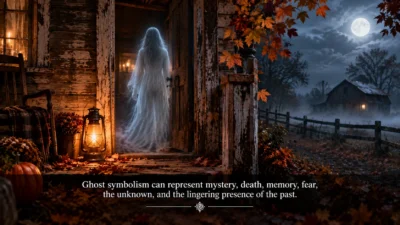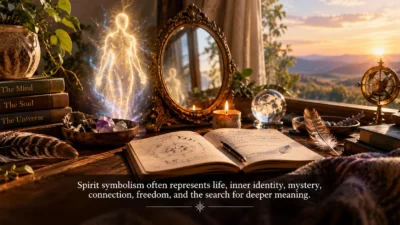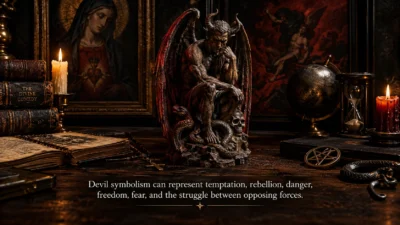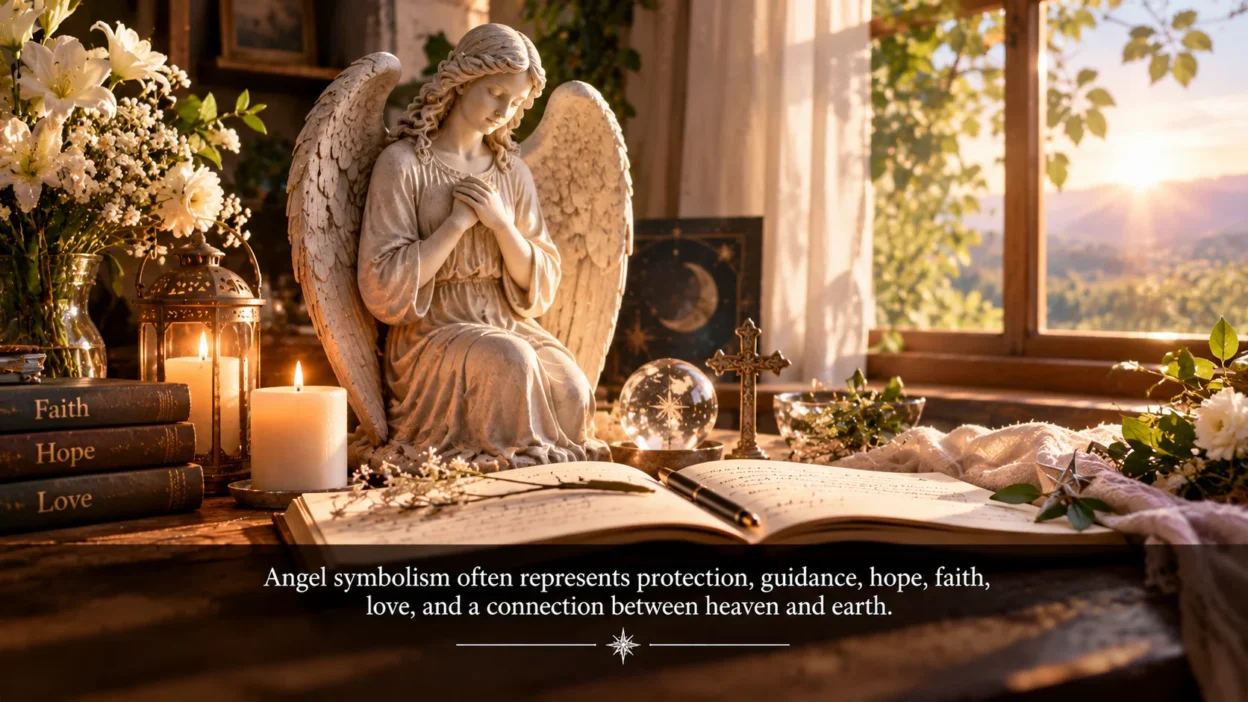
Angels have appeared in art, religion, stories, memorials, and personal objects for centuries. Angel symbolism often connects these figures with protection, guidance, hope, love, and a link between the human and spiritual worlds.
In 21st century, angels appear in many settings. You may see them on Christmas decorations, cemetery monuments, jewelry, tattoos, greeting cards, paintings, and memorial objects. Their meaning can change depending on the setting.
Today, an angel can also represent comfort without requiring a strictly religious interpretation. For many Americans, the image suggests innocence, peace, remembrance, or the feeling that someone is being watched over.
Quick Answer
Angel symbolism in the USA commonly represents protection, guidance, faith, love, hope, and remembrance. More broadly, angels can symbolize spiritual messengers, divine care, innocence, and the connection between earthly and heavenly realms.
TL;DR
- Angels commonly symbolize protection, guidance, hope, faith, and love.
- Ancient traditions helped shape later ideas about heavenly messengers.
- Christianity strongly influenced angel imagery in American culture.
- Angel wings often suggest heaven, freedom, and spiritual movement.
- Memorial angels frequently represent remembrance and comfort.
- Modern tattoos and jewelry give angel imagery personal meanings.
What Does an Angel Symbolize?
An angel is usually shown as a human-like spiritual figure with wings. Artists may portray angels as masculine, feminine, youthful, or deliberately gender-neutral.
However, wings aren’t the only important feature. Clothing, posture, facial expression, light, halos, and surrounding objects can change the meaning.
Common Angel Meanings
Angels commonly communicate ideas such as:
- Protection from danger or hardship
- Guidance during uncertain times
- Hope during difficult experiences
- Love for family members and friends
- Faith in a spiritual reality
- Remembrance of someone who died
- Innocence, purity, or peace
- A connection between heaven and Earth
The same image can therefore carry several meanings at once.
Why Wings Matter
Wings make angels visually different from ordinary human figures. They suggest movement between different realms.
Because birds naturally move through the sky, wings have also become powerful symbols of freedom and transcendence. Angel wings combine these ideas with spiritual meaning.
History of Angel Symbolism
Angel imagery developed over many centuries rather than appearing from one single tradition. Earlier cultures had supernatural beings who served as messengers, guardians, attendants, or intermediaries.
Over time, Jewish, Christian, Islamic, and other traditions developed distinct understandings of heavenly beings. Western art later shaped the familiar winged angel that many Americans recognize today.
Ancient Roots
Ancient Near Eastern cultures used images of winged supernatural beings and protective figures. Some appeared in palace art, religious spaces, and ceremonial objects.
However, these earlier figures weren’t simply identical to modern angels. Their roles and meanings varied greatly between cultures.
Development in Jewish Tradition
The Hebrew Bible contains references to messengers associated with God. The Hebrew term malakh can mean messenger or angel.
Later Jewish writings developed more detailed ideas about heavenly beings. These traditions influenced the religious environment from which Christianity emerged.
Christian Artistic Development
Christian art gradually established recognizable angelic imagery. Artists used wings, halos, flowing clothing, and radiant backgrounds to identify heavenly figures.
By the medieval period, angels had become common subjects in European religious painting, sculpture, manuscripts, and architecture.
Angel Symbolism in Christianity
Christianity has had a major influence on angel imagery in the United States. Angels appear throughout Christian scripture and tradition as messengers and servants of God.
However, Christian teachings about angels differ from popular artistic imagery. A decorative angel figure doesn’t necessarily communicate every theological idea associated with angels.
Angels as Messengers
The word “angel” is closely connected with the idea of a messenger. Biblical stories describe angels announcing important events and delivering messages.
This role helps explain why angels often symbolize communication between heaven and Earth.
Angels in Christmas Traditions
Angels became especially important in Christmas imagery. Christian traditions associate angels with the announcement of Jesus’ birth.
As a result, American Christmas decorations frequently include:
- Angel ornaments on Christmas trees
- Angel figures placed above nativity scenes
- Angel decorations in churches
- Angel illustrations on Christmas cards
- Angel costumes in holiday performances
Christmas helped move angel imagery beyond churches and into broader American seasonal culture.
What Do Angel Wings Symbolize?
Angel wings are among the most recognizable parts of angel imagery. They can suggest several ideas depending on the design.
Freedom and Transcendence
Wings naturally suggest the ability to rise above ordinary limitations. In angel art, this can become a symbol of spiritual elevation.
For Americans, wing imagery can also connect with ideas of personal freedom and emotional release.
Protection and Presence
Large wings wrapped around a person can suggest shelter. Artists sometimes use this pose to show an angel protecting a child, family, or grieving person.
However, wings don’t always mean protection. Open wings may instead suggest freedom, celebration, movement, or spiritual transformation.
Angel Symbolism in the USA
American culture has absorbed angel imagery through Christianity, European art, literature, popular entertainment, family traditions, and memorial customs.
As a result, angels now appear in both religious and secular environments. Their meaning often depends on personal experience.
American Cultural Associations
In the United States, angels commonly appear in:
| Context | Meaning in the USA | Common Associations | Notes |
| Christmas | Faith, celebration, hope | Nativity scenes, ornaments | Strongly connected with Christian tradition |
| Cemeteries | Remembrance and comfort | Graves, memorial statues | Often personal rather than strictly theological |
| Jewelry | Protection and love | Necklaces, charms, gifts | Frequently given to family members |
| Tattoos | Memory, identity, spirituality | Wings, halos, names | Meaning varies widely by person |
| Home decor | Peace and reassurance | Statues, figurines, artwork | May be religious or decorative |
Angels and American Memorial Culture
Angel statues are common in American cemeteries and memorial gardens. Their presence can express grief, remembrance, love, or hope.
For some families, an angel represents a loved one who has died. For others, it simply creates a peaceful visual reminder of spiritual comfort.
Spiritual Meaning of Angels
Angel traditions extend beyond one religious community. However, each tradition has its own teachings and should not be treated as interchangeable.
In general spiritual language, angels may represent a connection between the visible and invisible worlds.
Guidance and Protection
Many people use angel imagery when discussing spiritual guidance. An angel may represent the idea that a person isn’t completely alone during a difficult experience.
This interpretation often appears in personal jewelry, artwork, journals, and memorial objects.
Guardian Angel Traditions
The guardian angel is especially familiar in Western Christianity. The idea centers on spiritual protection or care associated with an individual.
Today, the phrase is also used more broadly. Someone who helped another person through a crisis may casually be called a “guardian angel.”
Angel Meanings in Other Cultures and Traditions
Angelic or angel-like beings appear across different religious and cultural traditions. Their exact roles, names, and meanings aren’t always the same.
Jewish and Islamic Traditions
Judaism includes traditions concerning angels as heavenly messengers and servants. Islam also has an established belief in angels, known as mala’ika, with important roles described in Islamic teachings.
These traditions should not be reduced to the decorative Western angel figure. Their theological meanings are much more specific.
Broader Cultural Patterns
Many societies have imagined supernatural beings connected with protection, messages, ancestors, or the divine.
However, similarities don’t necessarily mean the traditions share the same origin. They can reflect different cultural responses to questions about mortality, spirituality, and the unseen world.
Emotional and Psychological Meaning of Angels
Angel imagery often carries strong emotional associations. Its soft features, wings, light, and peaceful expressions can create a sense of safety.
However, the emotional response depends on personal experience. Someone raised with religious angel imagery may interpret it differently from someone who sees angels mainly as memorial symbols.
Feelings Associated With Angel Imagery
Common emotional associations include:
- Safety during frightening experiences
- Comfort after personal loss
- Hope during uncertain periods
- Peace during moments of reflection
- Love connected with family memories
- Innocence associated with childhood
- Reassurance during emotional hardship
Angels and Personal Identity
An angel tattoo may communicate spirituality for one person and remembrance for another. A necklace may represent faith, while a small wing charm may simply honor someone important.
Therefore, the same symbol can express very different personal stories.
Angel Symbolism in Tattoos
Angel tattoos remain popular because the imagery can be personalized easily. Artists can change wing shape, posture, clothing, facial expression, and surrounding elements.
Common Angel Tattoo Designs
Popular approaches include:
- Full angel figures with detailed wings
- Angel wings placed across the shoulders
- Small wing designs with names or dates
- Guardian angel figures
- Fallen angel imagery
- Angels holding flowers or crosses
- Childlike angel figures for remembrance
A tattoo can combine angel imagery with dates, initials, flowers, stars, or other personal symbols.
Fallen Angel Tattoos
Fallen angels carry a different emotional tone. They may represent struggle, rebellion, loss, regret, transformation, or conflict between ideals and experience.
The phrase also has religious associations connected with the concept of beings falling from a heavenly state. Modern tattoo culture often uses the image more broadly.
Angels in Jewelry, Fashion, and Home Decor
Angel imagery works well in small decorative forms. As a result, it appears on necklaces, bracelets, earrings, ornaments, clothing, figurines, and artwork.
Angel Jewelry
Angel jewelry is often associated with protection and remembrance. Parents, partners, friends, and family members may give angel-themed pieces as meaningful gifts.
Some designs use only wings. Others include halos, hearts, initials, birthstones, or engraved dates.
Angel Home Decor
Angel statues and figurines can create a peaceful atmosphere. They often appear alongside candles, flowers, religious artwork, or family photographs.
However, angel decor isn’t automatically religious. Many people choose it because they associate angels with kindness, peace, beauty, or comfort.
Angels in Social Media and Popular Culture
Modern media has expanded the range of angel imagery. Angels can appear in films, television, music, fantasy stories, digital artwork, memes, and social media posts.
From Sacred to Pop Culture
Modern fictional angels may act as heroes, villains, guides, warriors, or romantic characters. These portrayals often borrow traditional features while changing their roles.
Because of this, audiences may recognize the visual symbol even without sharing its original religious meaning.
Angel Aesthetics
Online culture has also produced softer “angelic” aesthetics. White clothing, glowing light, wings, clouds, pearls, and delicate imagery can suggest innocence or beauty.
This style often separates angel imagery from its original religious setting. Instead, it becomes a visual language for softness, elegance, purity, or fantasy.
Misunderstandings and Controversies Around Angel Symbols
Angel imagery is generally positive, but its interpretation isn’t universal. Context matters, especially when religious symbols are moved into entertainment or commercial settings.
Religious and Secular Meanings
A person may see an angel statue as a religious object. Another person may see exactly the same statue as a memorial decoration.
Neither interpretation automatically explains what the object means to its owner. Personal context remains important.
“Angel” as a Metaphor
Calling someone an “angel” doesn’t necessarily make a religious claim. In everyday American English, the word can simply describe someone who is kind, helpful, generous, or caring.
For example, a person who helps during a difficult moment may be called an angel because of their actions.
How Angel Symbolism Has Changed Over Time
Angel imagery has shifted from specific religious representations toward broader cultural symbolism.
In earlier religious art, angels often served identifiable theological roles. Later artwork expanded their emotional and decorative meanings.
From Religious Art to Personal Symbolism
Today, an angel can represent faith without being part of formal religious practice. It can also represent a deceased relative, personal resilience, or emotional protection.
This flexibility explains why angels remain common in modern American culture.
Older and Newer Interpretations
Some meanings remain strongly connected to religious traditions. Others have become popular cultural metaphors.
The modern angel therefore sits between several worlds: religion, family memory, art, fashion, entertainment, and personal identity.
What Do Different Angel Images Mean?
Small visual details can change the message of an angel. The pose, expression, wings, and surrounding objects all contribute to interpretation.
Common Visual Variations
A praying angel may suggest faith or devotion. An angel with open wings can suggest protection, freedom, or spiritual movement.
A grieving angel may connect with loss. Meanwhile, a smiling childlike angel may suggest innocence and tenderness.
Angel Symbolism by Appearance
- White clothing: purity, peace, innocence, or holiness
- Wings: freedom, protection, transcendence, or spiritual movement
- Halo: holiness, sacredness, or divine association
- Open arms: welcome, comfort, or protection
- Praying pose: devotion, faith, or reflection
- Clouds: heaven, spirituality, or transcendence
- Light: hope, divine presence, or revelation
- Flowers: beauty, remembrance, love, or mortality
These meanings aren’t fixed rules. Artists and individuals can intentionally give familiar features new meanings.
Read More: Brain Symbolism: Meaning, History, and Modern Uses
FAQs
What does an angel symbolize spiritually?
An angel can symbolize spiritual guidance, protection, hope, faith, or communication between the human and divine worlds. The exact meaning depends on the religious or personal tradition involved.
What does an angel symbolize in America?
In the United States, angels commonly represent protection, love, remembrance, faith, and hope. They also appear widely in Christmas traditions, memorials, jewelry, tattoos, and home decor.
What do angel wings symbolize?
Angel wings commonly represent freedom, protection, spiritual elevation, and movement between earthly and heavenly realms. Their meaning can change with the pose and surrounding imagery.
What does a guardian angel symbolize?
A guardian angel traditionally represents spiritual care and protection associated with an individual. In everyday American speech, the phrase can also describe a person who provides extraordinary help.
What does an angel tattoo symbolize?
An angel tattoo may represent faith, protection, remembrance, love, personal transformation, or spiritual identity. Many people personalize the design with names, dates, flowers, or other symbols.
What does a fallen angel symbolize?
A fallen angel can represent struggle, rebellion, loss, regret, transformation, or the tension between ideals and reality. Modern interpretations often extend beyond its original religious context.
Conclusion
Angel imagery has carried ideas of protection, guidance, hope, love, and spiritual connection across centuries. Its familiar wings and peaceful appearance make it especially powerful in art and personal symbolism. Today, angel symbolism in the United States can be religious, emotional, memorial, decorative, or deeply personal. A small necklace, cemetery statue, Christmas ornament, or tattoo may tell a very different story. Ultimately, the meaning comes from both tradition and context. Looking at the history behind an angel can make its familiar image feel more meaningful, whether you encounter one in art, culture, or your own life.