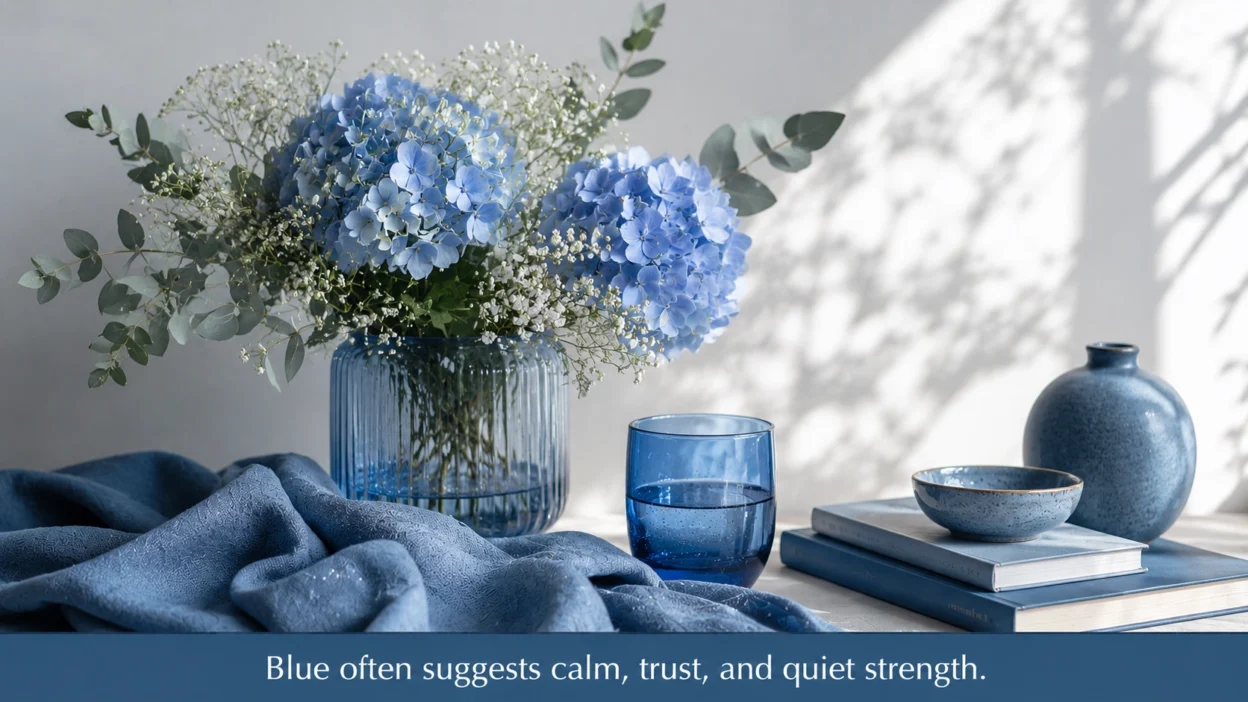
Blue shows up everywhere. You see it in the sky, the ocean, denim, uniforms, and logos. Because of that, it feels familiar before it feels symbolic.
Blue Symbolism matters because the color does more than look nice. In the United States, people often connect blue with trust, calm, loyalty, and stability. However, it can also suggest sadness, distance, or quiet seriousness.
That mix makes blue one of the most flexible colors in modern life. It can feel peaceful in a bedroom, formal in a suit, patriotic on a flag, or reflective in art. It can also feel cold when someone wants emotional space.
Quick Answer
Blue symbolism in the USA often points to trust, calm, loyalty, and stability. It can also suggest sadness, quiet, or restraint. In older traditions, blue could mean protection, heaven, truth, and the sacred.
TL;DR
• Blue often suggests trust, calm, and reliability in America.
• It can also signal sadness, distance, or reflection.
• Ancient cultures valued blue as rare and precious.
• American uniforms, flags, and brands helped normalize blue.
• Modern use includes tattoos, decor, fashion, and identity.
Overview of Blue Symbolism
Blue is a cool color with a wide range of meanings. It can feel soft or strong, peaceful or formal, depending on the setting.
What Blue Looks Like
Blue appears in many forms. It can be pale like ice, deep like navy, bright like cobalt, or faded like denim.
• Light blue often feels airy and gentle.
• Dark blue often feels serious and dependable.
• Bright blue often feels clear, energetic, and open.
• Muted blue often feels calm, quiet, and mature.
Core Meanings at a Glance
Most people in the USA connect blue with a few main ideas. These meanings often overlap rather than cancel each other out.
Blue can suggest trust, loyalty, and peace. It can also suggest sadness, honesty, and emotional distance. Because of that, blue often carries both comfort and restraint.
Historical Roots of Blue
Blue did not always feel ordinary. For much of history, it was rare, costly, and tied to status or sacred meaning.
Ancient Pigments and Early Meaning
Ancient people used blue in special ways. Egyptian artisans prized lapis lazuli, which came from far away and looked almost magical.
Later, blue pigments became linked with power, protection, and divine favor. In some ancient settings, blue stood for the heavens or for life-giving water. However, its meaning changed from place to place.
From Sacred Dye to Everyday Color
In medieval Europe, blue gained new importance. Religious art often used blue for holy figures, especially in Christian images of Mary.
Later, cheaper dyes and industrial methods made blue easier to use. That shift changed blue from rare and noble to familiar and everyday. Today, people use it so often that they may forget how special it once was.
Blue in the USA
In the United States, blue has a strong public life. It appears in institutions, fashion, sports, and national identity.
National and Cultural Associations
Blue often signals stability in American culture. It shows up in police uniforms, military clothing, business branding, and school colors.
It also appears in the national flag, where blue supports ideas like unity, endurance, and seriousness. Because of that, many Americans read blue as dependable before they read it as decorative.
| Context | Meaning in the USA | Common Associations | Notes |
| Flags and symbols | Loyalty and national identity | Patriotism, service, order | Often paired with red and white |
| Uniforms | Authority and trust | Police, military, workwear | Can feel respectful or formal |
| Business branding | Reliability and calm | Banks, tech, health care | Common in logos and websites |
| Sports teams | Team spirit and strength | Colleges, pro teams, local pride | Often chosen for confidence |
| Home decor | Peace and freshness | Bedrooms, bathrooms, coastal style | Popular in soft and navy tones |
Everyday American Settings
Blue appears in ordinary places too. Denim jeans, blue notebooks, and blue walls all carry quiet meaning.
• Blue often feels safe in public spaces.
• Blue can make a brand seem honest.
• Blue decor often makes rooms feel larger.
• Blue clothing can feel neat without being loud.
What Blue Means Emotionally
Blue speaks to the emotions in a subtle way. It rarely shouts. Instead, it settles into the background and changes the mood.
Calm, Trust, and Control
Many people feel calmer around blue. That is one reason hospitals, offices, and brands often use it.
Blue can also suggest self-control. It may signal that a person values order, patience, and steadiness. In that sense, blue often feels reassuring.
Sadness, Distance, and Quiet Reflection
Blue also carries a sad side. Phrases like “feeling blue” show how deeply sadness has linked itself to the color.
However, that sadness is not always negative. Sometimes blue means thoughtfulness, rest, or emotional depth. It can describe the feeling of pausing before speaking.
Psychological Associations
Blue affects how people read spaces and people. It can shape first impressions before a single word is spoken.
Why People Respond to Blue
Blue is common in nature, so many people find it familiar. The sky and water make it feel open and deep at the same time.
That natural link helps explain why blue often feels safe. It can lower tension, create distance from noise, and encourage focus.
Identity and Personality Signals
People often use blue to say something about themselves. They may want to seem calm, professional, mature, or dependable.
Some people choose blue because it feels private and composed. Others choose it because it feels classic and clean. Either way, blue often suggests a person who values balance.
Spiritual and Cross-Cultural Meanings
Blue has spiritual meaning in many traditions. These meanings are not identical, but they often share themes of truth, protection, and the sky.
Religious Uses and Sacred Meaning
In Christianity, blue often appears in sacred art and church imagery. It can suggest heaven, purity, devotion, and grace.
In other traditions, blue may connect to protection or spiritual power. For example, many cultures use blue objects or stones to ward off harm. Because of that, blue can feel both gentle and guarded.
Meanings Across Cultures
Blue does not mean the same thing everywhere. In some places, it carries good fortune or peace. In others, it may suggest mourning, spirituality, or rank.
• In some cultures, blue protects against envy or harm.
• In others, blue represents wisdom and depth.
• Some traditions connect blue with sky deities or sacred water.
• Many modern cultures use blue for peace and truth.
Blue in Nature and Everyday Life
Blue feels powerful because people see it around them all the time. Nature gives the color much of its emotional force.
Sky and Water Imagery
The sky and sea shape how people understand blue. One looks above, the other stretches outward, and both suggest space.
Because of that, blue can feel limitless. It can suggest freedom, distance, and calm. It can also suggest something that cannot be fully touched.
Why That Matters to Readers
When a color appears in nature, it often feels more trustworthy. Blue can seem honest because it feels like part of the world.
That natural connection helps explain its popularity. People bring blue into homes, clothes, and art because it already feels familiar.
Blue in Fashion and Identity
Blue is one of the easiest colors to wear. It works in casual clothing, formal wear, and almost every season.
Clothing, Branding, and Personal Style
Blue jeans are a classic American example. They feel practical, relaxed, and timeless.
Brands also use blue to appear steady and professional. A blue logo often feels less flashy than red or orange. It can make a company seem more dependable.
Social Signals and First Impressions
People often notice blue without thinking hard about it. A navy blazer can suggest authority. A light blue shirt can suggest softness and ease.
Blue can also feel gender-neutral in modern style. While some old habits still shape color choices, blue now belongs to many identities and tastes.
Blue Tattoos Meaning
Blue tattoos often carry personal meaning. The color can make a design feel calm, deep, or spiritually charged.
Common Designs
Blue works well in ocean scenes, birds, flowers, stars, and abstract patterns. It also fits symbols tied to memory, healing, or faith.
A blue tattoo may suggest peace, truth, or emotional honesty. Sometimes it simply reflects someone’s favorite color, but even then it can still shape identity.
When Blue Becomes Personal
People often choose blue for a reason tied to life experience. It may remind them of water, sky, a hometown, or a loved one.
It can also mark survival. For some people, blue feels like a quiet promise to keep going. That is why the color often carries private meaning in tattoo culture.
Blue in Home Decor and Holidays
Blue is one of the most common colors in interior design. It brings a room down to a calmer emotional level.
Calm Spaces
Bedrooms, bathrooms, and reading spaces often use blue. Soft blue can make a room feel cooler and more restful.
Darker blue can make a space feel formal and grounded. However, too much dark blue can feel heavy if the room lacks light. Balance matters.
Seasonal Use
Blue appears often in winter decor, coastal themes, and patriotic holidays. It can feel clean and fresh in spring, too.
Because blue is so flexible, it works across seasons. It can feel icy in December, breezy in summer, and polished all year.
Blue in Politics and Institutions
Blue also has a public, civic side. In the USA, it shows up in systems that depend on trust and order.
Trust, Authority, and Uniforms
Blue uniforms often suggest service and discipline. That is one reason many institutions choose blue.
The color can make rules feel steadier and systems feel more organized. It may also help people feel that someone in charge is calm, not chaotic.
Civilian Life and Public Meaning
In civic life, blue often stands for safety and reliability. It appears in schools, banks, hospitals, and local government branding.
That public use can shape private feelings. People may trust blue because they see it every day in serious places.
Misunderstandings and Negative Uses
Blue is not only gentle and peaceful. Like every color, it can be used in ways that shift or sharpen its meaning.
Sadness vs. Strength
Some people assume blue only means sadness. That is too narrow.
Blue can also mean honesty, focus, loyalty, and maturity. A sad feeling is only one part of its meaning. In many cases, blue shows emotional depth rather than weakness.
When Blue Carries Warning
In some settings, blue can feel cold, distant, or unwelcoming. A too-cold blue room may feel sterile.
Blue can also become associated with political identity or group loyalty. That is not wrong, but it can narrow the color’s meaning. Context always matters more than the color alone.
How Blue’s Meaning Has Changed
Blue has moved from rare luxury to everyday language. That change shaped the way people feel about it today.
From Rare Pigment to Everyday Color
In older times, blue was hard to make and expensive to use. That gave it prestige and sacred weight.
Today, blue is easy to find. Because it is so common, people often read it as trustworthy and familiar instead of precious and elite.
Read More: Black Symbolism: Meaning, History, and U.S. Use
Modern Shifts in America
Modern American culture widened blue’s meaning again. It now feels professional, patriotic, emotional, and stylish all at once.
Social media, fashion, and design keep adding new layers. Blue can now mean calm minimalism, digital trust, or quiet personal identity.
FAQs
What does blue symbolize?
Blue often symbolizes trust, calm, loyalty, and stability. It can also suggest sadness, quiet, or reflection. In the USA, people often see it as dependable and clean.
Is blue a spiritual color?
Yes, many traditions treat blue as spiritual. It can suggest heaven, protection, truth, or divine presence. The exact meaning depends on the culture or faith.
Why does blue feel calming?
Blue feels calming because people see it in the sky and water. Those natural settings are open, steady, and easy on the eyes. That makes blue feel restful in homes and art.
What does blue mean in tattoos?
Blue tattoos often suggest peace, honesty, depth, or healing. Some people choose blue for personal memories or spiritual meaning. Others simply love the color’s calm look.
Does blue always mean sadness?
No, blue does not always mean sadness. In the USA, it often means trust, strength, and peace. Sadness is only one part of its larger meaning.
Conclusion
Blue carries a rare kind of balance. It can feel calm without being weak, and serious without being cold. Across history, people have linked blue with sky, water, faith, and trust. In modern American life, Blue Symbolism still carries those ideas while also speaking to identity, style, and emotion. That is why blue remains so useful and so loved. It can hold many meanings at once, and that makes it feel deeply human.