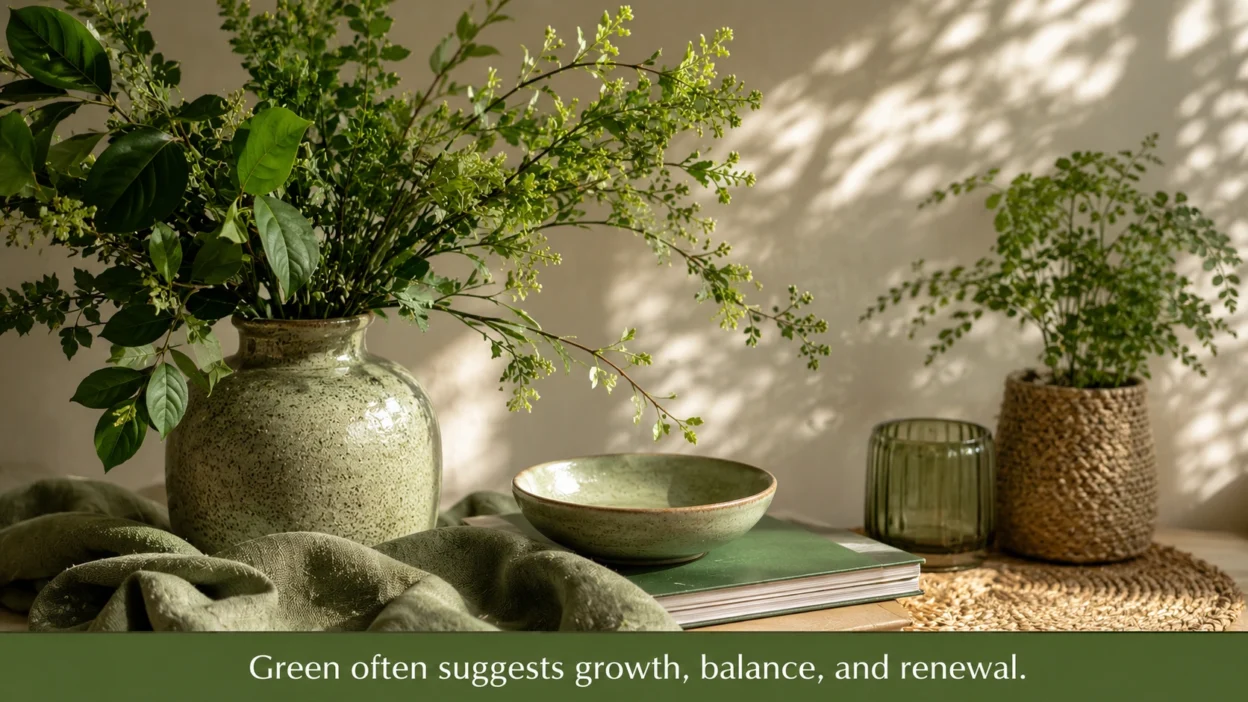
Green is one of the most familiar colors in daily life. People see it in trees, grass, traffic lights, clothing, sports, and holiday decor. Because it appears so often in nature, it can feel calm, fresh, and alive.
That is a big reason Green Symbolism matters in the United States. It can suggest spring, hope, money, safety, envy, or environmental care, depending on the setting. It also changes meaning across history, religion, and culture.
Today, green can feel peaceful one moment and powerful the next. It can point to growth, healing, good luck, or a strong personal identity. At the same time, it can carry older meanings that still shape how people read it now.
Quick Answer
Green symbolizes growth, renewal, luck, and balance in the United States. It can also suggest wealth, nature, safety, envy, and environmental awareness, depending on the context.
TL;DR
• Green often stands for growth and new life.
• In the U.S., it also suggests money and spring.
• Nature gives green a calm, healing feeling.
• Some older meanings include envy and inexperience.
• People use green in holidays, decor, fashion, and tattoos.
• Its meaning changes a lot with context.
What Green Looks Like in Daily Life
Green is not one single shade. It includes soft sage, bright lime, deep forest green, olive, mint, emerald, and neon green. Each shade can create a different feeling, even when the core color stays the same.
For a U.S. reader, this matters because people rarely react to color in the abstract. They react to how it appears on a leaf, a uniform, a logo, a gemstone, or a holiday decoration. That context shapes the message.
Common Shades and Feelings
• Soft green often feels calm and restorative.
• Dark green can feel rich, steady, and traditional.
• Bright green may feel lively, young, or bold.
• Olive green often suggests utility, earthiness, or military style.
Green also appears in very different places at once. It can be on a kitchen wall, a sports jersey, a traffic signal, or a cash app icon. Because of that, its meaning is flexible but never random.
The Core Meanings People See in Green
Green carries several main ideas in modern American life. The most common ones are growth, nature, and balance. However, people also connect it with money, luck, and safety.
That mix makes green especially useful in design and communication. It can soothe, signal, or persuade without needing words. In the U.S., that visual power makes the color easy to use and hard to ignore.
Main Meanings at a Glance
• Growth and renewal
• Nature and health
• Money and prosperity
• Safety and permission
• Luck and good fortune
Green works so well because it connects both the natural world and daily life. It feels familiar, but it can still carry energy. That balance helps explain its lasting appeal.
Ancient Roots and Early Uses
Green symbolism goes back far beyond modern America. Long before modern color systems, people linked green with plants, crops, rain, and life returning after winter. In farming cultures, that connection made green deeply hopeful.
In ancient Egypt, green was tied to growth, rebirth, and the afterlife. In parts of the ancient world, it also connected to fertility and the power of nature. Later, medieval and early Christian traditions gave green a wider range of meanings, including hope and earthly life.
Early Cultural Roots
• Agriculture made green a sign of survival.
• Spring made green a sign of return.
• Sacred art often used green for renewal.
• Trade and dyes made green harder to produce.
For a long time, green dye was not easy to make or keep bright. That made green fabrics and objects feel special in some places. As dye technology improved, the color became more common and its meaning spread into everyday life.
Green in American Culture
In the United States, green has many strong associations. It appears in environmental messages, bank branding, school colors, sports teams, and holiday traditions. Because of that, Americans often read green as practical as well as symbolic.
It also carries a distinctly American mix of old and new meanings. Some people connect it with the natural landscape. Others connect it with money, especially through the color of U.S. dollar bills.
U.S. Associations People Notice Most
• Spring, new growth, and fresh starts
• Dollars, wealth, and financial success
• Traffic lights, go-ahead signals, and permission
• Environmental care and clean living
• Holiday traditions, especially around St. Patrick’s Day
Green can feel optimistic in the U.S. because it often signals forward motion. A green light means move ahead. A green field means space, life, and possibility. A green logo can imply health, freshness, or eco-friendly values.
Green in American Public Life
| Context | Meaning in the USA | Common Associations | Notes |
| Dollar bills | Money and value | Wealth, earnings, success | One of the strongest U.S. links |
| Traffic lights | Permission to go | Safety, action, movement | A practical, everyday signal |
| Nature and parks | Renewal and calm | Growth, peace, health | Often linked to outdoor life |
| St. Patrick’s Day | Irish pride and celebration | Luck, parade culture, green clothing | Highly visible in March |
| Environmental campaigns | Care for the earth | Sustainability, clean choices | Common in modern messaging |
That table shows how green can shift without changing color. In the U.S., the same shade may mean money in one setting and nature in another. Context always matters.
Green in Religion and Other Cultures
Green has important meanings in many traditions outside the United States. In Islam, green is widely respected and often linked with paradise, life, and blessing. In many cultures, it also connects to fertility, growth, and sacred nature.
These meanings are worth noting because they show how universal the color can be. Still, the details vary from place to place. A respectful approach is best, since no single meaning covers every culture.
Cross-Cultural Meanings
• Sacred life and divine blessing
• Fertility and abundance
• Spring and seasonal renewal
• Natural balance and healing
In Europe, green has also had mixed meanings over time. It could suggest love, luck, or the wild. In some folk traditions, it was tied to fairies, forests, and mystery. That older layer still shows up in modern stories and art.
Green and the Mind
Green often feels restful because the human eye sees it easily in nature. Trees, grass, and leaves make green feel familiar and safe. That is one reason many people describe it as soothing.
Psychologically, green can suggest stability and restoration. However, it can also feel dull or immature if used poorly. The same color that calms one person may feel too plain to another.
Emotional Associations
• Calm and balance
• Hope and recovery
• Safety and comfort
• Youth and freshness
• Envy or comparison, in some cases
Green can also signal emotional change. A person drawn to green may want peace, growth, or a more grounded life. In contrast, a room full of harsh green can feel cold or unnatural. Tone matters as much as hue.
Green in Fashion, Decor, and Branding
Green shows up often in style and design because it can feel clean, rich, or modern. Soft greens are common in home decor, while darker greens appear in formal wear, luxury packaging, and classic interiors. Bright greens often aim for attention and energy.
In branding, green often suggests health, freshness, or environmental care. American companies use it to imply trust, natural ingredients, or a lighter footprint. It can also feel friendly without becoming too loud.
Why People Use Green
• It works well with wood, white, and gold.
• It can feel natural without looking plain.
• It suggests freshness in food and beauty spaces.
• It can look luxurious in deep, dark shades.
In homes, green often appears in plants, pillows, paint, and kitchen accents. In fashion, it may signal confidence, seasonal style, or a love of earthy tones. Because it sits between cool and warm moods, it is easy to adapt.
Green Tattoos, Social Media, and Identity
Green tattoos and green-themed posts often point to growth, healing, or a fresh start. Some people choose leaves, vines, emerald tones, or forest imagery to show a bond with nature. Others use green to express luck, rebirth, or personal change.
On social media, green can support a mood rather than a direct message. A green background, outfit, or filter may suggest calm, wellness, eco-consciousness, or a seasonal theme. It can also help build a brand identity that feels natural and approachable.
Modern Uses People Recognize
• Leaf tattoos for renewal and resilience
• Green nails or clothing for seasonal style
• Plant content for calm and wellness
• Green-themed visuals for eco-friendly messages
Green also appears in identity choices. Some people use it to show environmental values or cultural pride. Others simply like how it feels: fresh, clean, and quietly confident.
Green in Holidays and Seasonal Traditions
Green is strongly tied to spring and certain holidays in the United States. It appears in Easter decor, garden season imagery, and especially St. Patrick’s Day. Because of that, many Americans link green with joy, luck, and celebration.
That holiday connection also keeps green visually active all year. Even people who do not think about color symbolism often notice green in March. It becomes a sign of festivity before it returns to nature and daily life.
Seasonal Meanings
• March celebrations and parade culture
• Fresh plants and spring gardens
• Renewal after winter
• Bright, cheerful home decor
Green also feels right in warm-weather settings. It matches lawns, trees, parks, and outdoor gatherings. That makes it a natural part of American seasonal life, not just a decorative choice.
When Green Means Jealousy, Inexperience, or Danger
Green does not always feel positive. In English, “green with envy” is a common phrase. It links green with jealousy, comparison, or emotional tension.
The color can also suggest inexperience. A “green” worker may be new, untested, or still learning. In some technical settings, green can even be a warning color, though that depends on the system being used.
Negative or Mixed Meanings
• Envy and jealousy in older expressions
• Inexperience or being new to something
• Harsh or artificial looks when overused
• Confusion when the shade carries two messages
These meanings do not erase the positive ones. Instead, they show how flexible the color is. Green can calm, but it can also expose tension or uncertainty.
Read More: Blue Symbolism: Meaning, History, and Use
How Green Meaning Has Changed Over Time
Green has shifted from a nature-centered color to a many-layered modern symbol. In earlier life, it was mainly tied to plants, seasons, and fertility. Today, it also carries money, safety, branding, and environmental ideas.
That change reflects how American life changed. As cities grew, green became less about farms alone and more about signals, design, and identity. However, the natural meaning never disappeared.
Major Shifts
• From harvest and spring to many modern uses
• From rare dye to common daily color
• From simple nature symbol to identity marker
• From regional meaning to shared American code
The biggest change is probably how often green now works as a social signal. A green light, green label, or green outfit can all mean different things. Yet all of them still connect back to life, movement, and renewal.
FAQs
What does green symbolize most often?
Green most often symbolizes growth, nature, and renewal. In the United States, it also strongly suggests money, luck, and safe movement.
Why is green linked to money in America?
U.S. paper money has long used green ink and green design features. Over time, that look made green a clear symbol of wealth and financial success.
Is green a lucky color?
Yes, in many American settings green is seen as lucky. That idea is especially strong around St. Patrick’s Day and in some folk traditions.
Does green always mean something positive?
No, green can also suggest envy, inexperience, or something artificial. The exact meaning depends on the shade, setting, and cultural context.
Why do people use green in wellness and eco branding?
Green feels fresh, natural, and balanced. Brands use it to suggest health, earth-friendly values, and a calmer way of living.
What does green mean spiritually?
Spiritually, green often stands for life, healing, harmony, and renewal. In some traditions, it can also suggest sacred growth and blessing.
Conclusion
Green symbolism remains powerful because it speaks to both nature and modern life. It can mean growth, luck, wealth, healing, or balance, and it often changes with the setting. In the United States, people see it every day in money, traffic lights, spring decor, and environmental messages. That is why Green Symbolism still feels so familiar and useful. It connects old ideas of life and renewal with today’s visual culture. When people notice green, they are often noticing hope, movement, or a chance to begin again.