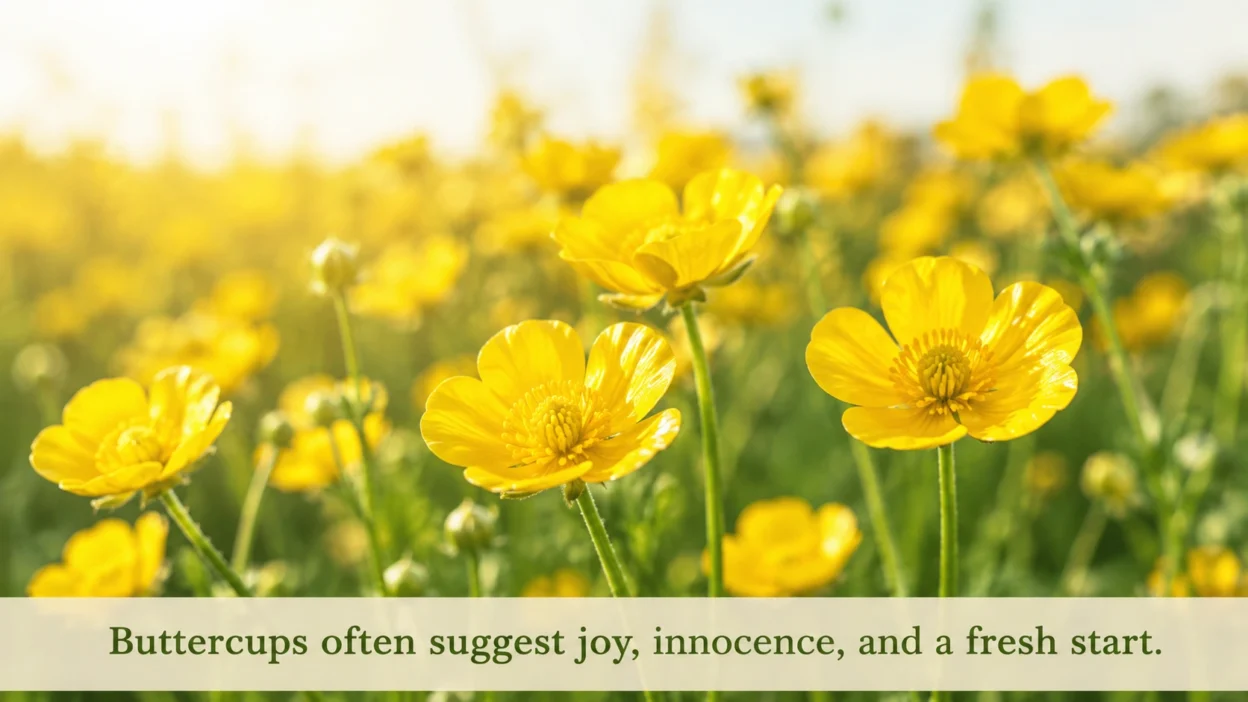
Buttercups are small flowers, but they carry a strong feeling. Buttercup symbolism often points to joy, warmth, youth, and simple beauty. In the United States, people usually connect the flower with spring, childhood, and sunny days.
That feeling comes from the flower itself. Buttercups are usually bright yellow, with a smooth, rounded shape and a glossy look. They grow low in fields, lawns, and roadside grass, so they feel familiar and easy to miss.
However, once people notice them, buttercups tend to stand out. They look cheerful without trying too hard. That mix of modesty and brightness is a big part of why the flower still matters today.
Quick Answer
Buttercup symbolism in the USA usually means cheer, warmth, innocence, and simple happiness. It can also suggest youth, tenderness, and a fresh start. In older folk traditions, it sometimes carried ideas of luck, play, and gentle wonder.
TL;DR
• Buttercups commonly symbolize joy and sunshine.
• In the USA, they feel tied to spring and childhood.
• Their bright yellow color suggests warmth and hope.
• Folk traditions often link them with luck and playfulness.
• Modern uses include tattoos, decor, and nature-themed art.
• Meanings can shift from innocent to nostalgic or romantic.
What Does a Buttercup Look Like?
Buttercups are easy to recognize once you know what to look for. Their small, bright blooms usually have five petals and a glossy yellow surface. Because they grow close to the ground, they often feel humble rather than showy.
Color, Shape, and Setting
The color matters a lot. Yellow usually brings to mind sunlight, energy, and optimism. Also, the flower’s simple shape makes it feel open and friendly instead of formal.
Buttercups often appear in fields, meadows, lawns, and roadside patches. That natural setting adds to their meaning, because they feel part of ordinary life rather than something rare or distant.
Why the Flower Feels So Memorable
People often remember buttercups because they are small but vivid. They do not need a big stem or a large bloom to get attention. Instead, they create impact through brightness and quantity.
• Their size makes them feel delicate and youthful.
• Their color suggests light, hope, and warmth.
• Their wild setting gives them a natural, carefree mood.
• Their glossy petals make them look almost painted.
Historical Background of Buttercup Symbolism
Buttercups have long been part of rural life, so their symbolism grew from everyday contact. People saw them in fields, along paths, and near homes. As a result, they became linked with simple living, natural beauty, and the changing seasons.
From Wild Flower to Folk Symbol
Long before modern flower language, people used plants to read the world around them. Bright spring flowers often stood for renewal because they appeared after winter. Buttercups fit that idea very well.
In many older folk traditions, flowers were not just decorations. They were signs of season, weather, and mood. Buttercups, with their sunny color, became a natural fit for joy and new life.
Older Beliefs and Childhood Play
In some traditions, buttercups also became part of children’s games. The common “do you like butter?” trick, where a flower is held under the chin, turned the flower into a playful symbol. Because of that, buttercups gained a stronger link with innocence and fun.
That playful use matters. It shows how symbolism can come from shared habits, not just formal tradition. Over time, the flower became tied to memory as much as meaning.
Core Meanings at a Glance
Today, buttercups usually point to a small set of ideas that feel easy to understand. They are not complicated symbols. Instead, they work through mood, color, and memory.
The Main Ideas People See
Buttercups often suggest joy, youth, and warmth. However, they can also point to tenderness, hope, and care. In some settings, they carry a soft feeling of nostalgia.
• Joy that feels light and natural
• Youth and innocent charm
• Hope, brightness, and new beginnings
• Tenderness, care, and gentle affection
Why These Meanings Stick
The meanings stick because they match the flower’s appearance. A bright yellow bloom already feels cheerful. Also, the flower’s place in childhood memory makes the symbolism easy to keep.
In other words, buttercups do not need a grand story to matter. Their symbolism grows from small, repeated experiences. That is part of their charm.
Buttercup Symbolism in the USA
In the United States, buttercups often feel tied to springtime, outdoor play, and a simple love of nature. They are not heavy or formal symbols. Instead, they usually suggest comfort, brightness, and an easy kind of happiness.
Everyday American Associations
Many Americans connect buttercups with childhood because of folk games and backyard memories. Others see them as a sign that the weather is warming and the season is changing. Also, the flower often appears in casual spring imagery, especially in family settings and nature-themed design.
Buttercups can also feel rural or nostalgic. Because they grow in open spaces, they may remind people of farms, fields, and older ways of life. That makes them especially strong in places where nature still shapes daily routines.
Meanings in American Culture
| Context | Meaning in the USA | Common Associations | Notes |
| Spring fields | Renewal and fresh energy | Green grass, sunlight, new growth | Often linked with seasonal change |
| Childhood games | Innocence and play | “Do you like butter?” tradition, laughter | Strong nostalgic value |
| Gifts and cards | Cheer and kindness | Encouragement, sweetness, warmth | Often used in casual settings |
| Home decor | Lightness and friendliness | Yellow accents, rustic style, cottage feel | Popular in soft seasonal designs |
| Nature imagery | Simple beauty | Meadows, wildflowers, calm outdoor scenes | Feels relaxed and familiar |
Why Americans Like This Symbol
People in the USA often like symbols that feel honest and easy to read. Buttercups do that well. They are bright without being loud, and they feel personal without being dramatic.
However, they can also feel deeply local. A flower that grows in ordinary grass can still carry emotional weight. That mix of common and meaningful makes buttercups appealing in American life.
Cross-Cultural and Spiritual Meanings
Buttercups are not usually heavy religious symbols. Still, in some cultures and spiritual settings, they can suggest light, renewal, and the gift of ordinary beauty. Because the flower is bright and seasonal, it often fits broader ideas about hope.
Gentle Spiritual Themes
In spiritual writing, yellow flowers often point to joy, sunlight, and clarity. Buttercups fit that pattern well. Also, because they appear in spring, they can suggest rebirth after a hard season.
Some people use flowers as reminders to stay open and present. Buttercups can support that idea because they feel simple and unforced. They remind people that small beauty can still matter.
Respectful Cultural Differences
Different places may read the flower in different ways. In one setting, it may be a childhood symbol. In another, it may simply be a wildflower with no special meaning.
That flexibility is important. Buttercup symbolism is not fixed everywhere, and that is normal. Meanings often depend on local tradition, memory, and use.
Emotional and Psychological Associations
Buttercups often trigger warm feelings fast. Their color, size, and setting make them feel safe, soft, and familiar. Because of that, they can carry a strong emotional pull even when the flower itself is simple.
What the Flower Signals Emotionally
People often read buttercups as a sign of comfort. They may suggest calm joy instead of excitement. Also, they can bring back memories of family, open spaces, and easier times.
Buttercups can also feel hopeful. Their bright color stands out in grass, so they suggest light showing up in plain places. That can make them useful as a symbol during stressful or uncertain times.
How They Shape Mood
• They soften a space without feeling formal.
• They create a warm, friendly atmosphere.
• They support feelings of hope and renewal.
• They often bring back childhood memories.
In psychology, small bright natural images often reduce heaviness. Buttercups are a good example of that. They feel like a quiet reminder that joy does not need to be large.
Buttercups in Love, Family, and Friendship
Buttercups are not the most dramatic flower of romance. Instead, they usually stand for tender care, sweet feelings, and uncomplicated affection. That makes them useful in close relationships where softness matters more than passion.
Soft Romance and Kindness
In love, buttercups can suggest a fresh, gentle start. They may represent affection that feels honest and light. Also, they can work well for people who want a symbol of warmth rather than intensity.
In friendship, they often mean encouragement and good wishes. A buttercup can feel like a bright little reminder that someone is thinking of you. That kind of meaning fits well in greeting cards and casual gifts.
Family and Memory
Buttercups can also point to family memory. Many people first meet them as children. Because of that, the flower can feel tied to parents, grandparents, yards, and seasonal routines.
That family link gives the flower staying power. It is not only about beauty. It is also about the memories attached to that beauty.
Colors, Seasons, and the Natural Setting
Buttercups are most often understood through their color and season. Yellow is the clearest part of the symbol, but the time of year matters too. Together, they create a strong emotional message.
Why Yellow Matters
Yellow usually suggests sunlight, energy, happiness, and welcome. Buttercups use that meaning very naturally. Their color feels bright, but not harsh.
Because the flower is often small, the yellow seems even stronger. It looks like a little piece of light in the grass. That image is one reason the flower stays memorable.
Why Spring Matters
Buttercups are closely linked with spring and early summer. Those seasons suggest growth, life, and movement after winter. Also, spring flowers often carry hope because they arrive when the landscape is waking up.
This seasonal meaning helps the flower feel alive. It is not frozen in one idea. Instead, it reflects change and return.
Modern Uses: Tattoos, Decor, and Social Media
Buttercups still show up in modern life, even if people do not talk about them often. They appear in tattoos, floral art, home decor, and seasonal posts. In each case, the meaning usually stays soft and positive.
Tattoos and Personal Symbols
A buttercup tattoo can suggest optimism, youth, or a love of nature. It may also honor childhood memory or a close family bond. However, the meaning depends on the person wearing it.
Some people choose buttercups because they want a quiet flower, not a flashy one. That choice can say a lot. It may suggest humility, gentleness, or a calm personality.
Decor, Gifts, and Seasonal Style
Buttercups work well in spring decor because they feel bright and welcoming. They appear in centerpieces, print patterns, children’s rooms, and garden-style designs. Also, they pair well with cottage, rustic, and nature-inspired styles.
On social media, buttercups often show up in soft aesthetic posts. They fit themes like fresh starts, sunny mornings, and simple joys. That makes them easy to use without needing a deep explanation.
Common Modern Uses
• Tattoo designs with soft, natural lines
• Spring bouquets and garden-style arrangements
• Home decor with yellow and green accents
• Photo posts about childhood or fresh starts
Buttercups in Art, Folklore, and Childhood
Buttercups have a special place in memory because they are often learned through experience, not books. Children notice them, play with them, and remember them. That makes the flower feel personal.
Folklore and Play
The old buttercup-under-the-chin game is a good example of living folklore. It turns the flower into a test, a joke, and a shared memory all at once. Because of that, buttercups often feel linked with laughter.
Folklore gives symbols a human side. It shows how people use nature in small, meaningful ways. Buttercups fit that pattern very well.
Art and Storytelling
In art, buttercups often stand in for spring, innocence, or a country setting. They may appear in children’s books, paintings, and greeting card design. Also, they can help create a mood of softness and nostalgia.
That makes them more than background flowers. They can shape the emotional tone of a whole scene. When artists use them, they often want to suggest peace and warmth.
Misunderstandings, Misuse, and Shifting Meanings
Buttercups are generally positive symbols, but their meaning can shift by context. A flower that feels sweet in one place may feel ordinary in another. Also, any symbol can be overused until it loses some of its charm.
Not Every Buttercup Means the Same Thing
Some people may see buttercups as just weeds or wildflowers. Others may connect them with childhood and happiness right away. Both views are valid, and context matters.
That is why symbolism is never fully fixed. A flower’s meaning changes with memory, culture, and use. Buttercups are a good example of that movement.
When the Meaning Gets Flattened
Sometimes buttercups are treated as only cute or only decorative. However, that misses their deeper links to season, memory, and care. Even small symbols can carry layered meaning.
The flower is also easy to borrow for generic “happy spring” messages. That use is not wrong, but it can feel shallow. A better reading keeps both the cheerful surface and the emotional depth.
Why Buttercup Symbolism Still Matters
Buttercups still matter because they speak in a soft voice. They do not demand attention, but they earn it. In a fast world, that quiet beauty can feel powerful.
Read More: Seed Symbolism: Meaning, History, and Modern Use
A Symbol of Small Joys
The flower reminds people that not all meaning has to be grand. Sometimes a little bloom in the grass is enough. Also, buttercups show how ordinary nature can hold memory and comfort.
For many readers in the USA, that is the heart of the symbol. It is about sunlight, simplicity, and the feeling that good things can appear in plain places.
A Modern Reminder
Buttercups fit modern life because they feel honest and easy to love. They can mark spring, celebrate childhood, or soften a design. More than that, they help people notice small moments of joy.
FAQs
What does a buttercup symbolize in the USA?
In the USA, a buttercup usually symbolizes joy, youth, warmth, and simple beauty. It also brings strong feelings of spring and childhood. Because of that, it often feels nostalgic and comforting.
Is a buttercup a sign of happiness?
Yes, it often is. The bright yellow color makes people think of sunshine and cheer. Also, its familiar spring setting adds to that happy feeling.
What is the spiritual meaning of a buttercup?
Spiritually, a buttercup can suggest renewal, light, and gentle hope. It is not a major religious symbol, but it often fits positive ideas about growth and fresh starts. Some people also see it as a reminder to value simple beauty.
Why do people hold a buttercup under the chin?
That old game is used to see whether the flower’s yellow reflection appears on the skin. If it does, people say the person “likes butter.” It is a playful folk tradition that adds innocence and humor to the flower’s meaning.
Are buttercups good luck?
In some folk settings, they can be seen as lucky because they signal spring and growth. However, that meaning is not universal. Most of the time, people think of them as cheerful rather than magical.
Conclusion
Buttercups may be small, but their meaning is easy to feel. They stand for joy, youth, warmth, and gentle memory, especially in American life. Their bright color and simple shape make them a lasting symbol of hope.
In the end, buttercup symbolism is about finding light in ordinary places. That is why the flower still feels familiar, kind, and quietly meaningful.:::