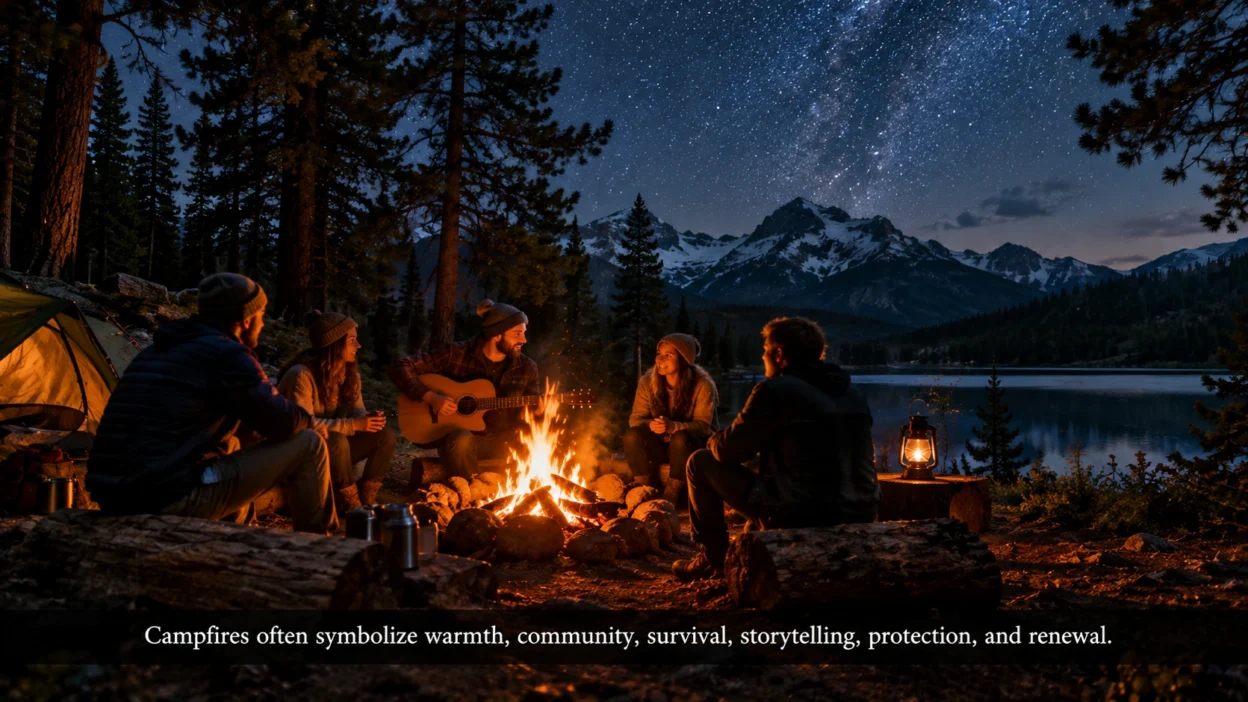
A campfire can turn an ordinary outdoor night into a shared experience. Campfire symbolism often connects fire with warmth, friendship, survival, storytelling, and human connection.
In the United States, campfires appear at summer camps, family gatherings, national parks, backyards, beaches, and outdoor festivals. They can also bring memories of childhood, adventure, freedom, and quiet nights under the stars.
However, a campfire means more than simple warmth. Its light creates a small gathering place in darkness. For many people, that makes the campfire a powerful image of community, protection, memory, and renewal.
Quick Answer
Campfire symbolism in the USA commonly represents community, warmth, survival, friendship, storytelling, and renewal. More broadly, fire has long represented transformation, protection, life, and the human ability to create light in darkness.
TL;DR
- Campfires symbolize warmth, friendship, safety, and human connection.
- Ancient people used controlled fire for survival, cooking, warmth, and gathering.
- American campfires often represent outdoor freedom and community.
- Fire can symbolize transformation because it changes everything it touches.
- Campfire memories often connect with childhood, adventure, and storytelling.
- Today, campfires appear in tattoos, decor, media, camping, and social gatherings.
What Does a Campfire Symbolize?
A campfire is a controlled fire built outdoors, usually with wood arranged around a central flame. Its physical form is simple, yet its meaning can become surprisingly rich.
Because people gather around it, the campfire often becomes a symbol of togetherness. Its light separates a small human space from the surrounding darkness.
Core Meanings of a Campfire
Several ideas commonly appear when people interpret a campfire symbol:
- Warmth and comfort during cold or difficult moments
- Friendship created through shared time and conversation
- Protection from darkness, cold, and perceived danger
- Survival through knowledge, preparation, and cooperation
- Storytelling and the preservation of memories
- Renewal through fire, change, and fresh beginnings
The meaning can change with context. A romantic campfire may suggest intimacy, while a wilderness campfire may represent independence and survival.
Why the Flame Matters
The flame itself is constantly moving. It rises, bends, flickers, and disappears before appearing again.
That movement can make fire feel alive. As a result, people often associate flames with energy, passion, change, and temporary beauty.
Ancient Roots of Campfire Symbolism
The history of campfire symbolism begins long before modern camping. Controlled fire became one of humanity’s most important technologies and changed how people lived.
Early humans used fire for warmth, cooking, protection, and light. Over time, the fire also became a natural center for social activity.
Fire and Early Human Life
A fire created a safe and useful space after sunset. People could prepare food, stay warm, make tools, and spend time together.
Therefore, fire became closely connected with survival. The ability to maintain a fire required knowledge, cooperation, and careful attention.
Ancient Religious and Mythological Ideas
Fire also gained sacred meanings in many ancient traditions. In Greek mythology, Prometheus was associated with bringing fire to humanity.
Ancient Iranian religious traditions placed important emphasis on sacred fire. In Vedic traditions of South Asia, Agni was a major fire deity connected with ritual and offerings.
These traditions differ greatly from one another. Still, they show a recurring human pattern: fire can represent life, communication, transformation, and sacred power.
Campfire Symbolism in American Culture
The campfire has a particularly strong place in American outdoor culture. It appears in camping traditions, summer camps, wilderness recreation, family trips, and backyard gatherings.
American ideas about nature and outdoor independence also shaped this symbolism. A campfire can suggest leaving ordinary routines behind and spending time in a more natural setting.
Camping and Outdoor Freedom
For many Americans, a campfire is part of the camping experience. Tents, forests, lakes, mountains, and open skies often surround it.
As a result, the fire can symbolize adventure and temporary escape. It creates a familiar gathering point within an unfamiliar landscape.
Summer Camps and Childhood
Campfires also have a strong connection with American childhood. Summer camps frequently use evening fires for songs, stories, games, and group activities.
Because of this, an adult may see a campfire and immediately remember childhood friendships or family trips.
The American Backyard Fire
The symbolism doesn’t require a wilderness setting. Backyard fire pits have become common gathering spaces for families and friends.
In this setting, the campfire becomes less about survival and more about connection. People may sit together, talk, eat, listen to music, or simply watch the flames.
What Does a Campfire Mean Spiritually?
Fire has spiritual meanings across many cultures, although those meanings aren’t identical. It can represent purification, transformation, illumination, devotion, or communication.
For a modern reader, a campfire may carry a personal spiritual meaning without belonging to a specific religious tradition.
Fire as Transformation
Fire changes wood into ash, smoke, heat, and light. This visible transformation makes it a natural metaphor for personal change.
Someone starting a new chapter may view a campfire as a reminder that change can create something different from what existed before.
Fire as Light
A small flame can illuminate a dark environment. Symbolically, this can suggest hope, awareness, guidance, or understanding.
However, the meaning depends on the person and context. A campfire doesn’t have one universal spiritual message.
Campfire Symbolism Across Cultures
Fire appears in traditions throughout the world. Its meanings vary because different communities developed their own stories, rituals, and relationships with fire.
Still, several themes appear repeatedly. Fire can provide warmth and life while also requiring respect and control.
Shared Symbolic Themes
Common themes associated with fire include:
- Light overcoming darkness
- Community gathered around a shared center
- Transformation from one state into another
- Protection against environmental threats
- Ritual connection and remembrance
- Energy, vitality, and creative force
Some cultures use fire in religious ceremonies, while others mainly associate it with seasonal celebrations or social gatherings.
These similarities don’t mean every tradition interprets fire in the same way. They simply show why fire has such a powerful place in human symbolism.
Emotional Meaning of a Campfire
A campfire often creates a particular emotional atmosphere. Its warm light, crackling sound, and repetitive movement can make a setting feel intimate and peaceful.
However, emotional responses differ between people. Someone who associates campfires with happy memories may experience comfort, while another person may associate fire with danger or loss.
Warmth and Comfort
Warmth is one of the simplest campfire associations. Sitting beside a fire can create a physical sense of comfort.
That physical experience often strengthens the emotional meaning. The campfire becomes connected with rest, safety, and relaxation.
Nostalgia and Memory
Campfires can also trigger memories. Songs, conversations, toasted marshmallows, and nighttime stories may become part of someone’s personal history.
Therefore, campfire imagery frequently works as a symbol of nostalgia. It can represent a moment that people want to remember.
The Campfire as a Symbol of Community
A campfire naturally encourages people to face toward one another. Everyone shares the same central source of light and warmth.
This makes the fire a useful symbol of belonging. Instead of separating people, it creates a common center.
Gathering Around One Place
The arrangement itself matters. People sit around the fire rather than simply looking at it from far away.
That circular arrangement can suggest equality and shared participation. Everyone becomes part of the same temporary gathering.
Storytelling and Conversation
Campfires have long been associated with oral storytelling. Stories become especially memorable when told in a dark setting with a glowing fire nearby.
Today, this association continues through campfire stories, personal conversations, songs, jokes, and shared memories.
Campfire Symbolism and Survival
Fire once provided essential survival advantages. It offered warmth, allowed food to be cooked, and provided light after sunset.
Modern campers may not depend on fire in the same way. Even so, the older survival association remains part of the symbol.
Fire as Human Ingenuity
Creating and maintaining fire requires planning and knowledge. In symbolic terms, this can represent human resourcefulness.
A campfire may therefore suggest the ability to solve problems and create safety under difficult conditions.
Protection and Safety
Historically, fire could help people feel safer at night. Its light changed the surrounding environment and helped create a visible boundary.
Today, that meaning can remain symbolic. A glowing fire may represent a small place of safety within a larger unknown world.
Campfire Symbolism in Nature and the Outdoors
Campfires connect two powerful ideas: human-made fire and the natural world. The contrast gives the symbol much of its character.
A fire in a forest or beside a lake looks temporary. The landscape remains long after the flames disappear.
Temporary Beauty
A campfire doesn’t last forever. Its flames eventually become embers and then ash.
That temporary nature can represent life’s passing moments. It may remind people to appreciate experiences while they are happening.
Connection With the Wilderness
The campfire also represents human presence in nature. A small circle of light can make a large landscape feel more personal.
For Americans who enjoy camping and outdoor recreation, this connection can carry strong emotional meaning.
Campfire Meaning in Tattoos and Art
Campfire tattoos can combine the fire with other images. Common designs include mountains, trees, stars, tents, moons, logs, or outdoor landscapes.
Because tattoos are personal, the same image can represent very different experiences.
Common Tattoo Ideas
A campfire tattoo may symbolize:
- A love of camping and outdoor adventure
- Family memories from childhood trips
- Friendship formed during an important period
- Surviving a difficult stage of life
- A connection with nature and simplicity
- A reminder to keep hope during darkness
Some people also pair a campfire with initials, dates, or short phrases. These details can turn a general symbol into a personal memory.
Visual Style
The colors can influence the impression. Orange and yellow flames usually emphasize warmth and energy.
Meanwhile, black-and-gray designs can create a quieter or more reflective mood. Minimalist campfire outlines may focus on the idea rather than realistic detail.
Campfires in Social Media, Decor, and Popular Culture
Campfires remain highly recognizable in modern American visual culture. They can appear in photographs, digital illustrations, home decor, merchandise, and outdoor-themed designs.
Social media has also strengthened the campfire’s connection with shared experiences. A photograph of friends around a fire can communicate togetherness without needing much explanation.
Home Decor
Fire pits and campfire-inspired decor can create an outdoor gathering atmosphere. Rustic cabins, patios, and outdoor living spaces often use fire as a visual centerpiece.
In these settings, the symbol usually emphasizes hospitality, relaxation, and social connection rather than survival.
Digital and Pop Culture Imagery
Campfires frequently appear in stories about travel, friendship, wilderness, and adventure. They can also provide a quiet setting for important conversations between characters.
This makes the campfire a flexible storytelling device. It can represent both excitement and peaceful reflection.
Campfire Symbolism by Context
The same fire can communicate different ideas depending on its setting. Context is therefore essential when interpreting the symbol.
| Context | Meaning in the USA | Common Association | Symbolic Emphasis |
| Family camping | Togetherness | Shared memories | Belonging |
| Summer camp | Friendship | Childhood experiences | Community |
| Wilderness camping | Independence | Outdoor adventure | Survival |
| Backyard fire pit | Relaxation | Social gatherings | Connection |
| Campfire tattoo | Personal history | Important memories | Identity |
| Storytelling fire | Tradition | Shared stories | Memory |
This is why there isn’t one fixed interpretation. The people, setting, and purpose surrounding the fire can change its message.
Misunderstandings and Controversies
Fire symbolism can sometimes be misunderstood because fire has both constructive and destructive qualities. A campfire can provide warmth, yet uncontrolled fire can cause serious environmental damage.
Therefore, symbolic interpretations shouldn’t ignore the real-world risks of fire.
Positive and Negative Associations
A campfire may suggest comfort, but fire can also represent destruction, anger, conflict, or loss. These meanings become stronger when the image shows large flames or burning landscapes.
Context helps distinguish a controlled campfire from destructive wildfire imagery.
Read More: Volcano Eruption Symbolism: Power, Change, and Release
Environmental Concerns
Modern outdoor culture also recognizes the importance of responsible fire use. Campfires can damage vegetation, leave waste, or contribute to wildfire risk when conditions are unsafe.
Because of this, some modern interpretations connect the campfire with responsibility as well as freedom. Enjoying nature can involve caring for the same environment that makes the experience meaningful.
How Campfire Meaning Has Changed Over Time
The meaning of fire has shifted as human life changed. What was once an essential survival tool can now function mainly as recreation and symbolism.
Still, older associations haven’t disappeared completely.
From Survival to Recreation
Ancient communities depended on fire for basic daily needs. Modern campers usually have access to manufactured lighting, heating, and cooking equipment.
As a result, the campfire now often represents choosing a slower and simpler experience. People create the fire because they want to gather around it.
From Necessity to Memory
The campfire has also become strongly connected with memories. Family trips, friendships, summer camps, and outdoor adventures can give the image personal meaning.
Today, the flame can therefore symbolize not only survival but also the experiences people choose to preserve.
FAQs
What does a campfire symbolize?
A campfire commonly symbolizes warmth, friendship, community, survival, storytelling, and renewal. Its meaning can change depending on whether it appears in nature, art, tattoos, or personal memories.
What does a campfire symbolize spiritually?
Spiritually, fire can represent transformation, illumination, purification, or connection. However, specific meanings vary greatly between religious and cultural traditions.
Why are campfires associated with friendship?
People naturally gather around a campfire because everyone can share its warmth and light. This creates a strong visual connection between fire and social bonding.
What does a campfire tattoo mean?
A campfire tattoo can represent outdoor adventure, friendship, family memories, survival, or personal transformation. The surrounding imagery often reveals the person’s intended meaning.
Why are campfires associated with storytelling?
Before modern entertainment and digital communication, fires provided natural gathering places after dark. Stories, songs, and conversations could continue while people stayed warm and together.
Does a campfire symbolize hope?
It can. A small flame shining through darkness can represent hope, guidance, comfort, or perseverance, although this interpretation is personal rather than universal.
Conclusion
A campfire brings together several powerful ideas: warmth, community, survival, friendship, storytelling, protection, and renewal. Its meaning comes partly from fire’s ancient role in human life and partly from modern experiences around camping and outdoor gatherings. Perhaps that explains its lasting appeal. A campfire is temporary, yet the memories created around it can remain long after the flames disappear.