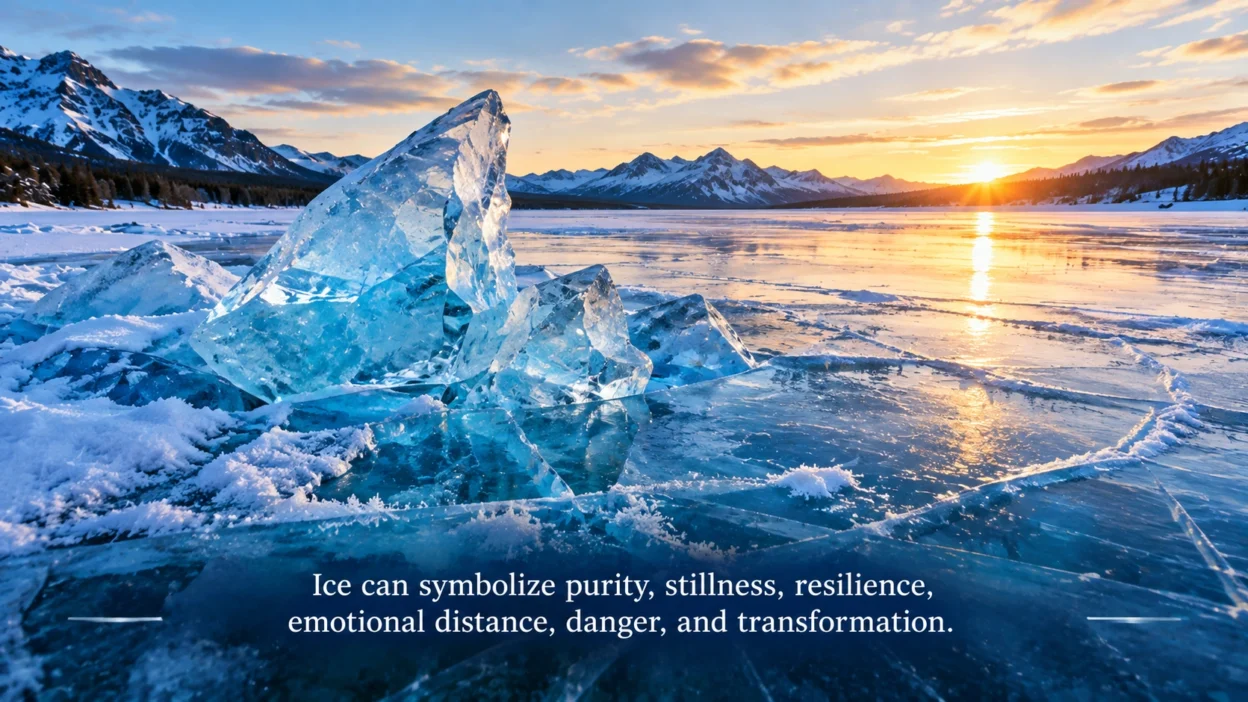
Ice is more than frozen water. Across stories, landscapes, art, and everyday life, it can represent stillness, purity, distance, danger, endurance, and change. Ice symbolism often comes from the way ice looks and behaves: beautiful and clear, yet cold, hard, fragile, and temporary.
In the United States, ice appears in winter traditions, sports, movies, photography, fashion, and everyday language. A frozen lake can suggest peace and solitude, while a thin layer of ice can warn of hidden danger.
The meaning also changes with context. Clear ice may suggest purity, while cracking ice can represent uncertainty or emotional pressure. Because ice eventually melts, it can also become a powerful image of transformation and impermanence.
Quick Answer
Ice symbolism in the USA commonly represents purity, stillness, resilience, emotional distance, danger, and transformation. More broadly, ice can symbolize frozen emotions, preservation, isolation, or a temporary state before change.
TL;DR
- Ice often represents purity because of its clear, clean appearance.
- Its coldness can symbolize emotional distance or restraint.
- Frozen landscapes can suggest peace, solitude, and stillness.
- Cracking ice can represent danger, uncertainty, or vulnerability.
- Melting ice often symbolizes change, release, and transformation.
- American winter culture gives ice many familiar meanings.
What Does Ice Symbolize?
Ice has several symbolic meanings because it combines opposite qualities. It can look calm and beautiful while hiding serious physical danger.
Purity and Clarity
Clear ice often creates associations with cleanliness and purity. Its transparent surface can also suggest honesty, simplicity, or clear thinking.
However, natural ice isn’t always perfectly clear. Bubbles, cracks, snow, and trapped material can make each piece unique.
Stillness and Silence
Ice stops flowing water in its tracks. Therefore, it can represent stillness, quiet, patience, and suspended movement.
A frozen lake feels especially powerful because a familiar moving landscape suddenly becomes silent and motionless.
Coldness and Distance
Ice is also connected with emotional coldness. In everyday American speech, someone described as “icy” may seem distant or unfriendly.
This meaning appears often in literature and film. A cold exterior can hide feelings that remain beneath the surface.
How Ice Appears as a Symbol
The physical appearance of ice strongly affects its meaning. Color, texture, location, and condition can all change the message.
Clear, White, and Blue Ice
Clear ice can suggest transparency and purity. White ice often connects with winter, innocence, cleanliness, and quiet.
Blue ice creates a different feeling. Its cool color can suggest calmness, distance, mystery, or sadness.
Cracks and Melting
Cracks introduce vulnerability into the image. They can represent pressure, instability, hidden weakness, or approaching change.
Melting ice usually carries a more hopeful meaning. It can suggest emotional release, renewal, freedom, or the return of movement.
Ice in Different Contexts
The same object can communicate very different ideas depending on its setting.
| Context | Meaning in the USA | Common Associations | Notes |
| Frozen lake | Stillness and solitude | Winter, nature, silence | Can also signal danger |
| Ice cube | Preservation and restraint | Drinks, freshness, cooling | Usually an everyday symbol |
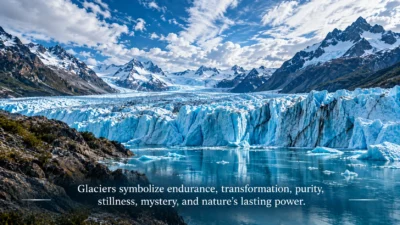
| Glacier | Endurance and time | Nature, climate, age | Often represents slow change |
| Cracked ice | Vulnerability | Risk, uncertainty, pressure | Strong visual metaphor |
| Melting ice | Transformation | Spring, release, renewal | Suggests movement returning |
The Ancient and Historical Roots of Ice Symbolism
Ice symbolism doesn’t come from one ancient tradition. Instead, many meanings developed naturally from human experiences with cold, winter, frozen water, and changing seasons.
Ice in Ancient Life
People living in cold climates understood ice as both useful and dangerous. Frozen water could preserve food, create travel routes, or make survival difficult.
Therefore, early symbolic associations often came from practical experience. Ice could mean endurance, seasonal hardship, isolation, or preservation.
Winter and Seasonal Cycles
Ancient cultures frequently connected winter with dormancy and reduced activity. Plants disappeared beneath snow, animals changed behavior, and daylight became shorter.
Yet winter wasn’t necessarily viewed only negatively. It was also part of a larger seasonal cycle. Ice could therefore represent a pause before renewal.
From Nature to Metaphor
Over time, physical experiences became emotional metaphors. “Cold” could describe an unfriendly person, while “frozen” could describe something unable to move forward.
This shift made ice useful in poetry, stories, visual art, and everyday speech.
Ice Symbolism in American Culture
In the United States, ice has many familiar cultural meanings. Winter weather, frozen lakes, hockey, ice skating, and popular entertainment all shape how Americans understand it.
Winter in the American Imagination
Snow and ice are strongly associated with winter in many parts of the country. For some people, they suggest cozy homes, holidays, family gatherings, and childhood memories.
For others, ice means difficult travel, power outages, dangerous roads, and severe weather. Therefore, American ice symbolism can be both comforting and threatening.
Ice Sports and Recreation
Ice hockey and figure skating add another layer of meaning. Hockey can connect ice with teamwork, competition, strength, and speed.
Figure skating creates a different image. Graceful movement across a hard surface can symbolize discipline, balance, beauty, and control.
Ice in American Entertainment
Movies and television often use frozen settings to establish mood. An icy landscape may create mystery, isolation, suspense, or emotional tension.
Likewise, characters described as “cold” or “icy” often appear emotionally controlled or difficult to understand.
Spiritual and Cross-Cultural Meanings of Ice
Ice doesn’t have one universal spiritual meaning. Different cultures and traditions interpret winter, cold, snow, and frozen water according to their own environments and beliefs.
Purity and Stillness
Because ice can appear bright and clean, it may be associated with purity or spiritual quietness. Its stillness can also suggest contemplation.
However, these meanings aren’t universal. Cultural context matters when interpreting a particular symbol.
Preservation and Endurance
Frozen conditions can preserve things for long periods. This physical quality can inspire symbolic connections with memory, endurance, and protection from change.
At the same time, ice eventually melts. That contrast makes it useful for representing temporary preservation.
Winter as a Spiritual Metaphor
Winter can represent a period of waiting or inward reflection. Ice may therefore symbolize a temporary pause rather than a permanent ending.
This interpretation fits a wider natural pattern: freezing, thawing, growth, and renewal.
The Emotional and Psychological Meaning of Ice
Ice is especially powerful as an emotional symbol because its physical qualities resemble several human experiences.
Emotional Distance
Someone who seems emotionally unavailable may be described as “cold.” Ice makes this metaphor easy to visualize.
A wall of ice can therefore represent boundaries, loneliness, guarded feelings, or difficulty connecting with others.
Self-Control and Restraint
Ice can also symbolize control. A frozen surface doesn’t move easily, which makes it a useful image for restraint and composure.
In this sense, ice doesn’t always represent something negative. It can suggest patience and the ability to remain calm under pressure.
Hidden Feelings
A frozen surface can hide what lies underneath. Likewise, people may appear calm while experiencing strong emotions internally.
For that reason, ice can symbolize feelings that are suppressed, protected, or waiting for the right moment to emerge.
What Does Melting Ice Symbolize?
Melting ice usually represents movement after stillness. It can suggest release, emotional opening, renewal, or a major transition.
Release and Renewal
When ice melts, water begins moving again. This makes melting ice a natural metaphor for breaking through emotional barriers.
It can represent forgiveness, healing, acceptance, or the beginning of a new stage.
Change and Impermanence
Melting also reminds us that frozen conditions don’t last forever. A solid object becomes flowing water without completely disappearing.
Therefore, melting ice can symbolize adaptation rather than simple destruction.
From Frozen to Free
This image works especially well in personal storytelling. Someone who once felt emotionally “frozen” may eventually become open and expressive.
The symbolism is simple: movement returns when the frozen state ends.
Ice as a Symbol of Danger and Vulnerability
Ice can look peaceful while being physically dangerous. This contradiction gives it a strong symbolic connection with hidden risks.
Thin Ice
The phrase “walking on thin ice” is widely understood in American English. It describes a situation where someone is close to trouble.
The metaphor works because thin ice may look safe until pressure causes it to break.
Cracking Ice
Cracks can symbolize warning signs. They suggest that something appearing stable may actually be under stress.
In stories, cracked ice can represent relationships, plans, trust, or personal confidence beginning to fail.
Beauty With Risk
Frozen landscapes often look spectacular. Yet their beauty doesn’t guarantee safety.
This contrast gives ice a deeper symbolic meaning: something can be attractive and dangerous at the same time.
Ice Symbolism in Tattoos, Art, and Design
Ice works well visually because its textures are instantly recognizable. Artists can communicate several ideas without using many additional elements.
Ice Tattoos
Ice-themed tattoos may represent resilience, emotional control, transformation, or personal experiences with winter.
However, the surrounding imagery matters. A melting ice tattoo communicates something different from a solid glacier or cracked frozen lake.
Home Decor and Fashion
Blue-white color palettes can create a cool, clean atmosphere. Frosted glass, crystal-like surfaces, and icy textures often suggest modernity and simplicity.
In fashion, icy colors can communicate elegance, distance, sophistication, or a winter aesthetic.
Digital and Social Media Imagery
Ice is also common in digital backgrounds, fantasy artwork, gaming imagery, and seasonal posts. Its visual clarity makes it useful for dramatic effects.
A frozen image may suggest calmness in one post and danger in another. Context remains the key.
Ice in Holidays, Winter, and American Traditions
Ice is closely tied to winter traditions throughout the United States. Its meaning often depends on personal memories and regional experience.
Christmas and Winter Imagery
Snow and ice frequently appear in American holiday decorations and winter scenes. They can create feelings of nostalgia, quietness, and seasonal celebration.
However, ice itself usually plays a smaller symbolic role than snow.
Ice Skating
Ice skating adds associations with balance, grace, practice, and recreation. For many Americans, skating also connects with childhood and community experiences.
Winter Memories
For some people, ice means peaceful mornings and frozen ponds. For others, it recalls dangerous roads and difficult weather.
This difference shows why symbolism is personal as well as cultural.
Ice and the Meaning of Preservation
One of ice’s most practical qualities is its ability to slow change. That physical property creates strong symbolic connections with preservation.
Holding Time Still
Frozen objects appear suspended in time. Therefore, ice can represent memory, permanence, or an attempt to stop change.
Yet this permanence is temporary. Eventually, the ice changes state.
Memories and the Past
An icy landscape can evoke old memories because winter often repeats familiar seasonal patterns.
For artists and writers, frozen settings can therefore become symbols of the past or moments that remain emotionally important.
The Limits of Preservation
Ice cannot stop time forever. It only delays transformation.
That makes it an especially useful symbol for the human desire to preserve relationships, memories, youth, beauty, or familiar circumstances.
Misunderstandings and Changing Meanings of Ice
Ice symbolism is usually straightforward, but context can change its meaning significantly.
Ice Doesn’t Always Mean Emotional Coldness
A common interpretation connects ice with emotional distance. However, that isn’t the only meaning.
Ice can equally represent peace, resilience, beauty, patience, preservation, or renewal.
“Cold” Can Be Positive
In some settings, coolness suggests calmness and control rather than unkindness. A person may be emotionally steady without being emotionally detached.
Therefore, interpreting an icy image requires attention to the surrounding story.
Modern Environmental Meanings
Ice has also gained stronger environmental associations in modern culture. Glaciers and sea ice can represent the effects of a changing climate.
However, the symbolic meaning depends on the specific image and message. A glacier may symbolize ancient endurance, environmental vulnerability, or both.
Read More: Campfire Symbolism: Meaning, History, and Modern Uses
How Ice Symbolism Has Changed Over Time
The meaning of ice has expanded as societies developed new experiences with it. Older meanings came largely from nature and survival, while modern culture adds psychological and visual interpretations.
From Survival to Aesthetic
Historically, ice could determine whether travel and survival were possible. Today, many people encounter it through entertainment, sports, photography, and design.
As a result, ice has become both a practical substance and an artistic symbol.
From Coldness to Transformation
Older metaphors often emphasized coldness, distance, and immobility. Modern interpretations frequently add ideas of change and emotional release.
Melting ice is especially powerful because it visually shows a transition from one state to another.
A Symbol With Opposites
Ice can represent both strength and fragility. It can preserve something while also signaling temporary conditions.
That tension is part of its lasting appeal. Ice looks solid, but its state can change quickly when conditions shift.
FAQs
What does ice symbolize spiritually?
Ice can symbolize stillness, purity, preservation, patience, and transformation. However, spiritual meanings vary across cultures and individual traditions.
What does ice symbolize in love?
Ice can represent emotional distance, guarded feelings, or a relationship that feels frozen. Melting ice can instead suggest renewed connection and emotional openness.
What does an ice tattoo symbolize?
An ice tattoo may represent resilience, self-control, transformation, winter memories, or emotional protection. The meaning depends heavily on its design and surrounding imagery.
What does melting ice symbolize?
Melting ice commonly represents change, release, renewal, and emotional transformation. It can show something moving from a rigid state toward greater freedom.
What does cracked ice symbolize?
Cracked ice often represents vulnerability, instability, uncertainty, or hidden danger. It can also suggest that something once considered stable is beginning to change.
Why does ice symbolize emotional coldness?
Ice is physically cold, hard, and resistant to movement. These qualities naturally became metaphors for emotional distance, restraint, and difficulty expressing feelings.
Conclusion
Ice carries a rich range of meanings because it combines beauty, strength, stillness, and fragility. In American culture, it can represent purity, solitude, emotional distance, danger, endurance, and the quiet beauty of winter. At the same time, melting ice adds an important message of change. It reminds us that even something solid can transform when conditions shift. Ultimately, ice symbolism works because it reflects a familiar human experience: moments when life feels frozen, followed by moments when movement returns. Whether used in art, tattoos, stories, or personal reflection, ice can represent both the pause and the possibility of what comes next.